
Amazon changed the rules again.
Every spring, the group chat with my fellow chocolate and gummy sellers turns into a countdown — not counting Easter sales, but counting the days until the meltable inventory cutoff. Under Amazon's long-standing policy, meltables had to arrive at fulfillment centers by around mid-April; anything arriving later gets marked unfulfillable and sits there doing nothing. (The exact date shifts year to year — check Seller Central's latest policy page. I'm describing the rhythm I've seen.)
And this year it's spicier: multiple service providers are reporting that Amazon is killing all in-house FBA prep services starting in 2026 — no more labeling, polybagging, or bubble wrap from Amazon. Every unit has to arrive 100% FBA-ready. For meltables, already the most annoying category to prep, that means the work starts at your own warehouse, not at the FC dock.
Here's my conclusion up front: meltables aren't unsellable in summer. They're unsellable via FBA in summer. And inbound timing isn't about when you ship — it's about when Amazon scans your freight in. Get that backwards and you pay in real money.
The April ritual: somebody always gets burned
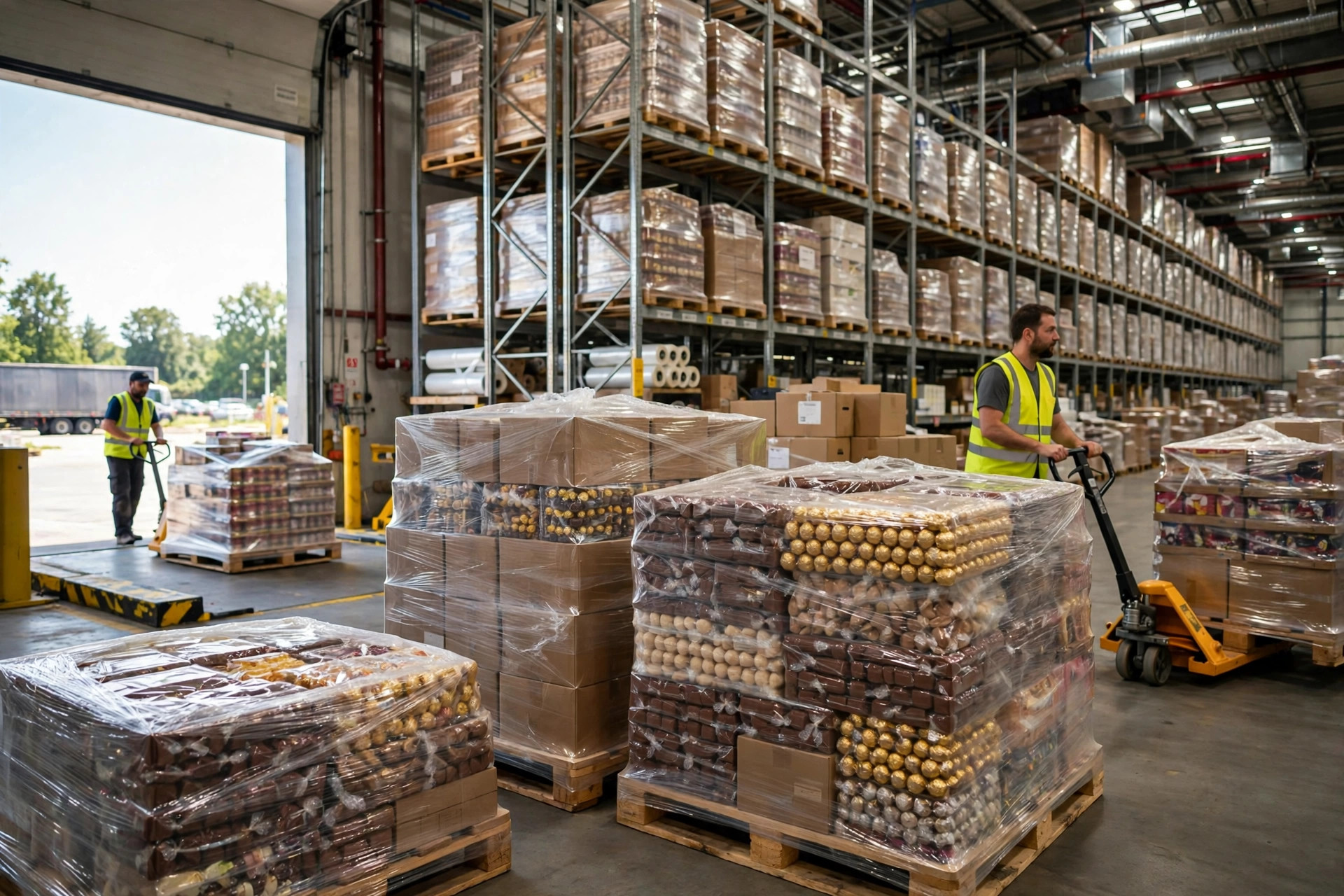
A buddy of mine sells handmade chocolate out of California. Easter 2025 went great, so in early April he restocked — three pallets out of his LA 3PL on April 8, ground freight, thinking "it's only April 8, plenty of time." The Arizona FC had a receiving backlog. His freight didn't get checked in until April 19. Past the line. The whole shipment: unfulfillable.
Then it got worse. Unfulfillable inventory can't sell — you file a removal order and haul it back. Removal fees are per unit; several thousand units cost him close to two grand in fees and return freight. By the time the chocolate came back it was May. It sat in a warehouse all summer. Re-send it in October? The expiration dates had lost half a year, and the reviews started saying "almost expired." His words: "I basically paid to learn a lesson."
Second story, more common. A gummy seller got smart in 2024 and used AWD (Amazon Warehousing and Distribution) as a buffer — FBA's closed, fine, I'll park inventory in AWD and trickle it in over the summer. Except AWD's meltable cutoff runs about two weeks earlier than FBA's. His freight got stuck mid-transfer. Most sellers don't know the AWD door closes first.
The lesson: Amazon doesn't care about your ship date. It cares about your check-in date. Two days of dock congestion past the deadline and nobody can save your shipment.
Reverse-engineering the meltable calendar
You can't plan meltables on a normal rhythm. Work backwards from a mid-April check-in deadline:
| Milestone | Action | Notes |
|---|---|---|
| Mid-January | Place full-year meltable POs, lock factory capacity | Before Lunar New Year, or factory slots slip to March |
| Late Feb – early Mar | Ocean freight lands, move to US warehouse | 25–35 days on the water, plus a customs buffer |
| Mid-March | QC + labeling, done yourself or at your 3PL | Amazon won't prep anything in 2026 — no skipping this |
| Before end of March | Create shipment plan, send to FBA | First week of April is receiving chaos |
| Mid-April | Freight MUST be checked into the FC | This is a hard line, not a goal |
See it? The real deadline isn't mid-April. It's end of March. Early April is peak receiving season; 3–5 day check-in queues are normal. Ship April 10, check in April 18, you're done. My personal rule: freight is moving by March 31, checked in by April 7.
How much to send? Two numbers decide. First: does your listing still get organic traffic May through September? Sellers who go dark all summer come back in October to find their rank in a ditch and ad costs doubled to climb out. Second: summer storage fees. FBA summer storage isn't cheap, and meltables are bulky. My formula: keep 60–70% of your May–September demand in your own US warehouse (or a 3PL), and only leave in FBA what you can sell through by end of April. FBA in summer is a clearance channel, not a stockpile.
One more detail: don't create your shipment plan in the first week of April. Every meltable seller is fighting for the same trucking capacity then — spot rates run 20–30% higher than normal, and FC docks queue up for half a day. Ship by end of March and you get cheaper freight and faster receiving. Win-win.
The counterintuitive part: summer is when meltables print money
This might be the most counterintuitive line in the whole piece: June through August is when meltables face the least competition and the best prices.
Think about it: most sellers cleared out in April and left. No FBA inventory. A buyer searches for chocolate and finds three sellers instead of thirty. The ones left standing price 15–25% above spring — and it still sells, because buyers have no alternatives.
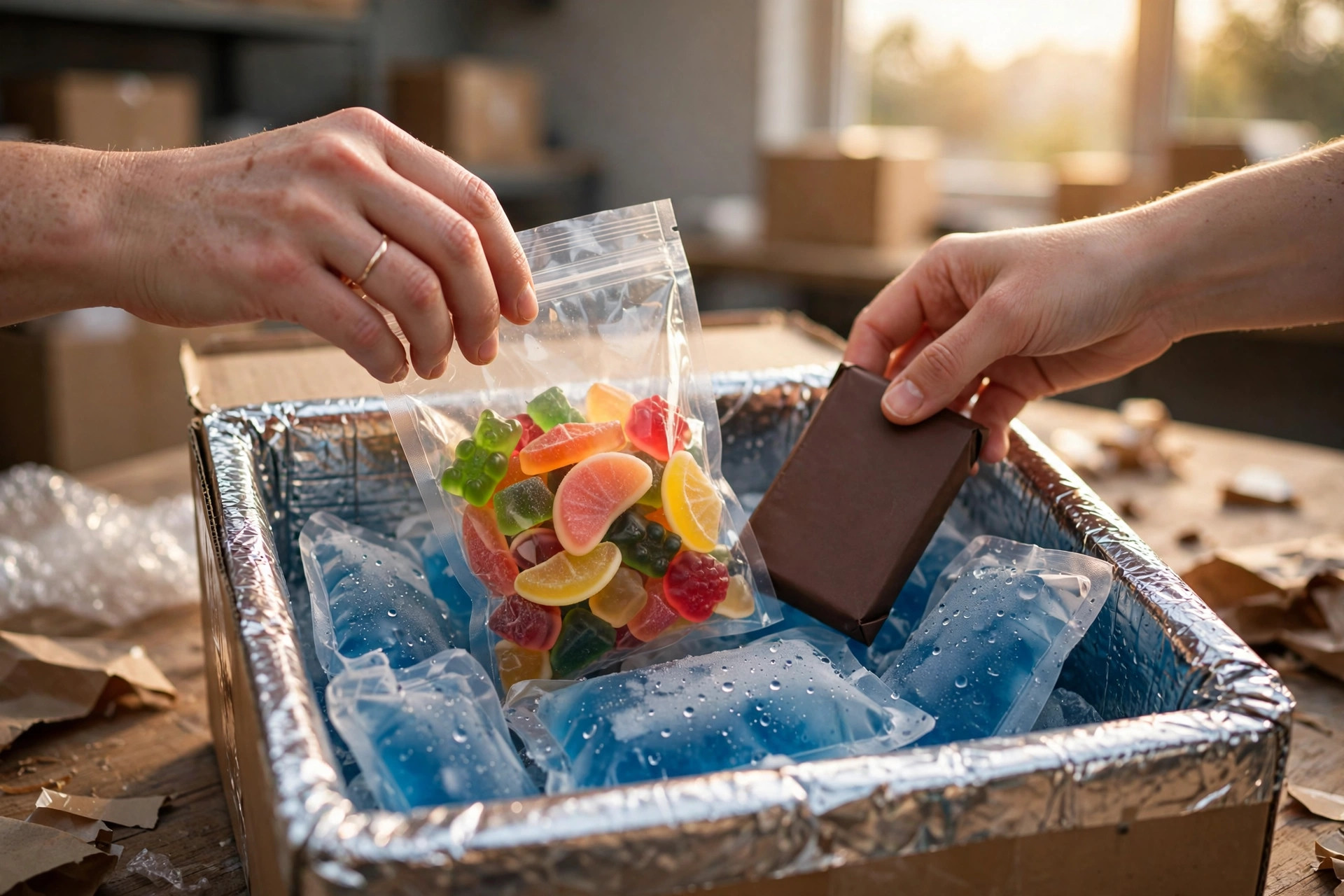
The question is fulfillment. The answer: FBM (self-fulfillment) with temperature-controlled packaging. Before you roll your eyes, run the numbers:
| Packaging | Extra cost per order (ballpark) | Use case |
|---|---|---|
| Standard box + bubble | $0.50–1.00 | Non-summer |
| Insulated mailer + ice pack | +$1.00–1.50 | Summer, 2–3 day delivery |
| Insulated box + double ice packs | +$2.00–3.00 | Summer, remote zones / 5+ day delivery |
(Our actuals from last summer — check your own supplier quotes.)
An extra buck and change per order buys you: summer prices 15–25% higher. A $20 chocolate bar sells for $24–25 in July. That extra $4–5 covers the $1+ packaging and the rest is pure margin. That's the trade-off: the packaging cost is certain, the premium isn't — but when competition is this thin, it's a bet worth taking.
Caveats: your product has to survive the trip. Pure chocolate, gummies, some skincare — fine. Ice cream — don't even think about it. And manage expectations in the listing: spell out "ships in summer thermal packaging." Our negative review rate last July was 1.8%, lower than December — because a buyer who opens a box with ice packs thinks "these guys are legit."
There's another layer most people never calculate: selling through summer on FBM keeps your listing rank and review velocity alive. When FBA reopens in October, you come back warm — while the sellers who went dark in April are burning ad money to climb back from zero. Those summer FBM months are really buying your October starting position.
The don't-wait-till-April checklist
First, file removal orders early. Meltables still sitting in FBA at the end of April? Don't hesitate — create the removal order and pull them back to your own warehouse. Removal queues back up too; file on May 1 and your freight comes out at the end of May, you pay an extra month of storage, and Amazon may just dispose of it. Disposed means no reimbursement.
Second, don't bet on one channel. FBA, AWD, a third-party US warehouse — have at least two. AWD works as a buffer, but remember its door closes earlier. I run FBA plus a small rented warehouse in California for summer FBM. Two lanes, always.
Third, the policy moves every year — check Seller Central in early March. The cutoff has hovered around mid-April for years, but the exact date and the AWD-vs-FBA order can change. Don't treat last year's date as scripture. Ten minutes: search "meltable inventory," read the current policy page.
Fourth, with Amazon prep gone in 2026, practice labeling now. Nobody's applying FNSKU labels for you anymore. Every unit must arrive shelf-ready. Meltables hate extra handling, so get the labeling and bagging done in March at your own warehouse — not at the FC dock.
Real talk: meltables are a category where the hassle is the moat. Every April it filters out a wave of sellers, and the ones who stay eat well all summer. If you can't be bothered to map the inbound window, this category isn't for you. But if you run this calendar right, you get a low-competition season handed to you every year for free.
I tested this myself and it works.
By Ah K, E-commerce Seller (5 yrs)





