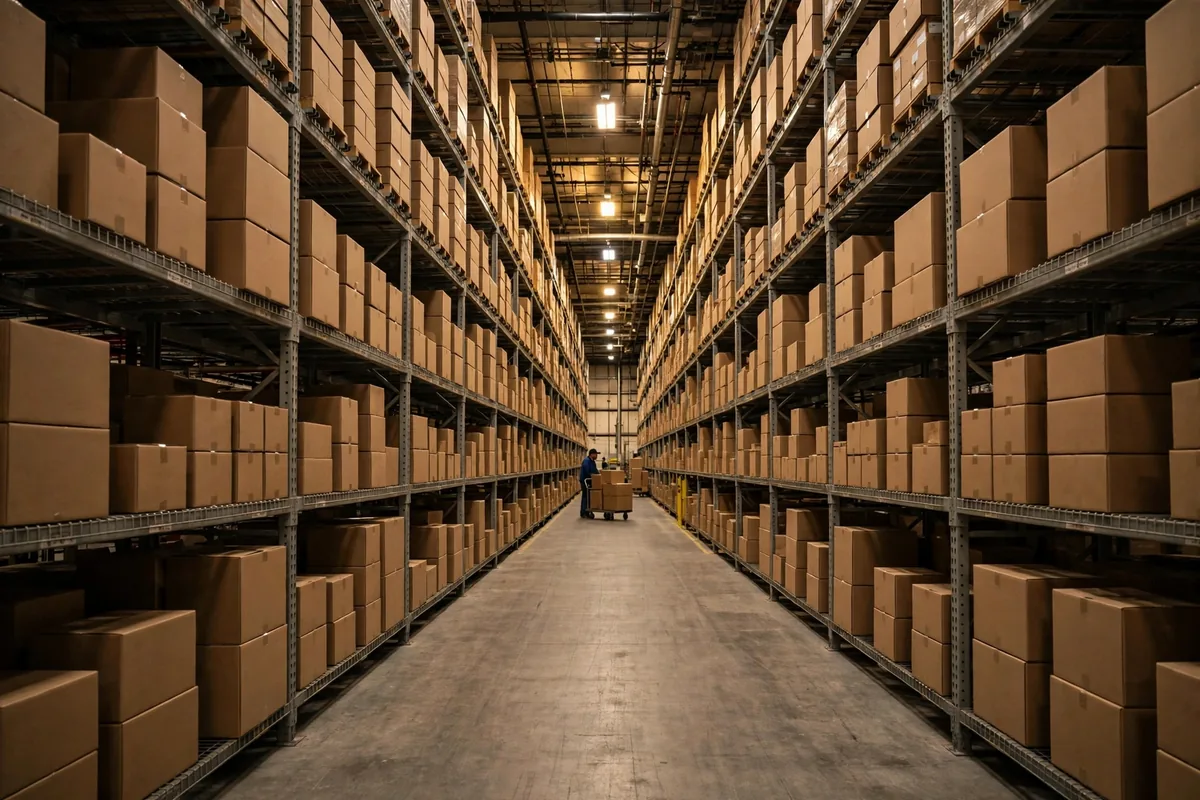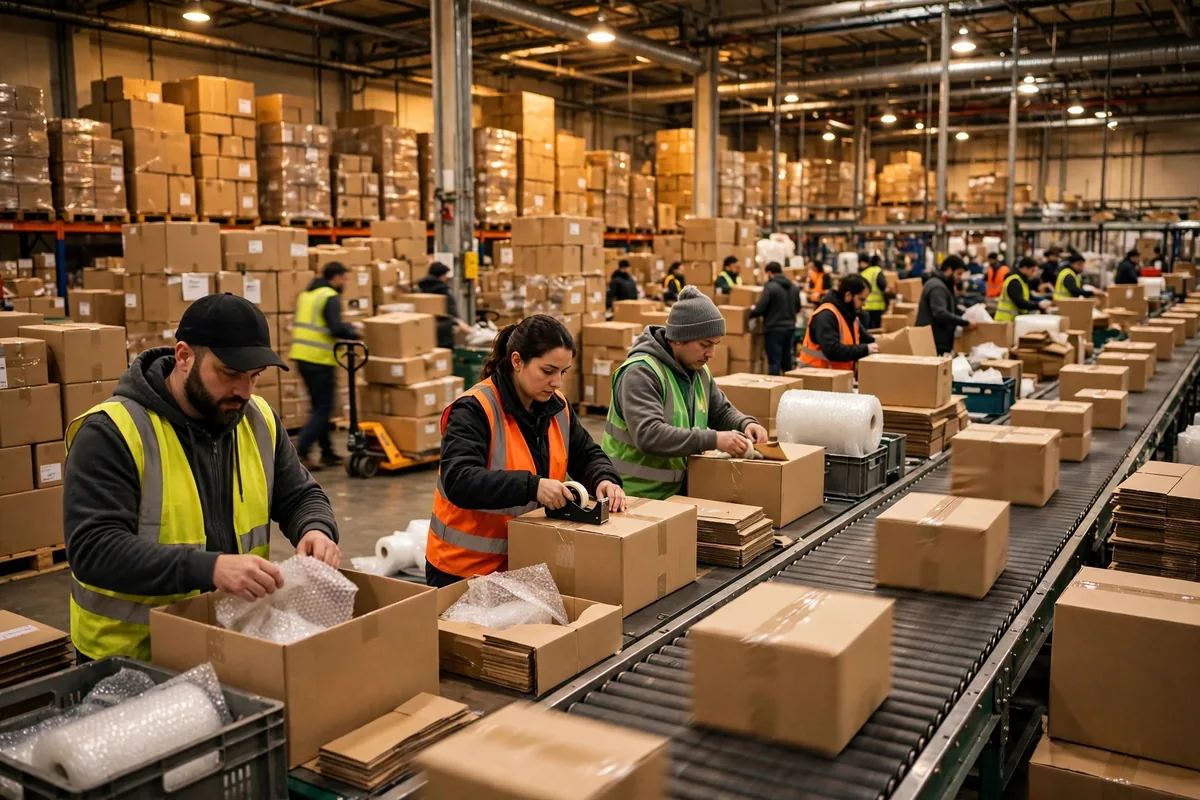
Amazon changed the rules again. In mid-2025, they cut FBA capacity from roughly six months of projected sales down to five, and quietly brought back per-ASIN restock limits. The old days of "just send more, better safe than sorry" are over. This is amazon fba stockout prevention in plain English: how sellers keep products in stock without drowning in storage fees. Short version: running out and overstocking are the same problem, and the safe zone between them is only 30 to 60 days of supply. Go wider and you burn cash. Go narrower and you lose sales.
What a Stockout Really Costs: One Ranking, Gone in 12 Days
Let me tell you about my friend Chen. He sells home storage boxes. Before Black Friday 2025, his best box was moving about 30 units a day, so in late September he stocked 1,800 units — 60 days of cover, he figured that was plenty. Then a short video made the product go viral in mid-October. Daily sales jumped to 80 units. He stocked out in early November.
Twelve days out of stock. His listing fell from No. 6 in its category to somewhere past No. 40. On Black Friday itself he just watched competitors eat the traffic. By the time his ocean shipment arrived, half the peak season was gone.
The lost sales were the small part. The real bill was the ad spend to climb back up the rankings — over the 12 stockout days plus two weeks of recovery, he burned several thousand dollars extra on ads, all because his own planning dug the hole. And here's the part that stings: in May 2025, Amazon slashed capacity limits so hard that some sellers lost more than 75% of their storage overnight, high IPI score or not. Stockouts were never just about how much you sent. They are also about how much space Amazon lets you have.
So lesson one of amazon fba stockout prevention: a stockout doesn't cost you a few days of sales. It costs you rank, traffic, and ad dollars, three times over. Planning without safety days is gambling your listing's life on the hope that logistics never goes wrong.
Overstocking Burns Money Just as Fast
I learned the other side of this the hard way. In early 2026, a small home appliance of mine was selling steadily, so I stocked six months' worth in one go — save on freight, save on reorder hassle, I told myself. By March my IPI score was sliding, and the week it dropped below 400, Seller Central capped my storage. New inventory couldn't go in. Worse, anything sitting over 26 weeks gets hit with a storage utilization surcharge of up to $10 per cubic foot, and stock that hits 271 days picks up an aged inventory surcharge on top — $0.30 per unit at 12 to 15 months, $0.35 beyond 15 months.
I did the math afterward: one extra month of that stock sitting in the warehouse cost me twice what I had saved on freight. Overstocking isn't saving money. It's burning it somewhere else. And the IPI score updates every Monday on a rolling 90-day window, scored 0 to 1,000 on four factors: excess inventory percentage, sell-through rate, stranded inventory percentage, and in-stock rate. 400 is the red line — fall below it and you get capped. You want to live at 550 to 600 or higher to have any buffer against seasonal swings or a new launch. Scores fall fast and take four to eight weeks to climb back. By the time you recover, peak season is over.
Here's the counterintuitive part: most sellers think stockouts are bad luck and overstocking is playing it safe. It's the reverse. Stockouts cost you rank and ad spend. Overstocking costs you storage fees and capacity. Both are real money. The only genuinely safe play is keeping inventory parked inside that 30–60 day band.
The Three Lines That Set Your Water Level Against Stockouts
So how do you actually set the level? I only watch three lines. Simple, crude, and it works. These three lines are the backbone of my amazon fba stockout prevention playbook: below 28 days you pay a low-inventory fee, above 26 weeks you pay a utilization surcharge, and the 30–60 day middle is where the quiet life is.
| Days of cover | Status | What it costs you |
|---|---|---|
| Under 28 days | Low-inventory fee zone | $0.32–$2.09 extra per unit, plus stockout risk |
| 30–60 days | Safe zone | Standard storage fees only, IPI stays healthy |
| 60 days–26 weeks | Running high | Capital tied up, IPI drifting down |
| Over 26 weeks | Surcharge zone | Utilization surcharge up to $10 per cubic foot |
| Over 271 days | Aged inventory surcharge | Another $0.30 per unit and up |
(Rates are from Seller Central and published industry guides; Amazon changes fees often, so confirm the current numbers in Seller Central before you budget on last year's figures.)
Days of cover alone aren't enough — you need a reorder point, and mine is one line of math: reorder point = daily sales × (production lead time + transit time + safety days). Example: a SKU selling 20 units a day, 15 days to manufacture, 35 days on the ocean, plus 10 safety days. Reorder point = 20 × (15 + 35 + 10) = 1,200 units. The moment inventory hits 1,200, you order. No waiting, no gut feeling. Gut feeling is the most expensive input in this business — Chen and I both paid tuition for it.
My Reorder Rhythm: Check Weekly, Recalculate Monthly
The formula is only half the job. The rhythm matters too. Here's what I actually do:
Check IPI and the Inventory Health Report every week. The score refreshes on Mondays, and you can see at a glance which of the four factors is dragging you down. Clear stranded inventory first — units with zero sales occupy space and send Amazon no demand signal at all. They drag your score down the fastest. Discount them, move them off Amazon, remove them. Anything but letting them sit.
Recalculate reorder quantities monthly. Seller Central's restock recommendation page gives you a number based on Amazon's forecast. Use it as a reference, not gospel — it doesn't know about your off-Amazon promotions or what your competitors plan next month. Your own sales data is the accurate one.
Before a peak season, get stock into AWD or an overseas warehouse 60 to 90 days early as overflow. Inventory in AWD doesn't count against your FBA capacity limits, and Amazon moves it into FBA automatically based on demand signals. After the 2025 capacity cuts, AWD became the life raft for small sellers.
One more rule that came back in 2025: ASIN-level restock limits. Even if your account has capacity overall, a single hot SKU can be capped on its own, and you can't send more no matter how much room the account shows. So track your bestsellers individually — don't just watch the account total. An account can look fine while a bestseller is capped and about to stock out.
Final warning: don't bet a whole peak season on one basket. In a 35-day ocean transit window, any hiccup — port congestion, an exam, a skipped sailing — burns your 60 days of cover down past the 28-day line in a blink. Carrying one or two extra weeks of stock before peak season costs far less than 12 days out of stock and the ad spend to recover.
This works — I've tested it myself. Tape the reorder-point formula to your desk, and order the moment inventory hits the line. In FBA inventory, gut feeling is the most expensive thing you'll ever buy.
By Ah K, E-commerce Seller (5 yrs)