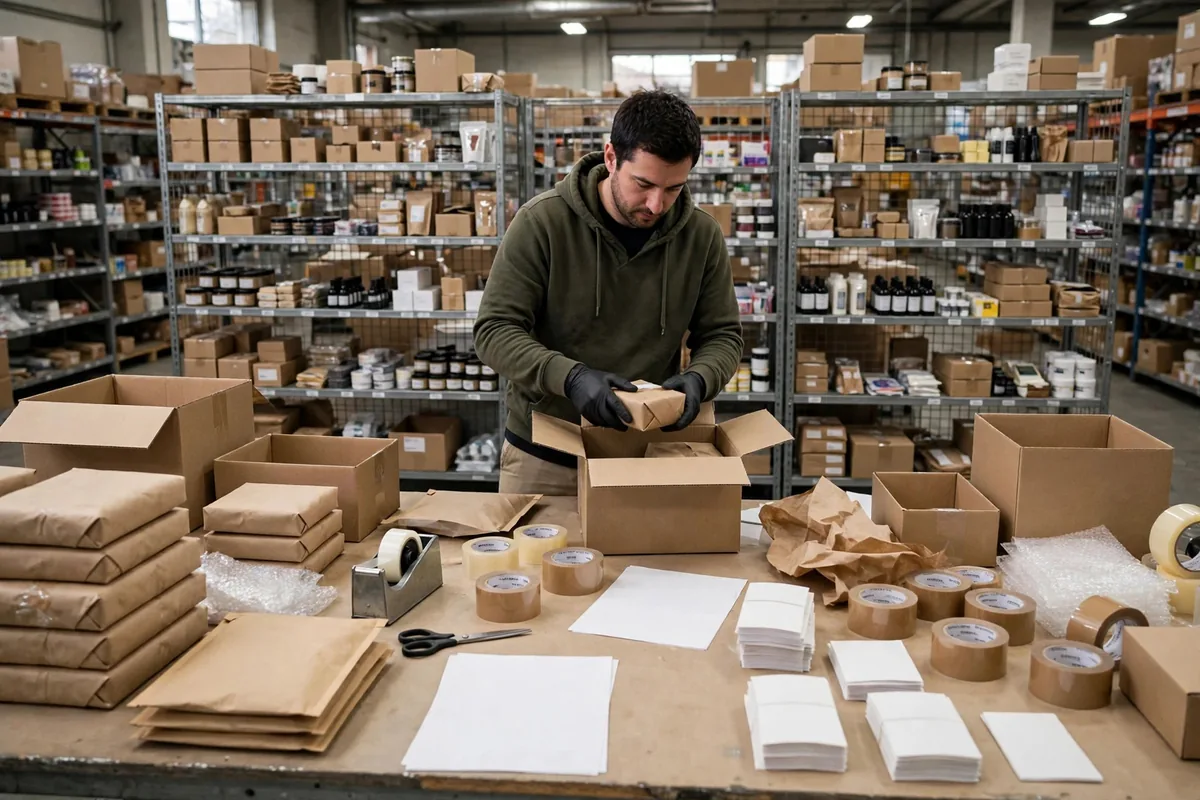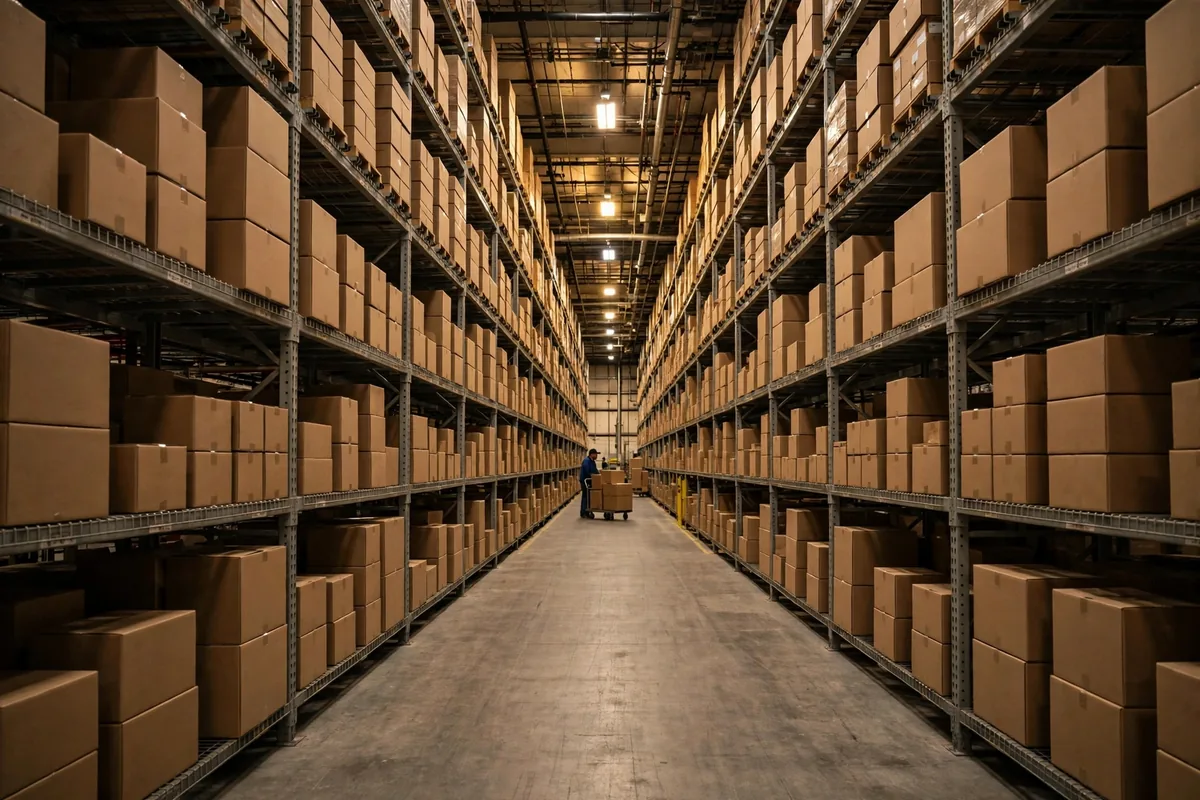
We small warehouses cannot afford to burn money like that — but let me say it first on behalf of Amazon sellers, because the Amazon FBA storage capacity limit is the one squeezing them.
Last September, a client of mine who sells home storage boxes was pulling his hair out. His bestselling storage box was moving 200-plus units a day, but his Amazon FBA storage capacity limit only let him send in two weeks' worth of stock. The goods were sitting in his own warehouse while his listing showed out of stock, and his ranking slid downward day by day. He asked me: it is my own inventory — why won't they let me ship it?
Because of the FBA storage capacity limit. It is measured in cubic feet, not units. Since March 2023, Amazon has folded the old weekly restock limits and quarterly storage limits into a single monthly capacity limit by storage type. Your number depends on your sales history and forecast, your Inventory Performance Index (IPI), and how much space the fulfillment centers actually have. When the network is full, limits get tight — Amazon does this math better than any of us.
How the Amazon FBA Storage Capacity Limit Is Actually Set
Three numbers decide your fate. Memorize them.
First, your IPI score. It runs from 0 to 1,000, updates weekly, and the long-standing public minimum threshold is 400. Fall below it and your capacity gets restricted. IPI measures how healthy your inventory is: how much of it is stranded, how often you stock out, and how much aged stock you are sitting on. Amazon does not want to give scarce warehouse slots to products that do not sell.
Second, the forecast window. In mid-2025, Amazon shortened its forecast coverage period from about six months to about five, and plenty of sellers watched their limits shrink overnight. You did nothing wrong — the rule changed, and a month of capacity vanished with it. That is the most infuriating part, and there is nobody to argue with.
Third, ASIN-level restock limits. They came back in April 2025, which means a single SKU can get capped on its own. Your total capacity might look fine while your bestseller cannot get in. That kind of cap is sneaky — checking your total balance will not find it; you have to check SKU by SKU.
Amazon announces each month's confirmed limit and the next two months' estimates around the third week of the month. The moment those numbers land, start acting. Do not wait until month-end to discover you cannot ship.
Fix Your IPI Before You Chase Extra Capacity
My storage-box client had an IPI in the low 300s. Two batches of 2024 slow movers were squatting in his FBA inventory, barely selling, and they were dragging his score down.
There is no shortcut to fixing IPI, but there is an order to do it in. Start with aged inventory: stock over 22 weeks old carries an inventory utilization surcharge of up to about $1.88 per cubic foot, so sitting on it burns money twice — storage fees plus the surcharge. Discount it, bundle it, or have it sent back to your own warehouse. Anything beats letting it rot in an Amazon facility.
Then look at stockouts. IPI punishes those too — every time a bestseller goes dark, your score takes a hit. Give your scarce capacity to your fastest movers first. Slow products can ship less, or not at all. Do not let slow stock occupy your fast stock's space.
One move people overlook: pull redundant inventory back to your own warehouse or a third-party warehouse. FBA space is prime real estate; slow goods belong in your own cheaper storage. Capacity is a scarce resource — spend it where it moves.
My client spent three weeks clearing two batches of old stock. His IPI climbed from the low 300s back above 400, and his limit loosened the following month. It cost him no extra money — just some dirty, unglamorous work. That is the cheapest way to beat the Amazon FBA storage capacity limit: fix the inventory first, and the limit follows.
Capacity Manager: How to Bid for Space Without Burning Cash
If your IPI is healthy and you still need more room, there is Capacity Manager. It lets you request extra capacity, but it costs money whether you use it or not. Do not treat it as a free lunch.
It works like an auction: you name the maximum reservation fee per cubic foot you are willing to pay for extra capacity, and Amazon assesses fulfillment center space roughly every three to four days, granting requests from the highest bid down. Everyone granted in the same week pays the lowest granted fee that week — not the number you bid.
The good news is that sales offset the fee. For every dollar of sales you generate using the extra capacity, you earn a $0.15 performance credit against the reservation fee. Sell well and the fee mostly disappears; sell poorly and you pay the difference yourself. So before you apply, run the numbers: can this batch turn fast enough to earn its fee back? If not, do not apply — you would be paying to store your own mistake.
One timing rule to remember: you can only request capacity for future months that already have a confirmed or estimated limit announced. The current month is off the table. For peak season, start queuing two months early — Q4 capacity needs to be requested in September or October, because by November the window is already cold.
When the Amazon FBA Storage Capacity Limit Bites, Small Sellers Still Have Options
Here is the counterintuitive part: getting capped is sometimes a favor in disguise, because Amazon is forcing you to manage inventory properly. I have seen sellers with generous limits spread stock everywhere and tie all their cash up in inventory; once the limit tightened, they were forced to improve turnover — and ended up healthier for it.
A few scrappy moves, all tested by the small sellers in my warehouse.
First, split your fulfillment. Stock that cannot get into FBA goes to a third-party warehouse or your own small warehouse first, then ships direct to customers or tops up FBA later. It costs a bit more per order than pure FBA, but you stay in stock, you keep your ranking, and staying in stock during peak season is where the money is.
Second, slim down your packaging. The limit is measured in cubic feet, so every centimeter you shave off a box means more units fit in the same capacity. Cut over-packaging, swap printed manuals for a QR code — every bit of space you free is capacity you did not have to pay for.
Third, watch Q4 storage fees. Standard-size storage in Q4 runs roughly $0.78 to $2.40 per cubic foot — check Amazon's latest fee schedule for the exact rates, since they change. Peak-season stock is expensive to hold, so build the storage cost into your stocking plan instead of staring at sales alone.
Fourth, know your ceiling. Individual seller accounts are capped at 15 cubic feet. If you are just starting out on an individual account, do not plan on stacking volume through FBA — get one product selling, get your IPI above 400, and then think about upgrading to a professional account.
At the end of the day, the FBA storage capacity limit game rewards the healthiest inventory, not the loudest complaint. Keep your IPI up, clear the slow movers, and spend reservation fees only where they earn their keep, and the capacity comes back. Amazon's warehouses do not care who you are — they only read the numbers.
Small warehouses have their own way of surviving: big sellers fight over capacity, we fight over turnover. Keep the goods moving fast, and even the tightest limit cannot starve you.
By Xiao Ma, Small Warehouse Owner