
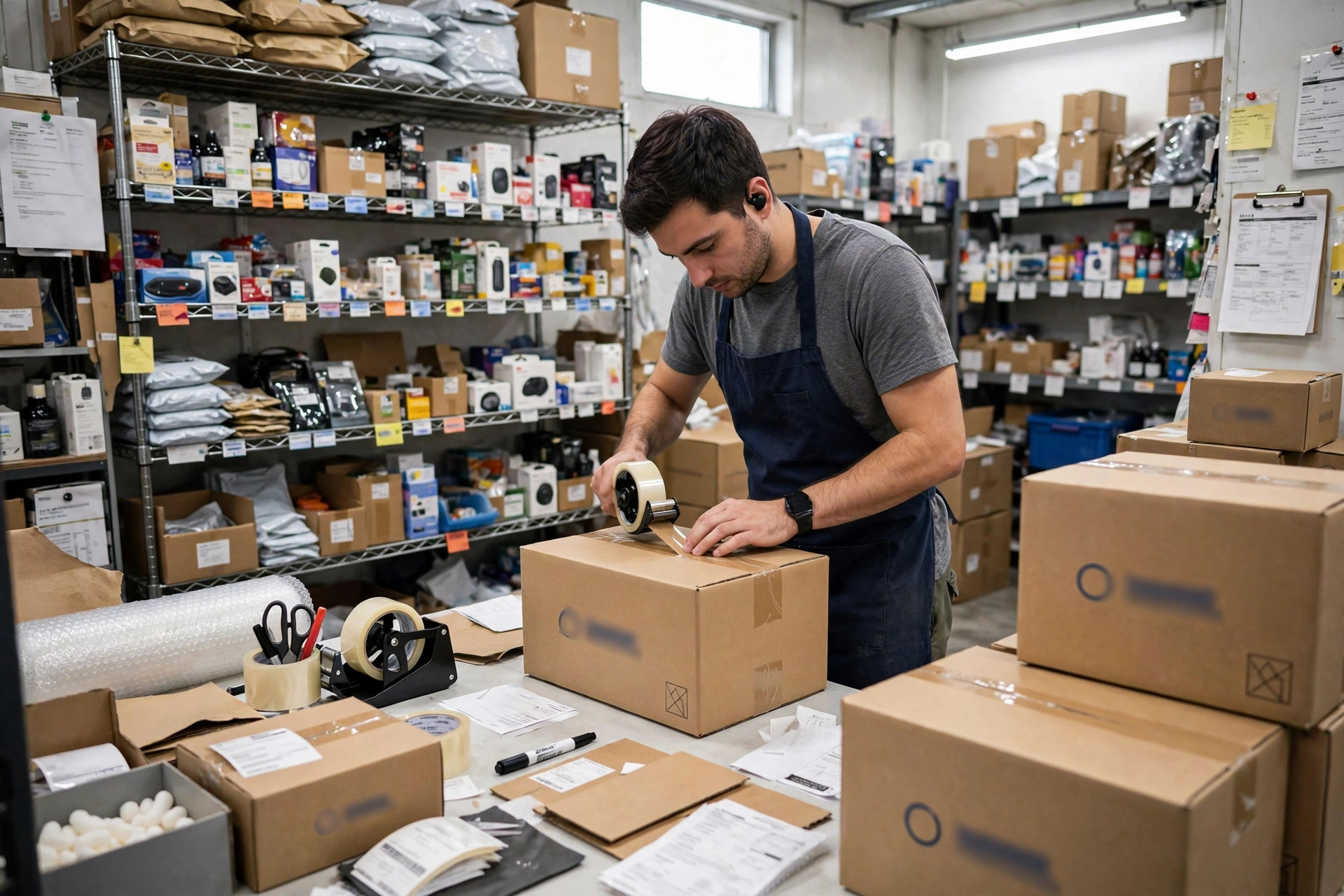
Amazon changed the rules again. I've said that fifty times in five years of selling, but this one's for anyone still selling unbranded white-label stuff on Amazon in 2026: you're basically working for someone else.
My first store died exactly this way. Back in 2022, my silicone storage box was doing over $40K a month — until six hijackers showed up within a month, stealing my images, rewriting my title, and dumping their bad reviews on me. I opened a case. Support replied: "Please provide proof you own the brand." Proof? I didn't even have a trademark. That product's Buy Box share dropped to 41%. Dead.
Enroll before you launch. A trademark is a seller's ID card. Below: the full playbook from enrolling my second brand from scratch.
What Brand Registry Actually Asks For: The Checklist
First, the headline: Brand Registry itself is free, but the ticket in is a trademark, and trademarks cost money.
Here's the enrollment checklist, in order:
| Document | Requirement | Notes |
|---|---|---|
| Trademark | Registered; pending accepted in some cases (check Amazon's latest policy). Word mark or design mark containing text | US marketplace = USPTO mark; a pure picture logo with no text won't cut it |
| Brand name | Must match the trademark text character for character | "MyBrand" and "My Brand Co" are two different brands to Amazon |
| Logo + product photos | Brand name permanently affixed to product or packaging (printed, embossed, molded) | Real photos! Mockups and renders get rejected — and can trigger an abuse review |
| Categories, manufacturing/selling countries | List honestly | Fill in as-is |
A few of these deserve unpacking — they're where sellers actually get stuck:
First, the trademark bar — whether a "pending" application works is a coin flip. Amazon's official line is a registered trademark, or "in some cases" a pending application. Some say filings through IP Accelerator (Amazon's vetted law-firm network) can enroll early. My advice: plan as if you need the certificate. A USPTO trademark typically takes 12–18 months from filing to registration (check the USPTO site for current timelines). Filing after your product blows up is too late.
Second, the thing that kills the most applications isn't the trademark — it's the email. Amazon sends a one-time code to the attorney/correspondent email on file with the USPTO. Can't open that inbox? You're stuck. Before you apply, log into the USPTO's TSDR system and confirm you can access that address. Five minutes saves three weeks.
Third, your brand has to live permanently on the product or packaging. Slapping a temporary sticker on for the photo? Rejected. Amazon wants printing, embossing, molded-in marks — branding you can't peel off. Which is exactly why enrollment and your warehouse operation are tied together. More on that below.
Approval timeline: expect 2–4 weeks. My second brand (a pet hair remover) was submitted in October 2024 and approved on day 16.
What Enrollment Actually Unlocks: Tested in the Wild
The moment you're approved, your listings finally become yours. Before that, they're everybody's — anyone could edit them.
| Perk | What it does | My verdict |
|---|---|---|
| A+ Content / Brand Story | Rich image modules, video, comparison charts on detail pages | The most valuable one — conversion lifts you can see |
| Brand Store | Free multi-page branded storefront | Great landing page, pairs well with off-Amazon traffic |
| Sponsored Brands | Headline ads with your logo | Mandatory for defending your brand keywords |
| Vine program | Invited reviewers, up to 30 reviews | New-launch cheat code; roughly $0–$200 per parent ASIN (check Amazon's latest policy) |
| Brand Analytics | Search-term and shopper demographic data | Feeds keyword and inventory planning |
| Report a Violation | One-click IP infringement reporting | Your main weapon against hijackers |
| Transparency | Unique serialization code per unit, verified by Amazon | Separate enrollment; needs a registered trademark + GTIN; about $0.01–$0.05 per code (check Amazon's latest policy) |
| Project Zero | Self-service counterfeit takedowns + automated blocking | High bar: registered mark + 90%+ violation-report acceptance over the prior 6 months |
My pet hair remover listing converted at 18.3% before enrollment. Thirty days after adding A+ Content (lifestyle images plus a comparison chart), conversion hit 24.1%. Ad ACoS dropped from 31% to 24%. That's from my own Seller Central — A+ is the single highest-ROI perk enrollment unlocks.
Vine deserves a mention too. Zero reviews plus ads is just burning money. My SOP: enroll, join Vine, get 30 reviews as a base, then turn on auto campaigns. Saves at least 5 points of ACoS.
Hijacker Protection: A Cold Splash of Water First, Then the Playbook
Here's the counterintuitive part: Brand Registry does not stop all hijackers. Don't mythologize it.
A lot of sellers think enrollment = hijackers vanish automatically. Wrong. Brand Registry hands you reporting weapons, not an automatic shield. And the part that stings: if a hijacker is selling genuine product (say, sourced from your distributor and resold), Amazon won't remove them — legitimate resale isn't infringement.
So what does enrollment actually stop? Counterfeits, stolen images, and unauthorized use of your brand name. My case from May 2025: my new silicone storage box (enrolled before launch this time) got hit by 4 hijackers in its third week. They lifted my main image and undercut me by $2. Buy Box share fell to 62%.
My three-step response:
- Report a Violation for trademark infringement — screenshots of the stolen main image plus proof their product carried no branding, all in one submission. Amazon processes IP complaints far faster than generic cases.
- Test buys. Order one unit. Fake or unbranded on arrival? Photograph it and file again as counterfeit. Kill shot against the fakes.
- Transparency codes on higher-ticket SKUs — every unit gets a unique code, verified by Amazon at FBA receiving. Hijackers can't even check their inventory in.
Nine days, three of four hijackers gone. The fourth sold genuine product — accepted, can't remove legitimate resale, but they stopped stealing my images, and I won the price war because A+ Content and a Brand Story can't be copied. Buy Box share recovered from 62% to 94% that week, margins came back.
The Warehouse Side: Enrollment Isn't a One-Person Job
Remember the requirement: your brand must be permanently on the product or packaging. So your factory and warehouse moves happen first — otherwise you can't even assemble the application:
- Mark the product itself. Molded lettering, laser engraving, printed logos — done at production. A sticker slapped on afterward gets you a rejection letter.
- Print the packaging. Color boxes, hang tags, manuals all carry the brand name. My SOP now: confirm logo placement and size on packaging at the sampling stage, photograph it, archive it — those photos go straight into the enrollment application.
- FNSKU labeling. Every unit labeled before FBA, one consistent brand standard — inconsistent packaging gets flagged at check-in. Always ship stickered, never commingled: commingled inventory mixes your units with other sellers' identical products, and counterfeit complaints become your mess.
- Transparency codes. If enrolled, every unit gets its unique code, applied at the factory or warehouse and scan-verified before shipping. Miss one unit and that unit stalls at FBA receiving. At ~$0.01–$0.05 per code (check Amazon's latest policy), run the math per SKU first.
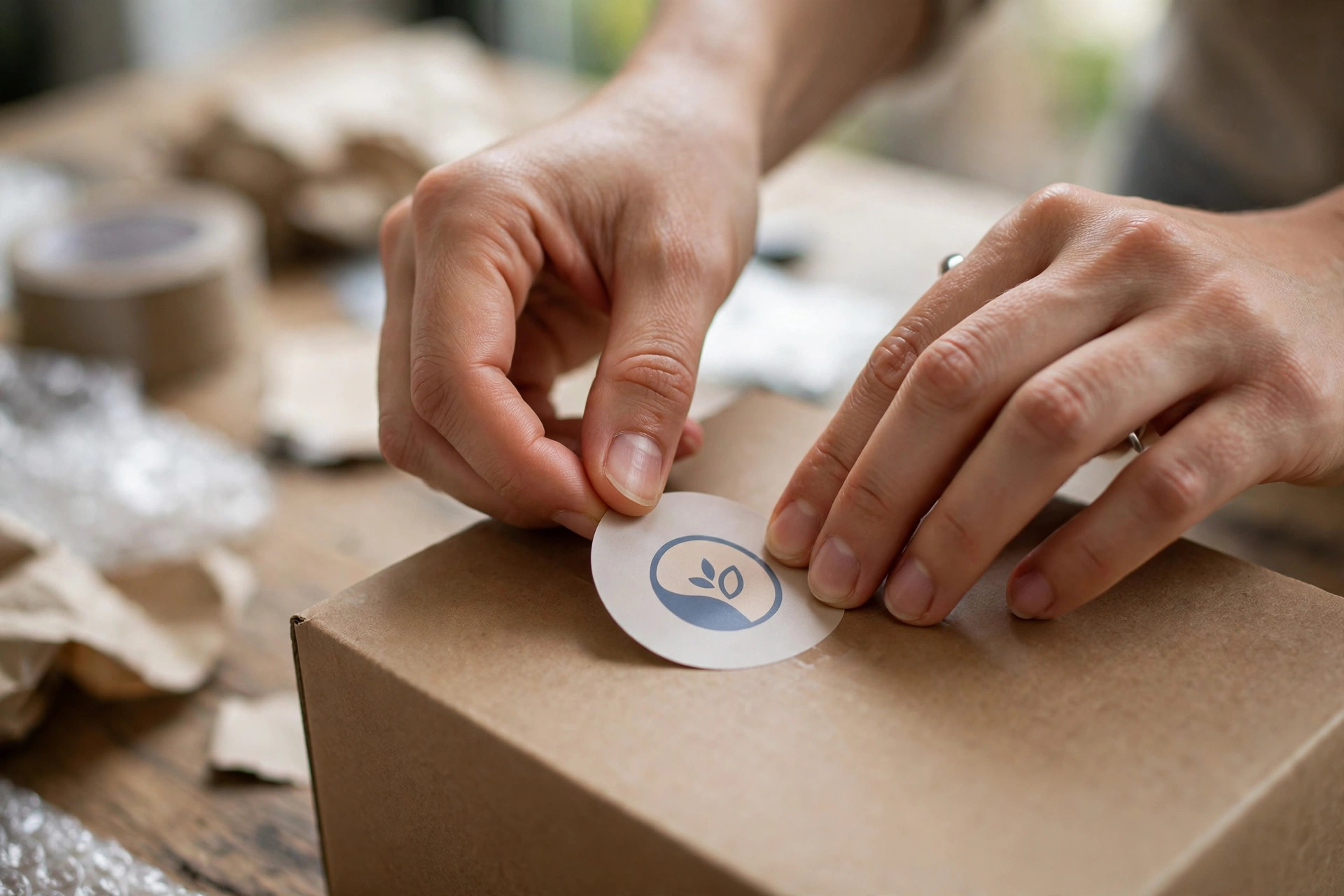
Bottom line: preparing these materials is really a supply-chain compliance audit. One "good enough" link and the review sends you right back.
Five Traps to Avoid
- One space off and you're done. The brand name on your application must exactly match the trademark certificate — case, spaces, hyphens, all of it.
- A picture-only logo can't enroll. The mark must be a word mark or a design mark containing text. A graphic with no words? Add text and refile.
- Confirm the USPTO email works first. The verification code only goes to that address — no rerouting. This single issue kills more applications than anything else.
- Don't submit mockups as product photos. Best case a rejection, worst case an abuse-behavior review. Photograph real production units.
- Enrollment is just the ticket in. A+ pages must be built, Vine joined, Transparency applied for separately — every perk has to be unlocked one by one.
The honest truth: trademark plus enrollment costs money up front (filing fees, legal fees) and time (waiting on the certificate, waiting on review). Plenty of small sellers think "I'll do it once I'm big." That was my first store's thinking. It cost me a product doing $40K a month. On Amazon, Brand Registry isn't optional — it's the price of admission. Enroll first, launch second. Don't get the order wrong.
This one, I've personally tested and it works.
By Ah K, E-commerce Seller (5 yrs)





