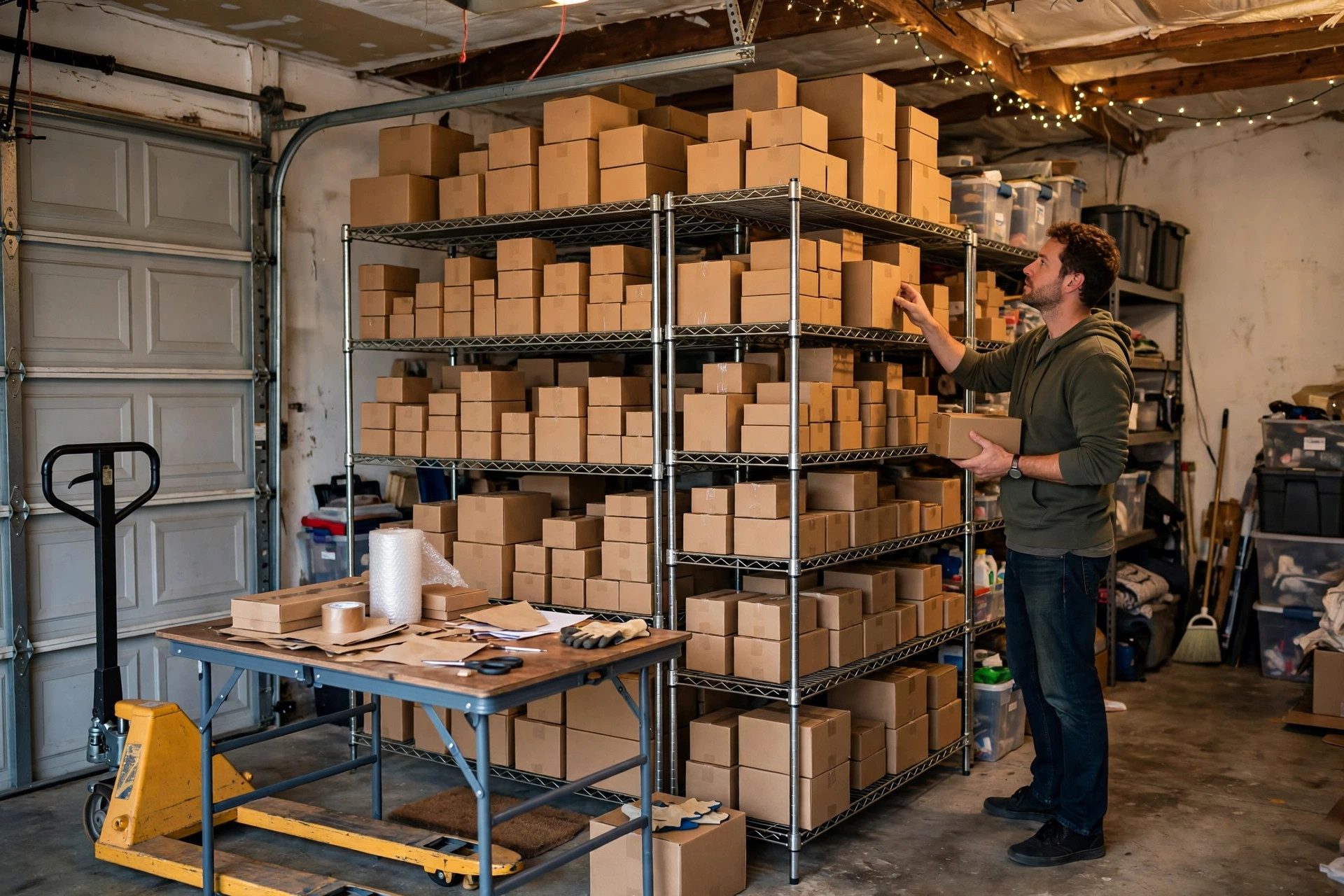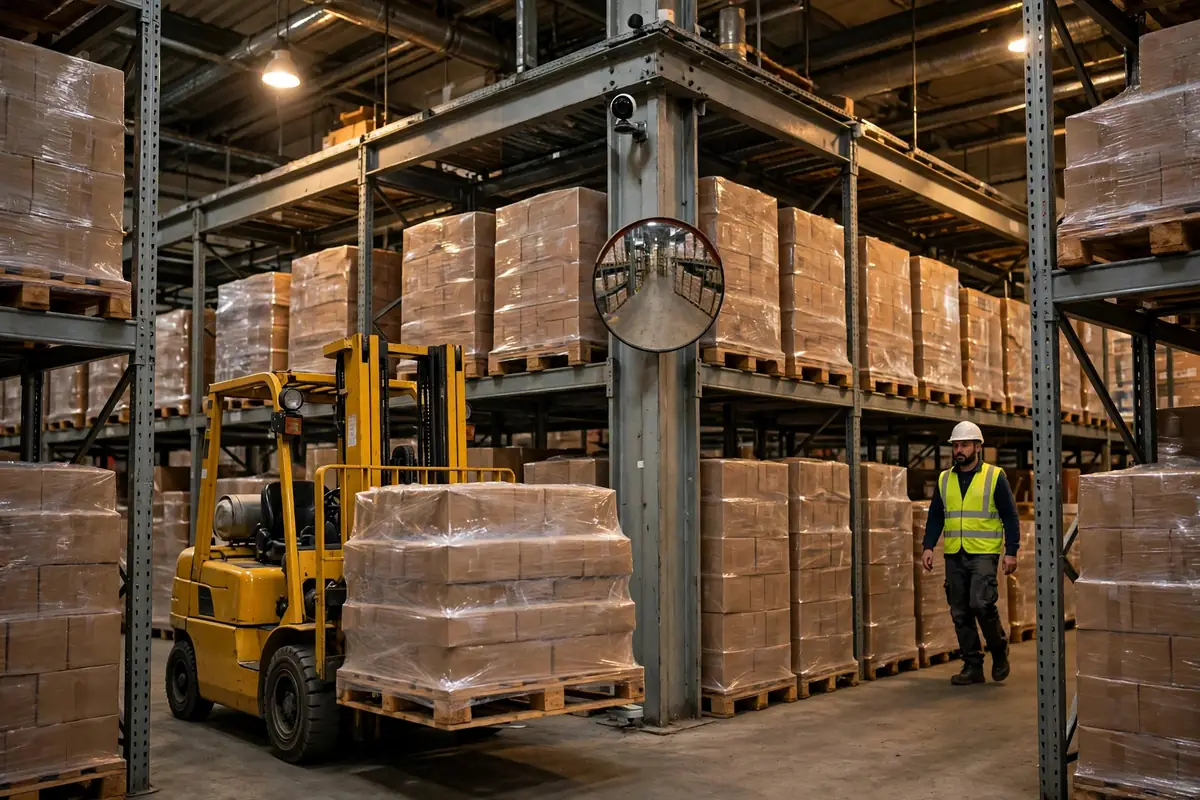
It was 8 a.m. I had just picked up my soy milk when my phone buzzed: an Amazon account health performance warning, sitting in the seller's inbox like an unpaid bill. We run a small warehouse — 3,000 square meters, a handful of people — and we cannot afford to burn money like this. If the account gets restricted, goods stop moving, and the thousands of units sitting on our racks just stare back at us. My first thought was not about how to write an appeal letter. It was: don't panic, check the warehouse first. The root cause is probably in there.
This is not the first time I have seen that email. After a few years running a small warehouse, I have noticed a pattern: when sellers get a performance notice, they rush to dig through customer service chats and polish their appeal wording, and almost nobody checks the warehouse first. But late shipments, wrong items, damaged packaging — every one of those demerits grows in the warehouse. When an Amazon account health performance warning lands, the warehouse is the closest place to the truth.
Account Health Warning? Before You Reply, Check These Three Spots in the Warehouse
Our warehouse now has a fixed routine for performance notices, and the order matters. Check these three things before touching the appeal letter.
Start with shipping speed. Right before peak season in 2025, a seller we had worked with for two years suddenly got a performance notice for late shipments. He was ready to stay up all night writing an appeal. I told him to hold on, and we matched our outbound records against the courier pickup times: for three days that week, the pickup truck had arrived more than two hours late, and a dozen orders had their actual ship time pushed to the next day. The root cause was not slow picking or slow customer replies. Nobody was watching the pickup. So we came up with a dirt-cheap fix: every day at 4 p.m., whoever is on duty posts a photo in the group chat showing whether the pickup truck has arrived. If it hasn't, we call. If calling doesn't work, we push part of the day's orders through a courier channel with an earlier cutoff. Glamorous it is not, but late-shipment blame has not landed on us since.
Second, wrong and missing items. A wrong item is the most unfair penalty in the business: one picking mistake in the warehouse becomes a bad review and a performance hit for the seller. We learned this the hard way in the summer of 2024, when a seller stocked the same mug in two colors and our picker sorted them by eye. Three orders went out wrong, returns and bad reviews followed, and the seller yelled at me on the phone. Since then we have had a hard rule: lookalike products live at least two racks apart, the pick list prints the color in big letters, and the person double-checking looks at the physical item, not the system screen. It sounds dumb. But a small warehouse cannot afford the fancy verification features of a big WMS, so dumb rules are our WMS.
Third, packaging. When a buyer opens a damaged parcel, they blame the seller first, not the courier. Big warehouses have standard packing procedures. We have one sentence: pack everything as if it will be dropped. Fragile goods get an extra layer of bubble wrap, heavy goods get a thicker box, and the tape goes around one more time. It costs a few extra cents per order, but one damaged return — shipping plus refund — costs enough to cover tape for hundreds of orders.
Our Small-Warehouse Self-Check List
The scariest thing about an Amazon account health performance warning is not the problem itself. It is not knowing where the problem is. We keep a self-check list taped to the wall now, and when a notice arrives we work through it item by item before deciding whether to write an appeal at all:
| Self-check item | How to check | What "pass" looks like |
|---|---|---|
| Late orders | Match order numbers against outbound and pickup times | Everything handed to the courier before cutoff |
| Wrong or missing items | Sample this week's mispick records and check sheets | Lookalikes stored apart, checker looks at the item |
| Damaged packaging | Look at the damage share of return reasons | Fragile and heavy goods reinforced, tape wrapped extra |
| Wrong inventory counts | Compare system stock against a physical count | Hot sellers counted weekly, differences fixed same day |
| Wrong labels | Sample FBA labels and carton markings | Photo kept after labeling, wrong labels redone same day |
Every line on that list was paid for with a real mistake. The inventory line cost us dearly at the end of 2024: the system said we had stock, the physical count was short by more than twenty units, and the seller took orders based on the system numbers. The result was overselling, cancellations, and a performance notice in the inbox. Since then, hot-selling products get counted every week without exception, and the person counting is never the person keeping the books. Two people watching each other is how numbers stay honest.
The label line has its own scar tissue. Early in 2025, a batch of FBA labels was printed with the wrong batch code, and the whole shipment was rejected at the Amazon warehouse. It took more than ten days back and forth, the seller went out of stock for a week, and the performance notice arrived right on schedule. Our new rule since then: photograph every label after it is applied, keep the photos in a phone album by date, and whoever applied the label owns it. A wrong label gets redone the same day, never the next. Photographing takes ten seconds per order, and it has saved us twice — once when a seller accused us of mislabeling and the photos proved us innocent, and once when we really had mislabeled and the photos caught it the same day. A small warehouse cannot rely on automatic system checks, so photos plus human eyes are our backup. Crude, but it works.
Here is the counterintuitive part: most sellers treat a performance warning as a customer service and operations problem, with the warehouse just shipping boxes. But an appeal letter can be beautifully written and still fail, because what Amazon looks at is what you changed, not what you said. If shipments are still late and items still wrong, one approved appeal just means the next notice arrives faster. Time spent polishing the appeal is better spent plugging the holes in the warehouse first. An appeal is hindsight; the warehouse is foresight.
The Small-Warehouse Math: What One Account Health Restriction Week Costs
Let's do the math, and note this is a hypothetical worked example included only to show the scale: suppose our warehouse ships 6,000 orders a month for a seller, at an average value of 25 dollars per order. One restricted week means roughly 1,500 orders that cannot ship, worth about 37,500 dollars. Add rent that still has to be paid, wages that still have to be paid, and goods occupying rack space while they sit there, and a single lost week costs more than several months of our rent. That is the moment you understand a performance warning is not an email. It is a bill aimed straight at your wallet.
Now run the prevention math in the other direction: half an hour a day checking pickups and double-checks, one hour a week counting hot sellers, a few extra cents of packaging per order. For a month, all of that together costs less than a fraction of one restricted day. That is how a small warehouse survives: big companies buy safety nets with systems and processes; we build ours from crude fixes and stubborn rules. Their playbook does not fit us, and we could not afford it anyway. But if the basic moves are done properly, a performance notice is nowhere near as scary as it looks.
One last suggestion for fellow small warehouses and sellers: when a performance notice arrives, take a breath, run the warehouse checklist, and only then write the appeal. In the letter, don't just say sorry. Write down what you changed, when you changed it, and how you will stop it happening again, one item at a time, with photos and records from the warehouse attached. That beats any clever wording. The account is the seller's lifeline, and the warehouse is the account's lifeline. A small warehouse has its own way of surviving, and that way is simple: don't wait for trouble to start fixing things.
By Xiao Ma, Small Warehouse Owner