Let's start with money — because in replenishment, every decision is a money decision.
Take a warehouse with 2,000 SKUs. One of your A-list SKUs sells 5,000 units a month at $10 a unit with a 30% margin. One day of stockout on that single SKU costs you roughly $500 in lost margin. Stretch that to 20 near-stockout days a year and you've quietly burned $10,000 in margin on one SKU alone. Now flip it: the same warehouse sits on $150,000 of slow-moving inventory. At an 8% annual cost of capital — loans, rent, the opportunity cost of cash tied up on shelves — that's $12,000 a year evaporating while you sleep.
Both sides leak money. Stockouts leak visible orders; overstock leaks invisible capital. Replenishment is the business of finding the balance point between the two leaks. AI replenishment claims it can find that point better than your planners can.
How AI Replenishment Actually Works
Strip away the buzzword and the mechanics are unglamorous — three steps:
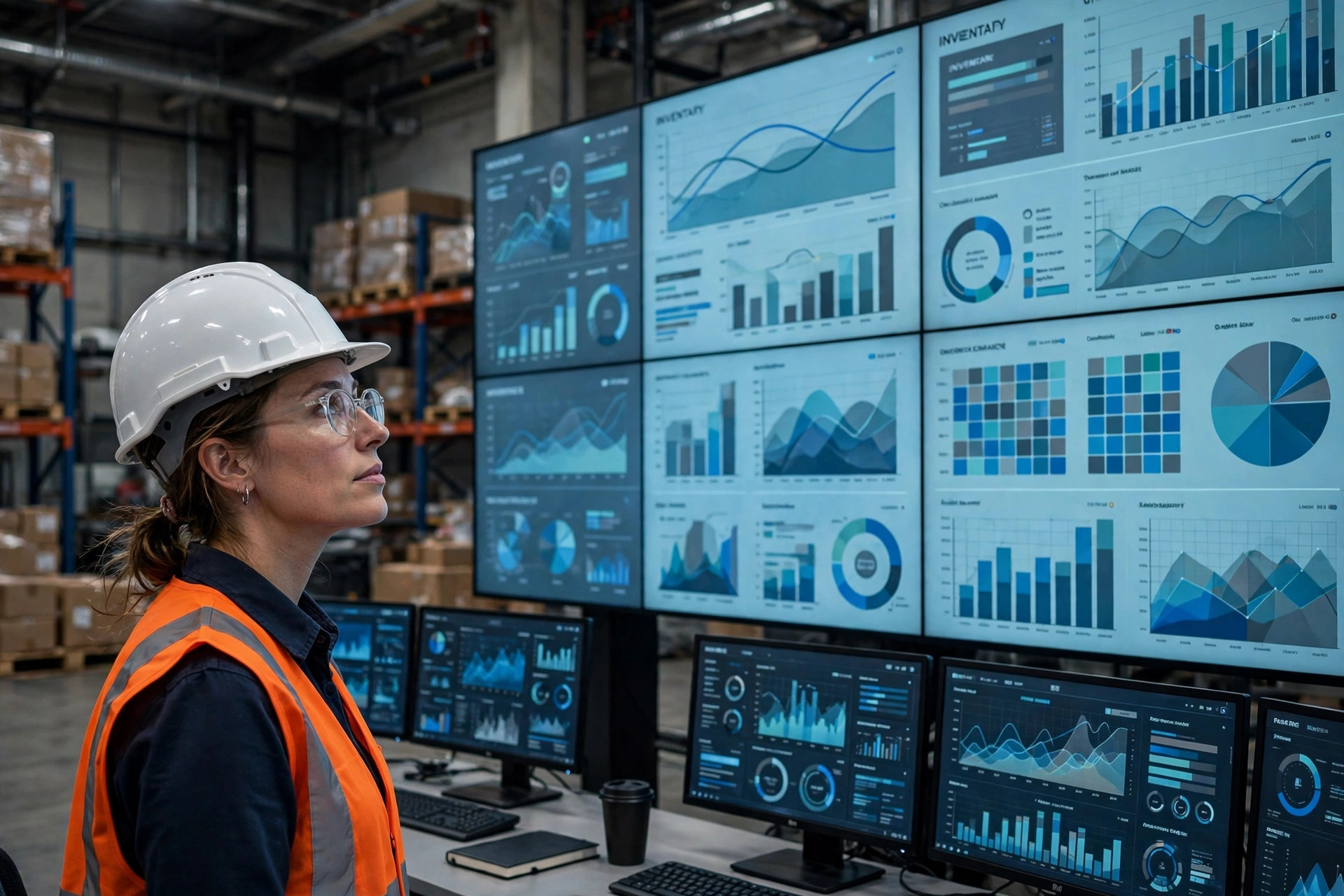
Step one, demand forecasting. The model ingests historical sales, seasonality, promotion calendars, even weather and holidays, and predicts daily unit sales per SKU for the coming weeks. Everything downstream depends on this input. Garbage forecast in, garbage purchase order out.
Step two, dynamic safety stock. The old way is a fixed rule of thumb ("keep 15 days of cover"). AI replenishment recalculates safety stock per SKU based on observed demand volatility — volatile SKUs get more buffer, stable ones get less. One-size-fits-all becomes one-SKU-one-policy.
Step three, in-transit netting. Stock already ordered and on the way is automatically deducted from the replenishment need, killing the classic blunder of "3,000 units are on a truck and the system just ordered 3,000 more."
Sounds clean. But before signing a contract, look at where the money actually goes.
The Cost Structure of AI Replenishment: Three Buckets, None Optional
I split the total cost of AI replenishment into three parts:
1. Software subscription. Most AI replenishment tools are SaaS, billed annually, with pricing that steps up by SKU count and number of warehouses. Check the vendor's latest published pricing — I won't quote figures that change quarterly.
2. Implementation. ERP/WMS integration, model parameter tuning, and a parallel-run period where the AI's recommendations are checked against your planners' orders before going live. This is chronically underestimated: non-standard interfaces and inconsistent data dictionaries routinely drag implementations out by an extra month or two. Get a capped implementation fee in writing.
3. Data cleanup labor. The bucket everyone forgets and the one that hurts most. Models feed on history, and most companies' history is dirty — promotion-period sales recorded as normal demand, returns never stripped out, SKU codes changed twice in three years. A realistic rule of thumb: about a third of the total project effort goes into making the data usable, either as internal overtime or outsourced hours. Skip this and the model's first month of purchase recommendations will be fiction — and you'll blame the software when the disease was in your data.
Add all three and you get TCO, the total cost of ownership. Compare it against the money saved. That comparison is the only decision method I trust.
The Numbers: Manual Restocking vs AI Replenishment
A real before-and-after. In 2024 I worked with a baby-products e-commerce warehouse in eastern China — about 30,000 orders a month, 1,800 SKUs. Through June 2024, two planners did everything manually: Excel, historical averages, gut-feel safety stock. In July they switched on an AI replenishment system and ran it for six months. Here's the side-by-side:
| Metric | Manual (H1 2024) | AI replenishment (H2 2024) |
|---|---|---|
| Forecast accuracy (A-list SKUs) | ~65% (planners' own, generous methodology) | 80-85% (system methodology, stricter) |
| Stockout rate | 4.2% | 2.1% |
| Dead stock (unsold 90+ days) | ~$85,000 | ~$50,000 |
| Planning headcount | 2 full-time planners | 1 planner + part-time review |
| Manual overrides | — | ~10-15 SKUs/week during promo season |
Real numbers, real conclusion: AI replenishment halved the stockout rate and freed roughly $35,000 of trapped inventory capital. But look at the last row — during promotions, a planner still had to override the system on a dozen-plus SKUs every week. You don't get to fire the humans.
The counter-case: early 2025, a cross-border auto-parts client with 6,000+ SKUs, 70% of them long-tail items selling fewer than 10 units a month. The owner asked whether to adopt AI replenishment. I ran the numbers and told him not to. Sparse history means the model's accuracy on long-tail SKUs is worse than an experienced planner's judgment; and the stockout losses and trapped capital on low-velocity SKUs are too small to cover the subscription. That money would have been wasted.
The Uncomfortable Truth: Where AI Replenishment Shines Least
Here's what vendors won't put on the slide: AI replenishment forecasts best on stable, mature SKUs — exactly the SKUs your planners were already getting roughly right. The SKUs that actually keep planners up at night fall into three buckets the model handles poorly:
- Promo-season blockbusters. There's no "this year's campaign" in the training data; the model extrapolates from last year's promo lift and routinely misses by a factor of two. A planner who knows this year's ad budget tripled will beat the model. The model doesn't know.
- New products. Zero history; the model borrows from "similar SKUs" and it's a coin flip. New launches need human eyes for the first three months.
- Highly seasonal, volatile SKUs. Sunscreen, hand warmers — the model is consistently half a step behind at seasonal inflection points.
The right posture is tiered: let the AI run the stable SKUs on autopilot, keep humans on promos, new launches, and high-volatility items. Don't expect one model to cover everything, and don't throw the system out because it's wrong on SKUs it was never going to get right. Replenishment is tiered management, not a single switch.
A Calculable Conclusion on AI Replenishment
So — worth it or not? I don't do vibes; I do formulas. Compute annual benefit first:
Annual benefit = stockout losses avoided + carrying-cost savings on reduced overstock + labor savings
- Stockout losses avoided = fewer stockout days × daily margin loss (measure on your own A-list SKUs)
- Carrying-cost savings = reduction in trapped inventory × cost of capital (use 6-10%)
- Labor savings = planners freed × fully loaded salary
Then annual TCO = subscription + amortized implementation (spread over 3 years) + data maintenance labor.
Decision rule: proceed only if annual benefit ÷ annual TCO ≥ 2. Why 2 and not 1? Because benefit estimates are always optimistic — vendor case studies cherry-pick. A 2x margin is your safety buffer. Between 1x and 2x, pilot on 200 A-list SKUs for three months and decide on real data.
Who's most likely to clear the bar? Three traits: a high share of stable A-list SKUs (the model needs something to chew on), high cost of stockout (high-margin or time-sensitive categories), and enough SKUs that humans can't keep up anymore (roughly 1,500+). Hit two of three and it's worth a serious pilot conversation. Hit none, and keep the money in your pocket.
By Lao Zhou, Logistics Cost Analyst