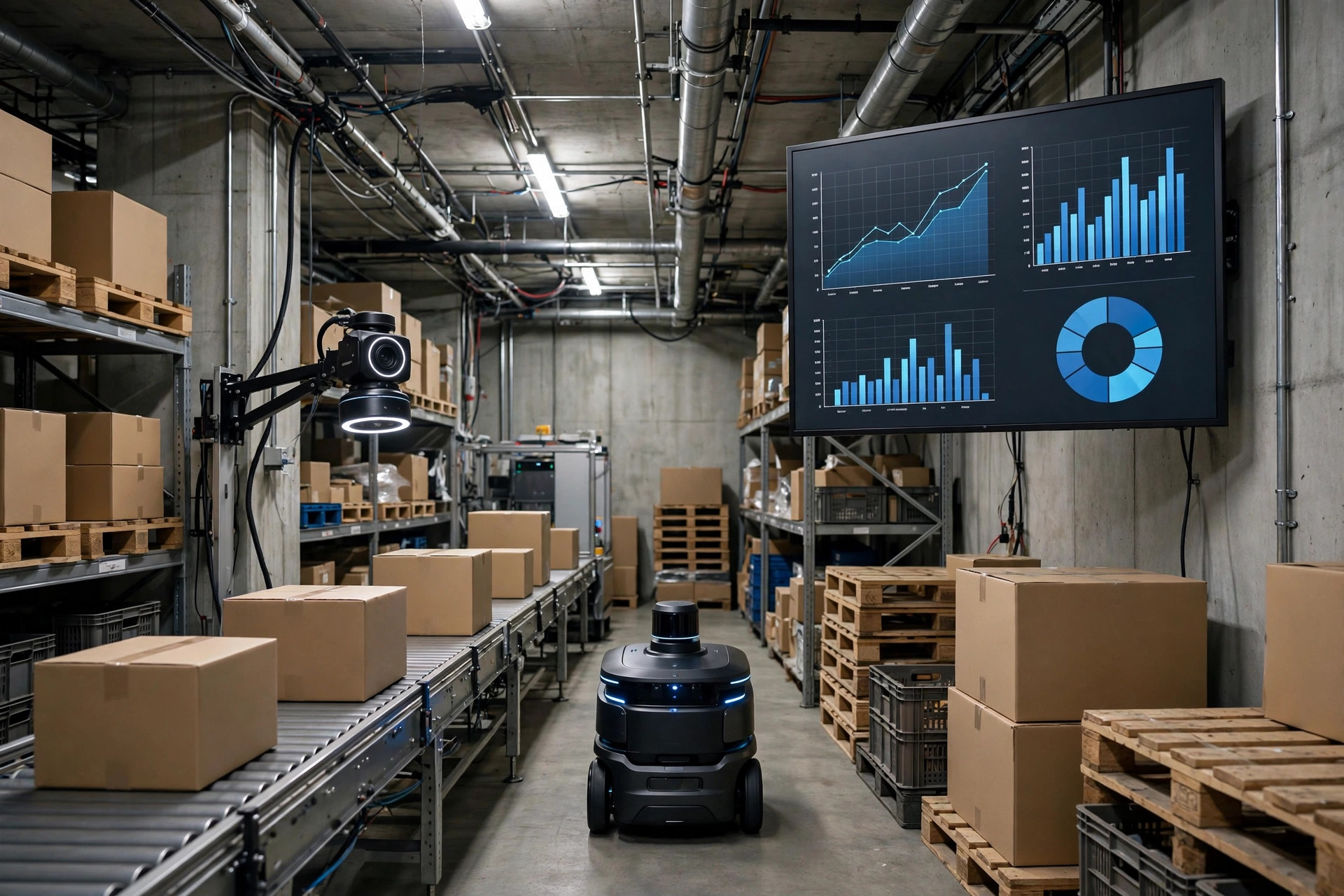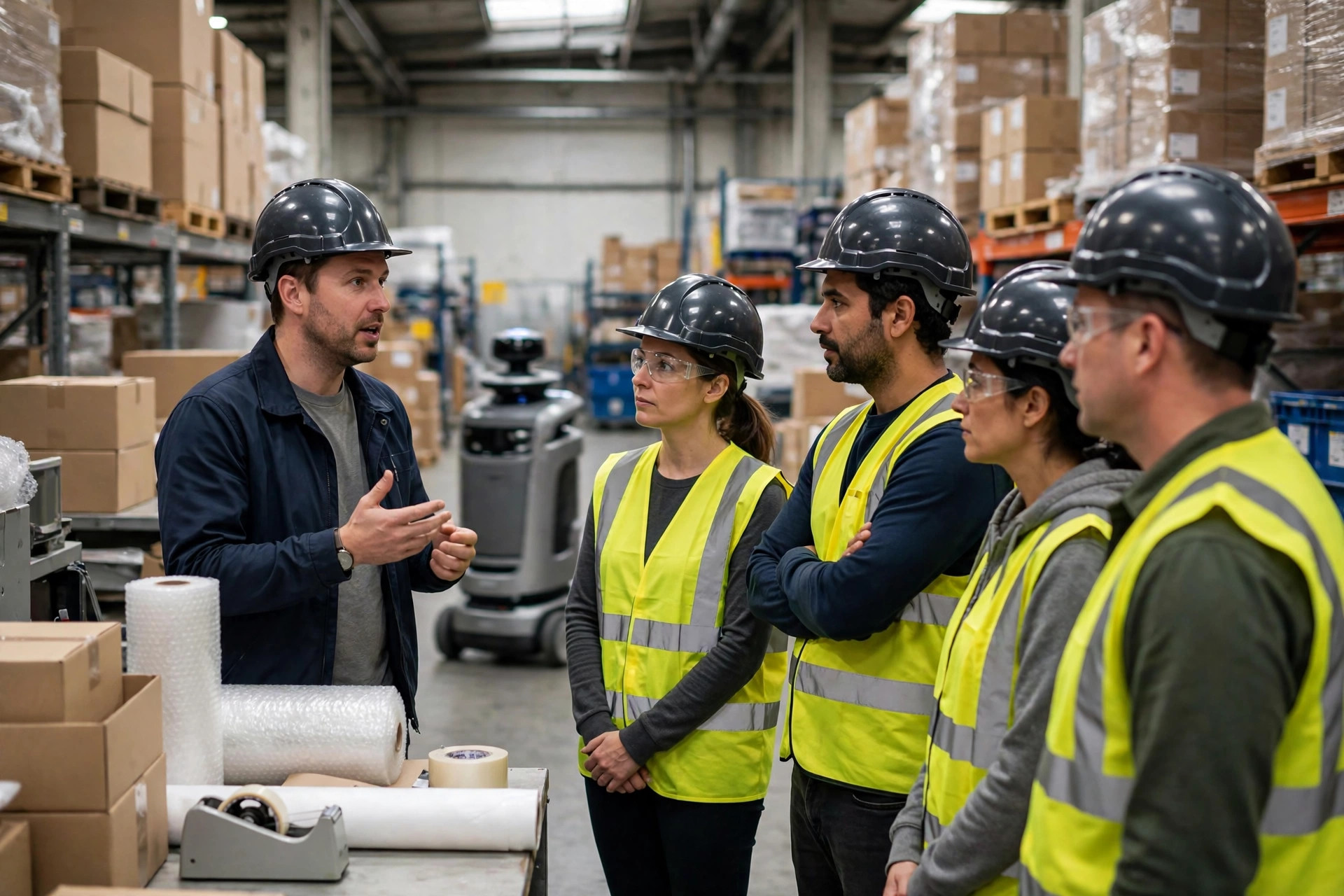
Last year I helped a 3PL roll out a vision-based verification system. In week one of the pilot, Lao Chen — fourteen years on the pick floor, crew lead, mentor to half his twenty-person team — pulled me aside between the racks. "Be straight with me," he said. "Is this camera going to count us out of our jobs?"
That one sentence told me everything. The hardest part of this project wasn't the algorithm. It was the twenty people on that floor. A year later the error rate had fallen from 8 per thousand to 2 per thousand, and Lao Chen had become the company's "AI coach" for the rollout. Looking back, winning over the front line came down to three moves, in order: understand what they're actually afraid of, train at their pace, and make the incentives real. The order matters.
Name the four fears before you touch anything
Skip the kickoff rally. Start with one-on-one conversations, and you'll find it's never one fear — it's four.
The first is job loss. The most direct, the hardest to say out loud. Lao Chen's math was simple: "The machine does 2,000 units a day, I do 800. Will the boss keep me after New Year?" The second is humiliation: a fourteen-year veteran fumbling a new interface in front of younger coworkers, finger shaking over the wrong button. The third is surveillance: cameras, algorithms, dashboards read as "the boss installed a pair of eyes on me." The fourth is the pay formula: piece rates built over years, and nobody knows what the new counting rules will do to take-home pay.
No amount of "AI is here to help you" dissolves these, because every one of them is about real money. The right posture is acknowledge, then dismantle one by one. Job loss gets answered with a concrete redeployment plan, not a slogan. Fear of looking foolish gets a three-month grace period in writing. Surveillance fears get the dashboard permission rules on paper — who sees what level of data. Pay fears get the new piece-rate formula published a month before it takes effect, with a trial run. Dismantle fears individually. Never bundle them into one promise.
Where you have these conversations matters too. Don't summon people to a conference room — that's an interrogation. Walk their pick path with them and talk on the move. People tell the truth on their own turf. Lao Chen's question came out beside the racking; in a meeting room he wouldn't have said a word.
Training: ditch the classroom
The classic corporate AI training goes like this: conference room, big projector, two hours of slides from IT, veterans scrolling their phones. That's not training. That's theater.
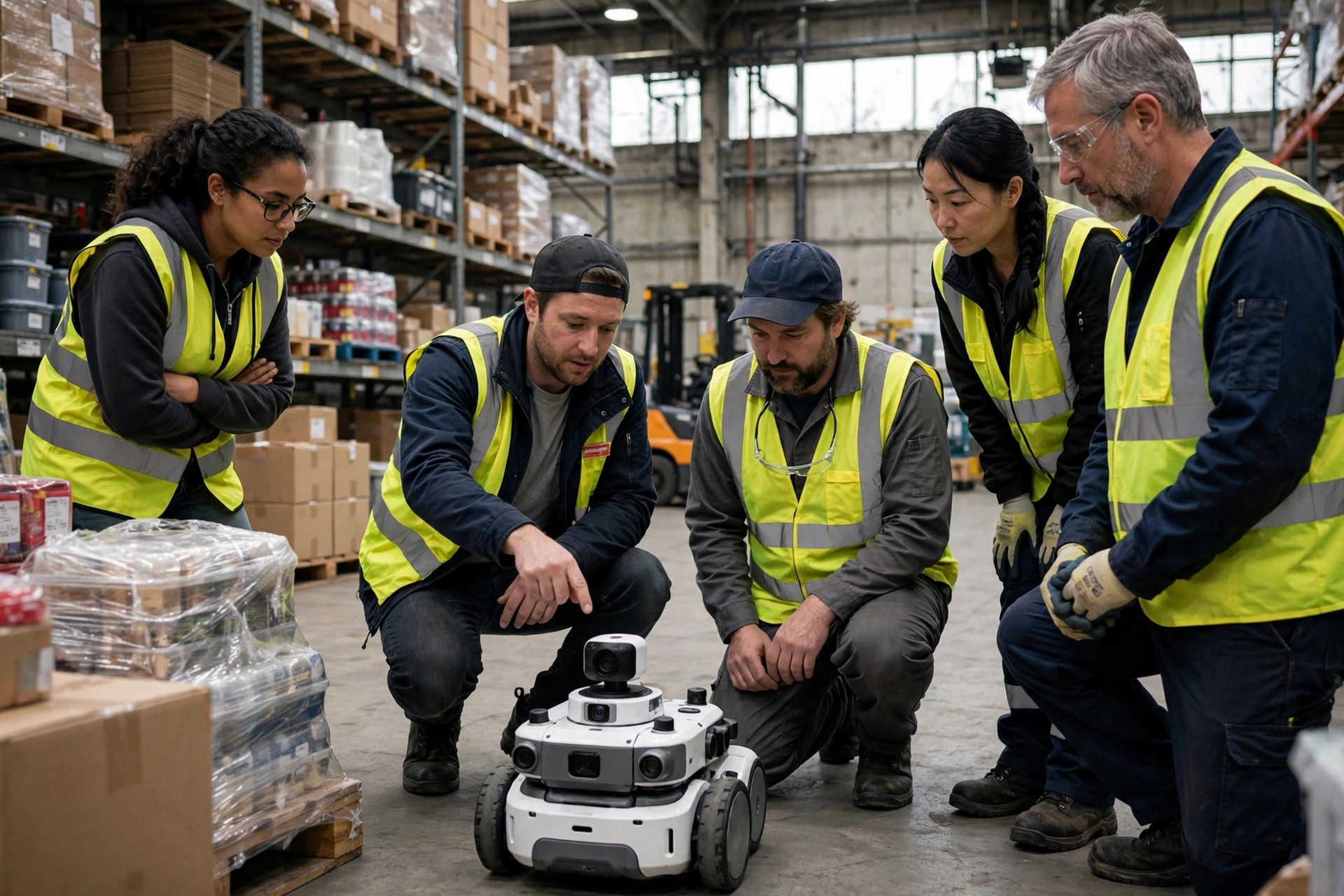
What worked for us was "one-on-one, thirty minutes." Thirty minutes before shift start, crew leads like Lao Chen learned first, then taught their teams — one function per day. Today: how to read a verification alert. Tomorrow: what to do when one fires. Practice immediately after learning, no penalties for mistakes during practice, public praise from the lead when it clicks. Two weeks in, the whole crew was functional and most of the resistance had evaporated.
Three details made the difference. First, the interface had to be dead simple — big buttons, big text, no squinting through reading glasses. Second, keep a human override: when the system calls it wrong, the veteran can overrule it, and every overrule feeds the model retraining queue. "I'm teaching the machine" feels entirely different from "the machine is managing me." Third, never launch in peak season. New system plus peak pressure breaks people. Pilot in the slow season, when there's room to stumble.
Incentives: share the gains or lose the room
The first two moves remove fear. This one creates pull. If every dollar of AI-driven productivity goes to the owner, why would the floor cooperate?
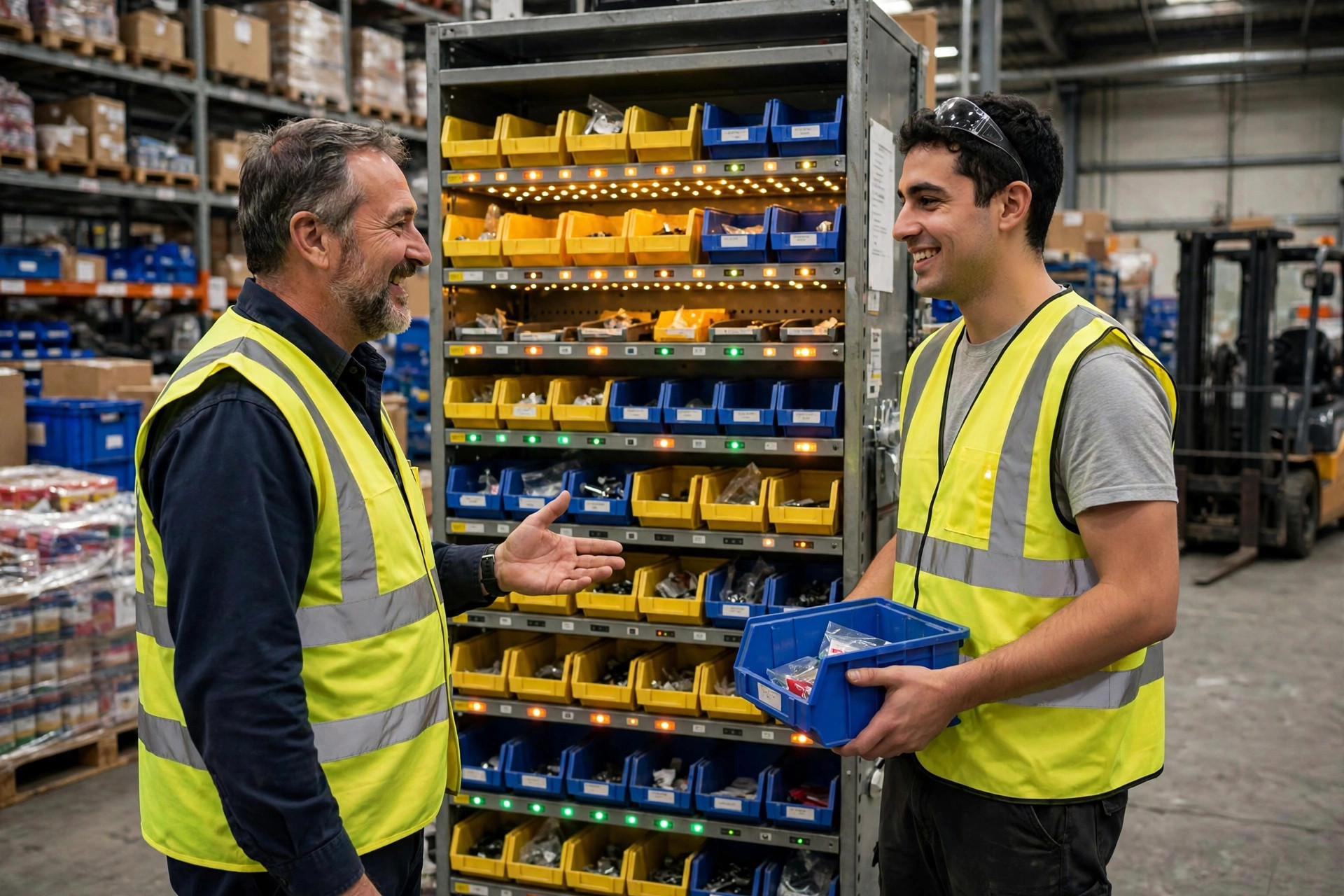
We set three rules. First, the pilot crew's bonus pool was tied to the error-rate drop: halve the error rate, and 30% of the saved rework and complaint costs went back to the crew as bonuses. Numbers posted publicly every month. Second, create the "AI coach" title with a stipend — people like Lao Chen who learned it and taught others got an extra 500 yuan a month and a new line on their badge. Don't underestimate the badge line; veterans care about that. Third, build the career ladder: a new "intelligent equipment coordinator" role, promoted from the floor first, paid a grade above picking. Answer the job-loss fear with actual new positions.
By month three, the neighboring crew was asking to join the pilot. Why? The bonus board showed the pilot crew earning visibly more. Self-interest is the best mobilization speech ever written — better than a hundred rallies.
Don't forget the middle layer
There's a hidden checkpoint most projects miss: frontline supervisors. Our warehouse manager, Lao Wang, was lukewarm on the pilot. Over drinks he finally admitted it: "Scheduling, dispatching, bonus decisions — that was all mine. Now the algorithm schedules and the data sets bonuses. Am I decorative?"
Middle management fears loss of authority, not loss of jobs, and it needs its own three moves. Give supervisors the right to interpret the data: the system produces numbers, the human explains them and makes the call — the algorithm advises, the person decides. Tie pilot success to their KPIs so it's their win, not IT's project. And bring them in early — at requirements review, not at go-live. When their floor rules get adopted into the system, half the resistance dies on the spot.
Lao Wang became the rollout's biggest champion, because he discovered something: he used to argue from gut feel, and now he walked into the owner's office with data reports when he needed headcount or budget. His authority didn't shrink. It got sharper.
People aren't a risk item
Too many AI project plans list "personnel resistance" as a risk with "strengthen training" as the mitigation. Not wrong — just far too thin. Frontline workers aren't a risk item; they're the deciding factor. The best system in the world, operated by people who don't use it, don't like it, or fake their way through it, produces garbage data — and AI on garbage data is decoration.
Lao Chen now tells everyone: "That camera is my apprentice." One sentence, total mindset flip. Between "is it going to count us out" and "it's my apprentice" lie the moves above. In warehouse AI, settle the people first, then the machines. Get that order backwards and no technology saves you.