That Night on I-10
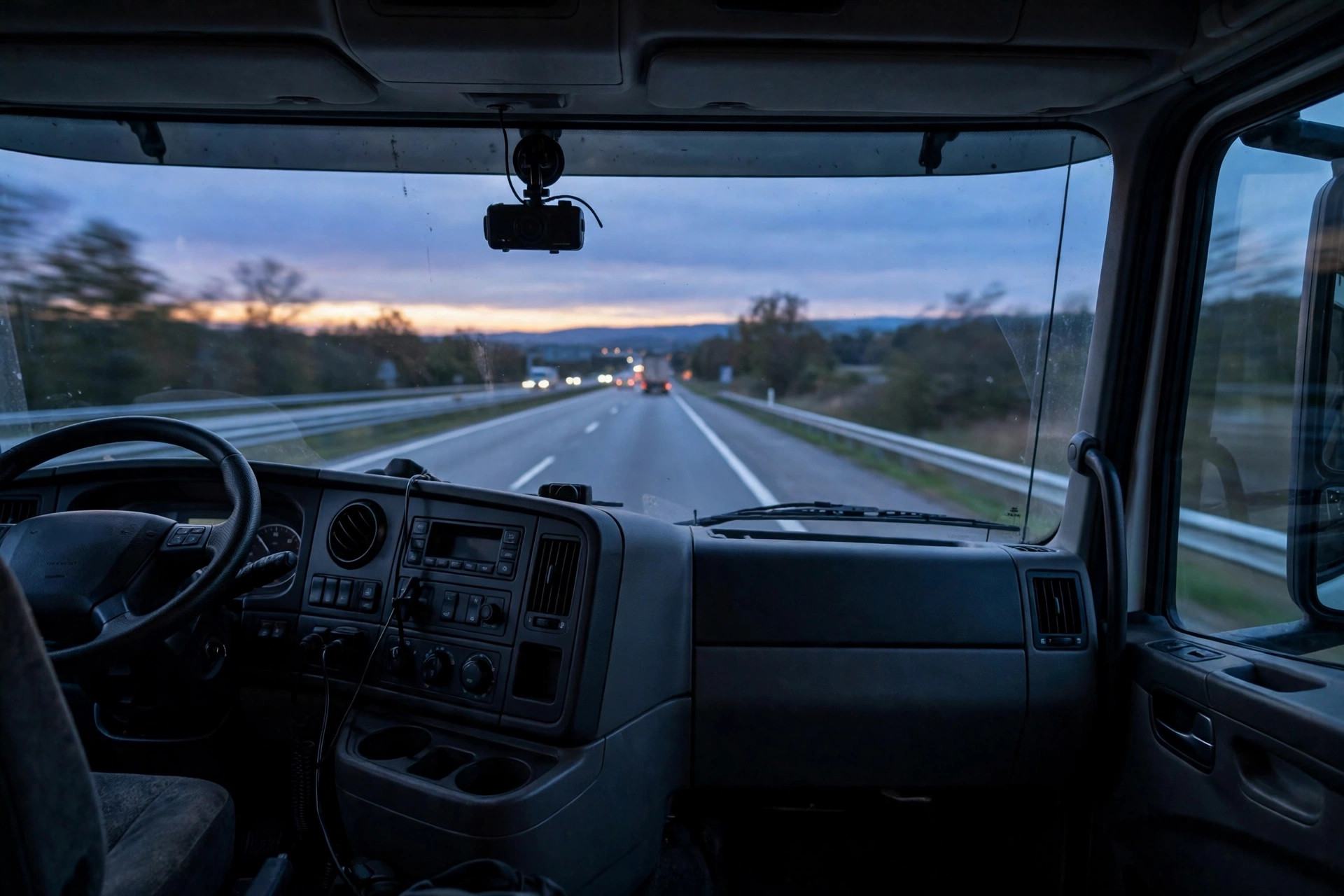
October 2024. I'm hauling freight from Phoenix to LA, rolling through the Arizona desert on I-10 at 2 AM. Nothing out there but black — just my headlights and the white lines.
A box truck ahead of me suddenly drifts half a lane to the left, then jerks back. Let me tell you, my blood ran cold. If there'd been a car next to him, that would've been it. I backed off the throttle and dropped back a good 200 meters. When I finally passed him, I glanced over — the driver had his head down, face lit up blue by his phone screen.
I thought about that the whole rest of the drive. Fifteen years behind the wheel, and I've seen that scene — the "one-second glance down" — more times than I can count. At 65 miles an hour, one second is 30 meters. Thirty meters. In the blink of an eye, that's plenty of room for a disaster.
Chen's Fleet Gets an "Electronic Co-Driver"
Here's what that night keeps teaching me, and what every fleet owner eventually learns: crashes are almost always a people problem. Good truck, good road — and it all goes wrong in one or two distracted seconds. That's why fleet safety thinking has flipped in recent years: it used to be about finding the cause after a crash; now it's about watching the driver before anything happens. The AI dashcam is that idea packed into a box.
My buddy Chen runs 30-odd tractors out of Fontana — short-haul transload work, shuttling between the big LA-area warehouses. Known him a decade. 2023 was a brutal year for him: two rear-enders in twelve months. One driver tailgating who couldn't stop in time; the other one stopped at a red light, looked down to answer a text, the light turned green, the truck ahead hadn't moved — bang. Both his drivers' fault, both clear liability.
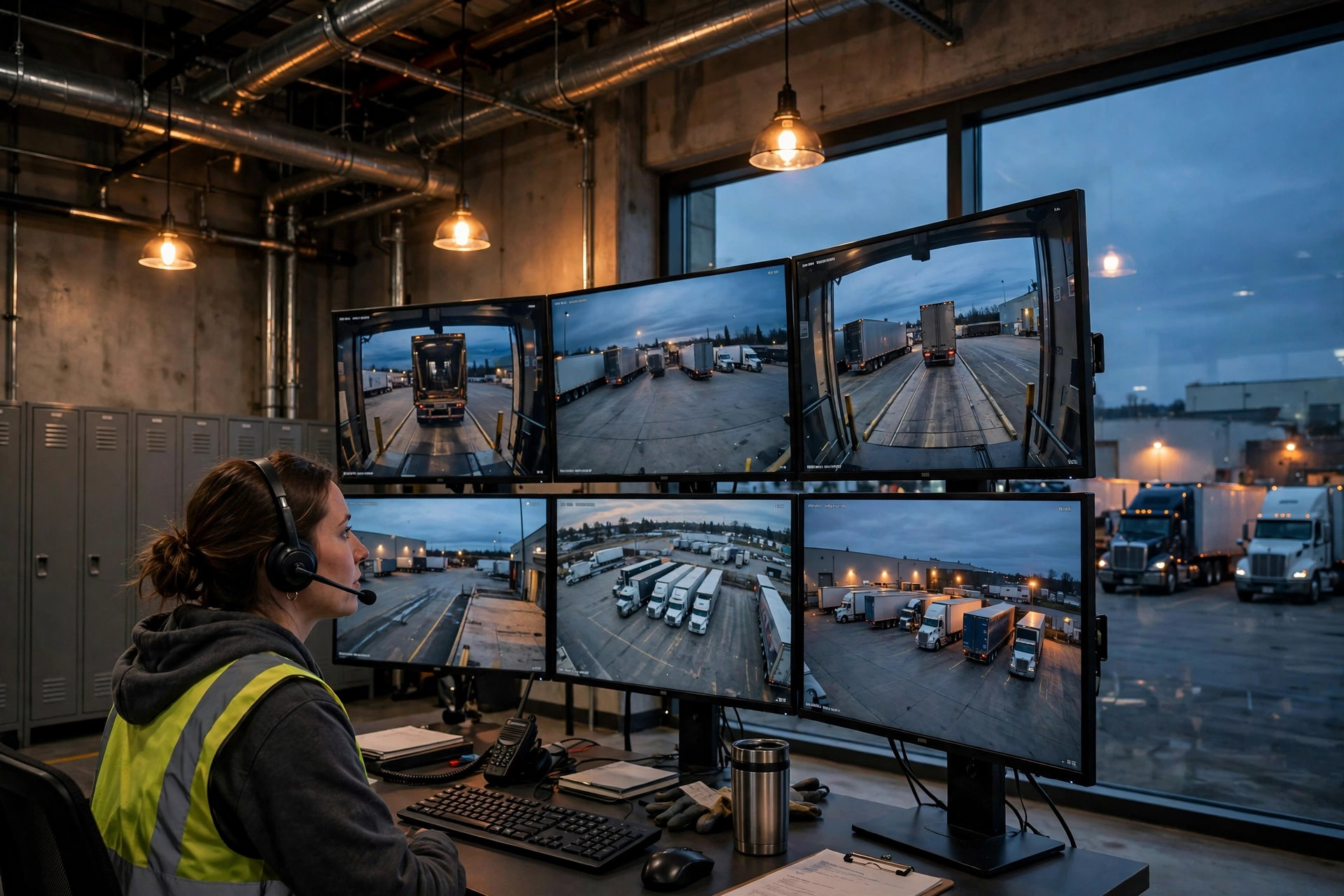
Come renewal time, his commercial insurance jumped hard. Chen broke it down for me: the repairs were the cheap part. The real pain was three things — the truck sitting in the shop earning nothing, claims dragging through paperwork for half a year, and premiums climbing two years running. Early 2024, he bit the bullet and put AI dual-facing dashcams across the whole fleet: one lens on the road, one on the driver, with real-time in-cab alerts. Following too close — beep. Eyes off the road more than two seconds — beep. Yawning, nodding off — beep.
Six months later I'm having tea at his yard and he tells me the change scared even him: harsh-braking events down by more than half, phone use behind the wheel basically gone. Every month at the safety meeting, Chen throws the footage up on the big screen: "Take a good look, everybody. If that had been a crash, three months of work down the drain — for nothing." Guess what? Ten times more effective than any fine. Drivers watch themselves on screen, faces go red, and they drive like saints after that.
And it's not just Chen. In 2025, Samsara — a US fleet-tech company — published a safety report covering 2,600 fleets over 30 months: fleets running the full AI safety setup (dual-facing cameras plus in-cab alerts plus driver coaching), 175 vehicles and up, cut their crash rate by 73%. Average customers still saw a 35–40% drop. In the first six months, harsh events fell 48% and phone use behind the wheel fell 84%. Now look — that's the equipment maker's own report, so take the numbers with a grain of salt. But the direction is right: dual-facing (watching the road AND the driver) beats forward-facing-only by more than two to one. Why? Because it manages the human end of things. The US traffic safety agency's old data puts the driver as the critical factor in roughly 94% of crashes. People are the biggest variable on the road.
Let Me Do the Math for You
Stories are nice, but let's talk money. Here's Chen's fleet, before and after — his numbers, told to me directly, so don't copy-paste them onto your own operation:
| Item | Before AI dashcams | About a year after |
|---|---|---|
| At-fault crashes | 2 rear-enders a year | Zero |
| Harsh / unsafe driving events per month | Triple digits — "too many to count," in Chen's words | Down to double digits |
| Phone use while driving | Everybody did it | Basically extinct |
| Commercial insurance | Big jump at renewal | Flat the next year, even negotiated a small discount |
| Equipment cost | — | Tens of dollars per truck per month (check the vendor's latest pricing) |
Chen's line stuck with me: "One fewer rear-ender a year pays for the whole fleet's cameras for years."
Here's the counterintuitive part, and listen close: the real value of this thing isn't the footage you pull after a crash — that's Monday-morning quarterbacking. The real value is that drivers change their habits once they know someone's watching. The first month after install, the whole fleet drove like angels. The deterrent effect dwarfs the technology itself. Most of the payback comes from changed behavior, not from post-crash evidence. Once you get that, you know how to spend the money: spend it on making sure drivers know they're being watched — not on building an evidence library.
Which Fleets Should Skip This
That said, this isn't magic fairy dust. Three kinds of fleets should save their money.
First, multi-stop city delivery. Thirty, forty stops a day — the system cries wolf all day long. Turn a corner, it beeps; pull to the curb, it beeps. Drivers get fed up and cover the lens with a cap. Money down the drain.
Second, fleets under five trucks. The hardware plus subscription adds up over a year. You're better off spending it on two things: hiring solid drivers and buying enough insurance. When the owner rides along every day, his eyes are the best AI there is.
Third, the install-and-ignore crowd. I've seen fleets put cameras in and never look at the data, never hold a safety meeting — might as well have thrown the money out the window. Hardware is dead; management is alive. Chen holds his safety meeting every single month, rain or shine. That's the real reason the system works.
And one big pitfall I have to flag: never use it as a fine machine. I watched one fleet owner obsess over footage, nickel-and-diming drivers for every little thing — five drivers quit in three months. Let me tell you, good drivers are brutally hard to hire right now. Harder than buying ten cameras. Chen's approach is what I call "coach mindset": footage only comes out at safety meetings, the good clips get praised, the bad ones get a private word. It took him under two months to go from full-driver revolt to full buy-in. Remember: the camera is a coach, not a cop.
Two pieces of advice for shippers and warehouse folks. When you're picking a carrier, ask one extra question: does the fleet run this kind of equipment, and do they score driver safety? Fleets that do have way fewer cargo claims and delays — your freight rides on their trucks, and that extra layer of protection lets you sleep at night.
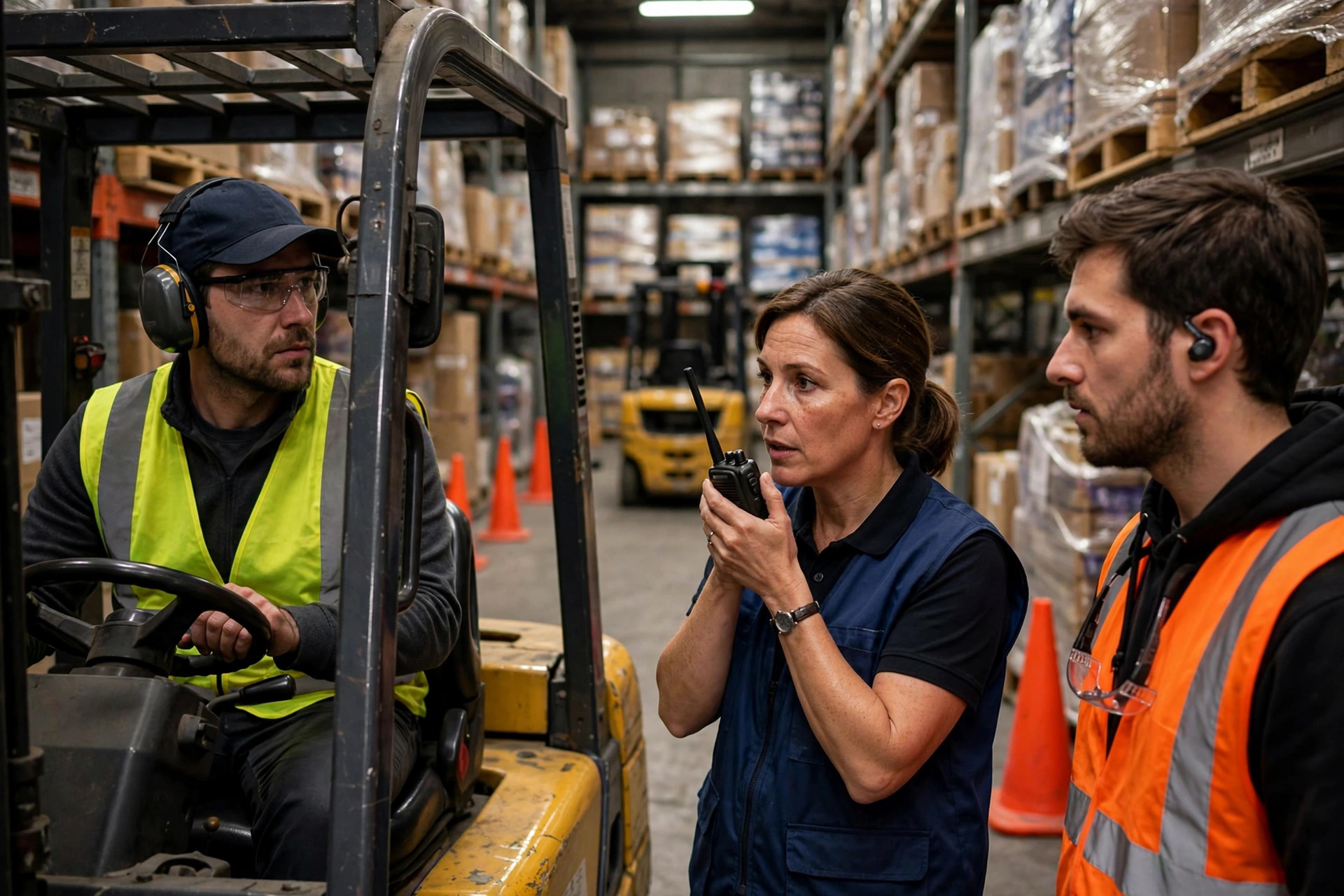
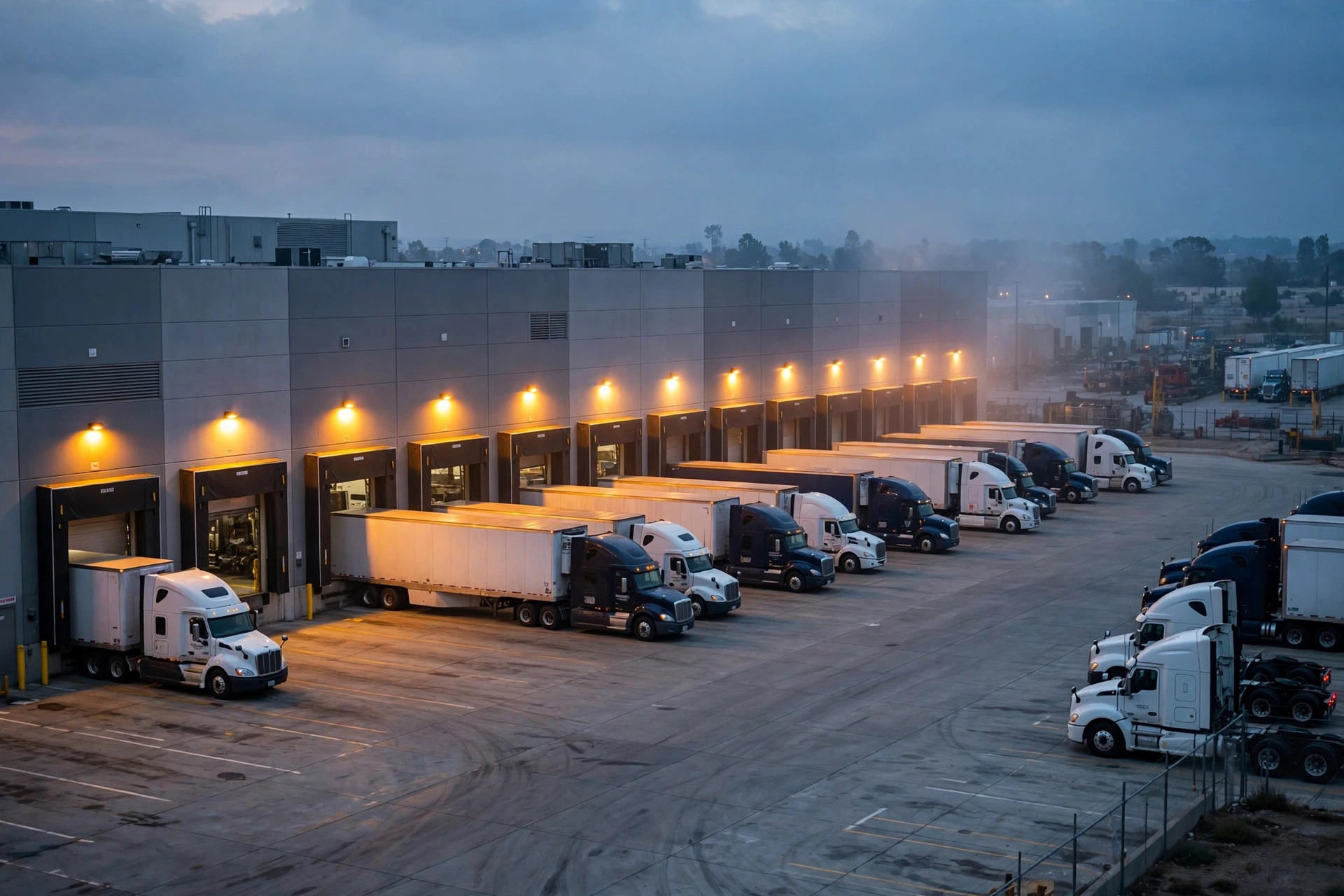
And here's the thing: a lot of crashes happen at the warehouse gate — queuing, backing up, fighting over dock space. Early this year I watched it happen at a distribution center in Ontario: a driver backing into a dock, eyes glued to his left mirror, kissed the dock bumper on the right rear. The warehouse manager, an old-timer named Miguel, told me they run a dead-simple rule now: 5 mph inside the yard, a spotter required for every back-up, break it and you don't come back. Three years, zero gate incidents. Sometimes dumb-simple beats smart-tech. So agree on the basics with your carriers: speed limit inside the yard, a spotter for every back-up. That beats any AI. Technology is the cherry on top; rules are the cake.
There's an old saying among drivers: better to arrive late in this world than early in the next. AI can help watch the road, but at the end of the day, it's still a human being holding the wheel.
By Shifu Zhao, Trucking Veteran (15 yrs)