I get asked "AMR vs AGV warehouse—which to choose?" a few dozen times a year. Back in my systems-integrator days, prospects opened with: "Da Liu, which is more advanced, AGV or AMR?" My answer never changed: stop comparing specs. Watch how your warehouse moves.
Here's my verdict up front: fixed routes for three years, people and vehicles separated, floor you can stick anything to—buy AGVs and pocket the savings. Routes that change a few times a year, forklifts and people everywhere, SKUs reshuffled constantly—buy AMRs, because magnetic tape on that floor is money down the drain. Everything else is detail.
The Principle: An AGV Is a Train, an AMR Is a Veteran Driver
Think of an AGV as a tram: magnetic tape, QR codes, or magnets buried in the floor are its rails. The vehicle doesn't know where it is—it only knows the rail. Drift off it and the thing alarms and stops. Navigation boils down to three flavors: magnetic tape (cheapest, stick it on the floor), QR codes (most precise—goods-to-person systems live on QR grids), and laser reflectors (expensive, for long spans). The common thread: they all depend on external references. Kill the reference, blind the vehicle.
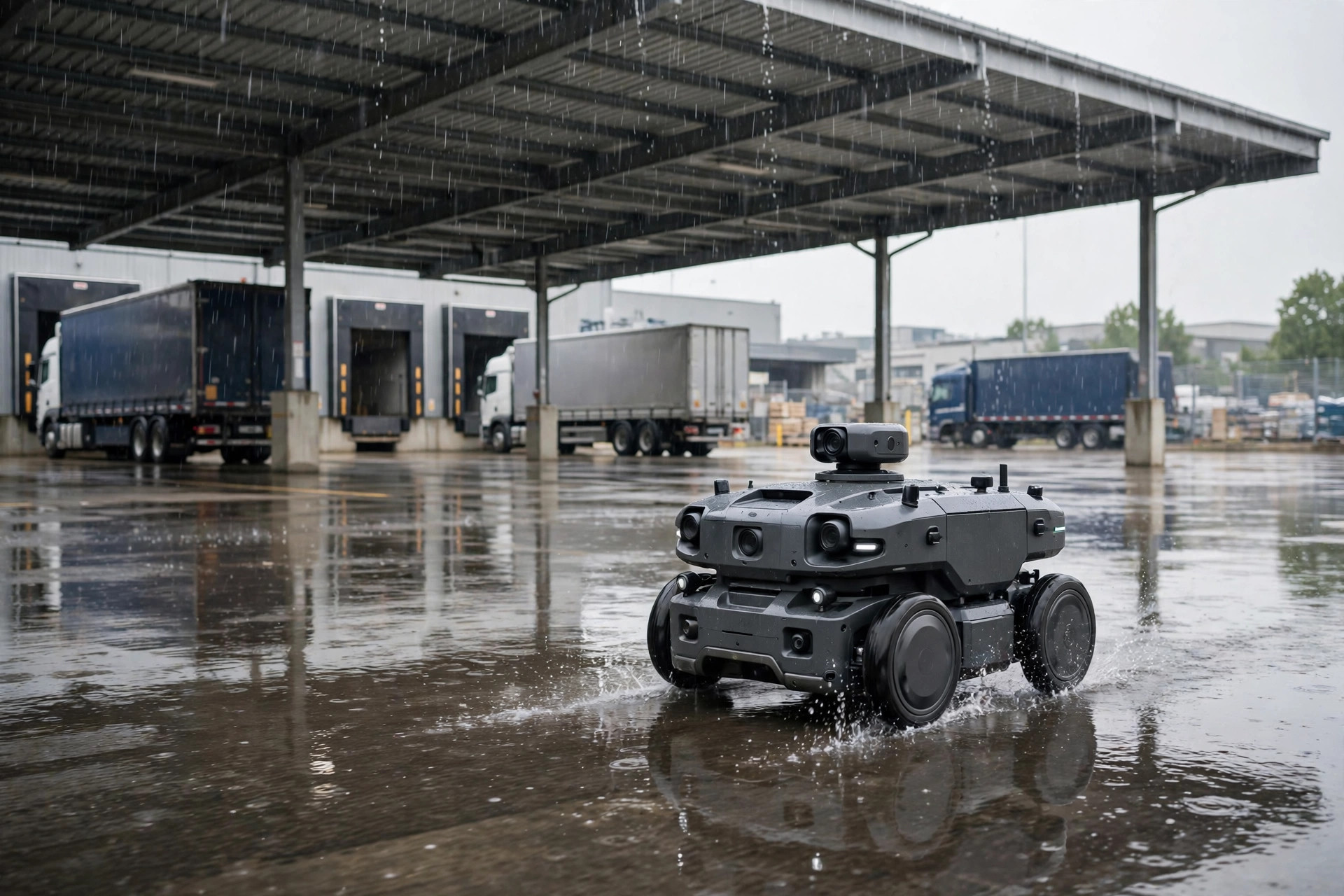
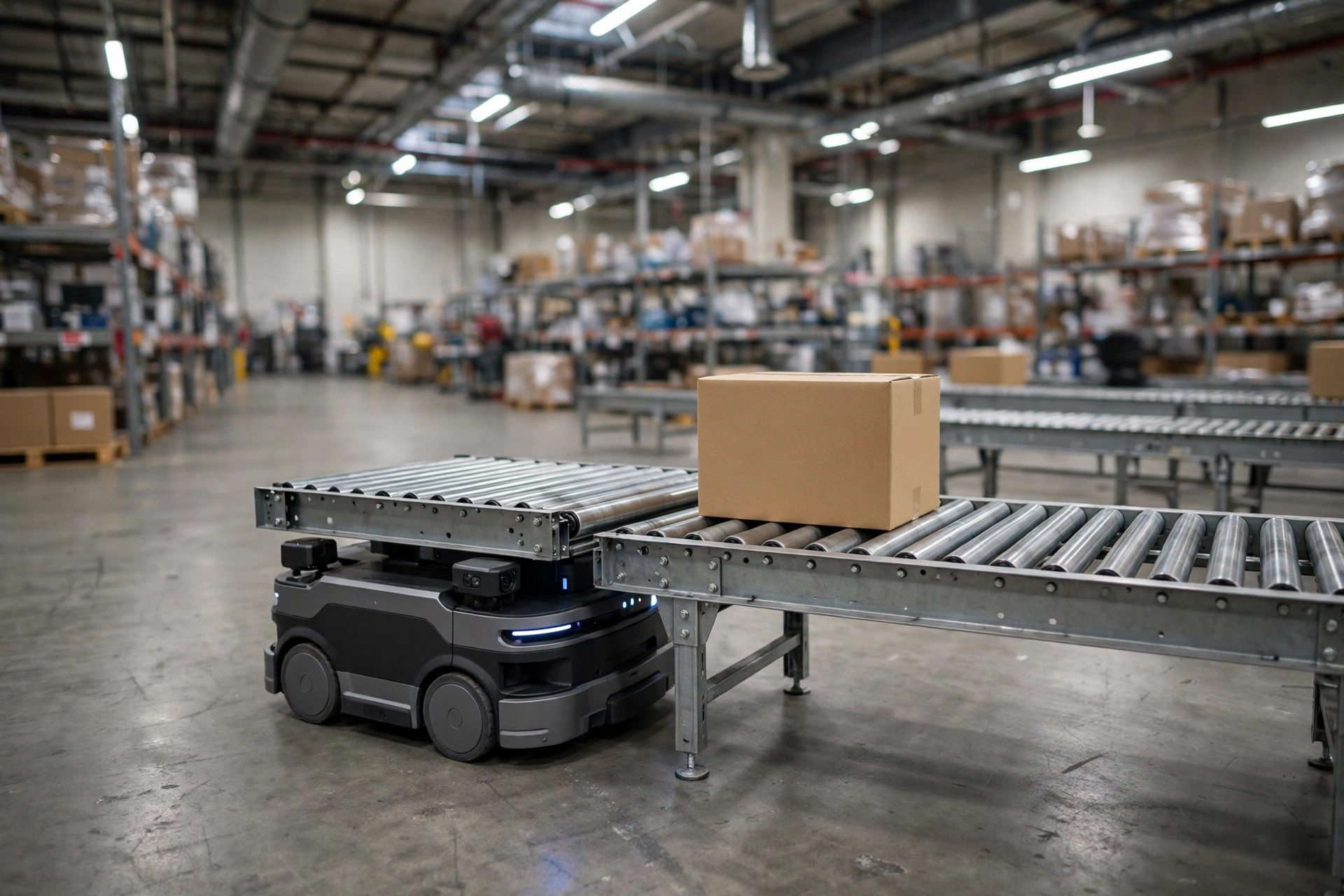
An AMR is more like a driver with ten years behind the wheel. The LiDAR on top is the eyes, throwing out tens of thousands of points per second. SLAM is the mental map—self-localizing, self-routing, swinging around a pallet somebody left in the aisle without being told. The robot drives the warehouse once, memorizes the environment into a map, then matches every live scan against that map to self-localize. Environment changes? Re-scan. Nobody touches the floor.
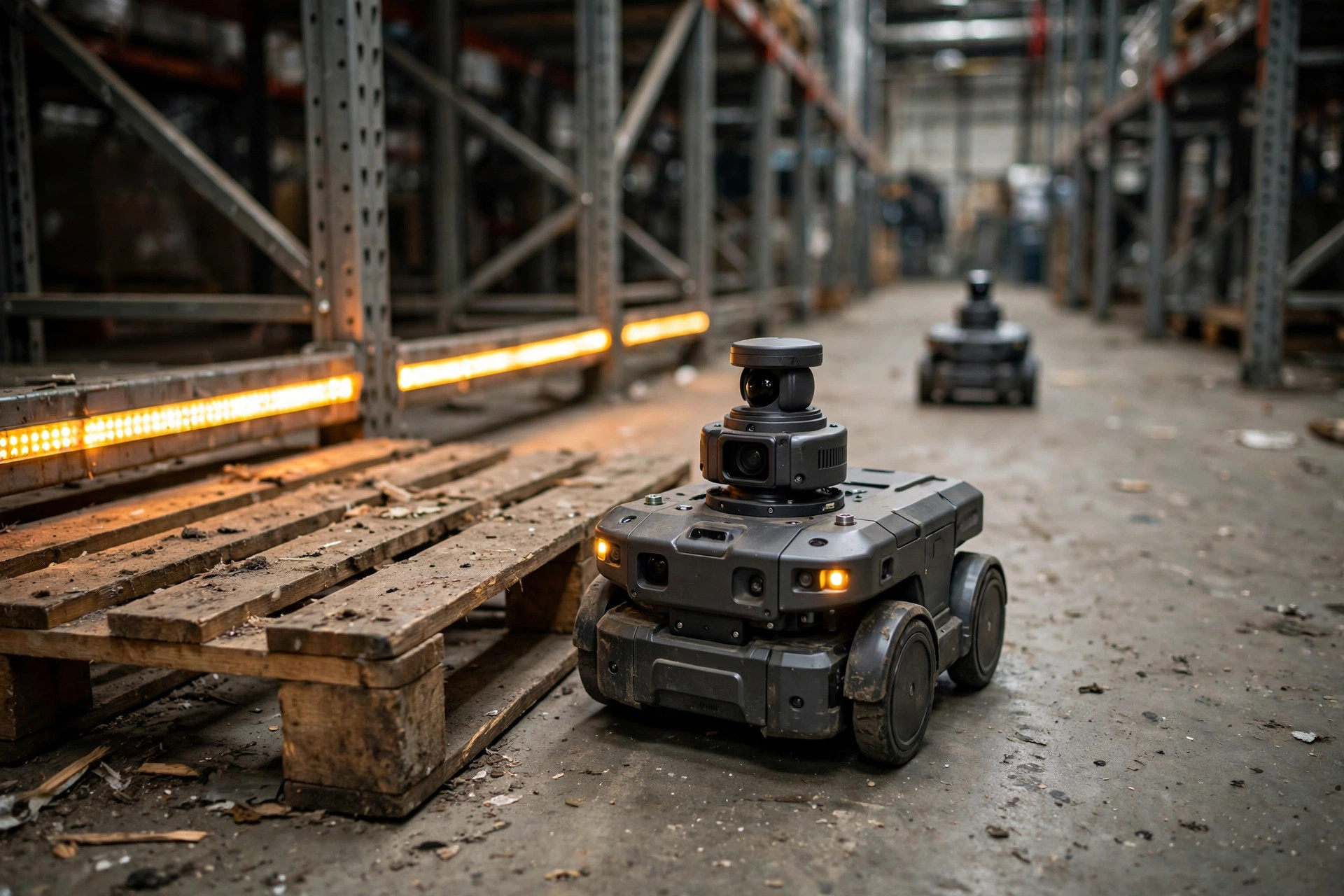
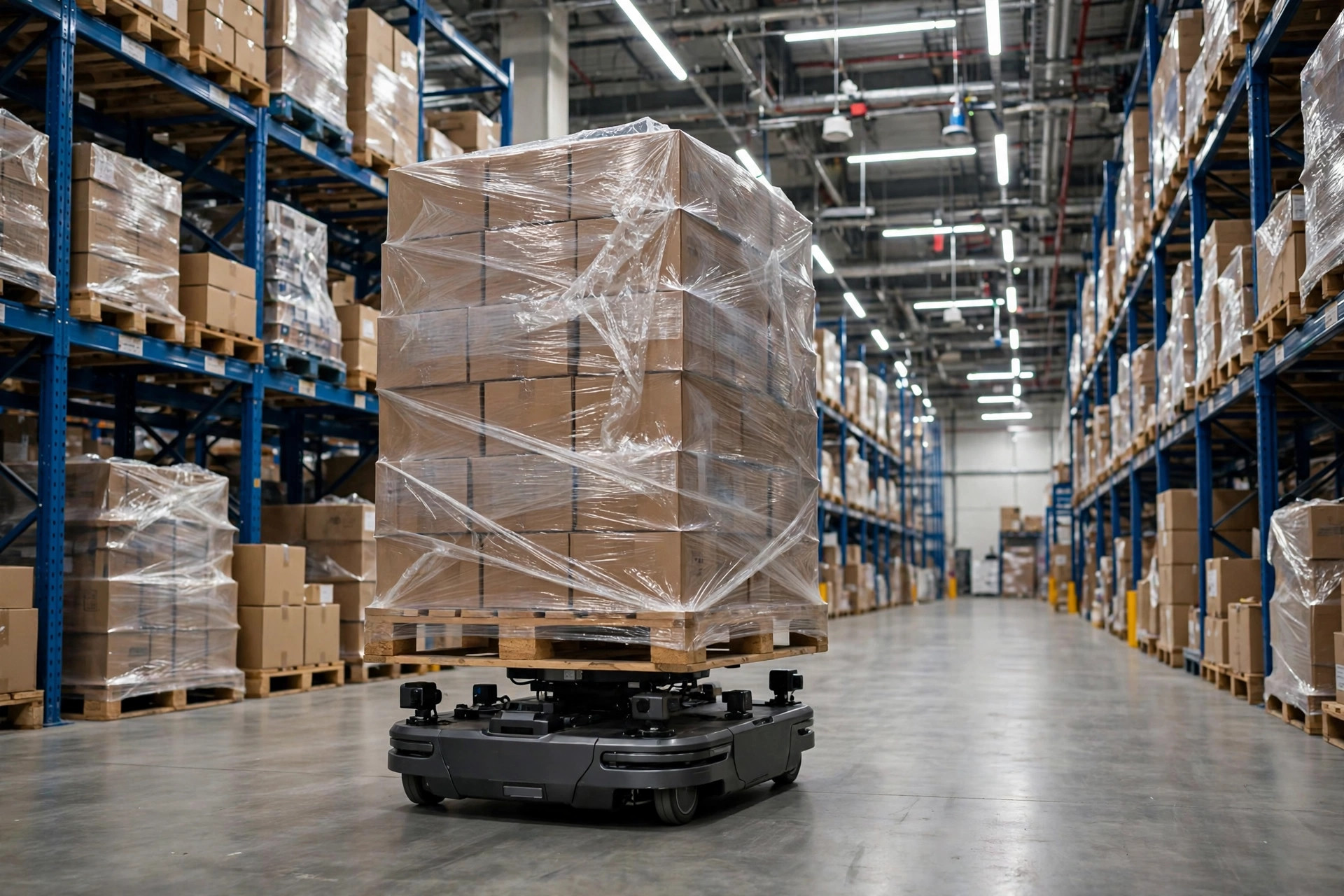
Some numbers, straight off a public datasheet: a mainstream 250-kg-class AMR lists 250 kg payload, 2.0 m/s top speed fully loaded, and 800-mm doorway clearance. A magnetic-tape AGV runs roughly 1–1.5 m/s—not because it can't go faster, but because tape navigation's localization rate and safety logic cap it. Comparing top speeds is pointless; throughput is a systems number.
The industry backdrop: the IFR's World Robotics 2025 service-robot report puts 2024 professional service-robot sales near 200,000 units, up 9%, with transportation and logistics at 102,900 units, up 14%—the biggest slice of the pie. More telling is RaaS, robots-as-a-service: fleet size up 31% in a year, related sales up 42%. More buyers would rather subscribe monthly than own—and RaaS is overwhelmingly an AMR game; AGVs barely play it.
Amazon, for scale: 750,000 robots in its warehouses as of June 2023, up from 350,000 in 2021. Its Sequoia system cut order processing time by up to 25% and sped up inbound listing by 75%. Amazon assigns robots by scenario, not by ideology.
The AGV vs AMR Table Vendors Hope You Skip
| AGV | AMR | |
|---|---|---|
| Navigation | Tape / QR / magnets / laser reflectors—needs floor or external references | Laser SLAM, self-navigating, zero floor mods |
| Deployment | Months: route planning, tape laying, commissioning | Mapping in days; complex WMS integration in weeks |
| Route changes | Re-lay tape, vendor engineers on site, days to weeks, usually with downtime | Edit mission points in software, do it yourself |
| Mixed traffic | Weak: fixed paths, humans yield to robots | Strong: autonomous obstacle avoidance, shares aisles with people and forklifts |
| Unit cost ballpark | Magnetic-nav units from ~$15K; pallet movers ~$60K; forklift-style ~$90K | Small platforms ~$30K–$40K |
| Best fit | Fixed routes, steady takt, separated traffic—line-side warehouses, fixed trunk lines | Shifting routes, mixed traffic, frequent SKU/slot changes |
| Maintenance headache | Tape wear, dirty QR codes, downtime for re-routing | LiDAR care, map updates, Wi-Fi coverage, charging strategy |
The cost row comes from a drive-maker's public whitepaper, refreshingly honest: a small AMR platform runs $30K–$40K; a comparable magnetic-nav AGV runs about $15K, sometimes less. On sticker price alone, AGV wins by half. Which brings me to my rant.
The Contrarian Take: AMRs Aren't Necessarily Pricier
Rant time. Most buyers do the math on sticker price. That's mistake number one.
A tape AGV carries three hidden costs. First, tape is a consumable. Forklifts and pallet jacks roll over it all day; lifting edges and breaks are routine—and vendors themselves admit tape damage is among the top causes of unplanned stops. Lose the signal and the vehicle parks itself mid-aisle while the whole line waits for a tape repair. Second, route changes. Move one route and you're re-planning, re-laying, re-commissioning, with vendor engineers on site for days to weeks—do your own math on the downtime. Third, zero flexibility: want a C stop on your A-to-B route tomorrow? Start over.
AMRs? You're paying for sensors and compute—a LiDAR plus safety controller per vehicle doesn't come cheap. But there's no floor infrastructure bill, route changes are a software operation, and deployment is measured in days. The IFR data backs the trend: RaaS sales up 42% in a year, because AMRs can be rented by the month and scaled by the unit. AGVs can't play that game.
The reverse rant matters too, because fake demand goes both ways. Your routes haven't changed in three years and you buy AMRs? You're paying for autonomous navigation, dynamic avoidance, and fleet orchestration you'll never use. That's buying an off-roader for a downtown commute—nothing wrong with the vehicle, everything wrong with the purchase. A fixed-takt line-side warehouse should run magnetic-tape AGVs without apology: rugged, cheap, easy to fix. That's the answer an honest engineer gives. AGVs aren't obsolete technology; in the right scenario they're still the better machine.
Which to Choose: Four Questions, No Spec Sheets
Four questions, and the answer walks out by itself:
- How often do routes change? Unchanged for three years → AGV. A few changes a year, plus peak-season reshuffles → AMR.
- Mixed traffic? Forklifts and people sharing the lanes → AMR; autonomous avoidance is non-negotiable. Separated traffic with dedicated lanes → AGV.
- Can you touch the floor? Leased building, floor must be restored, or a beat-up slab that won't hold tape → AMR. Your own building, flat floor → AGV is on the table.
- Buy or subscribe? Tight cash, want to pilot small → AMR via monthly RaaS. One capex hit, fixed use for years → AGV purchase wins.
Three out of four pointing at AMR? Stop agonizing.
A real case: an 800,000-square-foot auto parts plant in Tennessee (public case study) put six AMRs on material transport in 2020. They've logged over 500,000 missions since, with ROI in under a year. The plant engineer's own words: they picked AMRs over AGVs because the floor was too "alive"—routes needed regular changes, and every AGV re-route meant tearing up the floor. The lesson isn't that AMRs are "more advanced." It's that the warehouse moved.
And a counter-case from my own integrator days. In 2019 I worked on a project at an auto-parts warehouse in eastern China: eight magnetic-tape AGVs running a fixed trunk line from receiving to storage. The project was fine; the floor wasn't. Manual forklifts cut across the AGV routes all day, and the tape got chewed up four times in three months—each time parking a whole line. The fix was physical guardrails separating people from robots. Nothing wrong with the AGVs; the selection missed question two.
The Maintenance Nobody Puts in the Brochure
Last section, and it's the one integrators least like to discuss.
AGVs rot at the floor: tape hates crush loads, water, and bucket blades; QR codes hate dust and oil film—smudge them and localization drifts. "Inspect the tape regularly" goes in every SOP and gets executed in almost none.
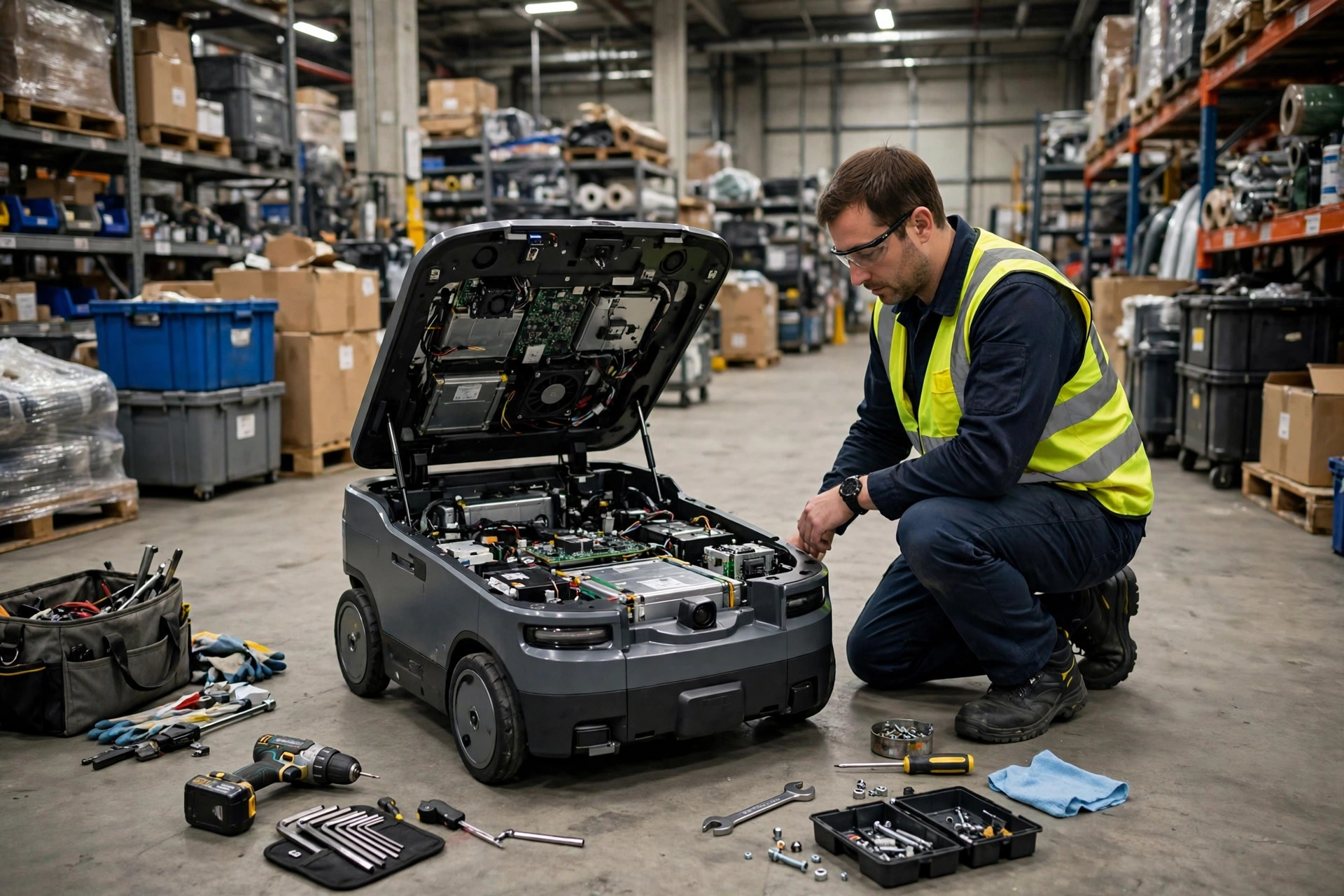
AMRs rot at the environment: LiDAR hallucinates on highly reflective surfaces and glass walls; a big racking reshuffle invalidates the old map and you're re-scanning; patchy Wi-Fi drops fleet coordination; a sloppy charging strategy leaves robots queuing for chargers and fleet utilization drops by a fifth. None of that is the robot's fault—it's engineering—but unengineered, the robot is furniture.
One more: an AMR's "intelligence" rides on software. Before you sign, ask how map-management and fleet-scheduler licenses are priced—nothing stings like discovering the software bills annually, with no line item in your budget.
Was the Money Worth It? One Number Decides
Everything above collapses into one number: how many trips one vehicle runs per day, and how many labor-minutes each trip saves you.
The math is simple: daily trips per vehicle × labor-minutes saved per trip × your labor cost per minute × operating days, versus total cost of ownership. In multi-shift operations, payback as short as 18 months is a commonly cited benchmark—but that's somebody else's number. Your route volatility, your labor rates, your shift pattern: plug them in, and AGV or AMR answers itself.
No technology is superior in the abstract. Only fit. Buy the wrong one and the most advanced robot in the world is an expensive paperweight.
By Da Liu, Automation Engineer