Big companies talk about dynamic slotting and real-time algorithmic optimization. Sounds lovely. My little warehouse cannot afford that kind of money.
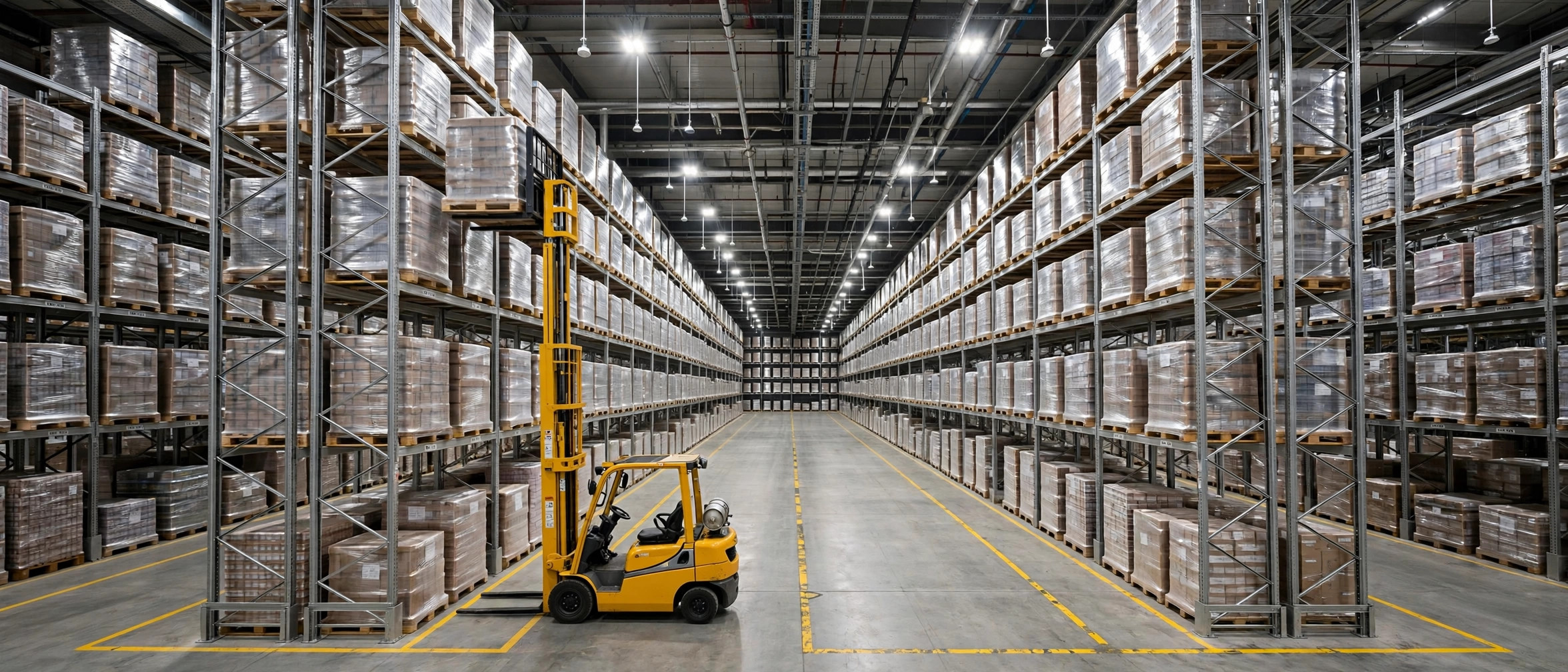
We run 3,000 square meters, under two thousand SKUs, six people total including me. Our ABC classification was set when we opened three years ago, and in those three years the sales mix has completely turned over while the slot assignments sat frozen in time. Last year I finally exported our outbound data on a whim and discovered the horror: our hottest sellers were buried at the back of the deepest aisle doing penance, while slow movers we bet wrong on three years ago were still lounging in the waist-high golden zone like they owned the place. My picker Xiao Li complained: "Boss, are these slots assigned by seniority or something?" I had no comeback.
Three warning signs your slots need a review
The hardest part of re-slotting is not doing it — it is remembering to do it. Here are the three alarm bells from our warehouse. If any one of them rings, it is time.
First, your pickers start complaining that the hot items are a pain to reach. The people who touch the product every day have the best instincts. If they say it is hard to grab, the velocity and the slot have almost certainly drifted apart. Second, a queue forms at the packing bench. When hot SKUs live too far from packing, pickers burn their time walking and the packers stand idle — travel time eating your throughput. Third, cycle count variances creep up. Product moving in and out of deep aisles gets misplaced, mis-slotted, and missed during counts. When the variance rate climbs, do not blame sloppy pickers first. Check whether the slots make sense.
Our warehouse tripped all three alarms before we finally acted. If we had done it six months earlier, Xiao Li's knees would have thanked us.
Our low-tech method: a spreadsheet, once a quarter
Do not laugh. It is low-tech, but it works. Here is the whole process, free to copy.
Step 1: Export your outbound data.
If your WMS has a reporting module, great. If not, do not panic. The dumbest method works fine: export the last three months of outbound lines from your WMS or inventory system, dump them into a spreadsheet, and pivot by SKU to total shipped quantity and shipped value. You know how to sort and pivot in Excel, right? That is our entire "data platform."
Step 2: Re-run ABC with a brutally simple rule.
Sort by shipped value (or shipped quantity — whichever better represents "busy" in your warehouse), highest first. The top 80 percent of cumulative volume becomes class A, the next 15 percent class B, the last 5 percent class C:
| Class | Cumulative outbound share | Slot treatment |
|---|---|---|
| A | Top 80% | Waist-high golden zone, closest to packing |
| B | 80% - 95% | Mid-level racks, normal treatment |
| C | Bottom 5% | Top levels and deep aisles — Siberia |
Step 3: Print the current slot map and mark it up in red.
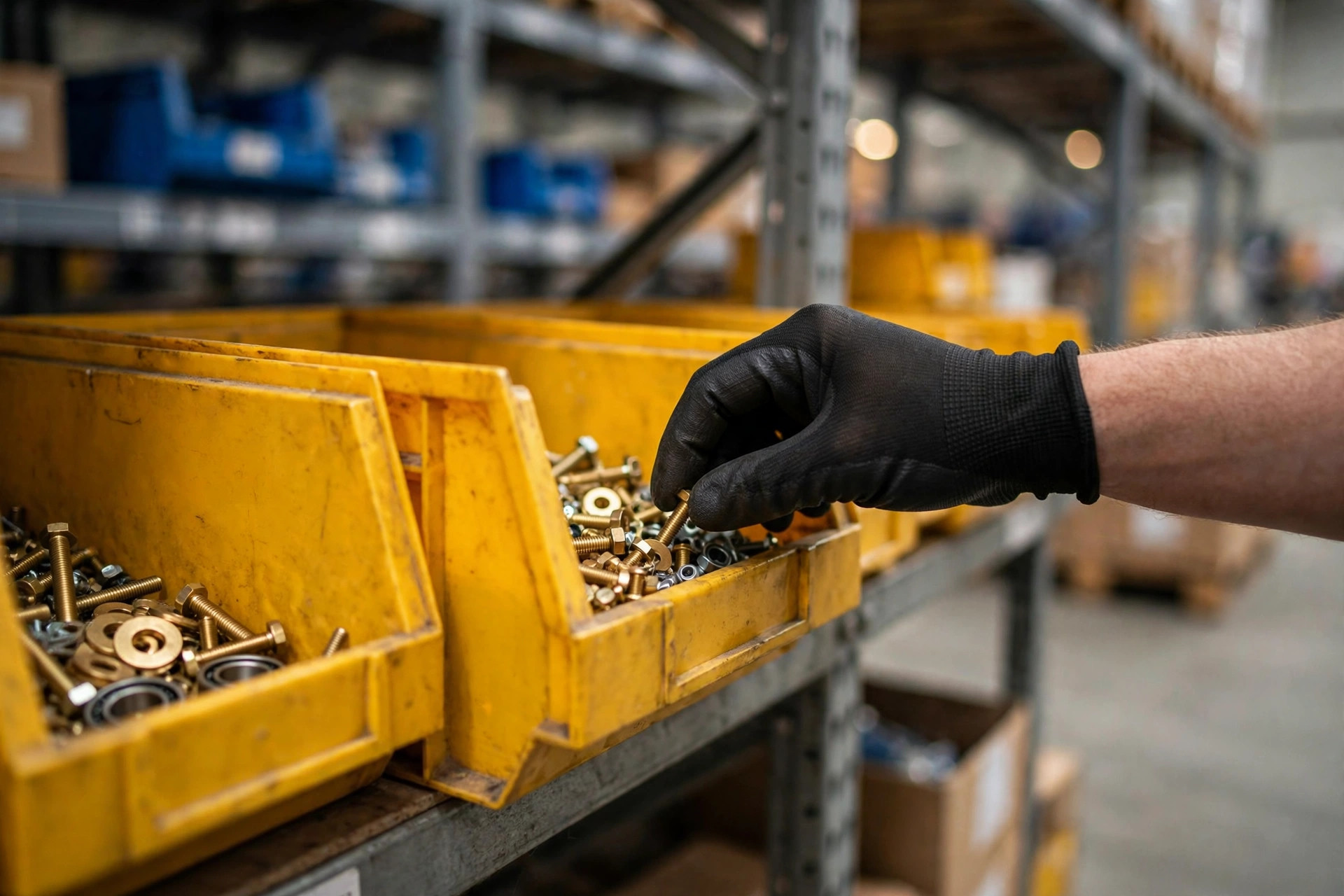
Print the slot layout on A3 paper. Circle in red every A-class SKU that is not sitting in the golden zone. Last time we did this, I circled more than forty. Looking at that sheet, my blood pressure spiked — that was not a slot map, it was a picker suffering chart.
Step 4: Pick a slow season and move everything in two afternoons.
Do not try to move the whole warehouse in one go — that is fantasy. My approach: pick two slow afternoons, walk the floor with the printout, and relocate the top 20 A-class SKUs by volume into the golden zone first. The displaced C-class items get exiled to the top racks and deep aisles. Two people, one reading the sheet and one moving product, can knock out a couple hundred SKUs in an afternoon. Update the slots in the WMS the moment you move something. Do not wait, or it turns into chaos.
Step 5: Pin a "slot leaderboard" on the wall.
After the move, I print the top 20 A-class SKUs with their slots on one big sheet and pin it at the picking area entrance. The red list says "these live here, grab them with your eyes closed." The black list says "these C-class items do not belong in the golden zone." It makes new-hire training easier, and next quarter's review has a paper trail. Low-tech. Costs one sheet of A3 paper. Works.
The results: numbers do the talking
In October 2025 we ran this process against Q3 movement data. The worst offender: a tissue brand, solid class A, shipping more than 200 units a day — slotted at the very back of aisle 12. Pickers ran dozens of extra trips for it daily. After we moved it into the golden zone, we measured for a week:
| Metric | Before review | After review |
|---|---|---|
| Avg pick travel for A-class SKUs | approx. 45 meters | approx. 18 meters |
| Avg pick time per order | approx. 48 seconds | approx. 39 seconds |
| Picker daily steps (phone pedometer) | approx. 18,000 | approx. 15,000 |
Xiao Li now walks 3,000 fewer steps a day and still has energy left for basketball after his shift. He told me this was the most humane thing the boss has done all year. I am still deciding whether that was a compliment.
A cautionary tale: my neighbor Lao Chen's warehouse
Lao Chen's place is even smaller than mine — 800 SKUs. Last year a vendor talked him into a dynamic slotting system for a five-figure sum, promising "AI real-time optimization." The result? The system generated dozens of move suggestions a day — move A over here today, move it back tomorrow. Pickers spent their shifts hunting for relocated product and cursing. Three months later the system was switched off, and the money was gone.
That story taught me the real lesson: a small warehouse does not lack algorithms, it lacks the habit of doing it regularly. With under two thousand SKUs, no matter how fast the mix changes, a quarterly manual review keeps up just fine. The "optimal" answer from a system and the answer a human reads off a spreadsheet differ by a few percentage points — but the implementation cost differs by two orders of magnitude.
Three suggestions for warehouses like mine
First, cadence: once a quarter, no excuses. Anchor it to slow seasons — after the holidays, after the summer rush — and set the next quarter's slots while you are at it. Do not be like us, frozen for three years. That is not stability, that is laziness.
Second, do not chase perfection. Each round, move only the top 20 A-class SKUs and the obviously misplaced C-class items. Eighty percent of the benefit for twenty percent of the effort. Aim for 100 percent in one go and you will be too exhausted to ever do it again.
Third, buy your pickers a good meal after the review. They feel the change first, and they know better than anyone which slot is awkward. Before the next review, ask them: "Which product has been the biggest pain to grab lately?" Their gut feeling beats your spreadsheet.
Big companies have their playbook. Small warehouses have ours. Spend little, get it done, do it regularly — and the warehouse runs just fine.
By Xiao Ma, Small Warehouse Owner