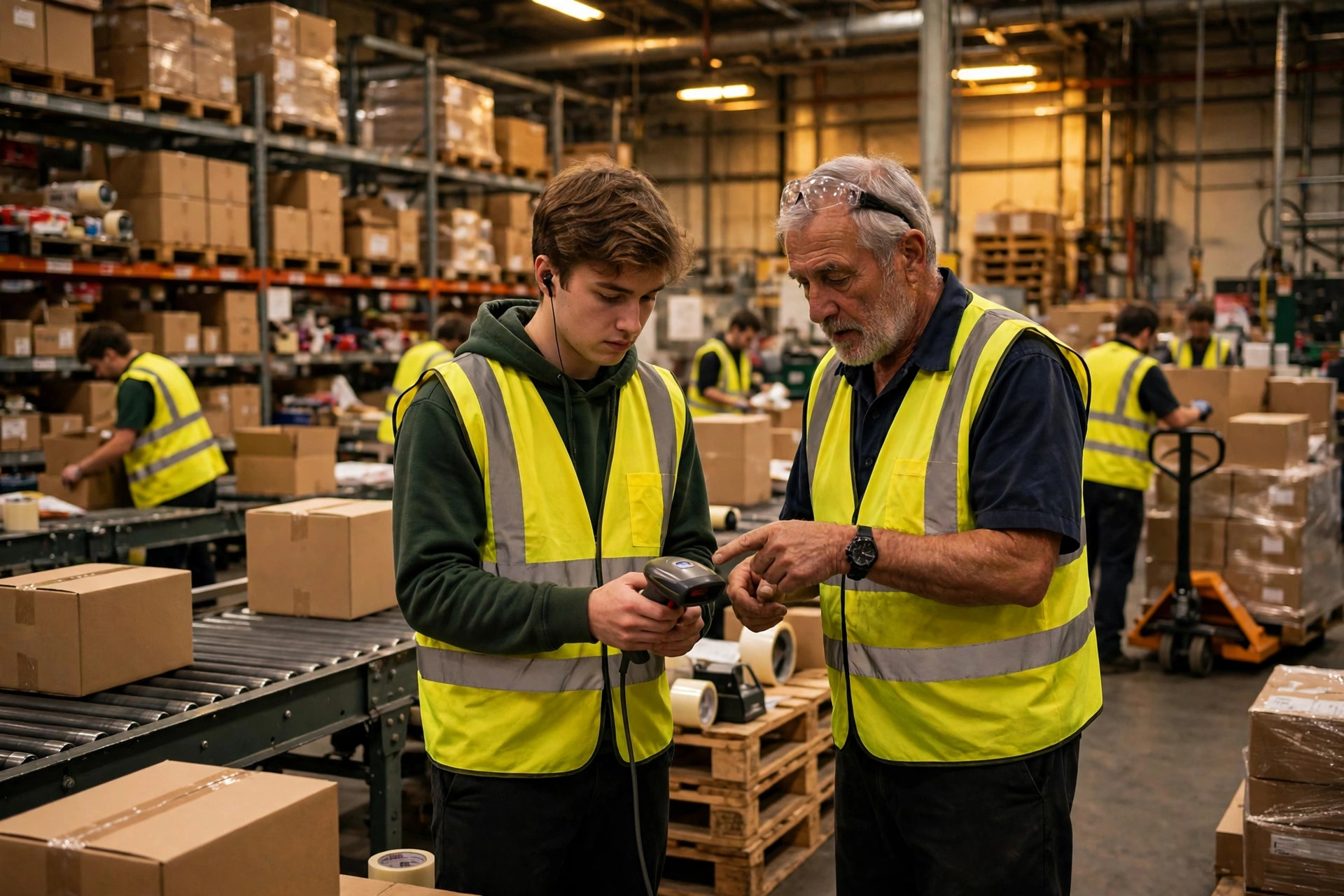
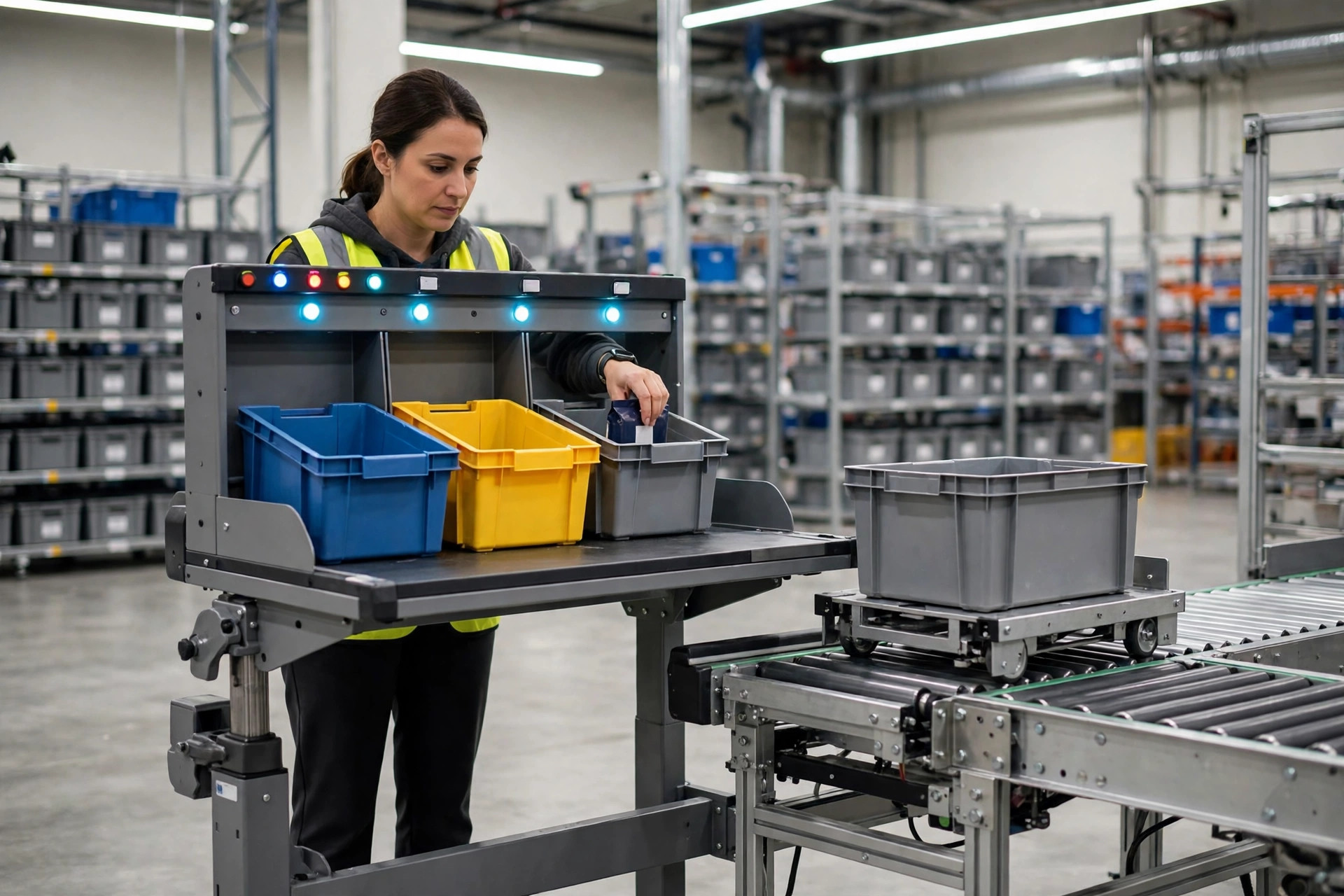
It was 2:40 in the morning on a night shift, and the lights in aisle three were still buzzing. I watched a new picker stare at his pick ticket, standing between two racks, afraid to reach for anything. Old Li walked over, pointed at the upper level, then at the scanner. One beep, one line cleared, and the kid finally exhaled. That moment is warehouse new picker training onboarding in real life: new hires rarely fail because they cannot do the work, but because nobody showed them where to look first.
Let me be straight with you: in every warehouse I have run, when a new picker struggles in week one, it is rarely an attitude problem. It is a training problem. Hand someone a ticket on day one and leave them alone, and two mispicks later a supervisor chews them out, and by day two they do not come back. Hiring is hard, and in peak season it is harder. Losing a new hire costs more than hiring one. So our warehouse has one hard rule now: for the first three days, a new picker always works with a buddy, and two signatures are required before anyone works alone, one from the buddy and one from the supervisor. No signature, no solo picking.
Day One of Warehouse New Picker Training Onboarding: Watch Only, No Picking
On day one, the new hire only follows the buddy. The buddy picks one order and explains it as they go: how to read a location, which end of the aisle the numbering starts from, what one beep versus two beeps on the scanner means, and what to do when something looks wrong, which is to stop and report it, never to quietly put it back and hope nobody notices.
Before peak season last year, we brought in twelve new pickers at once. Trying to save time, a supervisor split four of them across different aisles and told them to learn by doing and ask questions as they went. On the first night shift, one of them mixed up two products that looked almost identical, and a whole pallet went out before anyone caught it. It came back, we re-picked it, and we burned an entire shift of labor fixing it. After that, day one became watch-only, no exceptions. It looks slow. It is the fastest thing we do.
Before day one ends, the buddy walks the new hire through the whole building: where receiving is, where damaged goods go, where the break room is, and which route is the emergency exit. Brothers, do not skip this walk. At 3 a.m., a new hire who knows who to ask and where to go is a new hire who stays calm.
Day Two of Warehouse New Picker Training Onboarding: The New Hire Picks, the Buddy Stands One Step Away
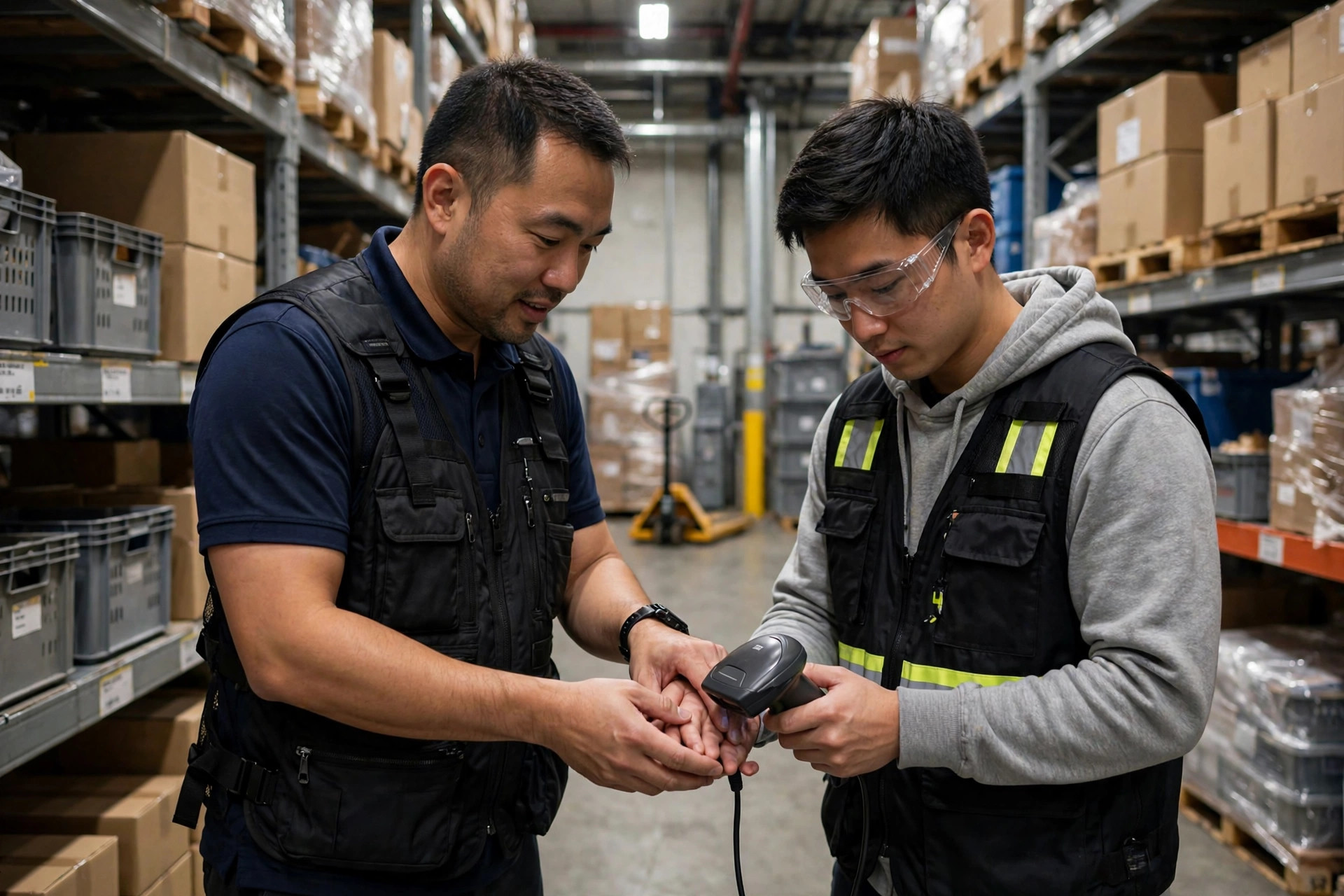
Day two flips it around. The new hire does the picking, and the buddy stands one step away watching. The buddy watches exactly three things: is the location right, is the quantity right, and did the scanner get used at every step. Speed does not matter yet. Technique does not matter yet.
We tried the other way once: on day two the buddy went back to their own work and the new hire was told to shout if they got stuck. They did shout, but not often enough, because nobody likes asking the same question five times. One new hire short-picked three orders in a row, and we only caught it at the check station. The checker said something I still remember: ten minutes saved up front can cost an hour at the back end. So now the buddy stays on day two, corrects mistakes on the spot, no blame, no lecture, just a clear explanation of how to recognize it next time.
Near the end of day two, the buddy and the supervisor sit down with the new hire for a short review: how many orders they picked, where the errors were, and what kind of errors they were. The type of error matters more than the count. Misreading a location and miscounting a quantity are different problems and need different practice. Telling someone to "just be more careful" fixes neither.
Day Three and the Warehouse New Picker Training Onboarding Sign-Off: Solo Only When They Are Ready
On day three, the new hire works a normal shift, but the buddy stays in the same aisle, just farther away. This is the day they have to pass the sign-off standard. Pass it and they are on their own. Fail it and they get another day with a buddy, no shame in that. Our sign-off standard is posted at the end of the aisle where everyone can see it:
| Sign-off item | Pass mark |
|---|---|
| Solo orders picked | At least 20 orders per shift, two shifts in a row |
| Errors | No more than 1 error across both shifts, and no wrong product shipped |
| Process | No skipped scans, and problems reported instead of hidden |
| Safety | No walking in forklift lanes, proper practice for high picks |
When we first posted this, some veterans said it was too soft and others said it was too strict. After two months of using it, we found the balance. Too strict, and new hires never get signed off while buddies stay tied up. Too loose, and errors reach customers, which costs far more. Sign-off is not an exam. It tells the new hire: you are good enough to work alone, and if something goes wrong, the warehouse has your back. You do not carry it alone.
Picking the Buddy Matters More Than Writing the Manual
Here is the part most warehouses get wrong: if you pick the wrong buddy, the best training manual in the world will not save you. Our warehouse picks buddies on three hard conditions: their own error rate is low, they are willing to talk, and they do not make a new hire feel stupid for asking a basic question. The fastest picker is not always the best teacher. Some veterans pick beautifully and explain terribly, all "just watch me do it," which teaches nobody anything.
And here is a counterintuitive call: during those three days, the buddy's productivity target has to be adjusted down, not held at full rate. We used to hold buddies to their full target while they trained someone, which meant training a new hire cost the buddy money in their own numbers. Who would take that job seriously? We changed it: during the three buddy days, the buddy's target counts at about seventy percent of normal, and a successful sign-off earns the team a credit. Suddenly, experienced workers volunteered to be buddies. That is the trade-off in warehouse new picker training onboarding. If you only count the orders from those three days, buddy training looks expensive. If you count the orders from the three months after a new hire stays, it is the cheapest thing we do.
One more thing: keep the same buddy for all three days. Do not rotate. Every person explains things a little differently, and a new hire who hears one rule on day one and a different version on day two ends up trusting neither. A fixed buddy also owns the outcome, so when sign-off day comes, that signature actually means something.
What we do now, every time. So this is how we run it, no exceptions: day one watch-only, day two buddy standing by, day three sign-off against a posted standard; one fixed buddy for all three days, the buddy's target adjusted during training, and two signatures before solo work. Buddy training is not a classroom course. It is how the first three days are lived.
And a word of warning for fellow managers: do not spend day one reciting the employee handbook. The handbook can live on the wall and be read over time. On day one, a new hire needs one person standing next to them, showing them where this order goes. Buddy training succeeds or fails on one question, asked at the end of day three as the new hire walks out of the building: do they feel like they can come back tomorrow, or do they feel like this job is not for them? Get that answer right, and the rest of the training mostly takes care of itself.
By Chen Feng, Warehouse Operations Manager