Here is my conclusion up front: run the shuttle like a real transport lane, not like moving boxes inside one building. Fixed runs, fixed routes, a transfer document, and a clear in-transit status. Once you treat the shuttle as short-haul transport between warehouses, the paperwork, the system postings, and the accountability all fall into place.
The load that vanished between two buildings for three days
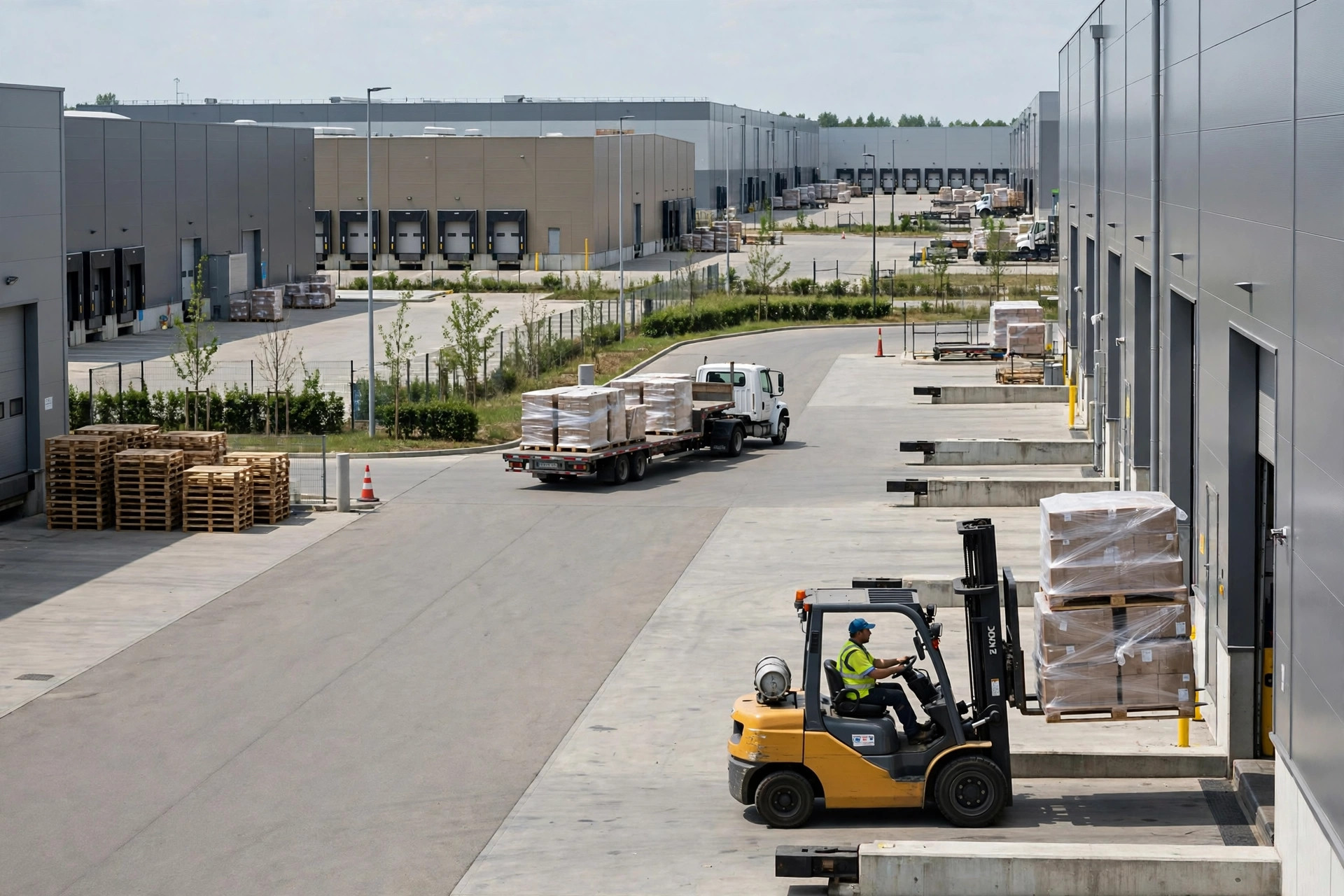
In 2019, I was reviewing processes for a 3PL client in California's Inland Empire that sold home goods. Their site had three buildings: Building A for receiving and storage, Building B for packing and shipping, and Building C for returns and repairs. One day Building B needed to ship an order, the system showed plenty of stock, and the locations were empty. Forty-two pallets were missing. The customer's truck was already at the dock, and the driver waited four hours.
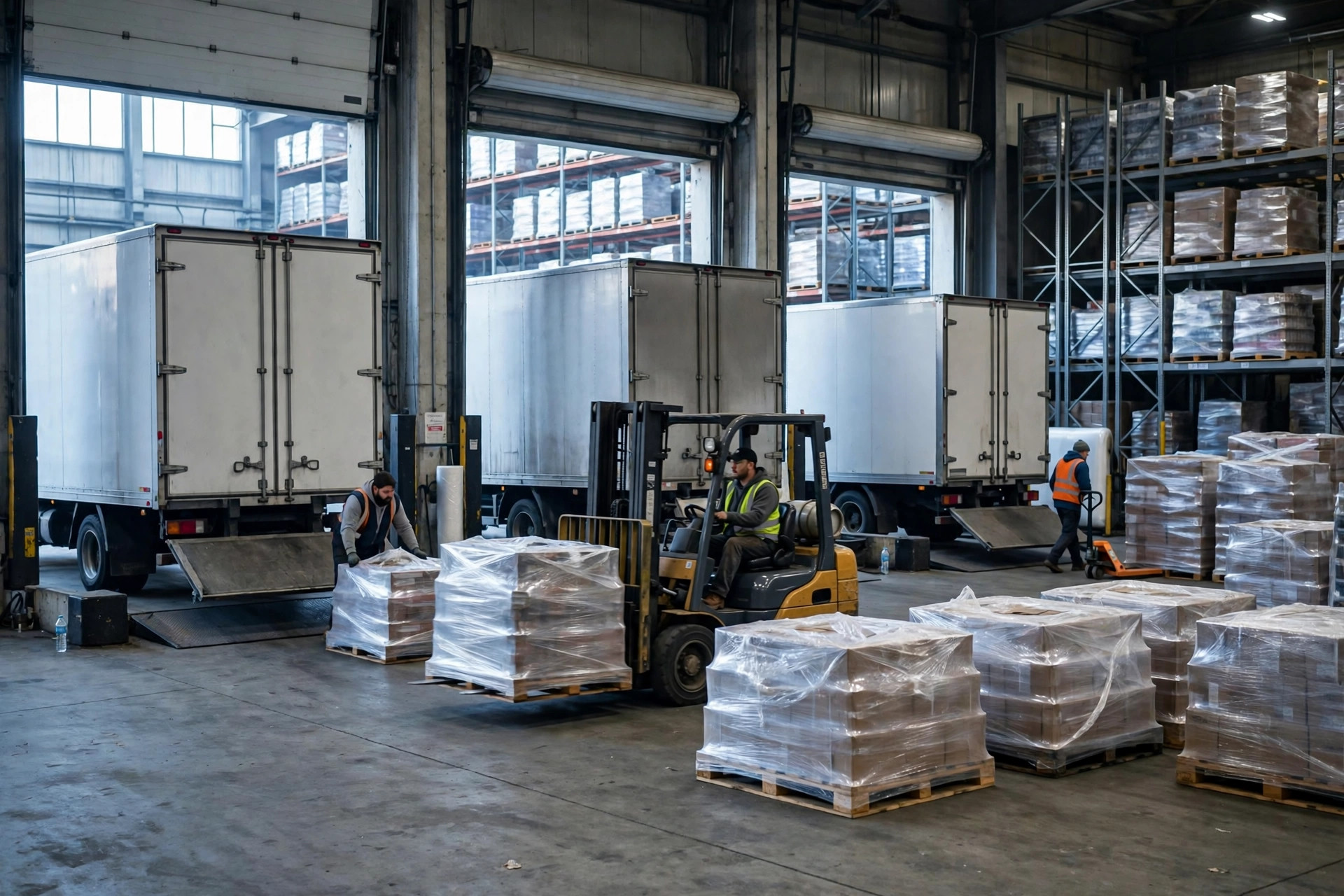
It took two days to find them. The pallets had been moved from Building A to a staging area at Building B the day before, but the shuttle driver had dropped them outside a side door, with no scan and no signature. Overnight it rained, and a forklift moved part of the load to the entrance of Building C to clear space. In the system, the stock still sat in Building A, because nobody had created an in-transit status. The freight was not stolen. It had lost its identity between buildings: nobody knew which building owned it, and nobody was responsible for it.
This story has two sides. One side is a process gap: no transfer document, no in-transit inventory status, so freight became invisible the moment it left Building A's door. The other side is an accountability gap: Building A thought the freight had been handed over, Building B thought it had never been received, and the stretch of road and open ground in between belonged to everyone in theory and no one in practice. The freight was recovered, but the order shipped two days late, the customer deducted a penalty, and the warehouse manager took the blame. The real cost was not the penalty. It was that the customer stopped trusting the site's inventory numbers.
How to schedule inter-building shuttle runs and routes without collisions
Shuttle planning breaks on two things: no rhythm, and everyone fighting for the same dock doors at the same hour.
My approach is to split the demand first, then fix the schedule. Split shuttle demand into three kinds: planned transfers, order-driven transfers, and exception transfers. Planned transfers are the daily, predictable moves — inbound stock sorted from Building A into Building B's shipping zones, or returns moved regularly from Building B to Building C — and these run on fixed runs. Order-driven transfers are triggered by wave releases, and the shuttle order is generated with the wave. Exception transfers are one-off moves like emergency reallocations or space clearing for a count, and they go through approval instead of jumping the queue of fixed runs.
Schedule by door-to-door time, not drive time. I have seen a site where the drive from A to B took four minutes, but loading, waiting for a dock door, and signing added up to more than twenty minutes, and every run was scheduled on the four-minute figure, so every run ran late. When shuttle queues build up at peak, the fix is usually not more trucks. Stagger the wave release times across buildings by half an hour, and the shuttle peaks flatten on their own.
Add one rule for staging areas: a staging area is not a warehouse. Freight that spends the night in staging needs a reason, a named owner, and a handling time the next day, and anything unclaimed after 24 hours should trigger an automatic alert to dispatch.
Transfer documents for inter-building shuttle loads: in-transit stock and who owns a loss
The paperwork is the lifeline of inter-building shuttle transfer. My iron rule is simple: no load leaves a building without a document, and no load counts as received until someone signs for it. A transfer document does not need to be complicated, but it needs four things: the pallet or carton IDs, the sending and receiving buildings, the names of the sender and receiver, and the times of dispatch and receipt. The sending building scans the load out, and the freight enters in-transit status. The receiving building scans it in on signature, and the freight lands in a location or staging area. Until signature, the freight is in transit and belongs to the sending building. After signature, it belongs to the receiving building.
In-transit ownership is where many systems get sloppy. If stock is deducted the moment it leaves the sending building and is not added until the receiving building books it in, the available stock figure drops for no real reason, and sales sees a false stockout. The right approach is an in-transit location or status: on dispatch, stock moves from the sending building's available stock into in-transit, and on signature it moves into the receiving building's available stock.
Responsibility for losses and variances should be written in three sentences and posted on the wall: before signature, the sending building and the shuttle share responsibility according to the handoff record; after signature, the receiving building owns it; freight left overnight in staging is the responsibility of whoever left it there. Here is the counterintuitive judgment most warehouses get wrong: when freight goes missing between buildings, the first suspect is usually the driver or the forklift operator. In my experience, nine times out of ten it is not theft, it is a process leak — a missed scan, a wrong door, a staging move nobody recorded. Check the process first.
Own shuttle fleet or outsource: separate the two bills
This question has two sides. An owned fleet is available on demand, its drivers know your doors and staging areas, and at peak you control priority. The price is fixed cost: trucks, drivers, insurance, and maintenance, whether it is busy or not. Outsourcing means paying per trip and carrying no idle trucks in the slow season. The price is that at peak, an outside carrier may be serving several sites at once, your urgent load may queue, and an unfamiliar driver is more likely to drop freight at the wrong door.
Do not compare only the per-trip rate. Put four lines side by side: the annual fixed cost of an owned fleet, including trucks, people, insurance, and maintenance; the outsourced per-trip price multiplied by annual trips; the cost of delayed orders when trucks are not available at peak, which is the line most people forget; and the hidden cost of wrong-door drops, losses, and rework. I have seen a site where outsourcing looked twenty percent cheaper per trip, but three delayed shipments in one peak month wiped out the whole year's saving in penalties. My judgment: a site with stable daily volume and regular waves should own its fleet; a site with sharp seasonality should own a baseline service for fixed runs and outsource the peaks.
| Option | Best for | Biggest advantage | Biggest cost | | Owned shuttle fleet | Stable daily volume, regular waves | Available on demand, peak priority under your control | Idle trucks and drivers in the slow season | | Fully outsourced | Small, highly variable volume | Pay per trip, no idle assets | Peak queues, unfamiliar drivers, wrong-door risk | | Owned baseline plus outsourced peaks | Sharp seasonal swings | No waste in quiet periods, flex at peak | Two dispatch setups to manage, one shared process |
Here is my parting advice, and it is also a question: in a multi-building site, you are not managing trucks, you are managing the identity of freight while it is between buildings. As long as every load has a document, a status, and a named owner at every moment, inter-building shuttle transfer stays under control. The moment freight leaves a door and nobody owns it, three buildings become three islands blaming each other. In your warehouse, who owns the stretch of road after freight leaves the door?
By Lao Mi, Supply Chain Veteran (20 yrs)