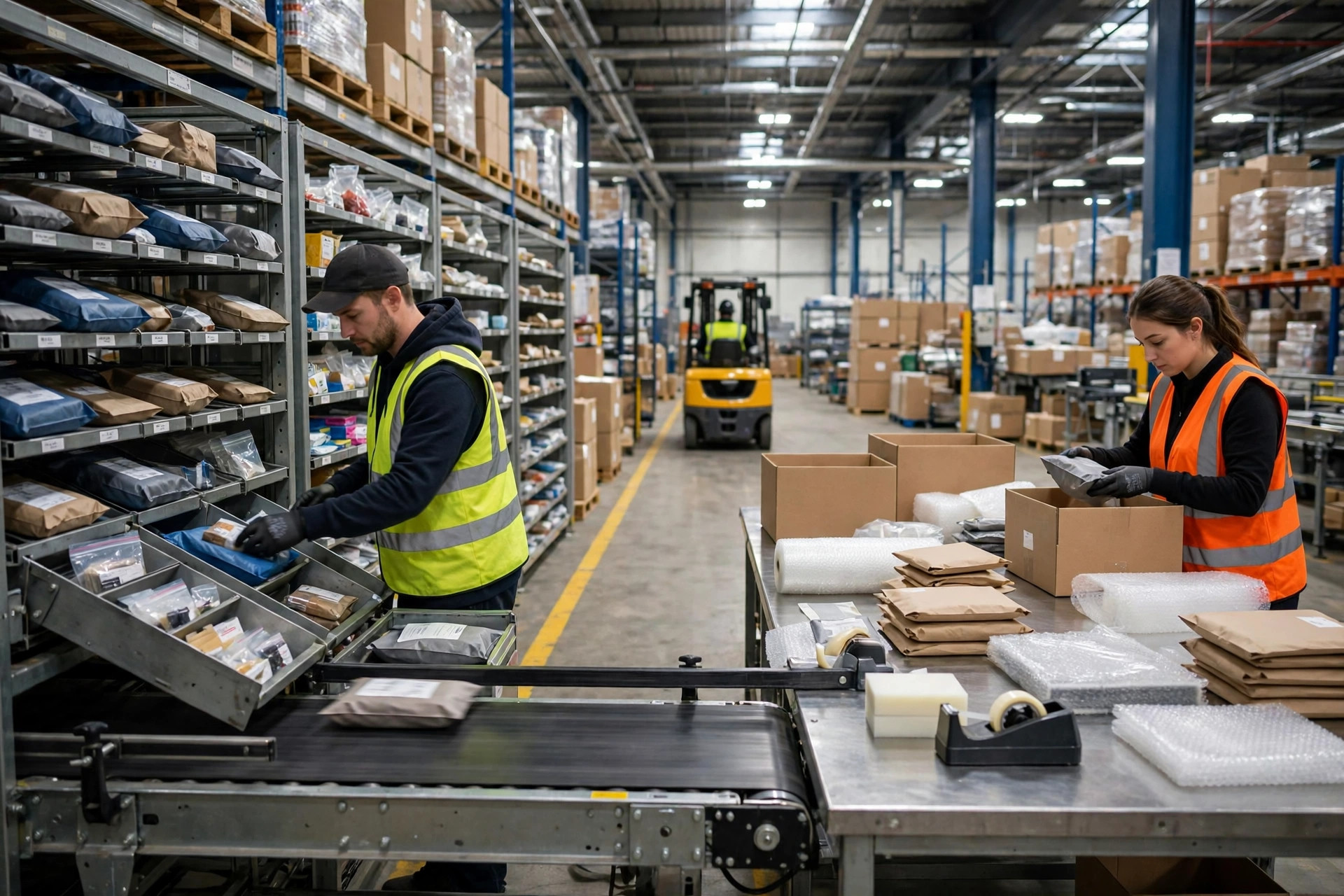
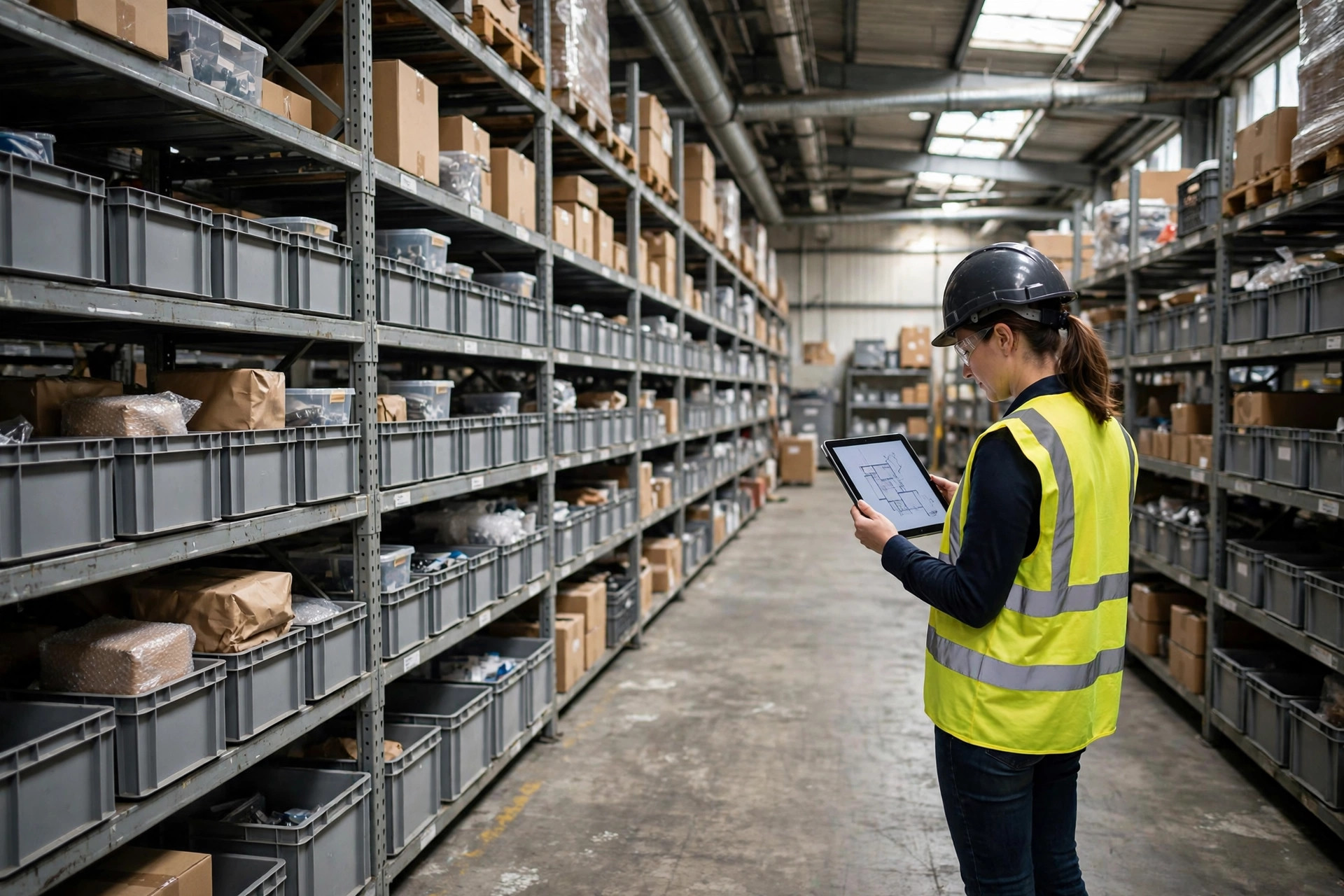
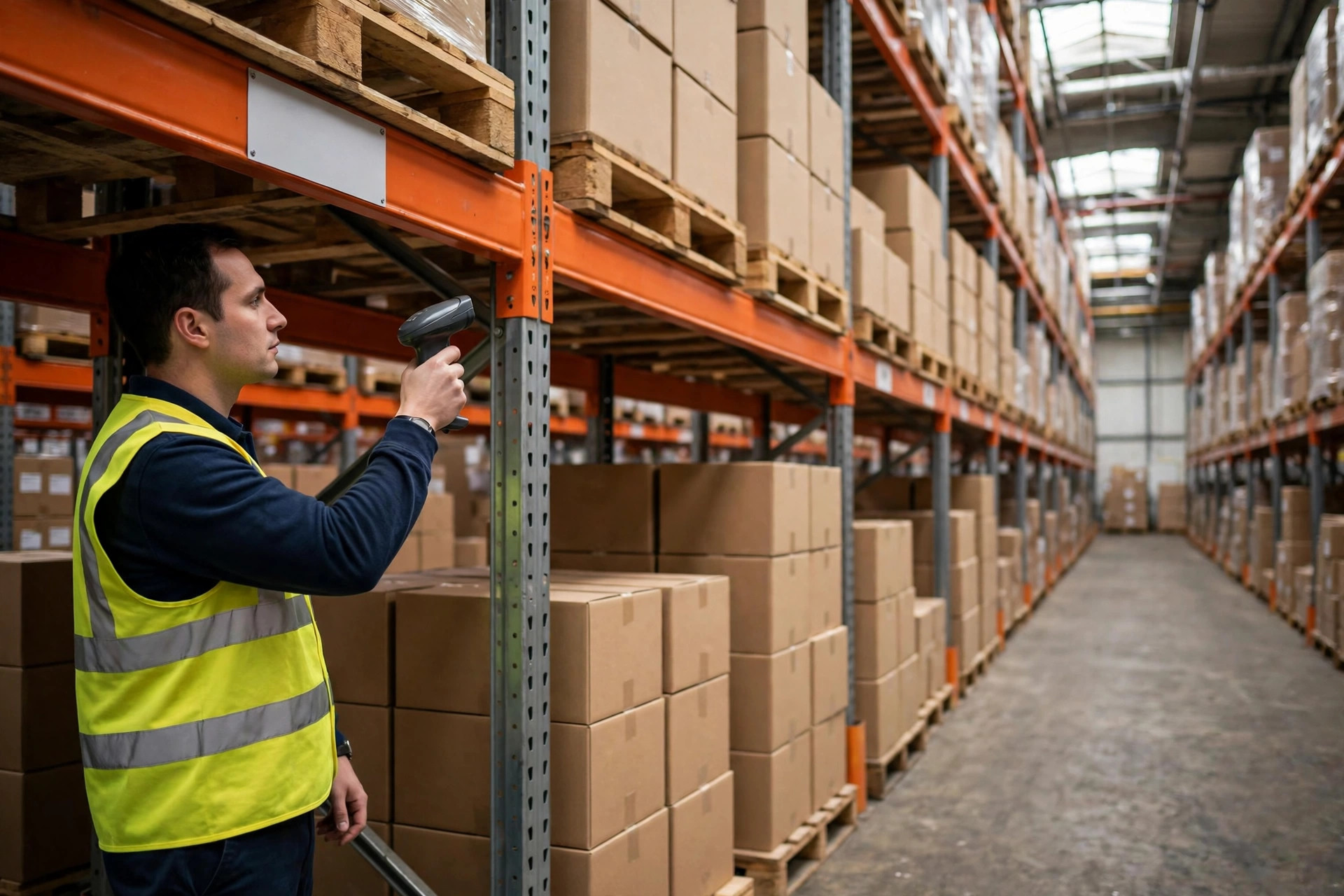
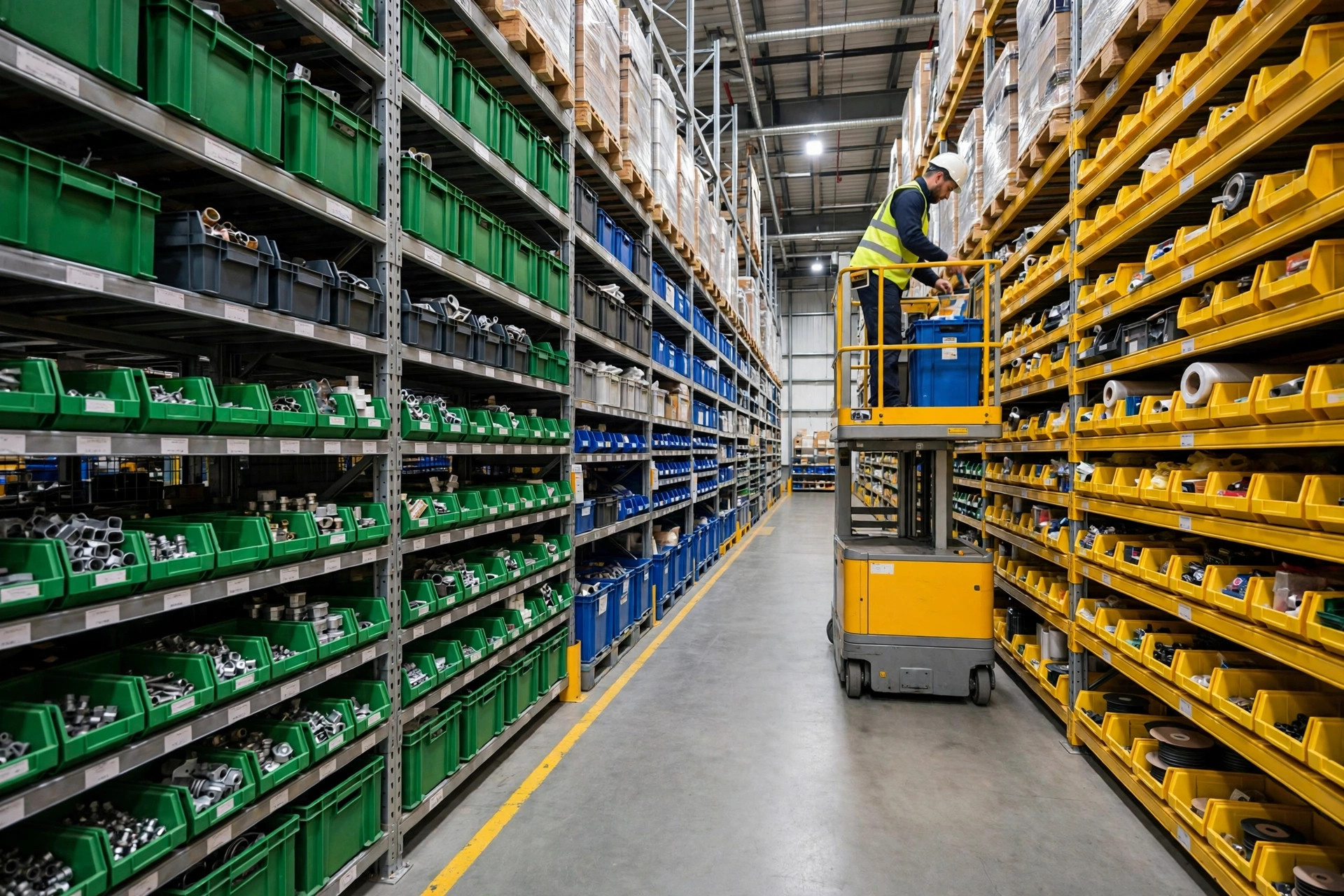
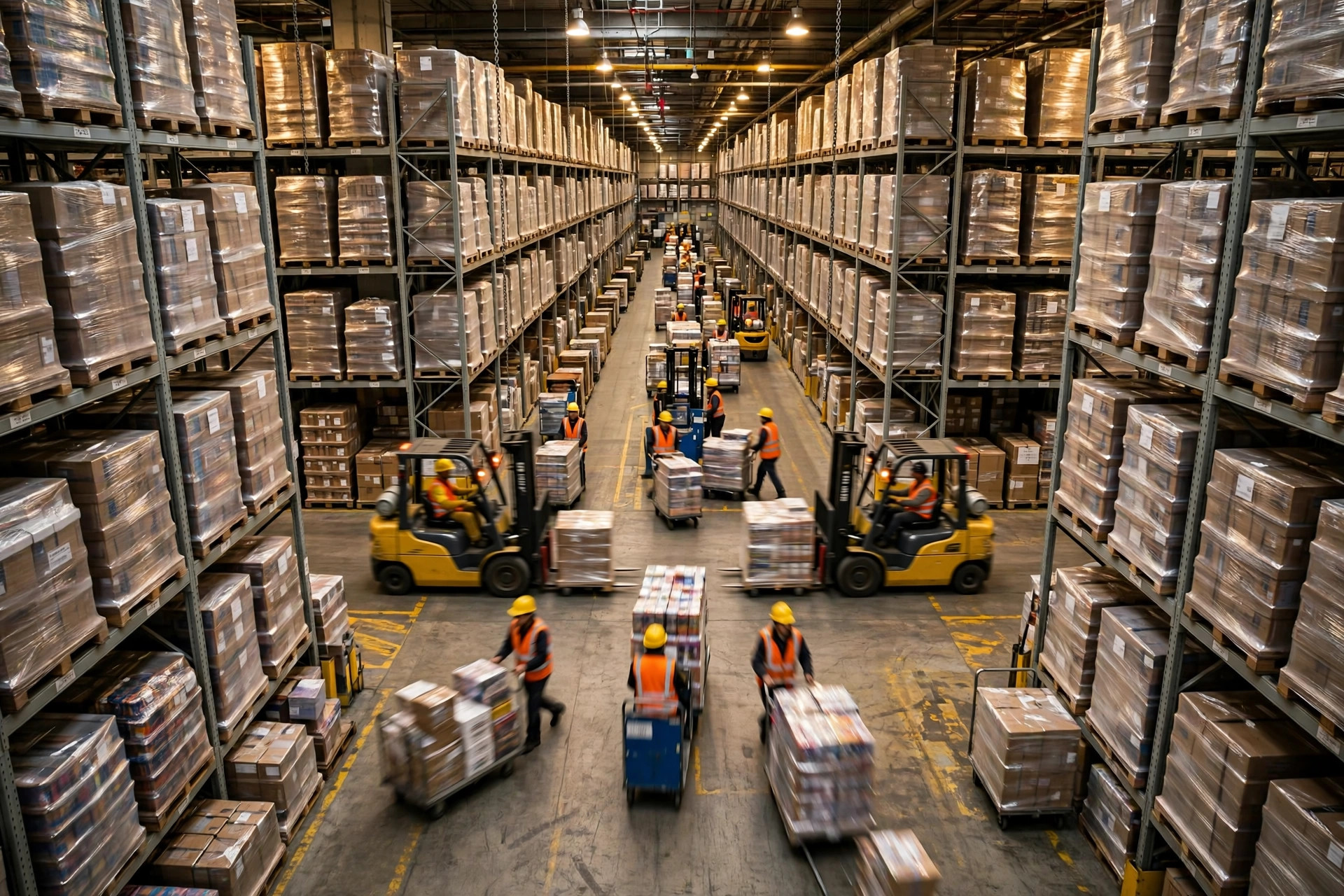
One Monday morning this August, right after the night shift handover, I ran into Lao Li at the mouth of aisle 3. He was straightening up slowly, one hand on the rack, the other pressed against his lower back. That is what bad heavy-item ergonomic slotting looks like in real life: not a chart, not a policy, just a man getting up too carefully. The case he had wrestled the night before held motor parts, 70 pounds a case, and someone had tucked it onto the third level the week before to save space. Reaching it meant going up on your toes.
Let me be honest with you. We run a warehouse of about 200 people, and heavy goods are not some edge case for us. Motor parts, valve cases, coiled cable: plenty of what we pick weighs more than 45 pounds a case. For years we slotted by empty space. Whatever level was open got the freight, and the rack utilization numbers looked great on paper. The people paid for it. Bending low to dig out a bottom level, stretching high to pull down a top level, all day long, shoulders and backs taking turns complaining. Lao Li finished his shift that day without calling out. But I knew better than to call that a win. A man pushing through pain is not a solution. Sooner or later he is out for real, and then the whole shift is short one person, which costs far more than the space we saved.
The Waist-High Zone Is Where Heavy-Item Ergonomic Slotting Pays Off
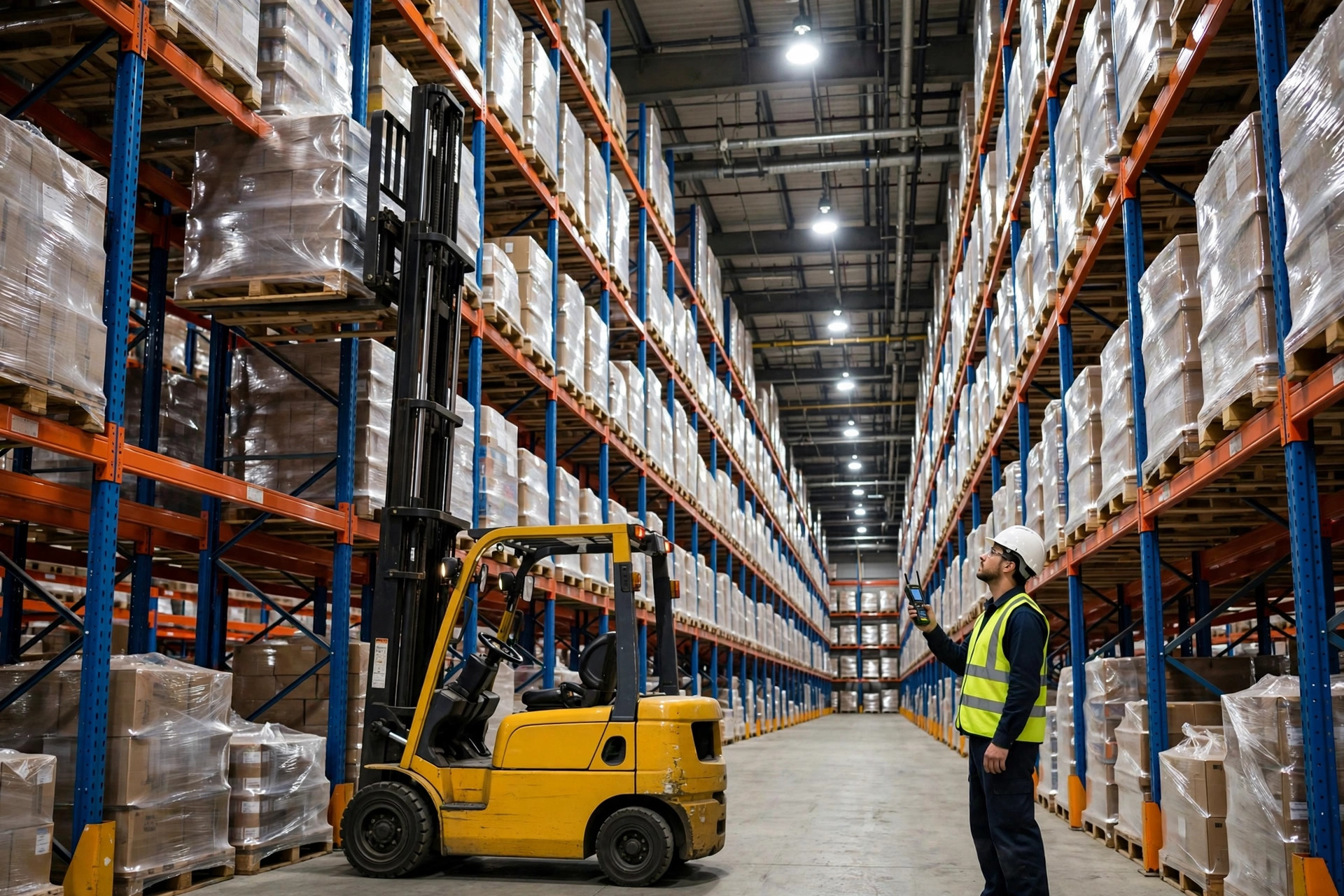
Our rule now is deliberately simple: the level you can reach standing straight, without bending and without going up on your toes, is where heavy goods live. On our racks that works out to roughly 28 to 43 inches off the floor. Cases between 33 and 55 pounds all go to that level. Anything below knee height is reserved for full pallets moving by forklift, so nobody has to bend down and dig. The high levels hold light, bulky freight only. We would rather leave a high slot empty than put something heavy up there.
A new hire named Xiao Zhang taught us this rule the hard way. On his first summer day, he followed Lao Li on a pick and reached on his toes for a valve case on the third level. The case tipped. Nobody got hurt, but Lao Li pulled the case down himself on the spot and told me afterward that new hires should never be given that job. He was right. A new person does not know how heavy a case really is, and he is too embarrassed to say he cannot reach it. If the slotting is wrong, the worker ends up carrying the mistake with his own back. That is not management. That is passing the buck.
The Sunday afternoon we fixed it, we did not wait for peak season to pass. Lao Li led six people and spent half a day moving heavy cases down in aisles 3 and 5, more than 60 cases changing levels. I stood there and watched: a valve case that used to take two people and a step stool to reach could now be pulled out by one person standing flat, turned, and set straight onto a pallet. The next morning Lao Li told me the pickers looked different. Slotting takes half a day to fix, and then it pays you back every single day.
Draw the Forklift Line by Weight, Not by Mood
Before, the split between forklift work and manual work ran on mood. When the forklifts were busy, people carried two extra cases. When people were tired, the forklifts made two extra trips. There was no line, just whoever spoke loudest that day. Now the line is drawn by weight, and it is posted at the mouth of every aisle in plain language:
| Case weight | Where it goes | Who handles it |
|---|---|---|
| Over 55 pounds | Ground level or forklift zone, never on a manual rack | Forklift |
| 33 to 55 pounds | Waist-high level | Manual, one case at a time |
| Under 33 pounds | High or low levels, either is fine | Manual |
A table like that looks rigid, but it makes the day easier. A picker never has to guess whether he can take a case. The shift lead never has to negotiate a forklift trip. We also color-coded the cases: a red tag means forklift freight, a yellow tag means waist-level freight. A new hire walks into an aisle, glances at the tag, and knows how to handle the case without asking anyone.
We learned this the expensive way last peak season. Someone skipped a forklift trip and tucked a 62-pound case onto a high manual shelf. The picker who pulled it down strained his back and missed three days. For those three days, everyone else covered his work, and the people covering got tired and resentful in turn. One skipped forklift trip cost us the rhythm of the whole shift.
Two People Carrying Is Not a Safety Plan
Here is a judgment that goes against common sense, and some of my own veterans did not like hearing it: two people carrying a case together is not safer. It looks safer. But the moment one person shifts a half step out of sync, or lets go a second early, the full weight lands on the other person, and that is exactly how a back goes out. Our rule now: any case over 88 pounds, or any carry where one person is not confident walking 30 feet with it, goes on a forklift or a lift table. Two people do not muscle through it.
The veterans pushed back at first. They thought calling equipment was making a fuss. I did not argue the point. I changed one thing instead: calling a forklift is not counted against your speed score. Once I said that out loud, compliance followed. The equipment was bought to do this job. Having people wrestle an 88-pound case while a forklift sits idle is a bad trade by any measure.
The hardest part to police is the phrase "just this one case." During peak, someone always says it: just this once, lift it and move on. I stop that sentence whenever I hear it. Rules die the same way every time, one exception at a time, and the second exception becomes the habit. If we are truly in a rush, I would rather go coordinate a forklift to jump the queue than save a few minutes on somebody's spine. Waiting five minutes for equipment beats losing a man for three days. That is not a close call.
Ergonomic Slotting for Heavy Goods Is Also a Morale Decision
People ask me: if heavy goods take up all the waist-high slots, where does the light freight go? Fair question. The honest answer is that it goes higher, and the people picking light freight walk a few extra steps. But count the whole bill, not just the steps. One back injury means three days out, a short-handed shift, and everyone else covering, getting tired, and getting sloppy. Flip it around: when slotting lets a person finish a shift without his back aching, he comes back the next day willing to work well. Morale is built exactly like that, one painless shift at a time.
This is how we run the warehouse now: heavy goods at waist height, overweight cases on machines, and the forklift line drawn by weight. No new system, no new equipment. We just re-slotted the racks and posted the rules at the aisle mouths. These days, when Lao Li trains a new hire, the first lesson is not how to move fast. He walks the new person to the aisle sign, reads the weight table together, then has him pull one case from the waist level with his own hands, so he learns what "easy to handle" actually feels like. Veterans teaching newcomers pass on more than technique. They pass on judgment: which jobs you can push through, and which jobs you must hand to a machine.
So here is my reminder to fellow managers. Tonight, go look at the highest level in your warehouse. If there is anything over 45 pounds sitting up there, do not wait. Move it down now. By the time somebody's back speaks up, you are already late.
By Chen Feng, Warehouse Operations Manager