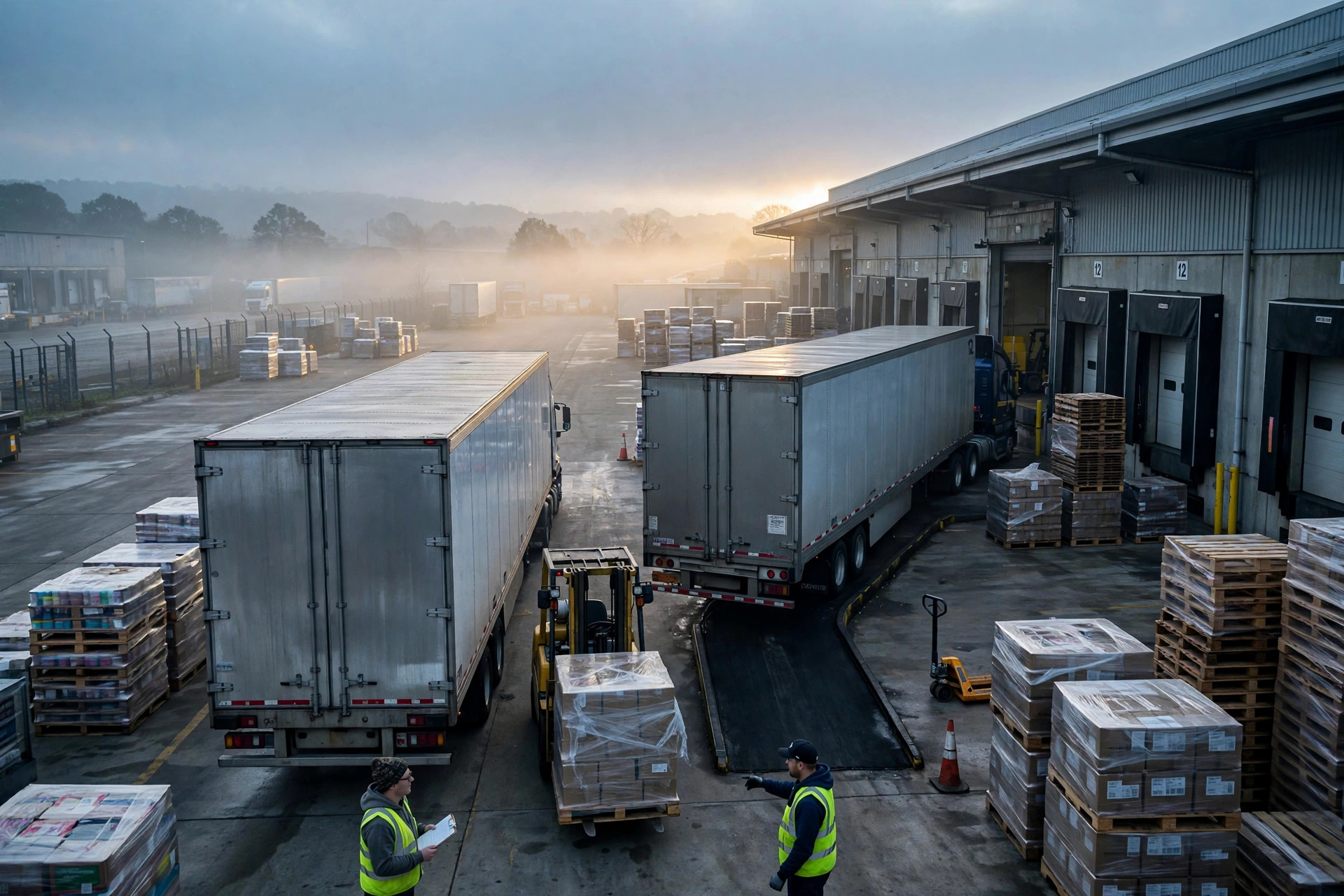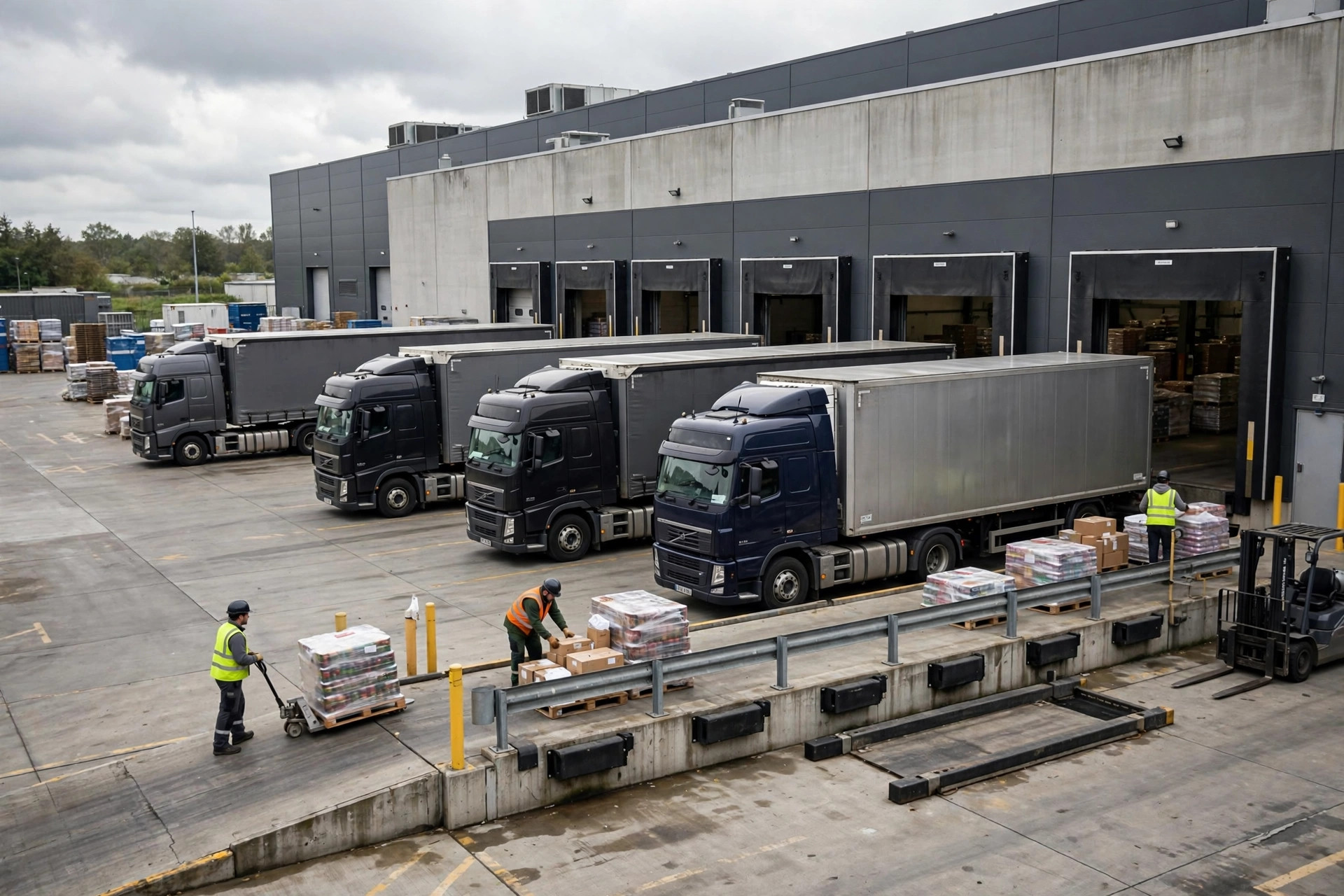
Dock door utilization is supposed to be under control when the appointment book is full. Tell that to the 14-door 3PL warehouse in Fontana, California, where one October day last year cost $4,680 — in detention fees, idle dock time, and overtime nobody budgeted for. Their appointment calendar was completely full. Every slot, every door, every hour. And still, trucks idled in the yard for 45 minutes on average before anyone touched them.
If you run a warehouse, this is the most expensive paradox in your building: a full appointment book is supposed to mean dock door utilization is under control. In practice, the full book and the queue coexist just fine. Let me show you the money.
The queue has a price tag — count all of it
A truck that waits is never just "a little delay." For a mid-size operation receiving 20 trucks a day, each averaging 40 minutes of idle time, the annual ledger looks like this (figures below are illustrative, based on a real operator's books; your contracts set your real numbers):
| Cost line | How it is calculated | Annual estimate |
|---|---|---|
| Carrier detention fees | 20 trucks x 40 min x 260 days, $75/hr after the standard 2-hour free window | ~$173,000 |
| Idle dock time | Doors reserved but unproductive while drivers wait; lost throughput you can never sell again | 2,900 idle door-hours |
| Yard congestion labor | Extra yard jockey hours, staging, re-sequencing | ~$35,000 |
| Overtime at the dock | Late starts cascade into the evening shift | ~$48,000 |
| Total visible drain | ~$256,000/year |
Notice what is not in the table: the appointment software subscription. You already paid for that. The irony is that the queue survives it.
Why a full book still produces queues
An appointment system manages reservations. It does not manage variance. Three gaps explain nearly every queue I have ever costed out:
1. One-size-fits-all time slots. Most facilities give every truck the same one-hour window. But a drop trailer takes 25 minutes; a live floor-loaded container takes 90. When you average them into identical slots, the schedule looks tidy and the reality drifts — each 90-minute job eats the next truck's slot. A Dallas food distributor fixed exactly this in 2024 by splitting windows into three service tiers (30/60/90 minutes by load type). Door utilization rose from 61% to 79%, and average wait fell from 38 minutes to 9. Same doors, same labor, same volume — different arithmetic.
2. The no-show / late-arrival dilemma. Some percentage of trucks will always be late or never show. If you do not overbook, empty doors sit idle and utilization collapses. If you do overbook, you manufacture the queue you were trying to avoid. Most operations pick one extreme and eat the cost of the other. The answer is not philosophy — it is data: track no-show rates by carrier, lane, and day of week, then overbook only where history earns it.
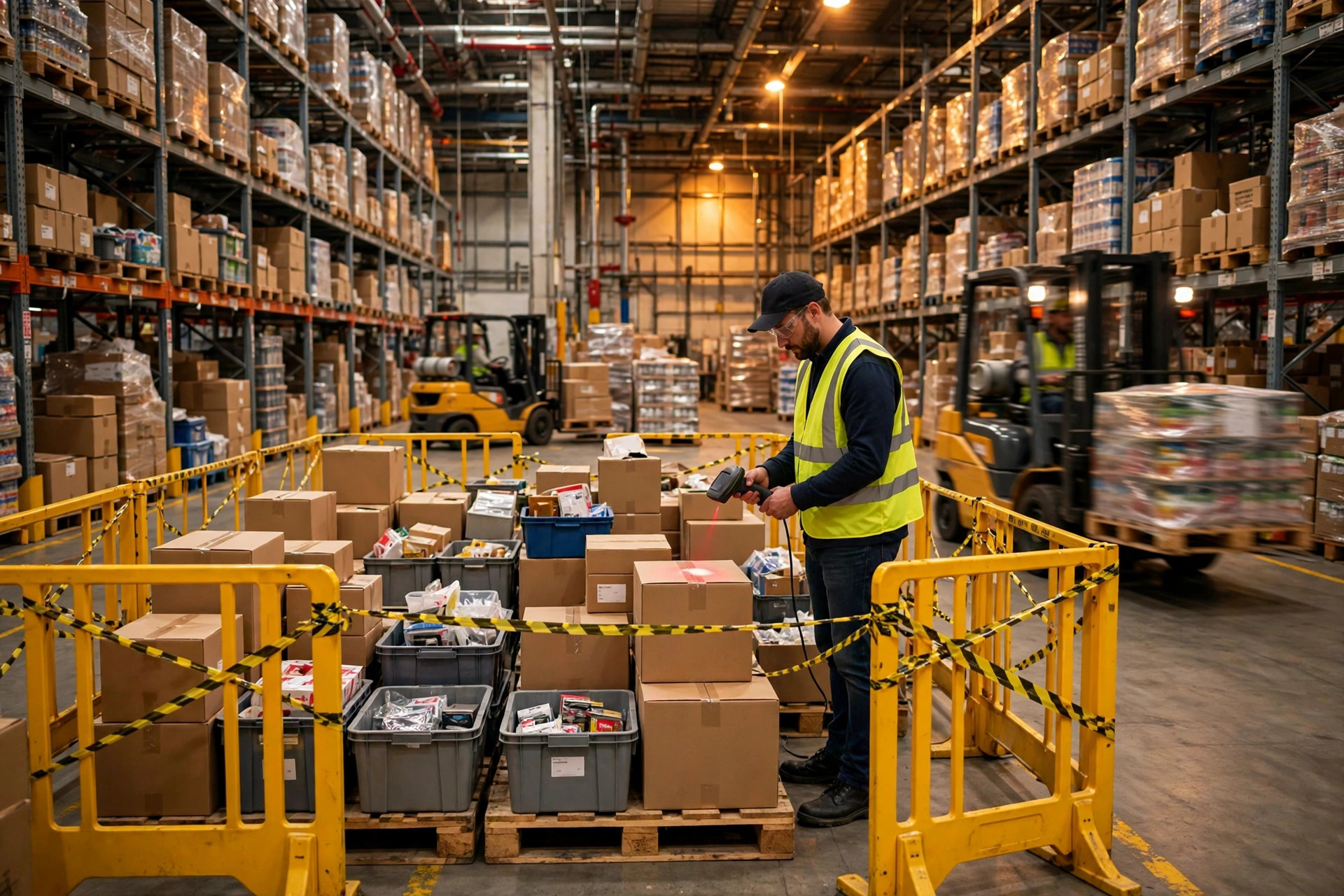
3. The schedule is managed; the dock is not. Appointments end at the guard shack. After that, nobody tracks dwell time per door in real time, so a slow unload stays invisible until three trucks are stacked behind it. A reservation system without live door telemetry is a budget without an accountant.
The counterintuitive part: 100% utilization is a disaster
Here is the trade-off nobody wants to hear: a dock running at 100% scheduled utilization is mathematically guaranteed to queue. This is basic queuing theory, not opinion — as utilization approaches 100%, waiting time grows exponentially with even tiny variance. The cheapest operating point for most warehouses is 75%–85% scheduled door utilization: busy enough to earn, loose enough to absorb the late container that always shows up on Friday.
So "fully booked" is not success. It is the most expensive version of utilization, wearing a tidy disguise. A door sitting empty for 20 minutes between well-planned appointments costs you the door rate; a door buried under a two-hour queue costs you the door rate plus detention plus overtime. Empty is cheaper than congested.
Where dock door utilization leaks — and how to plug it
Four levers, in order of payback speed:
Lever 1: Size the window to the work. Profile your average unload time by load type for two weeks. Anything with a coefficient of variation above 30% gets its own window length. This single change typically cuts wait times 40%–60% with zero capital spend.
Lever 2: Price the free time. Give carriers a fair free window (industry practice is about 2 hours), then charge detention by the half hour and enforce it. When waiting has a price, late arrivals and slow paperwork mysteriously improve. Put the money you collect back into the labor budget for peak doors.
Lever 3: Watch the door, not just the book. Track actual dwell time per door per appointment, in real time if possible. The metric that matters is start variance — how far actual unload start drifts from the appointment time. If average start variance exceeds 20 minutes, your schedule is fiction; fix the schedule before buying more doors.
Lever 4: Stage the yard like a buffer, not a parking lot. A small number of staging spots between the gate and the doors absorbs arrival variance without touching utilization. The cheapest capacity you will ever buy is a few painted rectangles of asphalt.
A number to take home
Before you approve another door, a bigger yard, or a fancier scheduling system, run this formula:
Required doors = (trucks per day x average door occupancy in hours) / (operating hours x target utilization)
Use 0.80 as target utilization — not 1.0. A 20-truck day with 1.2 hours average occupancy over 12 operating hours needs 20 x 1.2 / (12 x 0.80) = 2.5 doors of real capacity — and the rest of your doors are buying you the 20% slack that keeps queues from forming. If your formula says you need fewer doors than you have and trucks still queue, the problem is never capacity. It is arithmetic — and arithmetic is the cheapest thing in the warehouse to fix.
By Lao Zhou, Logistics Cost Analyst