Last August, on a night shift, I cracked open the doors of a 40-foot container on our receiving dock and a wall of heat hit me in the face. The customer's rep went pale on the spot.
Folks, let me be straight: chocolate is the most high-maintenance diva I have ever handled. Chocolate warehouse storage lives and dies on temperature and humidity control — not on how cold you can get, but on how steady you can hold it. Three years running chocolate for a 3PL client, and year one handed us a claim that still makes my back sweat.
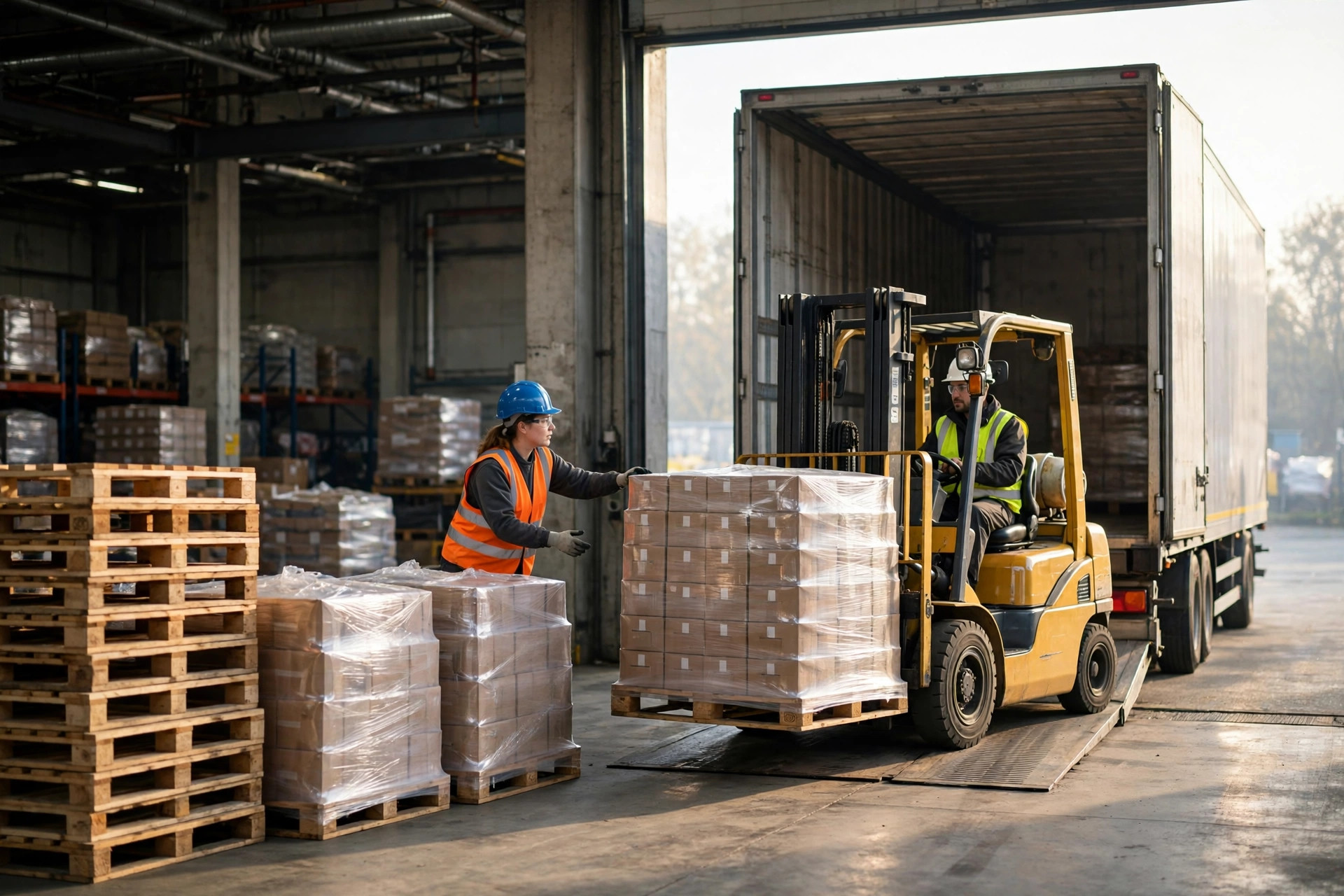
Here is what happened. Peak summer. A container of chocolate rolled into our warehouse close to 11 at night. The driver swung the doors open and the heat just poured out. The customer's rep was right there. His face went white. My stomach dropped.
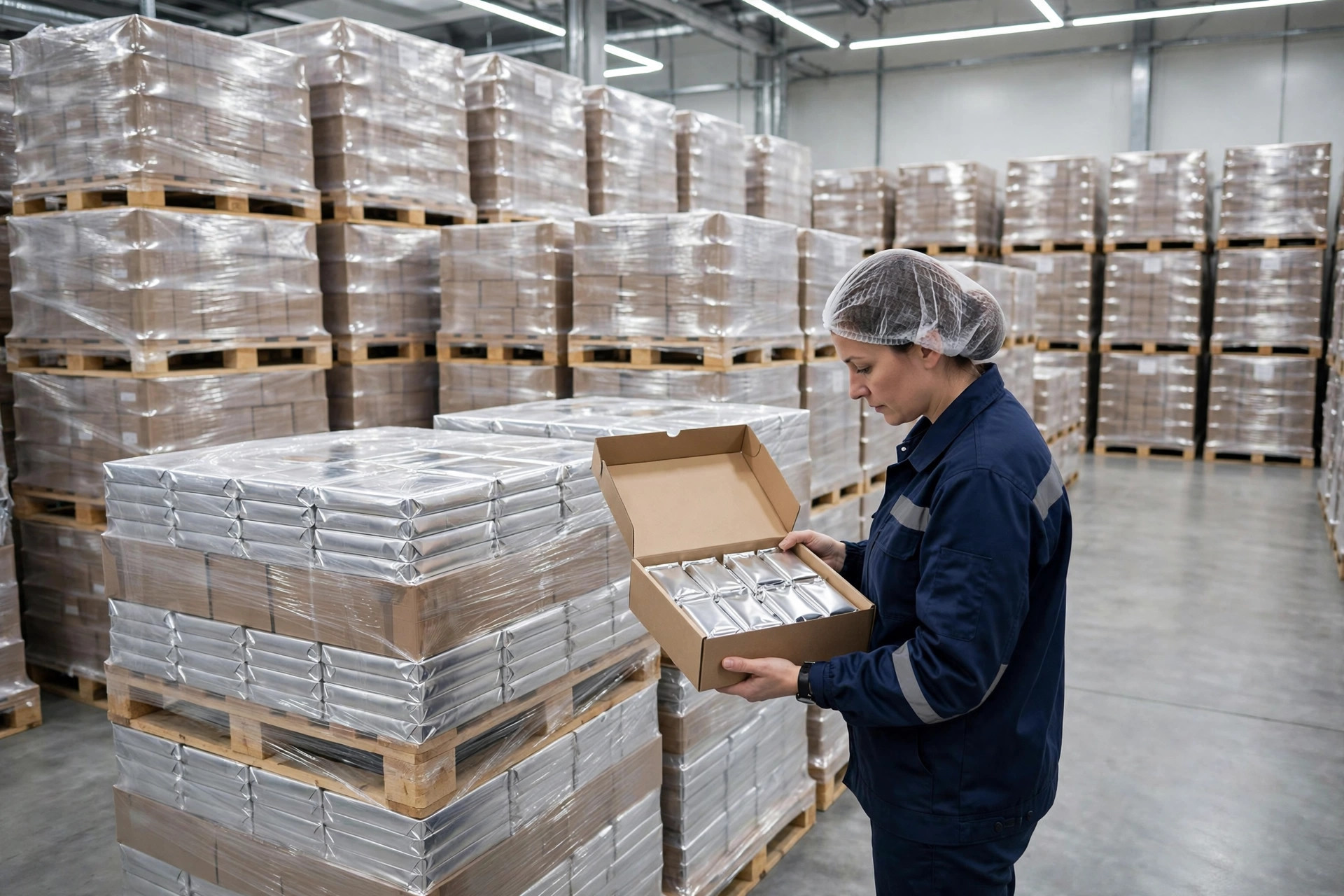
We broke it down: several pallets of chocolate with a whitish film across the surface, like dust. The rep refused the shipment on the spot and wanted us to pay. The driver was not having it. "That box barely ran the reefer the whole trip," he said. "Your warehouse's problem, not mine." We argued on the dock until 2 a.m. In the end we covered the lab testing.
The lab came back with two words: fat bloom. Temperature had swung in transit, cocoa butter migrated to the surface and recrystallized — safe to eat, ruined to sell. This client makes premium chocolate. That shipment was discount-bin material.
That claim cost us the lab fee plus part of the cargo loss. What really got me was the number I looked up afterward: cocoa is trading around $12,605 a ton, according to The Times. At that price, no cargo owner tolerates any loss. After that shipment I understood the whole game: chocolate warehouse storage is all about one word — steady.
Why That Container Turned White: Temperature and Humidity at Work
Bloom comes in two flavors, and you had better learn to tell them apart.
The first is fat bloom: the surface turns white or grayish, like a fogged-up window. Temperature swings push cocoa butter to the surface, where it recrystallizes. Looks like mold, but it is not — though once premium chocolate goes white, its value falls off a cliff.
The second is sugar bloom: the surface turns sticky and grainy. The culprit is humidity — damp air, or chocolate moving from a cold space into a warm one so condensation forms. The water evaporates, the sugar stays behind. Customers reject it even faster.
Two iron rules, burned into my brain: hold 55–65°F (12–18°C) and keep it steady; hold humidity under 50% if you can, never let it cross 70%. Note the word "steady" — not "as cold as possible." We learned that the hard way.
Three Days of Mapping: What Chocolate Warehouse Temperature Really Looks Like
After that claim, the client gave us one more chance — but only if we did a full temperature and humidity mapping first, with data to back it up.
We were rookies, so we asked an old hand who runs food warehouses and settled on a rough layout: one probe at the main door, one in staging, one in each corner, two buried in the middle of the pallet stacks, one under an AC vent. Three days and nights through a heat wave, warehouse running normally — doors cycling, forklifts rolling. Real conditions, not lab conditions.
The data stunned us. The door probe swung hardest — every busy afternoon its line looked like a heart monitor. The probes in the middle of the stacks were nearly flat. Humidity matched: on the rainy day, the door probe spiked while deep inside barely moved.
Two conclusions shaped everything after. First, chocolate never sits near the doors — several rows of racking buffer the dock, and nothing stages there overnight. Second, the AC controller's number means nothing alone. What matters is the temperature inside the stack, next to the product. The panel can say 65°F while the goods live in a different world.
Chocolate Storage: Conditioned Warehouse vs. Cold Storage — What We Settled On
After the mapping, the client asked: why not just use cold storage? Zero to four degrees — what could go wrong? I was tempted. But we sat down with the client and a refrigeration engineer, ran the numbers, and cold storage turned out to be a trap:
| Conditioned warehouse (12–18°C) | Cold storage (0–4°C) | |
|---|---|---|
| Temperature stability | Steady, small swings | Steady, but too cold |
| Risk at outbound | Low, natural handoff to ambient | High — condensation the moment it comes out, sugar bloom moves in |
| Humidity | Easy to hold under 50% | Cold and dry; chocolate picks up odors and the texture suffers |
| Energy | Normal air conditioning | Power bill jumps hard |
| Crew | Normal work clothes | Working in winter jackets, slower pace, grumpier crew |
Here is the counterintuitive one, the most important line in this article: a colder warehouse is not a safer warehouse — 0–4°C treats chocolate worse. The moment chocolate leaves cold storage for an ambient staging area, the surface beads with condensation: sugar bloom's perfect crime scene. Cocoa butter also changes crystal structure at very low temperatures, raising fat-bloom risk after warm-up. You think you are tucking the chocolate into a warm coat. You are throwing it from a freezer into a sauna, and the bloom comes faster.
Our final call: a conditioned warehouse at 12–18°C, humidity under 50%, never above 70%. Spend the money on "steady," not on "cold." Two summers later, zero claims — and now the client recommends us to everyone he knows.
Beyond the Dock Doors: The Road and the Clock
With the warehouse sorted, the traps on the road turned out just as nasty. Chocolate is a warehouse-plus-transport game. A steady warehouse and a swinging truck still adds up to a ruined shipment.
Our rules now: in summer, an insulated box truck is the minimum, a reefer is better — but the setpoint must sit inside that 12–18°C band. Never let a driver slam it to 0–4°C to "be safe." Too cold hurts more. The trailer gets pre-cooled, the driver has to be on site, and the temperature logger runs from the moment the seal goes on. Sealed data ends arguments.
On the receiving end, our first move is not to unload. It is to open the doors and do three things: smell, look, measure. Smell for anything off — chocolate is an odor sponge. We learned that the painful way: a shipment once shared a cross-dock with scented soap, picked up the smell, and the customer rejected it outright. Since then, chocolate never shares a truck or a zone with anything scented.
Look at the cartons for water stains and crushed corners. Measure surface temperature with an infrared gun. If it has drifted out of band, we photograph everything before a single carton comes off. Document first, argue later — photos are evidence when the finger-pointing starts.
One last thing: expiry management. Chocolate is not canned soup — past its prime the flavor slides downhill, and premium customers are ruthless about it.
Our method is low-tech but it works: color-coded labels by receiving month, so anyone on the floor can see which batch moves first. The system flags approaching expiry, and we nudge the client to promote or transfer stock in time. Every monthly count, we send him a list of the shortest-dated stock. He feels like we care more about his inventory than he does — renewals have been easy ever since.
And the night-shift alarms: the sensors text us when the band breaks. I have been woken up twice — a tripped dehumidifier, a dock door left open. Do not get annoyed at the 3 a.m. wake-up call. That alert is cheap insurance. Getting out of bed beats paying for a ruined load the next morning, every time.
My honest take after all these years: with cargo like chocolate, the test is not how expensive your equipment is. It is how much attention your people pay. Anyone can read a thermometer. The real difference is whether your night crew gets up at 3 a.m. when the alarm goes off.
Parting note for fellow operators: before you quote a chocolate client, ask yourself three questions. Can your building genuinely hold 12–18°C, steady? Would you sign a penalty clause on temperature and humidity excursions? Will your night crew get out of bed at 3 a.m. for a truckload of chocolate? Three yeses — take the business. One "not really" — fix the fundamentals first. Chocolate is a diva, and divas punish the unprepared.
By Chen Feng, Warehouse Operations Manager