Here's my answer up front on the YMS vs WMS difference: if your operation crosses two of the three lines below, stop trying to stretch your WMS appointment module and buy a YMS.
The three lines:
- More than 30 truck moves in and out per day.
- More than 20 dock doors, with appointment conflicts at least 3 times a week.
- More than 15 trailers sitting in the yard year-round, and you're still paying detention every month.
I've seen this exact mistake three times. Three times a client asked me: "Lin, can you just add a trailer-location field in the WMS? The yard is chaos." Three times I added the field. Three times they came back six months later: still chaos. The field existed, but nobody updated it, and the Excel sheet lived on.
The YMS vs WMS Difference in One Sentence
The YMS vs WMS difference is really one sentence: WMS manages freight inside the gate; YMS manages trucks and trailers outside it.
WMS thinks in documents: ASNs, receipts, orders, waves. It knows a shipment is "coming," but that's where its knowledge ends. What time the truck arrives, where it parks, where the empty trailer is, whether the driver has left — the WMS neither knows nor cares.
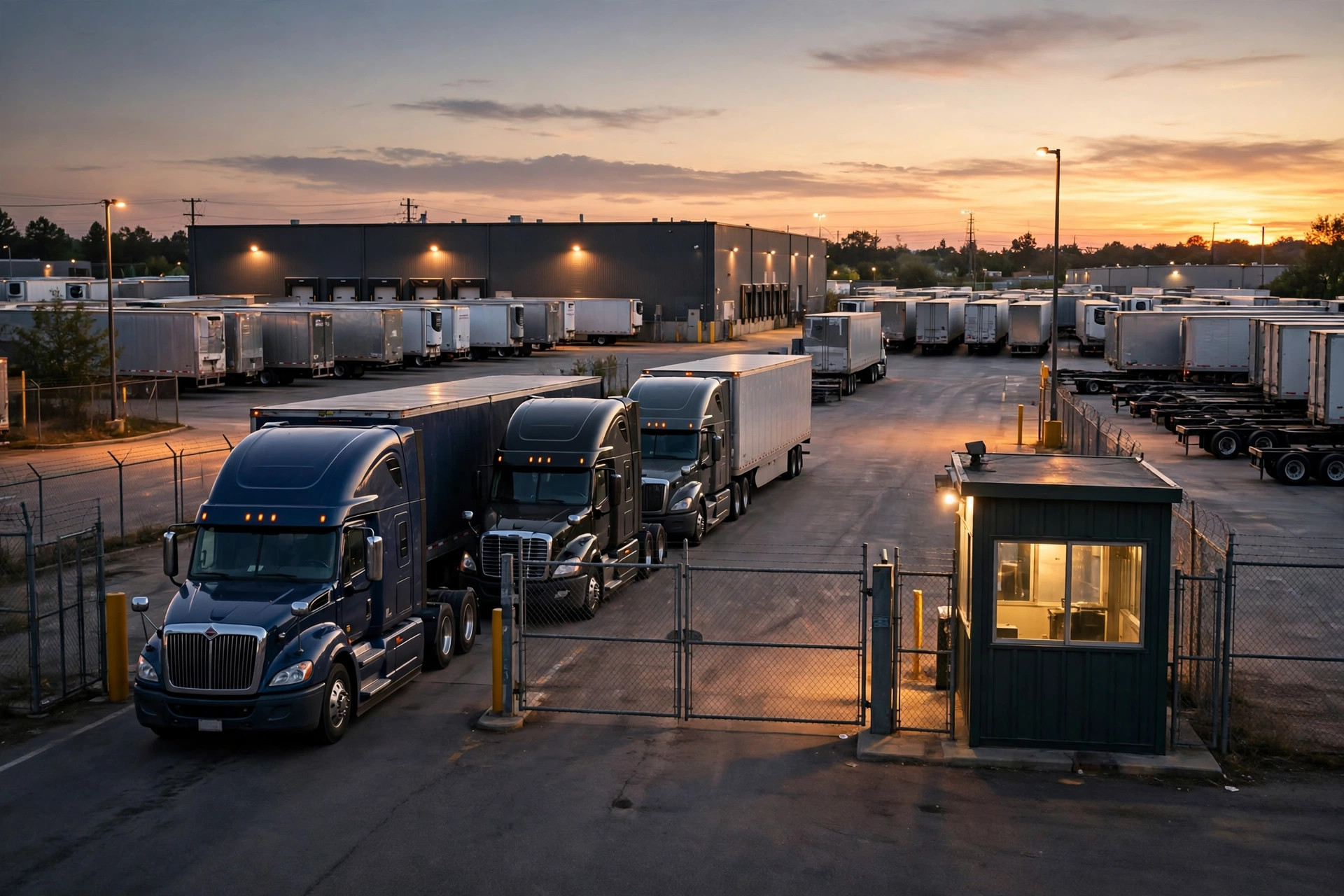
A YMS thinks in vehicles and locations: gate check-in, appointment scheduling, dock assignment, trailer tracking, drop-trailer management, yard moves, gate release. Its smallest unit isn't the SKU — it's the license plate and the trailer number.
Here's my rough rule for drawing the boundary: everything the gatehouse handles belongs to YMS; everything inside the four walls belongs to WMS.
Line One: How Many Trucks Move Through Your Gate Daily
My rule of thumb: 30 moves a day.
Where does 30 come from? Two gate attendants with a radio and an Excel sheet can humanly handle about 25 to 30 moves a day. Past that, the spreadsheet starts lying — wrong spots, forgotten updates, two people with two versions. That's not a people problem. It's a tool problem.
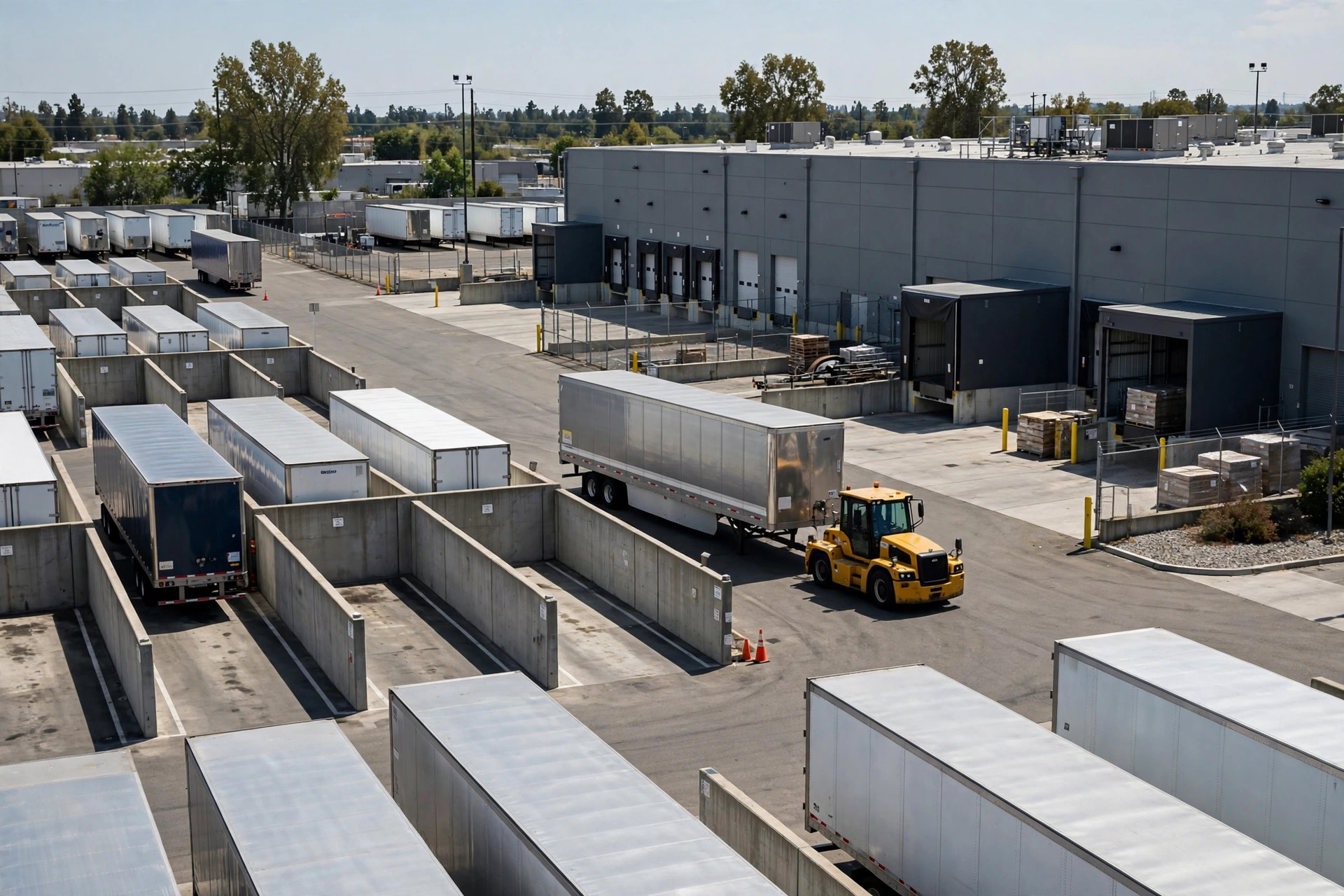
In 2023 I worked with a 3PL client in Ontario, California: 32 dock doors, 55 to 65 moves a day, 40-plus trailers in the yard at any time. Three gate attendants tracked trailer locations in Excel — "trailer number, approximate zone." The worst incident: a customer needed a trailer pulled, Excel said Zone B, it was actually in a corner of Zone D. It took two full days to find it, and detention charges kept running the whole time.
My call: lines one and three both crossed — YMS, no debate. We did three things at go-live:
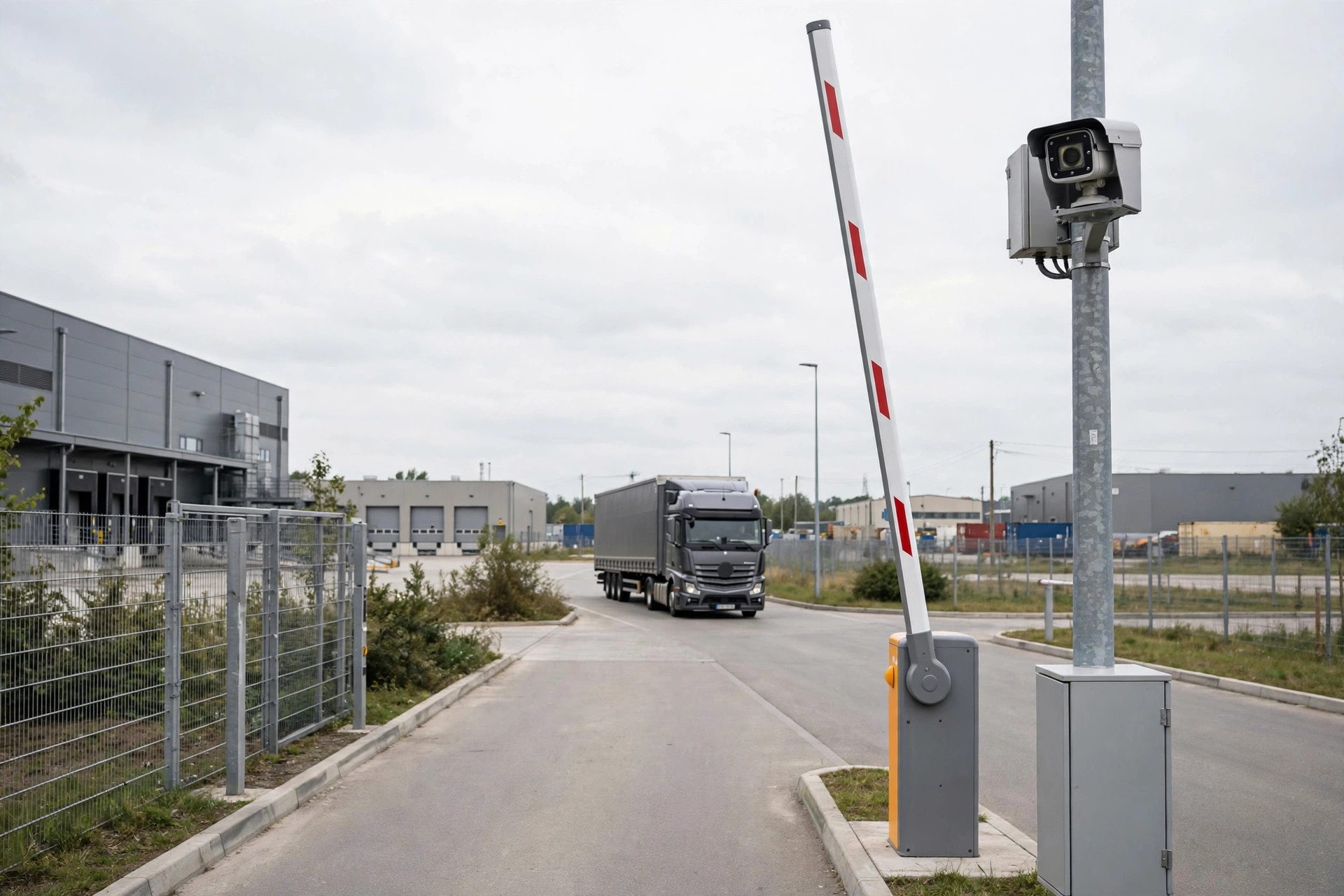
- License-plate cameras at the gate, so every entry auto-created a record — no more handwriting plate numbers.
- Every trailer spot numbered and painted; trailers scanned to a spot on arrival.
- Drivers scanned out at the gate, so the system calculated dwell time automatically.
Three months later: average trailer search time dropped from over 40 minutes to under 5, and the gate crew shrank from three to two — the freed-up headcount moved to appointment management.
Line Two: 20+ Doors and Weekly Appointment Conflicts
Why isn't the WMS appointment module enough? Because it handles "appointments" while a YMS handles "execution."
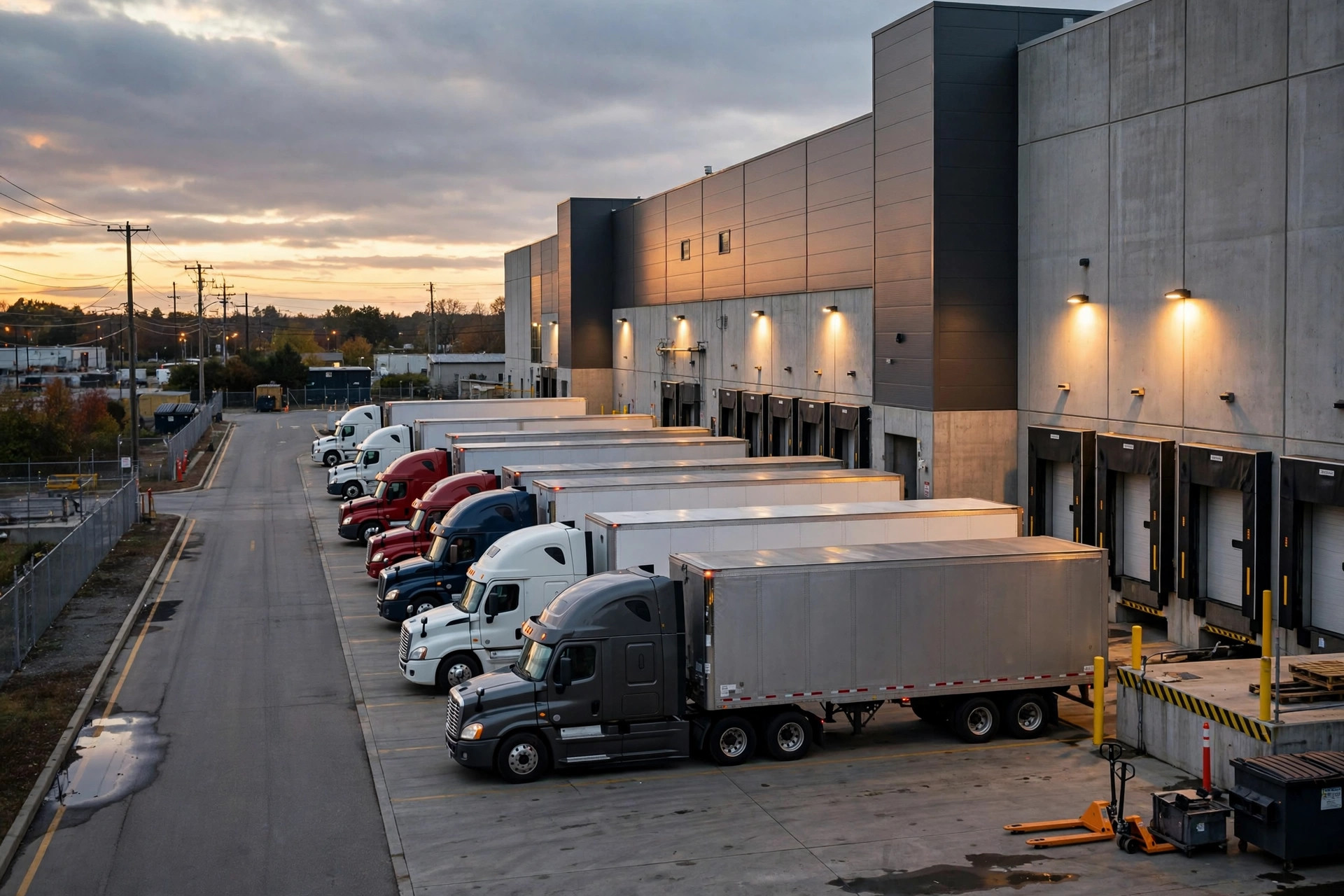
The appointment is only step one. The truck arrives early — now what? It's late — now what? A door is empty but the booked truck is two hours out — can you slip someone in? Every WMS appointment module I've seen answers all three with "adjust manually." And those three questions are the daily reality of any site with a lot of doors.
In 2024, an import deconsolidation warehouse near Savannah, Georgia: 24 doors, 40-plus moves a day. Appointments by phone, dock assignments by the supervisor's gut every morning. The worst week of peak season: six trucks backed up on the public road outside the gate, the longest waiting nearly 5 hours. Local police wrote tickets, and it made the local news traffic segment.
Line two, crossed cleanly. After YMS go-live, appointment windows tied to the gate: a truck misses its window, the system releases the door to the next one; an early arrival gets assigned to whatever door has a gap. The supervisor stopped answering phones to build schedules and started managing exceptions on a screen.
Under 20 doors, a good supervisor plus the WMS appointment module is usually enough. Past 20, scheduling by gut feeling is a conflict waiting to happen.
Line Three: Drop Trailers, Yard Moves, and Detention Bills
This is the most tangible line, because it's measured in dollars.
Industry numbers first: dry-van detention typically runs $50 to $75 per hour, with 2 hours of free time as the standard (per the 2025 industry guide); ATRI found 94.5% of fleets charge detention at an average of $63.71 per hour; a DAT survey found 63% of drivers wait more than 3 hours per stop.
My threshold: monthly detention over $3,000, or driver complaints 3-plus times a month, or yard moves over 50 a month. Hit any one of those and this line is crossed.
How does a YMS save this money? Timestamps. A driver claims "I waited 5 hours, pay me $300." You open the YMS: gate entry 10:00 AM, appointment 1:00 PM — he showed up 3 hours early, and those 3 hours don't count.
Then there's drop-trailer: a driver drops a trailer in the yard and leaves, coming back days later. Without a YMS, a dropped trailer is a missing person — the Ontario trailer lost for two days was exactly this failure mode.
The YMS vs WMS Decision Scorecard: Five Minutes, Five Dimensions
Still unsure after the three lines? Score yourself. Five dimensions, 0 to 2 points each:
| Dimension | 0 points | 1 point | 2 points | Your score |
|---|---|---|---|---|
| Daily gate moves | Under 15 | 15–30 | Over 30 | |
| Trailers staged in yard | Under 8 | 8–15 | Over 15 | |
| Dock doors | Under 10 | 10–20 | Over 20 | |
| Monthly detention / complaints | Rare | Occasional, under $3,000/mo | Frequent, over $3,000/mo or 3+ complaints/mo | |
| Drop-trailer / yard-move frequency | Almost never | A few times a week | Daily |
Scoring:
- 6 or more: buy the YMS. Every month you wait costs more than the project.
- 3 to 5: hold with the WMS appointment module plus disciplined process; re-score in six months.
- 2 or below: not yet. Spend the budget on using your WMS properly.
The Counterintuitive Part: Software Is the Cheapest Part of a YMS
Most people think a YMS is a software project. After 30-plus go-lives, I'll say it plainly: a YMS is a yard-infrastructure-plus-process project. The software license is the smallest slice of the spend.
Where does the money actually go? Three things:
- Gate hardware: license-plate cameras, self-service check-in kiosks — the hardware bill beats the software bill.
- Yard markings: every trailer spot numbered and painted. My Ontario client spent a full week just painting numbers.
- The hardest one: getting gate staff, drivers, and dispatchers to follow the process. Week one, the gate attendant found scanning annoying and kept handwriting.
So the trade-off: under 30 doors, a serious gate supervisor plus the WMS appointment module is plenty — the YMS math doesn't work. But if your yard is already at daily trailer hunts and monthly detention bills, the YMS pays for itself in a year on avoided arguments and fines alone.
One more counterintuitive truth: after YMS go-live, the yard doesn't necessarily get faster — but the arguments definitely get fewer. Detention disputes, lost trailers, door-hogging fights all get timestamps. What you're buying isn't speed. It's the end of finger-pointing.
Pre-Go-Live Checklist: Three Ways Projects Blow Up
- Going live before the yard is numbered. Trailer locations in the YMS read "somewhere in Zone C" — worse than the Excel sheet. Fix: two weeks before go-live, number and paint every trailer spot, photograph the lot, no exceptions.
- Training the gate crew exactly once. The gate is where all YMS data is born; if the attendant doesn't scan, the system is blind. Fix: week one, the implementation consultant camps at the gate and walks every truck through the process.
- Setting appointment windows from fantasy. You schedule 45 minutes per truck; the real unload takes 90. Fix: run two weeks on real data before locking the windows — don't guess.
If you're still on the fence, do one thing tomorrow: have the gate log a full week — moves per day, dwell time per truck, this month's detention bill. Put the numbers against the three lines and score the table.
Images in this article are AI-generated photorealistic illustrations for explanatory purposes.
By Lin Xiao, WMS Implementation Consultant