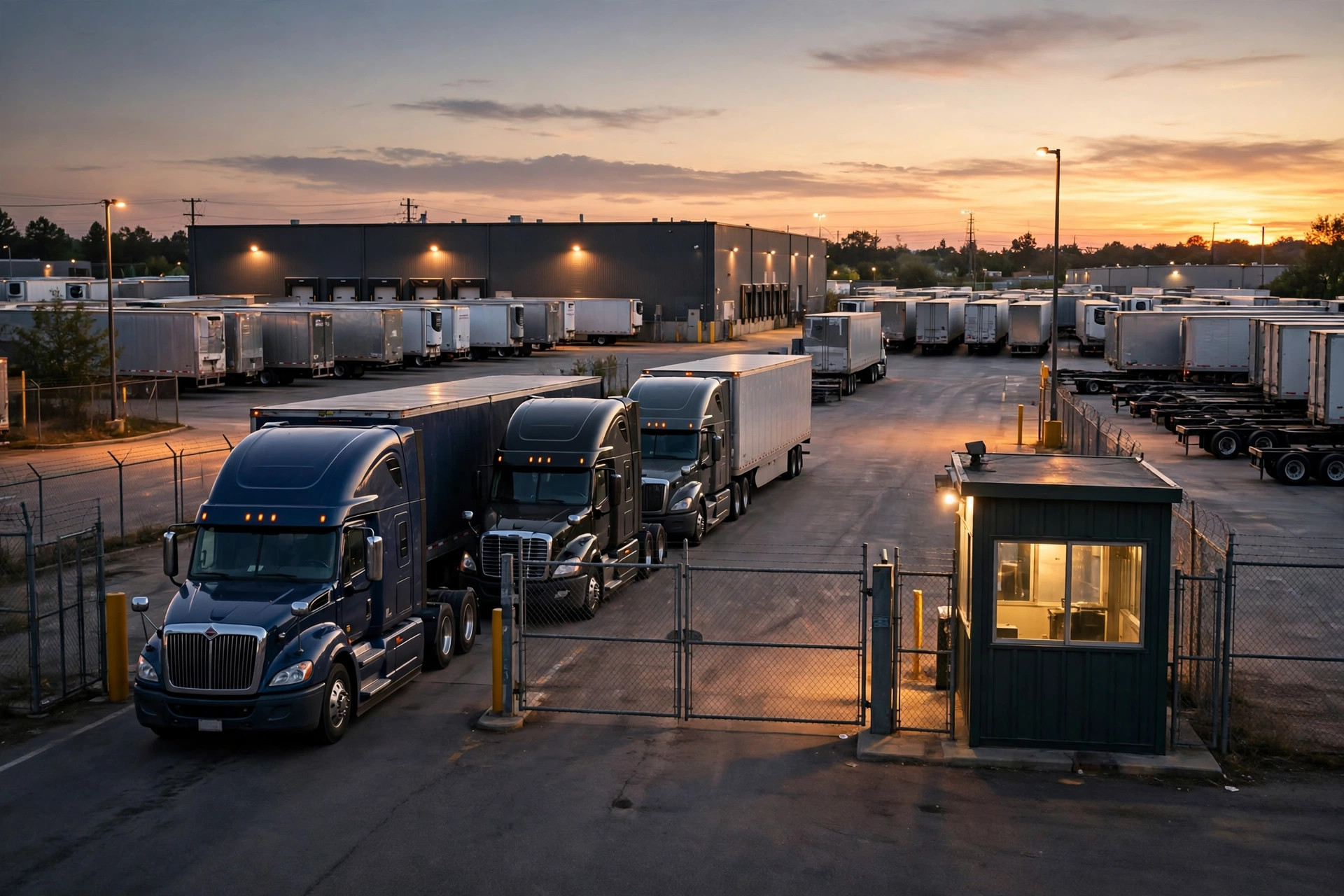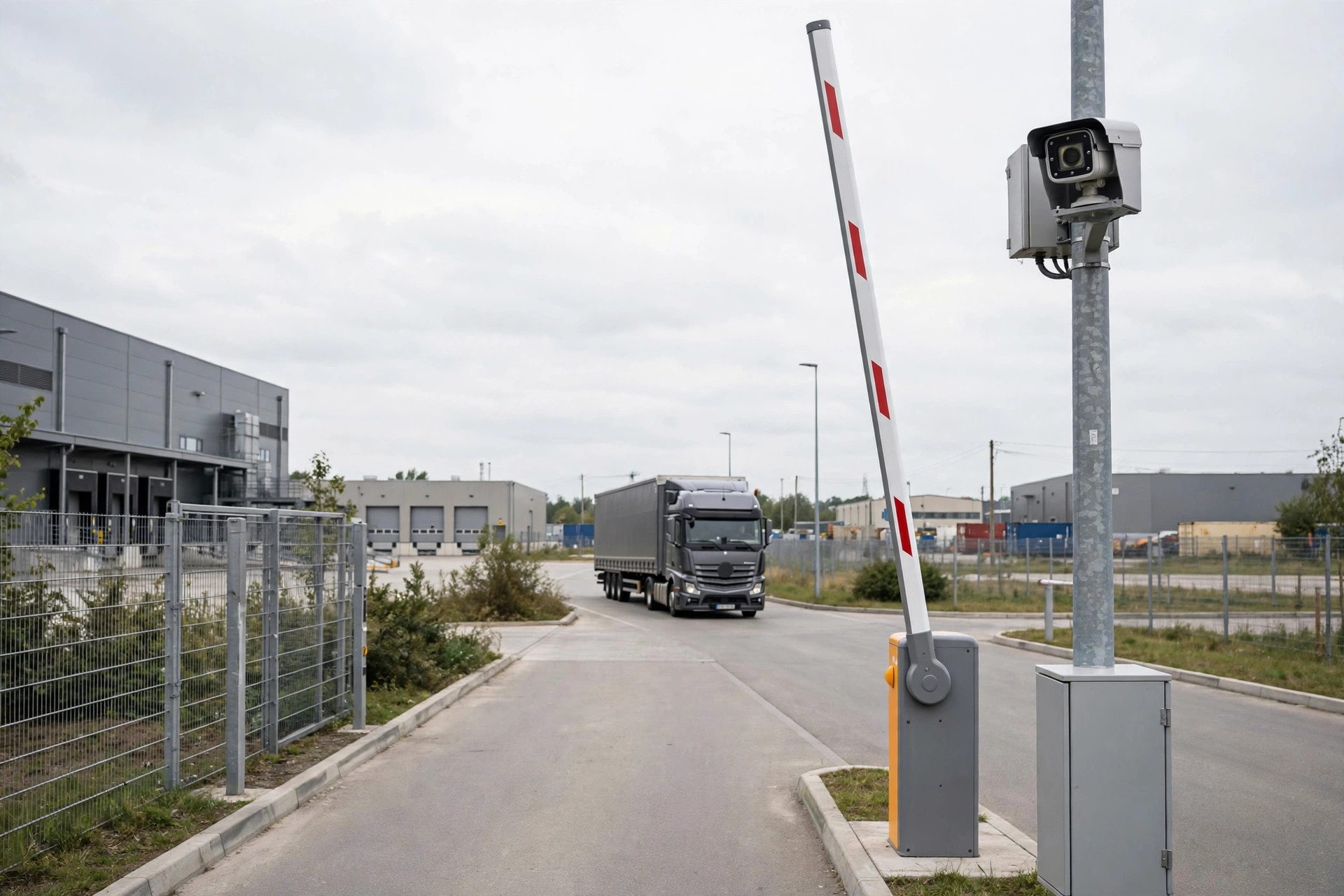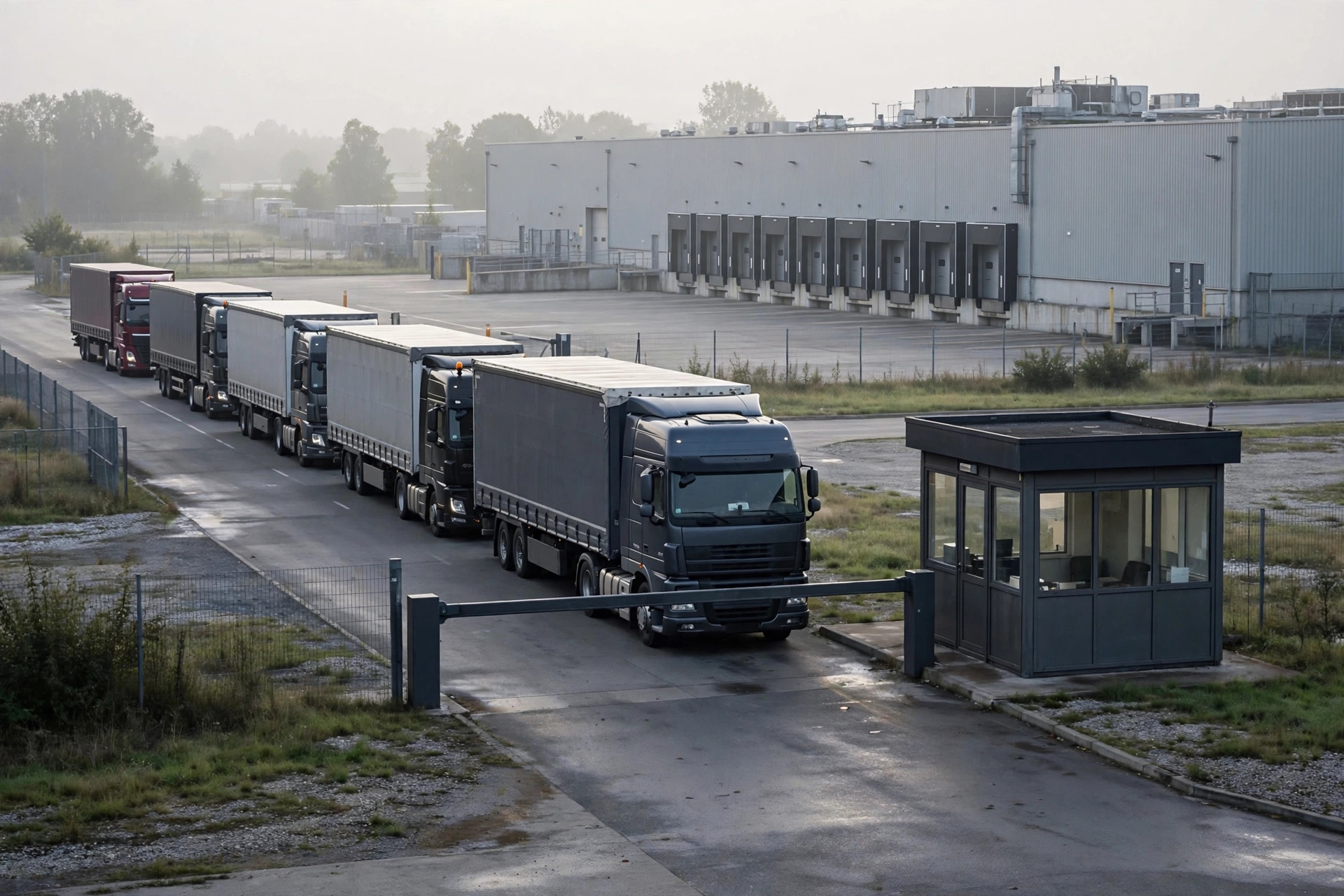
A truck missed its delivery appointment. In plain warehouse English, that's a no-show: the truck booked the 8 a.m. door, and at 8:30 its GPS is still 200 kilometers out. What just happened is not a scheduling hiccup — it's a contract default. Your yard locked up its three most valuable assets — a dock door, a stretch of gate throughput, and a yard spot — and the counterparty walked away.
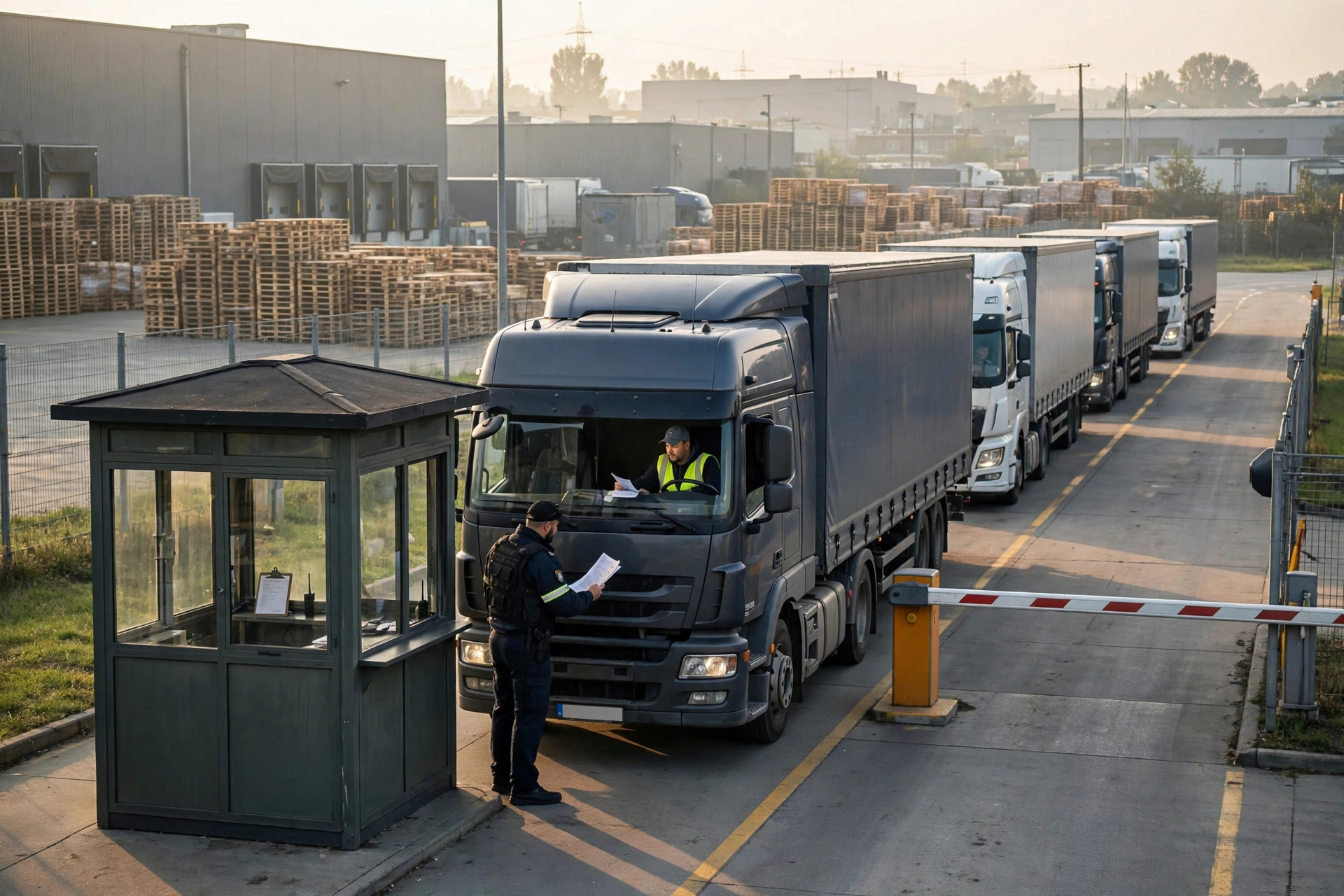
Last month I was on a project at a 3PL yard outside Suzhou. The dispatcher pulled up the YMS logs: 96 appointments in one day, 23 trucks never showed. Forty minutes of queue at the gate, six doors sitting empty inside. I told him one thing: your problem isn't capacity. It's that no-show trucks are holding your resources hostage while the trucks that actually arrived can't get in.
First, the Mechanics: A No-Show Locks Three Things, Not a Time Slot
Most people think a no-show just means "one less truck unloaded." Wrong. An appointment in a YMS is a three-part ticket: the dock door, the gate lane, and the yard spot. All three get locked for that time window. The truck doesn't come, and all three sit idle together.
Think of it like a restaurant reservation — except the restaurant loses a table and you lose a dock door plus half a gate. The chain reaction is the real killer: the no-show truck holds the slot, real trucks queue outside, drivers start calling after twenty minutes, the gate starts waving trucks through manually, and the moment that happens, your YMS data goes sideways. Here's the daily math: one no-show equals one door idle for two hours, one extra round of gate queue processing, and one yard spot wasted. Twenty-three no-shows out of 96 appointments is roughly a quarter of your gate capacity thrown away every single day.

Let me fire the first shot here: plenty of yards "solve" no-shows by calling the driver an hour ahead to confirm. My verdict — that's a fake fix. The trucks that were going to no-show still no-show; the ones coming still come. A no-show is a contract problem, not an information problem. Solving a contract problem with phone calls is like solving a traffic jam by shouting at it. You'll lose your voice; the road stays jammed.
Three Release Playbooks for No-Shows: Soft, Hard, Dynamic — and the Three Lines That Pick Between Them
Playbook one, soft release: grace period plus automatic return to the pool. The appointment window passes, you add a grace period (we usually configure 30 minutes), the truck still isn't there, and the YMS flips the status from scheduled to no-show. The door and the spot go straight back into the available pool. Cheapest to implement, carrier relationships unharmed. The weakness is obvious: it treats the symptom, and repeat offenders feel zero pain.
Playbook two, hard release: no-show equals void plus demerits. The appointment is voided on expiry — want to unload? Rebook and rejoin the queue. It also goes on the carrier scorecard: accumulate enough no-shows and you get downgraded — restricted booking rights, suspended appointment privileges. Fine amounts are per the carrier contract; I'm not inventing numbers here. Now the counterintuitive call: of all the yards I've worked with, the ones toughest on no-shows have the lowest no-show rates. Because the rules are written into the carrier contract, the carrier's dispatcher prices the cost of a no-show into their own planning before they even book. This is the warehouse-side reschedule policy in one line: rules up front, defaults priced in. Rules that live only in your SOP are not rules.
Playbook three, dynamic reallocation: the standby pool. Think airline standby — someone cancels, the waitlist moves up in order. Freed slots skip the public pool and go first to trucks already waiting at the gate, auto-pushed by the YMS on wait time and cargo urgency. This one has the highest technical bar: gate and yard data have to move in real time, and a freed slot needs a taker within minutes, or the release was theater.
| Soft release | Hard release | Dynamic reallocation | |
|---|---|---|---|
| Implementation cost | Lowest — just configure a rule | Medium — scorecard plus contract terms | Highest — real-time data linkage |
| Resource recovery speed | Fast — back to pool when grace expires | Fastest — void on expiry | Fastest — and someone takes it immediately |
| Carrier relationship | Friendliest | Tensest, except with repeat offenders who deserve it | Neutral — waiting trucks actually thank you |
| Best for | Small yards, rare no-shows | Chronic no-shows, yards with leverage | Perpetual gate queues, time-sensitive freight |
How do you pick? Three lines: daily truck volume, no-show rate, door count. Small volume and occasional no-shows — soft is enough. Chronic no-shows and carriers who know you won't punish — go hard. A gate queue every day plus freight that can't wait (cold chain, fresh produce, peak season) — go dynamic. One yard can mix: ambient freight on soft, reefer on hard.
Last year I watched hard release work end to end at a cold-chain warehouse: three no-shows meant a two-week appointment suspension. Two months in, the no-show rate fell from roughly one in five to single digits. The dispatcher told me the strangest part wasn't the number — carriers started calling ahead to reschedule instead of just vanishing.
Three Traps When You Put the Reschedule Policy Into Production
Trap one: rules configured in the YMS but missing from the contract. Your no-show state machine can be beautiful; without contractual teeth, carriers keep no-showing. Get the order right: contract first, system second. That's the first principle of any reschedule policy that actually works.
Trap two: one grace period for everything. Giving reefer and ambient freight the same 30-minute grace is fake fairness. A reefer door carries time cost; an ambient door doesn't. Set grace by cargo type — that's basics.
Trap three: resources released, information not. The slot is back in the pool, and the standby trucks are still sitting outside scrolling their phones — the push never arrived, so nothing was actually released. The release action and the notification action must come out of the same transaction. One minute of lag is a failure.
Second shot: some yards skip all of this and buy "AI no-show prediction" first. Straight talk — get the no-show state machine right first; prediction comes later. AI on top of a broken process is just gold plating on garbage. Shiny garbage is still garbage.
A complete truck missed delivery appointment playbook comes down to one line: defaults must cost something, and releases must move fast. Was the money worth it? Watch one number: your yard's monthly no-show rate. If it drops, the playbook works. If it doesn't, switch playbooks.
By Da Liu, Automation Engineer