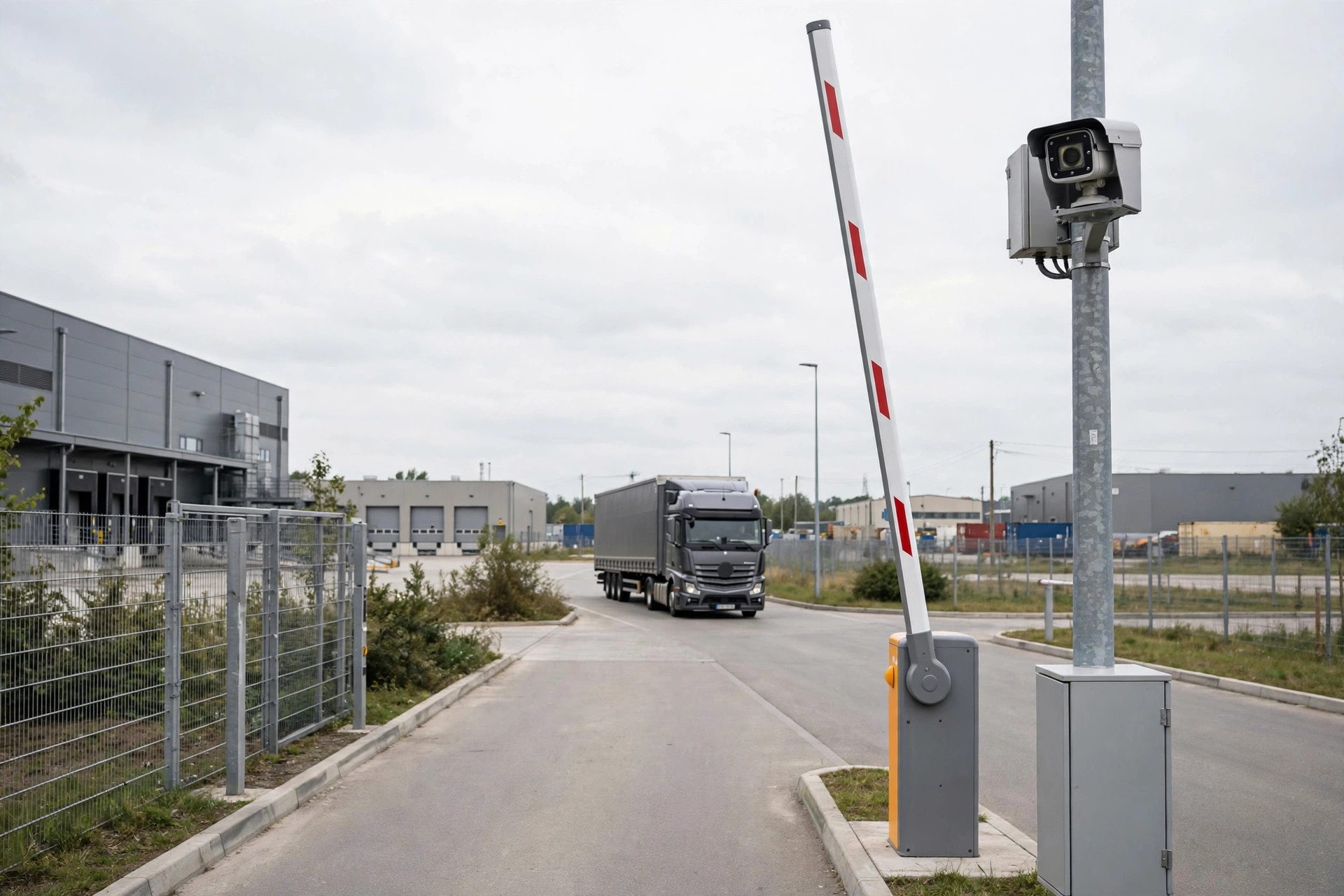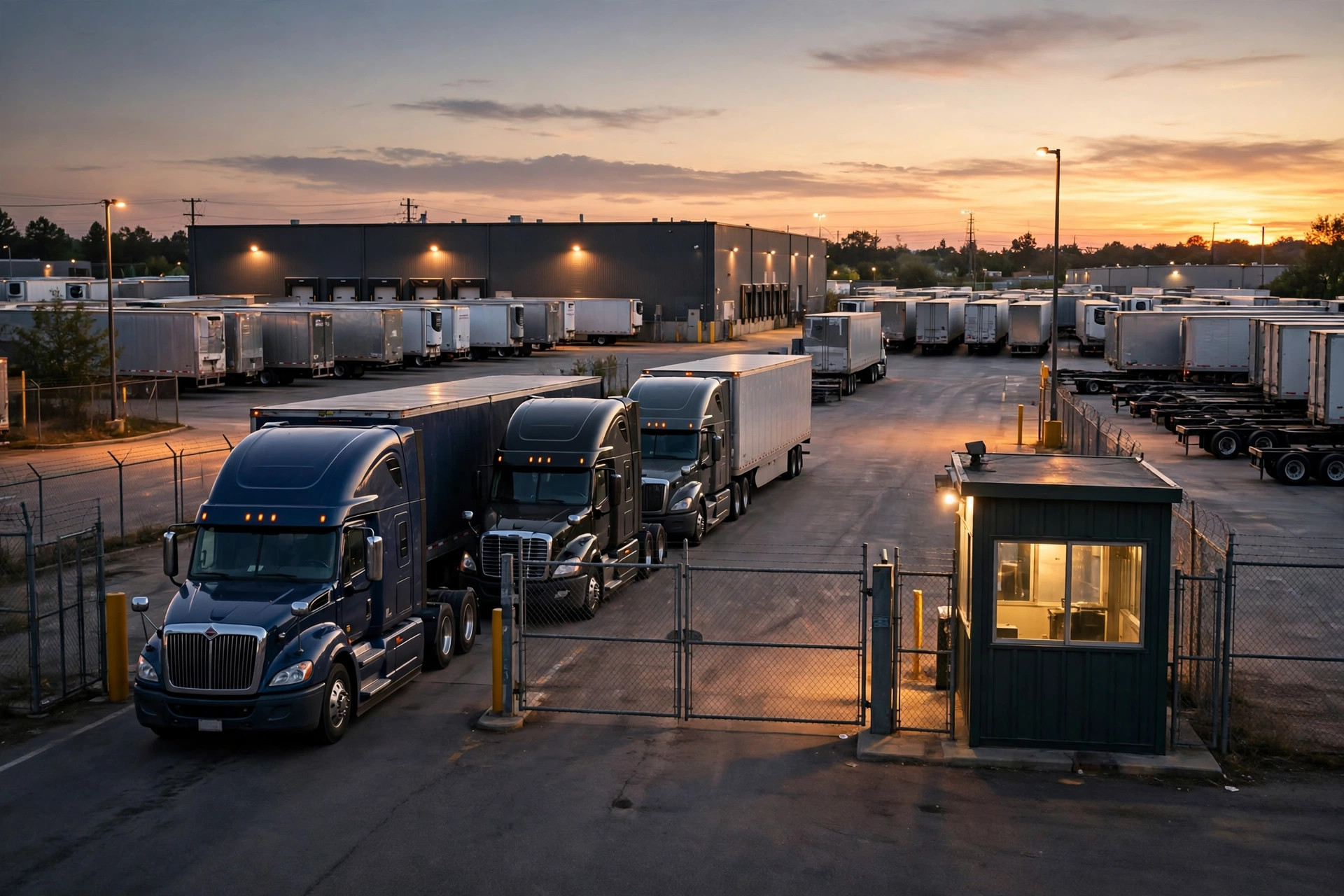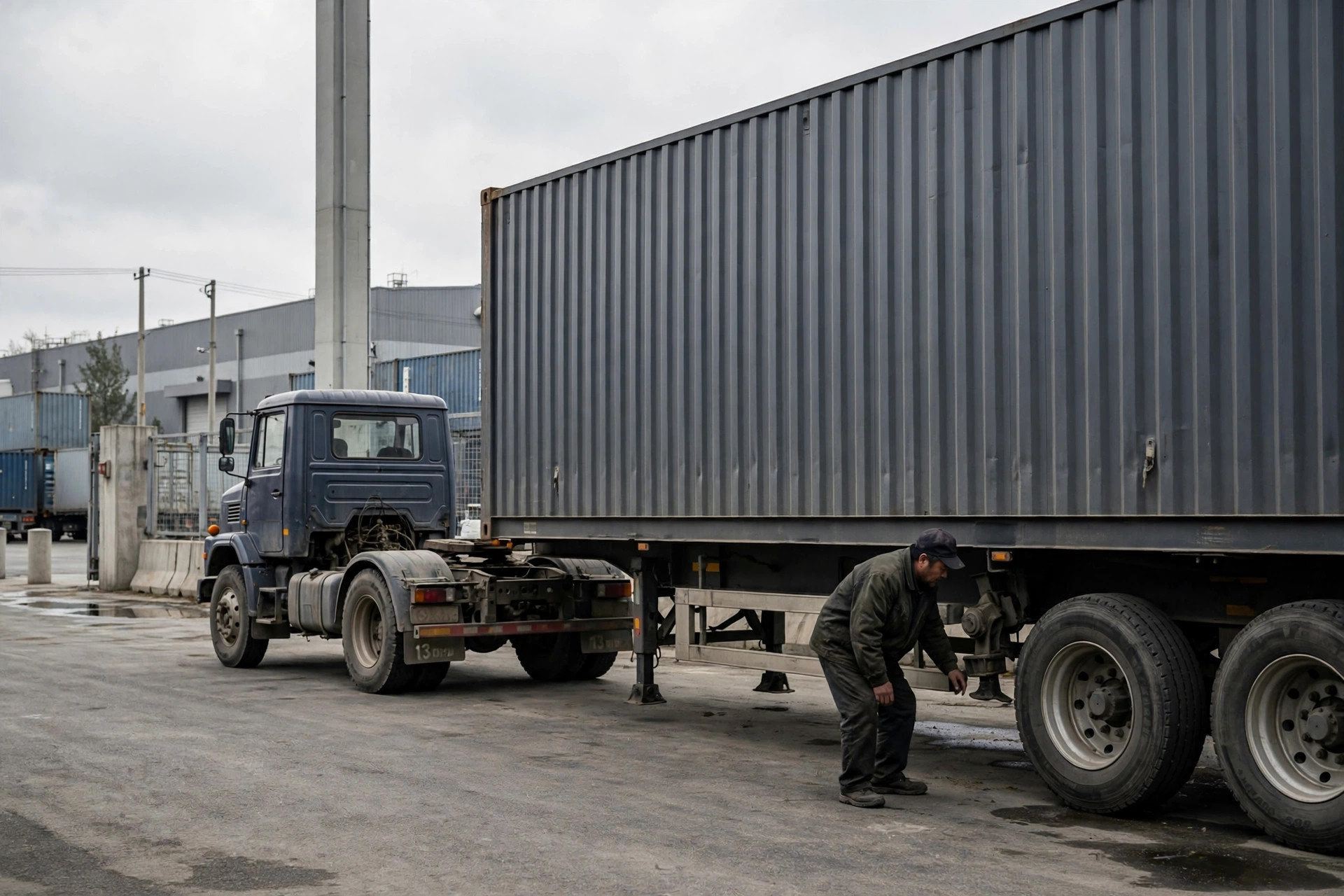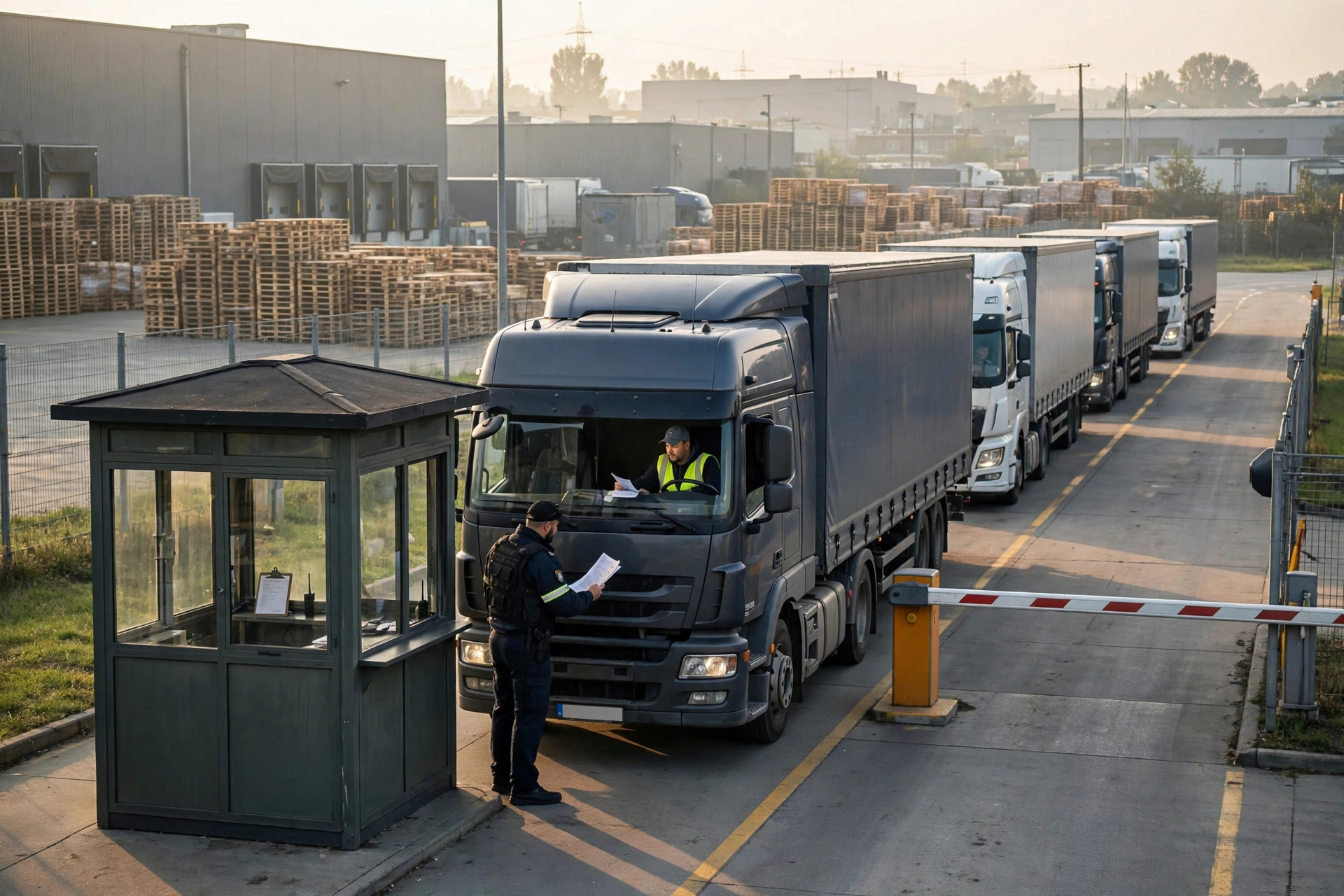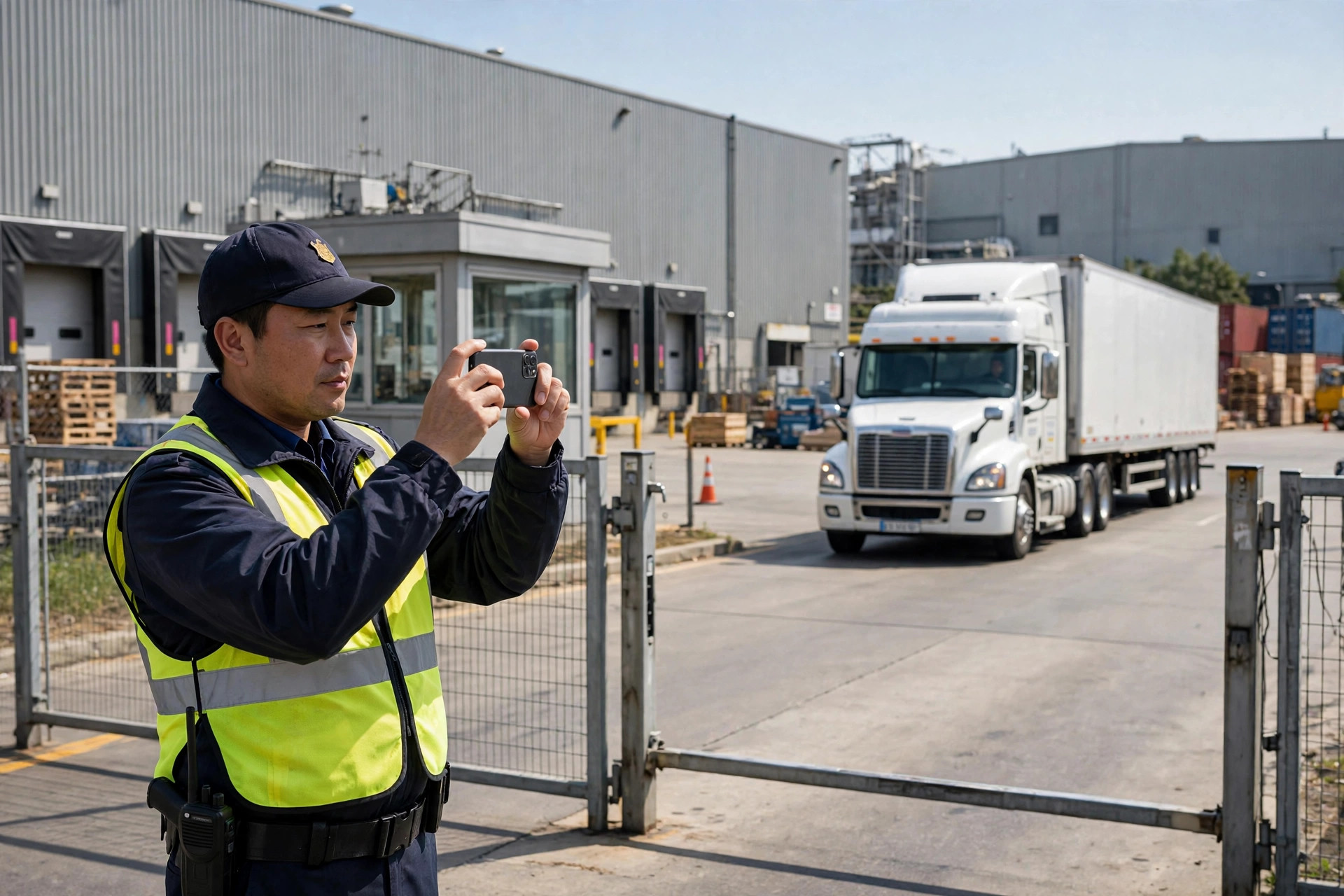
On a recent round of distribution-center visits, I noticed a new step at the gate: as each tractor-trailer arrives or departs, someone walks around the equipment with a smartphone, photographing it from fixed angles. In industry literature this practice has a name — YMS gate equipment photo documentation — the systematic capture, archiving, and retrieval of equipment-condition photos as part of gate interchange events. What interests me as a researcher is not the photography itself, but what it signals: the yard, arguably the least digitized corner of the supply chain, is quietly rewriting its rules of trust.
The Vanishing Pen on the Interchange Form
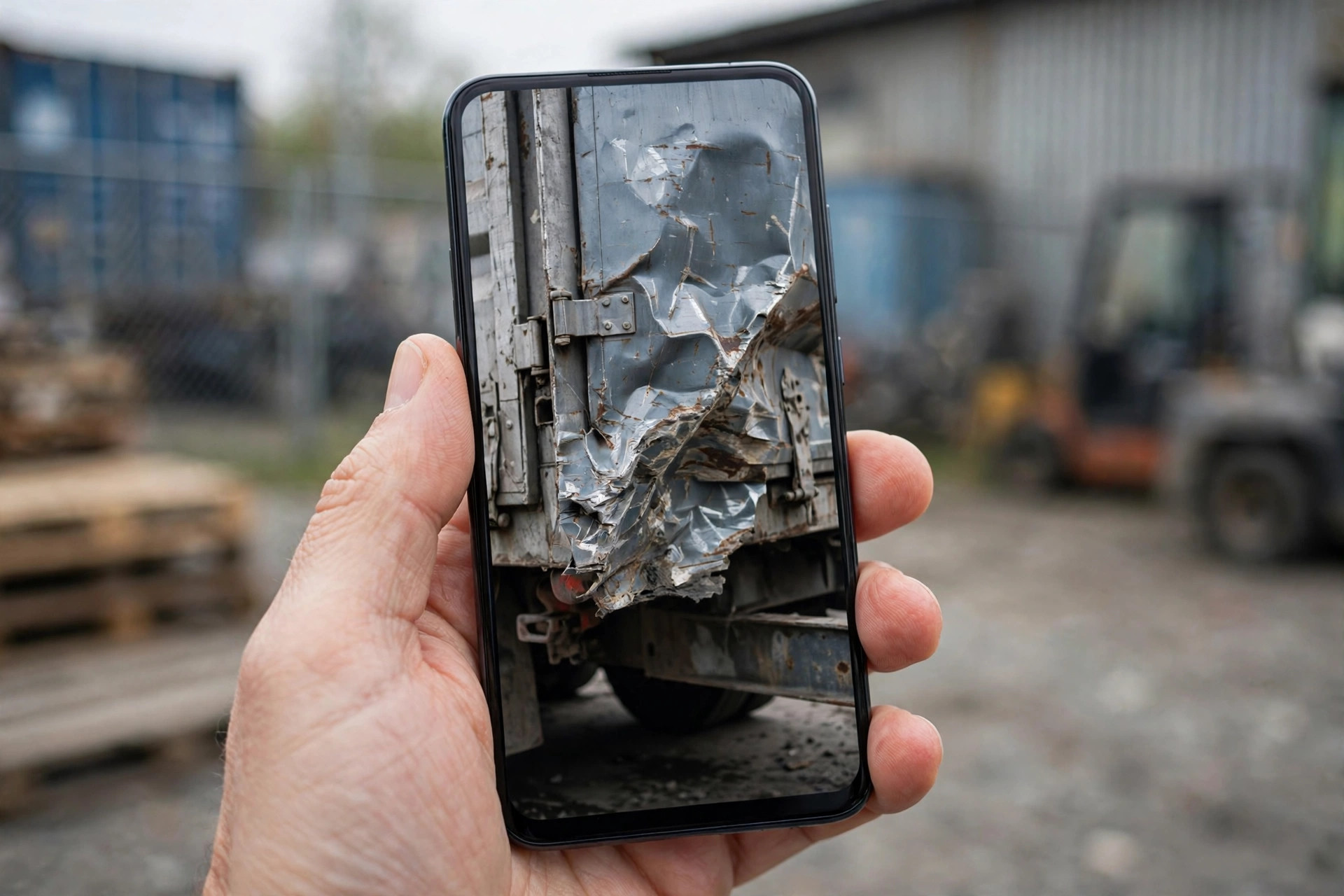
Consider what this replaces. The traditional interchange process runs on paper: the driver signs a form, and equipment exceptions are noted by hand — "dent, right rear door," "irregular wear, axle two." Three structural weaknesses follow. First, handwriting is routinely illegible, which makes post-incident interpretation a guessing game. Second, a handwritten note is a unilateral statement; a driver who signed can later claim they never really looked. Third, paper moves slowly, so merely locating the document becomes its own project once a dispute arises. Across interviews with 3PL operations leaders, a consistent pattern emerges: condition disputes are measured in weeks, and roughly a third are never truly resolved — not because liability was established, but because both sides ran out of stamina.
The photo workflow reframes the problem as a comparison. One set of photos at arrival ("this is how it came in"), one set at departure ("this is how it left"), each stamped with time and location and attached to the gate event under the tractor and trailer numbers. Lay the two sets side by side, and liability usually settles itself. Note the subtle point: the value is not in "recording" but in the delta — the difference between the two image sets is what adjudicates the claim.
What YMS Gate Photo Documentation Actually Solves
Two cases from my fieldwork illustrate the mechanism.
The first comes from the US Southeast: a 3PL operating roughly 300 dock doors and serving more than 40 retail brands. According to its operations director, interviewed in mid-2025: before the gate-photo process, the company averaged six to eight equipment-condition disputes per month — trailer scrapes, irregular tire wear, damaged tail lights — each taking an average of 11 business days from claim to determination, with about a third ending in an unsatisfying split-the-difference. After implementation — gate staff photographing fixed points (tractor, both trailer sides, rear, tire close-ups), images auto-archived under the equipment record in the YMS — determination time fell to under three business days, and driver challenges to rulings dropped by roughly 60 percent. The director's most telling comment: the biggest win was not "winning disputes" but having fewer of them. Once drivers know arrival is always photographed, the appetite for arguing at interchange visibly shrinks.
The second case is a food distribution center on the West Coast, and the dispute was about a refrigerated trailer. In early 2025, a cold-chain shipment arrived out of temperature range. The carrier insisted the product had shipped that way; the receiver suspected a reefer-unit failure in transit. Historically, this is a multi-week claims battle, with the freight possibly accruing holding costs in the meantime. This time the receiver pulled the arrival photos: the reefer display panel, photographed clearly at the gate, showed a box temperature far above the contracted range — the problem had originated at loading, not in transit. Liability was settled in two days. The value of one photograph, here, equals weeks of process cost.
Doing the Math: Three Documentation Methods Compared
Every method has a cost, so let me put numbers to it. The table below is compiled from interviewee figures — treat the numbers as orders of magnitude:
| Method | Time per interchange | Annualized cost (order of magnitude) | Dispute resolution speed | Evidentiary strength |
|---|---|---|---|---|
| Paper interchange, handwritten | ~1 minute | Negligible (consumables) | Weeks; ~a third unresolved | Weak — handwriting and testimony |
| Gate-staff smartphone photos + system archiving | ~2–3 minutes | Low thousands of USD per gate per year, mostly labor and storage | Under 3 business days | Strong — timestamped image chain |
| Fixed gate camera array | Zero incremental time | Tens to low hundreds of thousands USD per gate, one-time capex | Near real-time | Strongest — full coverage, no blind spots |
The table hides a trade-off worth naming: the smartphone method is today's best value, but it shifts cost onto people — two to three extra minutes per vehicle can create queues at peak hours — while the camera array front-loads cost as capital expenditure in exchange for zero incremental time. The choice is ultimately a bet between labor flexibility and capex.
The Counterintuitive Finding: More Photos, Less Evidence
Here is the most interesting thing I encountered in the field. One company proudly told me it had archived 400,000 condition photos — then admitted that finding the right photo during a dispute was "excruciating." Images sat in shared folders named by date, unlinked to tractor numbers, trailer numbers, or gate events. Four hundred thousand photos, amounting to roughly four hundred thousand pieces of digital waste.
The counterintuitive judgment: a photo's value lies not in how many you take, but in whether you can find it. Retrieval structure — keyed to tractor, trailer, timestamp, and gate event — matters more than resolution. This is what the "management" in YMS gate equipment photo documentation really means: it is first a data-governance discipline, and only second a photography routine. Photos without an attachment structure are just storage occupancy.
A second counterintuitive point: the hardest part was never the technology; it was getting people to cooperate. Many drivers' first reaction is suspicion — "are you photographing my truck to find fault?" The companies that rolled this out smoothly all did one thing right: they framed photography as mutual protection. Drivers can request additional shots; the images are visible to the carrier; both sides adjudicate from the same set. Designed well, the camera shifts from inspection to notarization.
Why Now: Four Structural Drivers
Practices go mainstream for structural reasons. I see four.
First, the freight downcycle. Public rate indices trace a pronounced downturn in truckload rates; with carrier margins compressed, the willingness to chase every disputed charge rises — the few hundred dollars that used to be written off are now worth fighting for.
Second, capture and storage costs have fallen below the threshold that matters. Everyone carries a smartphone; cloud storage is priced in cents per gigabyte. Archiving hundreds of thousands of photos is no longer a finance discussion. With the technology barrier gone, "should we do this" becomes a pure management decision.
Third, YMS adoption provides the attachment point. Photos need a structured home — a gate event, an equipment record. Without a system, they are loose files; the YMS happens to provide exactly that structure. In a real sense, the system arrived first, and the process followed.
Fourth, the digitization of the insurance and claims chain has raised the evidentiary bar. As claims handlers begin to accept — and eventually require — image evidence, photography moves from nice-to-have to table stakes.
Outlook: Where YMS Gate Photo Documentation Goes Next
Based on this attribution, here is my read on the next few years, with timelines and reasoning attached.
Near term (1–2 years): gate photography becomes a standard YMS gate-module feature — arrival and departure events auto-generate shot lists, photos archive under equipment IDs, and interchange records cannot close with missing images. The precedent is delivery proof-of-delivery photo capture in TMS, which traveled from premium feature to standard equipment between roughly 2015 and 2020; gate photo documentation is retracing that curve.
Medium term (3–5 years): fixed AI camera arrays take over automated condition scanning — damage detection and before/after comparison — with the gate-staff phone demoted to exception handling. The reasoning is the maturity curve of computer vision for vehicle exterior inspection: detection accuracy has crossed the practical threshold, and what remains is mostly a cost-decline story.
The longer-term questions return to institutions: who owns the photo data, how long it must be retained (litigation horizons versus storage cost), and mutual recognition standards for evidence between 3PLs and carriers. Technology cannot settle these; they will likely require industry-association-level coordination — the next issue worth tracking.
An open thought to close: when every arrival and departure is fully recorded, the yard's cost of trust gets restructured, and the room for argument keeps shrinking. But technology only ever solves the burden of proof. It cannot answer the deeper distributional question — who should pay for systemic equipment wear. No photograph answers that.
By Dr. Chen, Supply Chain Researcher