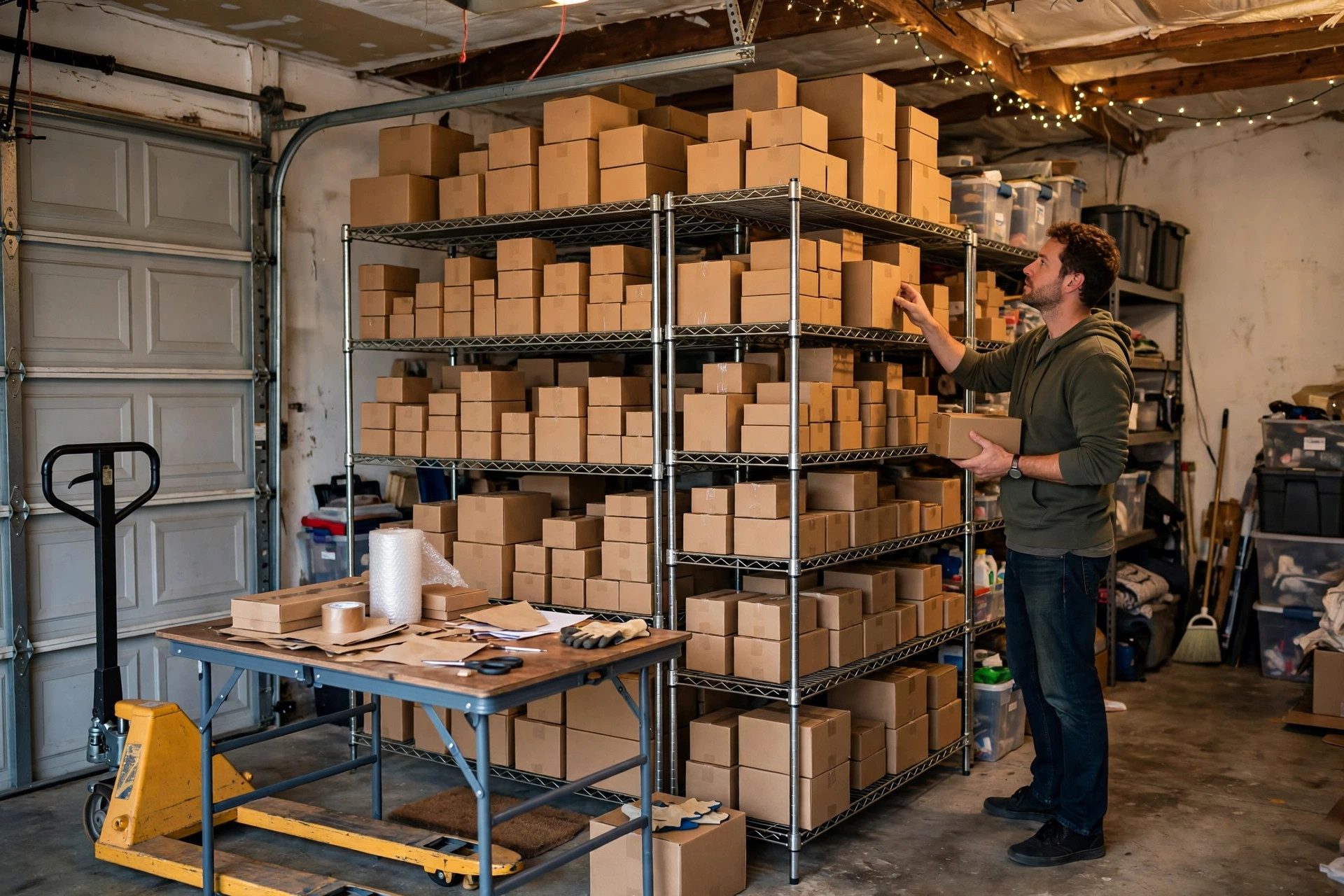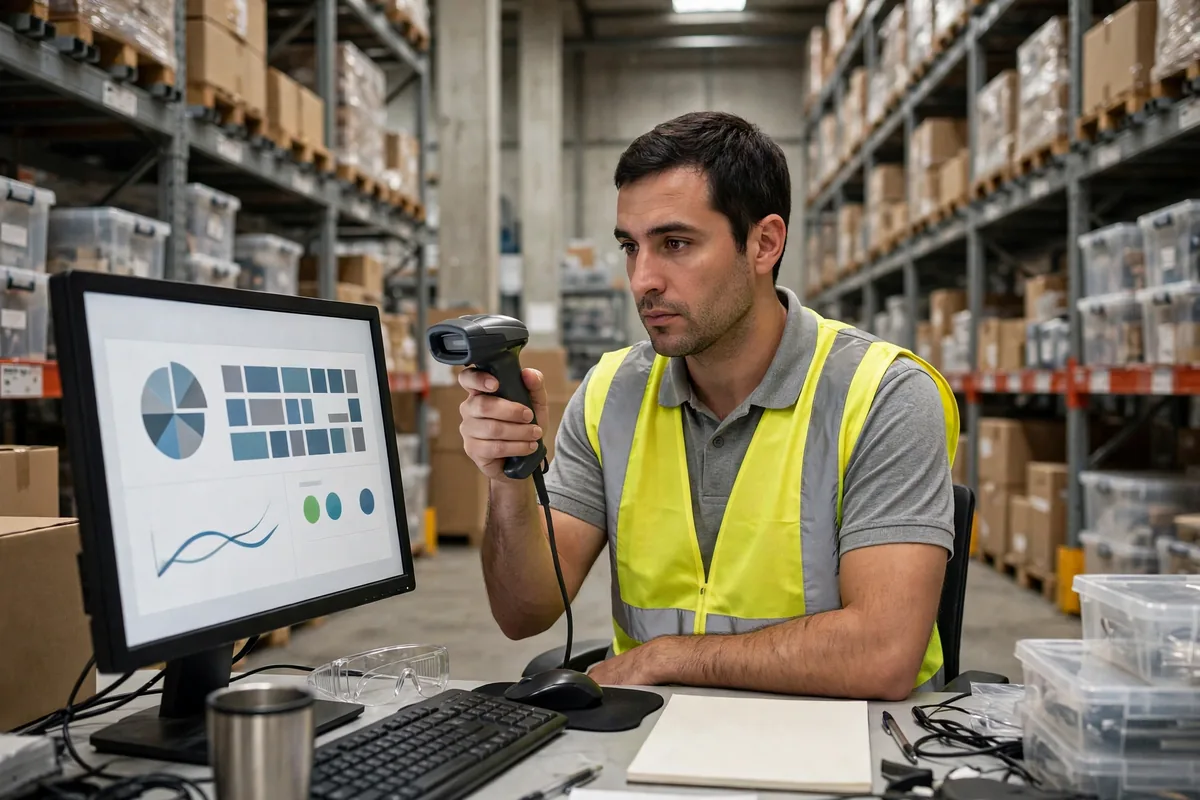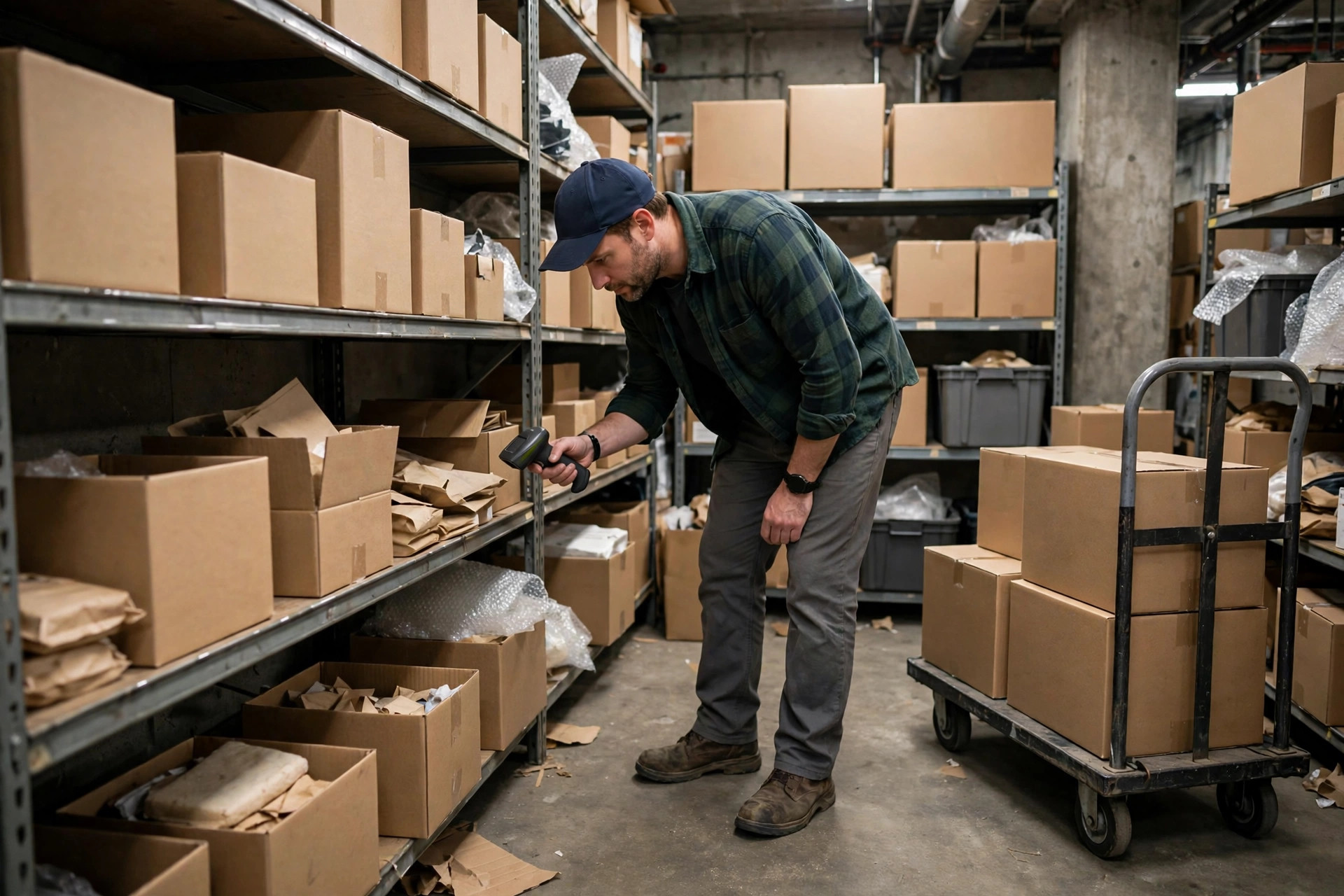
Let me be blunt about our size, because it explains every WMS POC pilot decision in this story. We run a 3,000-square-meter warehouse in Dongguan with six people, including me. A normal day is around 800 orders. A peak day pushes past 2,000. We cannot afford to burn money on a system that looks great in a meeting room and falls apart on the floor, and I say that as someone who already burned money exactly that way once. A WMS POC pilot that uses the vendor's data is not a test. It is a sales performance, and I applaud the performance while keeping my wallet closed.
Our first selection round went like a dream, which should have been my warning. In the summer of 2024 I watched a big vendor demo: inbound scanning flowed, pick paths drew themselves neatly on screen, reports appeared with one click. The salesperson said implementation would take two weeks and training half a day. I nearly signed on the spot. Go-live week told a different story. Our real product master was full of items that share a name but differ by specification, while the demo had used 200 clean, hand-picked products. Our real orders constantly split, merge, and change, while the demo had run only textbook orders. On the first peak day the system slowed so badly that pickers stood at the rack waiting for the screen to refresh. For two weeks I did nothing but firefight, and the system I had admired in the demo seemed to have vanished entirely.
A friend who runs a pet-supplies warehouse, even smaller than ours at four people, had a worse version of the same story. He signed up after hearing that per-order pricing sounded cheap. The demo ran beautifully on 50 of his best sellers. After go-live he discovered the other side of his catalog: more than 3,000 slow-moving items, most of which move only a couple of times a year, all needing master data, barcodes, and cycle counts that never appeared in the demo. Worse, his customers often change address or quantity after ordering, and the demo had never tested an order change at all. His team tracked changes in a spreadsheet outside the system, and every spreadsheet mistake became a wrong shipment. Three months in he told me the sentence that now guides my own selection process: the demo tests what the vendor wants you to see, not what you actually do all day.
Where a WMS POC Pilot Gets Faked
The first place is the data. Demo data is always curated: tidy product names, complete barcodes, accurate stock. Bring the opposite. Hand over your messiest products, the items that share a barcode from an old cleanup nobody finished, the SKUs where the system quantity and the shelf quantity disagree. A system that still runs smoothly on your dirty data is worth talking to. The second place is the order mix. Do not test only standard orders. Dig out your hardest ones: split and merged orders, partial shipments when stock runs short, address changes after ordering, a return that becomes a fresh order the same day. If the demonstrator goes vague when those orders appear and promises configuration after signing, that is the configuration not working yet. The third place is volume. A warehouse doing 800 orders a day learns nothing from a 20-order demo. Push a real peak-day volume through picking, checking, and label printing together, and watch whether the queue backs up. A bottleneck discovered in a test costs an afternoon. A bottleneck discovered on peak day costs customers.
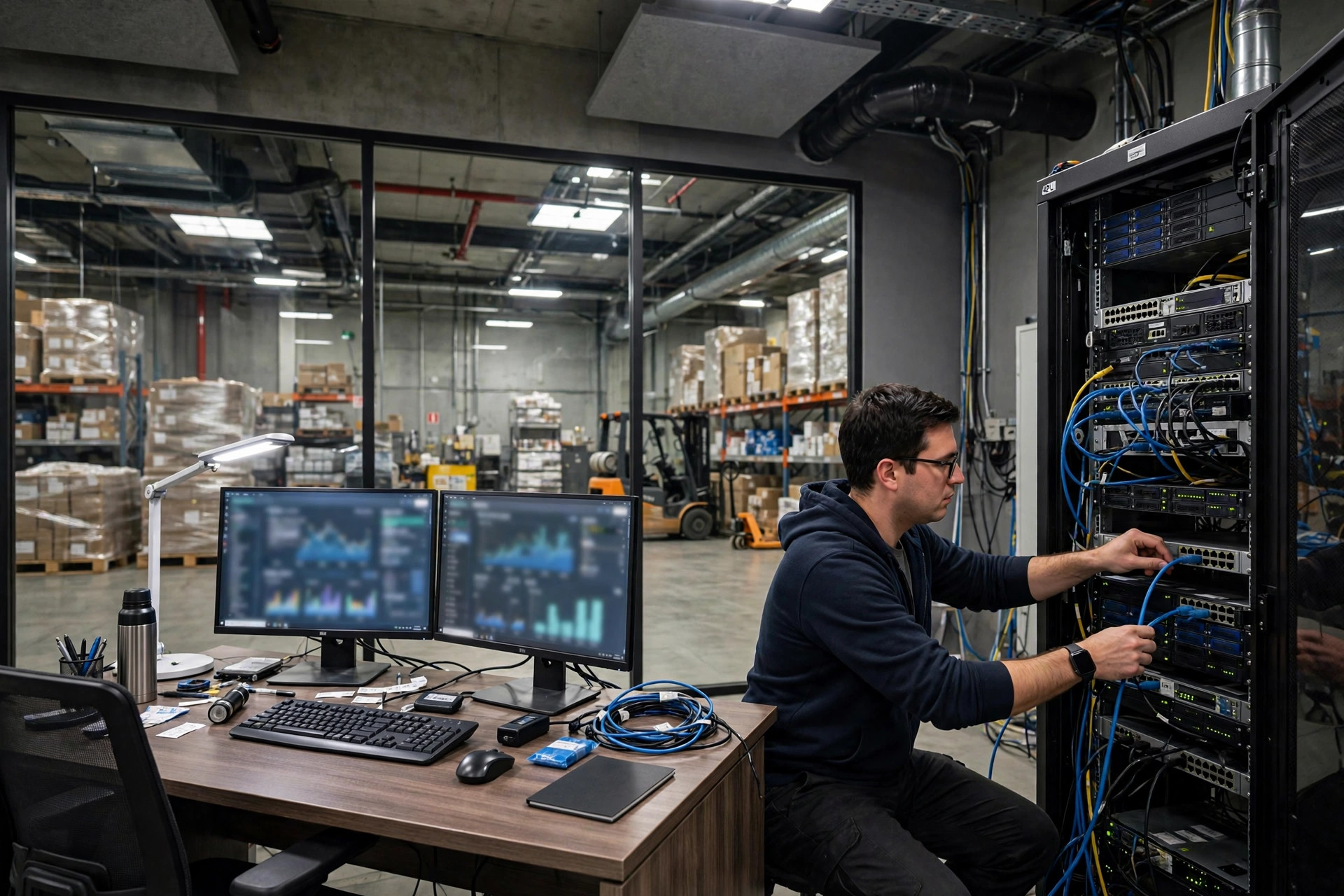
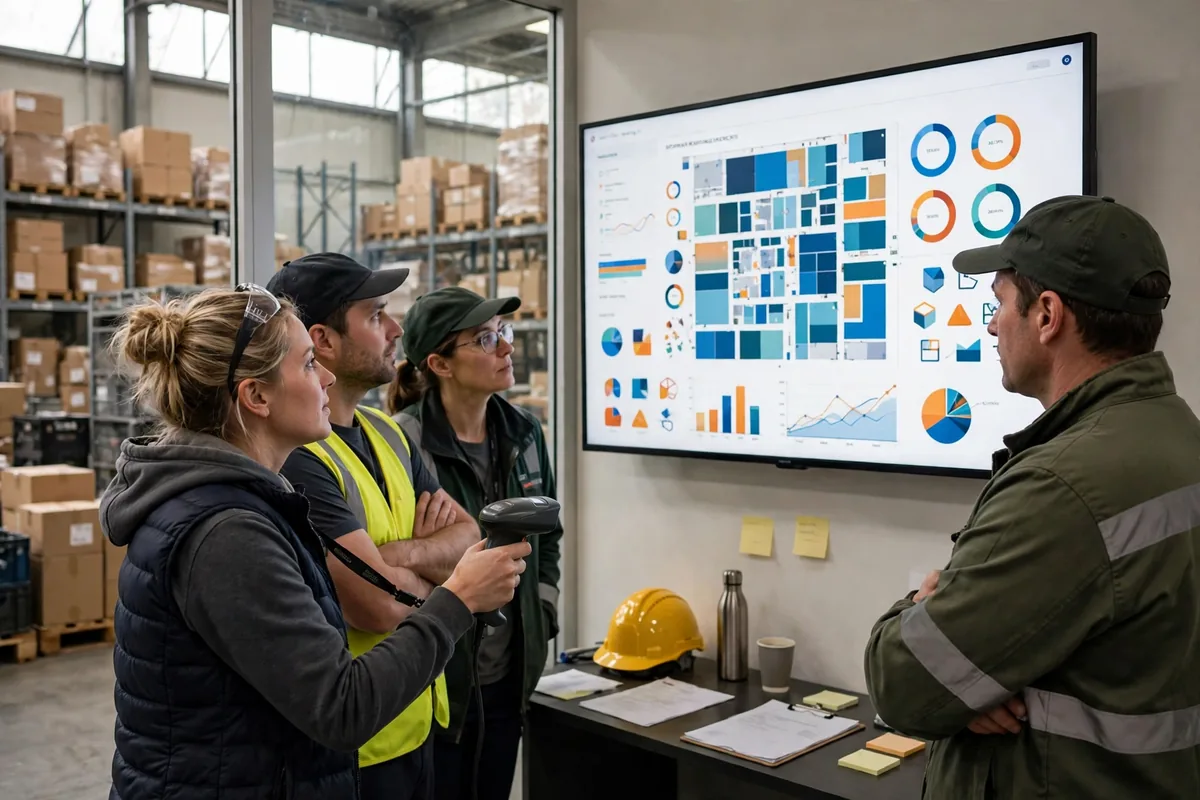
Our second selection round used a homemade method born entirely from embarrassment. Instead of letting the vendor lead, we set the exam. I exported 3,000 real orders from the previous month, awkward ones included, plus 200 of our messiest products and the order curve from our last peak day, and handed the whole pile over. On test day I banned feature presentations. The vendors had to run live: receive a batch containing damaged goods, pick a wave full of split and merged orders, process three address changes, and then handle peak-day volume. One vendor failed in public: an address changed in the order still showed the old address on the pick ticket. Another slowed visibly around 1,500 orders, and its consultant explained that the production environment would get extra configuration, without quite answering whether that configuration cost extra. I crossed both off the list on the spot, and that decision cost me nothing but an afternoon.
A WMS POC Pilot Cost Table: Demo Price Versus Go-Live Price
Small warehouses must count more than the number on the quotation. Here is the table I used in round two, built from the costs the first demo never showed:
| Item | What the demo suggested | What go-live actually looked like | | Product master cleanup | One-click template import | Same-name variants and legacy barcodes took two and a half weeks of manual checking | | Changed and exception orders | Standard flows cover everything | Address changes, splits, and partial stock needed spreadsheet workarounds | | Peak volume | Built for high concurrency | Pick screens slowed badly during peak hours | | Training and adoption | Half a day and everyone is ready | Veteran staff needed weeks to adapt, and speed dropped first | | Later configuration | Production setup will be optimized | Extra interfaces, reports, and configuration may carry extra fees, so get it in the contract |
That table saved more than money. After the first failed selection, returning to our old manual method took nearly a month, with wrong shipments and extra freight and customer-service time along the way. The second selection took three extra weeks of testing, but go-live week held steady, pickers stopped waiting on screens, and a 2,000-order peak day shipped on time. Three weeks of testing bought us a go-live without firefighting, and for a small warehouse that trade is always worth making.
Here is the counterintuitive lesson: the system with the most features is usually the worst fit for a small warehouse. Big-vendor systems are designed for warehouses with dozens of staff and tens of thousands of square meters: strict workflows, layered permissions, endless reports. They sound impressive. But in a six-person warehouse, one person often covers two or three jobs, and the stricter the workflow, the more expensive it is to work around. Sooner or later the team works around it in spreadsheets and chat groups, and the expensive system becomes decoration. The right system for a small warehouse is not the one with the longest feature list. It is the one where your hardest orders flow without workarounds, your dirtiest data works without rework, and your peak volume holds without paying for extra configuration. If those three hold, fewer features are fine. Missing features can be added later, which beats starting out with a heavy system nobody uses.
My advice to other small-warehouse owners comes down to four rules, each paid for with real money. One, the demo must use your data and your orders; vendor-prepared clean data does not count. Two, the demo must test exception and changed orders, because standard orders running smoothly prove nothing. Three, peak-day volume must be tested for real, and any verbal promise about concurrency goes into the contract or it does not exist. Four, ask about every cost beyond the quotation, line by line: extra interfaces, extra reports, extra configuration, and what happens when order volume passes a threshold. Treat a vague answer as a future invoice.
A small warehouse has its own way of surviving, and it does not need a big warehouse's heavy system or a demo room's smooth performance to prove it. Put your dirtiest data, your hardest orders, and your peak-day volume on the table, make the system run them in front of you, and only talk about money after it passes. If it cannot pass, walk away. That walk is the cheapest decision a small warehouse ever makes.
By Xiao Ma, Small Warehouse Owner