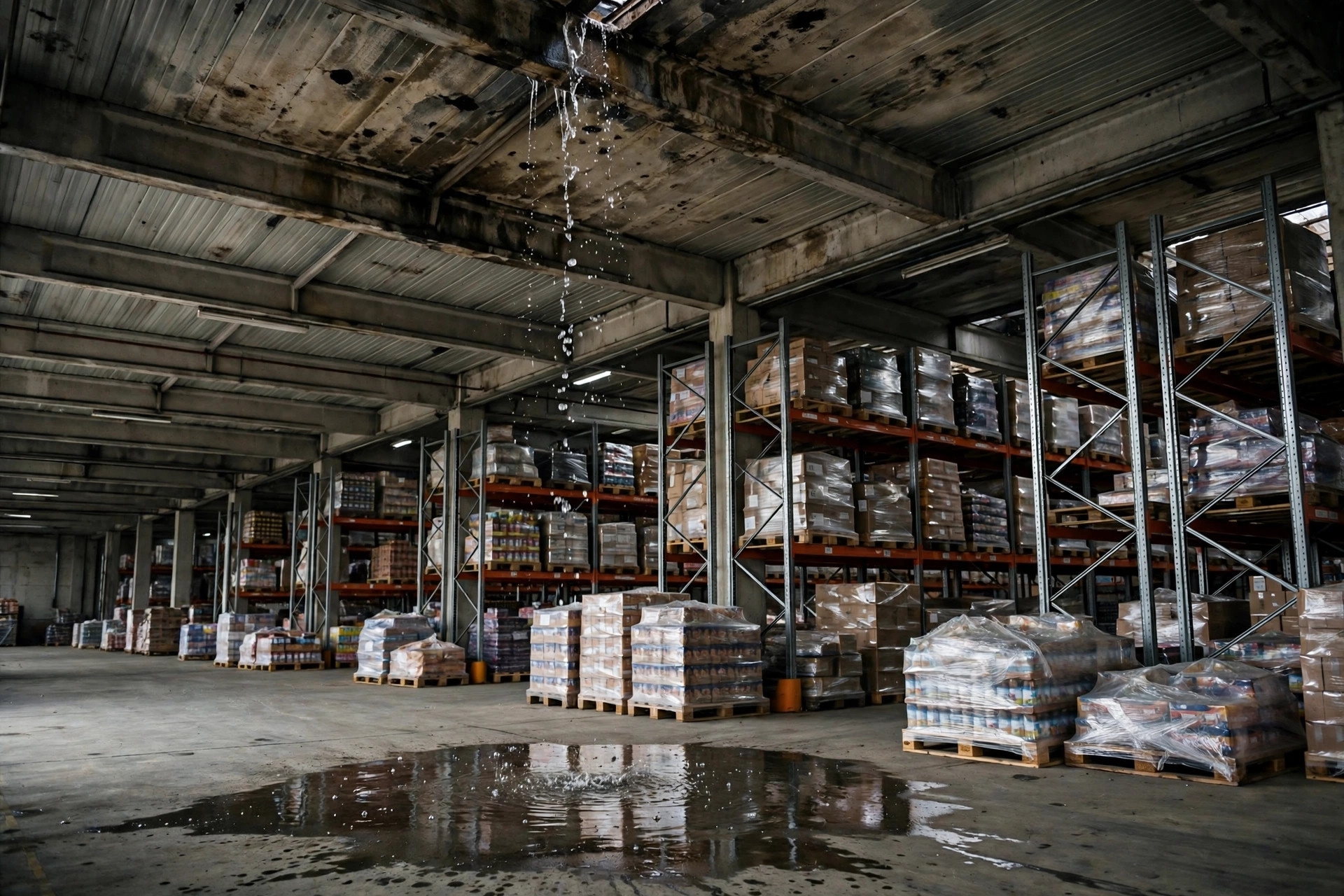
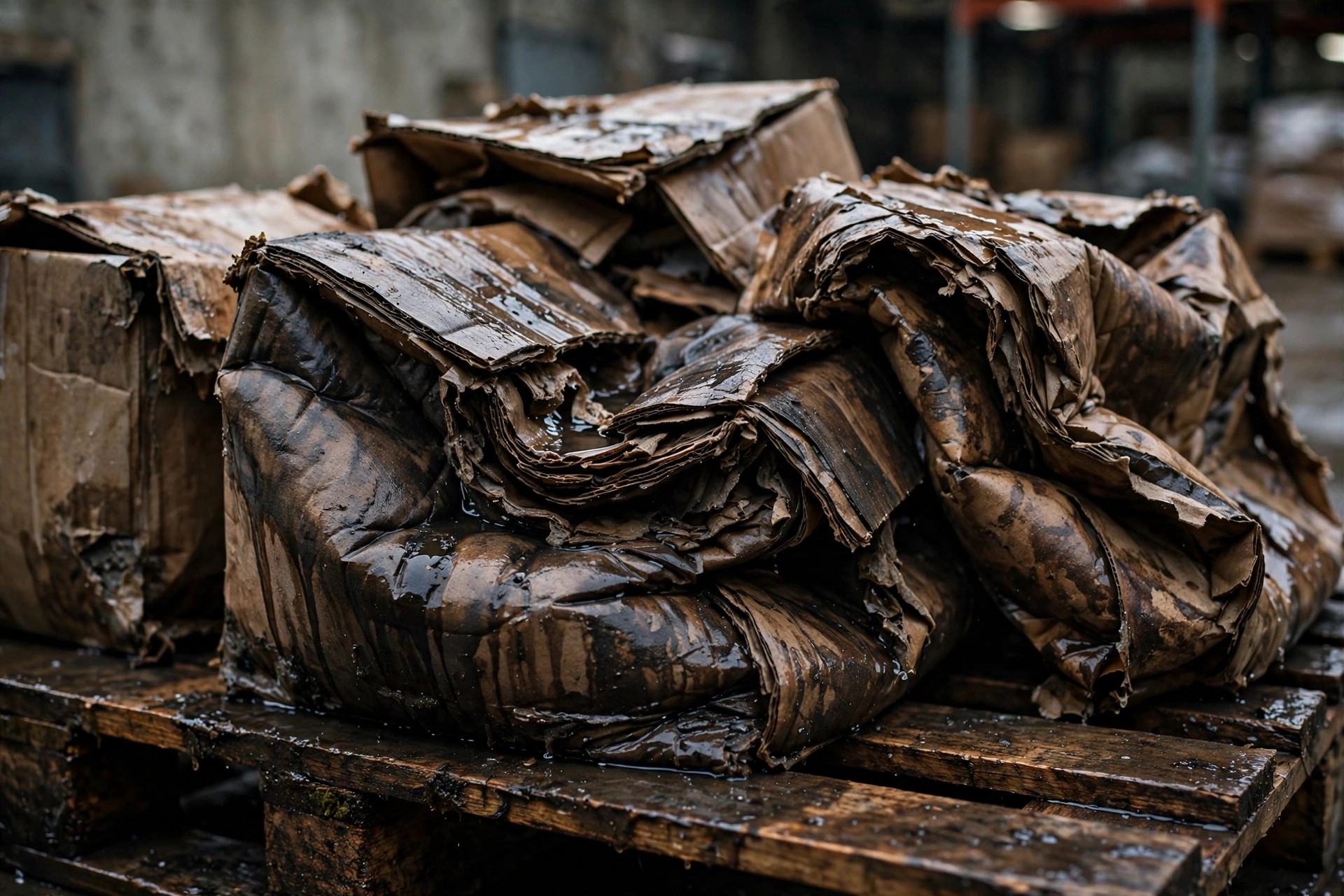
We had a client in the small-appliance business who took space in a 3PL warehouse in Fontana back in the fall of 2023. October brought a big storm. The roof drains clogged, water poured in through the roof seams, and it landed right on his shipment. Several hundred outer cartons soaked through; when they opened them up, half the appliance housings had rusted from the moisture. The cargo was worth north of $200,000, and his first call was to the 3PL, demanding a claim.
The warehouse manager was polite and immovable: the lease said the roof was the landlord's to maintain — "we don't own the roof, and we don't fix the roof." So the client went to the landlord, who said his property policy covered the building, not the cargo, and anyway whether a clogged drain counted as a failure to maintain was very much up for debate. Three months later, the client's own cargo policy paid part of it. He absorbed the remaining hundred thousand plus himself.
Here's the honest truth from the 3PL side of the table: most water-damage fights aren't about whether the policy pays. They're about whose policy pays. If you're the cargo owner and you don't nail this down before you sign, the day something happens you'll be watching three parties point at each other.
Buying Water-Damage Coverage Doesn't Mean Water Damage Gets Paid
Here's the counterintuitive part: plenty of cargo owners see the words "water damage" in a policy and assume a soaked shipment means a payout. It doesn't work that way. Insurers slice water into very fine categories, and the slicing decides everything.
Category one: sudden and accidental. A burst pipe, a sprinkler head snapped off by a forklift, a roof punctured by hail — usually covered. The deductible applies per occurrence; the exact figure is whatever your policy says, but the typical range runs from a few thousand to tens of thousands of dollars per incident.
Category two: gradual seepage. A roof that leaked for three years with nobody fixing it, and in year four the cargo gets soaked — almost never covered. The insurer's line is always the same: foreseeable and preventable, a maintenance issue. Nobody mentions it when you buy the policy.
Category three: mold. Water sits for three days, cartons go moldy, and mold losses are often sublimited or excluded outright.
In 2022 we saw a variant of category one at a warehouse near Riverside. A night-shift forklift driver backed up and sheared off a fire sprinkler head with his forks. The water column soaked an entire pallet position of consumer electronics — eight pallets, every outer carton wet, cargo value north of $300,000. The cargo owner's voice on the phone: "This one you have to cover, right?"
It did get paid in the end — but through the cargo owner's own property policy water-damage endorsement. Why? The sprinkler system was installed by the landlord and maintained by the 3PL per the lease, so liability was actually clear. All the time went to the insurer's wrangling: the head was snapped off by impact, so it counted as sudden and accidental — covered. But if the head had burst from age and poor maintenance, some policies would call that a maintenance issue and deny it. Same sprinkler head. Whether it pays depends entirely on why it sprayed.
Do the Math: Three Water Scenarios, Three Outcomes
Say you're the cargo owner. Here are the three most common water-damage scenarios side by side (illustrative figures — your actual policy governs):
| Scenario | Cargo loss | Deductible | Excluded? | Net recovery |
|---|---|---|---|---|
| Sudden roof leak | $80,000 | $10,000 | No | about $70,000 |
| Sprinkler misfire (impact) | $200,000 | $25,000 | No | about $175,000 |
| Gradual roof seepage | $30,000 | $10,000 | Yes | $0 |
The real questions are three:
First, does my policy even include water damage? Plenty of basic cargo policies don't; it takes an endorsement. No endorsement, no coverage.
Second, what is the deductible, and how is it applied — per occurrence or annual aggregate? It matters enormously. A $20,000 loss against a $25,000 deductible never even makes it into the claims process. Plenty of small cargo owners discover this clause for the first time the hard way.
Third, what's excluded? Seepage, mold, flood. And pay attention to flood: U.S. commercial policies generally don't include flood — that takes a separate federal flood policy, and the details change, so check the current program terms. California's atmospheric rivers in 2023 soaked plenty of warehouses, and a lot of owners only discovered afterward that flood wasn't in their policy.
And there's a real trade-off here: a higher deductible means cheaper premiums, but you eat the small losses yourself. If your per-shipment values are high, it can be worth paying more premium to push the deductible down. If your cargo value is spread thin across many small shipments, a high deductible with low premiums may be the smarter math. Run it against your own cargo profile — don't copy someone else's.
One more thing from the quoting side of the desk: when a 3PL quotes you a storage rate, insurance cost is amortized across the whole building. A higher water sublimit means higher premiums, and that cost ends up in the rate. So every dollar you squeeze out of sales in negotiation may well be squeezed out of the insurance limits — a cheap rate paired with a thin policy, and when something happens you won't even know who to cry to. This isn't to say expensive is always better. It means you should negotiate the policy limits as part of the quote, not just the per-pallet price.
The Insider's View: A Three-Way Puzzle
Why does water-damage liability always end up in a circle of finger-pointing? Because it's inherently a three-way puzzle.
The landlord's property policy covers the structure — roof, walls — not your cargo. The 3PL's liability policy covers the 3PL's own negligence (say, failing to maintain the sprinklers), but water damage usually carries a sublimit, and it's set low — premiums are expensive, and no 3PL buys more of this than it has to. That's an open secret in the industry. And the cargo owner's cargo policy covers the goods themselves — the only policy actually tied to your cargo value.
One more thing worth asking about limits: 3PL policies are annual aggregates — if a big loss already ate most of this year's limit before your cargo arrived, your real protection is thinner than the paper number. Ask "how much of this year's limit is left?" and get the answer in an email.
So when you negotiate a 3PL contract, don't stop at the pretty line that says the contractor will carry adequate insurance. Take it apart:
One: nail down maintenance obligations in writing. Who repairs the roof, who clears the drains, who inspects the sprinklers — make it a checklist in the lease, not mushy phrases like "reasonable maintenance." The insurer's first move in any claim is to read the lease. Mushy lease, mushy payout.
Two: watch the subrogation clause. Many leases include a waiver of subrogation: when something happens, everybody goes to their own insurer and nobody sues anybody. That's protection for you and a limitation — once your insurer pays, it can't go after the landlord or the 3PL. Know which side of that you're on before you sign.
Three: ask the 3PL for its water-damage sublimit. When sales quotes you, insurance cost is baked into the rate. Ask one question — "what's the water sublimit on your liability policy?" — and sales knows instantly they're dealing with a pro. The script changes immediately.
Four, and this is the big one: the policy you buy yourself beats relying on anyone else's. The 3PL's policy limits are set for the whole warehouse; spread across your one shipment, they may not be nearly enough. A cargo policy with a water-damage endorsement costs less than you'd think (check current rates), and when things go sideways it's the only policy you can count on.
To all the client-side folks out there — one piece of advice: the more specific the contract is about water damage, the less you'll argue about it the day it happens.
Next Time You Negotiate a Contract, Ask These Three Questions
One: "Whose policy covers water damage in this warehouse? What are the limits and the deductible?"
Two: "Who exactly owns each maintenance item in the lease — who clears the drains, who inspects the sprinklers?"
Three: "How is the subrogation clause written — do we chase each other after a loss or not?"
Ask all three, and you'll know within a minute whether you're dealing with an insider or an amateur. If they stammer and can't answer, the water-damage risk on that warehouse is probably landing on you.
By Susan, 3PL Sales Director