Start with a bill, not a feature list: warehouse traceability system cost only looks expensive until you price what "we cannot trace this batch" already costs you. Illustrative calculation: a regional food ingredients warehouse mislabelled the expiry date on one inbound lot. When a downstream customer demanded a trace, the team spent three days digging through spreadsheets and receiving notes, six people worked overtime, outbound stopped for half a day, and part of the stock still could not be accounted for, so the whole lot was treated as suspect. Finance added up the overtime, the stopped shipments, the write-off and the customer claim: six figures in total. That money never appears in any system budget, but it is the real comparison case for traceability investment.
So I never discuss traceability by features. I discuss it by cost blocks. There are five: software, hardware, consumables, implementation, and running costs. The two blocks most often underestimated are consumables and running costs; the block most often overestimated is software. We take them one at a time, then size the decision by warehouse type, then do the recall maths honestly.
warehouse traceability system cost, block by block
Block one is the software licence. Vendors price three ways: annual subscription, perpetual licence per site plus annual maintenance, or usage-based pricing by order or pallet volume. Rates vary widely, so check current published pricing or a formal quote rather than trusting any round number. The structural point: subscription feels cheap in year one and can overtake a perpetual licence once volumes grow, while perpetual hurts early and suits a stable site run five years or more. Either way, confirm whether batch tracking, serial management and recall reporting sit inside the base price. Many low quotes are low because the traceability module is priced separately.
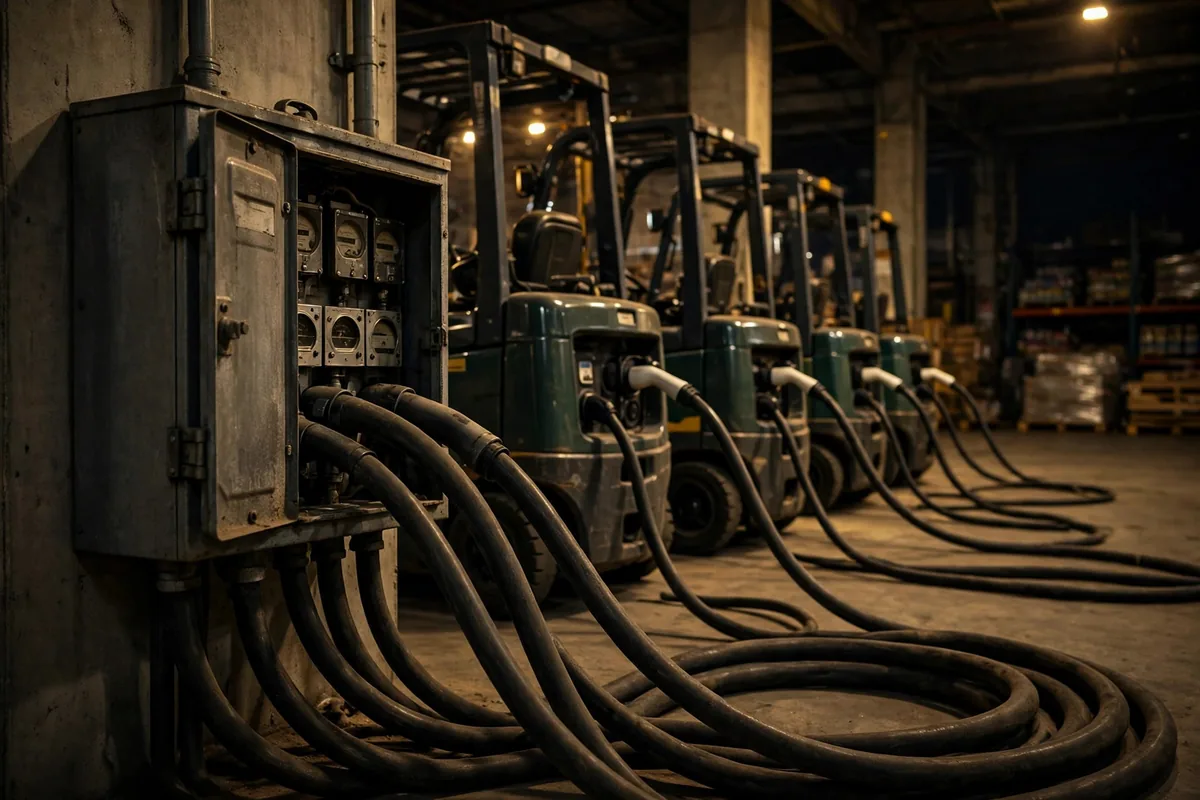
Block two is scanning hardware: fixed scan tunnels, handheld terminals, ring scanners and label printers, ranging from a few hundred to well over ten thousand per unit — again, use current vendor pricing. The trap is not the unit price, it is the quantity assumption. Count by peak simultaneous workstations, not by headcount on a quiet Tuesday, and add spares. My rule is peak stations plus twenty percent. Underestimate here and peak season will expose it, at rush prices and lead times.
Block three is label consumables, the block everyone dismisses as petty cash. Illustrative calculation: a site printing 8,000 labels a day, over 300 working days, consumes 2.4 million labels a year. A one-cent difference per label, ribbon included, is 24,000 a year. Serial-level tracking consumes more than batch-level because every unit gets its own label. Never accept "consumables are negligible" from a salesperson; multiply your own daily volume.
Block four is integration and implementation: connecting batch fields between WMS and ERP, backfilling batch data for stock already shelved, changing floor processes, and training. Normally a one-off cost, and the one most likely to overrun, for one consistent reason — dirty master data. Inconsistent supplier lot formats and duplicate item codes all get cleaned during the project, because nobody cleaned them earlier. Budget a fifteen to twenty percent contingency here. That is not padding; it is loss prevention.
Block five is running costs: a share of a system administrator's time, hardware repair and replacement, licence renewals, and one or two recall drills a year. Routinely left out, yet it decides what your data looks like in year three. An unmaintained traceability database decays into records nobody can reconcile, and on recall day you are back to digging through paper.
| Cost block | How it is charged | What gets forgotten | Control |
|---|---|---|---|
| Software licence | Subscription, perpetual, or usage-based; get a formal quote | Traceability module and interfaces priced separately | Compare five-year totals, never year one |
| Scanning hardware | Per device | Spares, peak-season stations, breakage | Peak stations plus 20% spares |
| Label consumables | Per label, ongoing | Serial-level unit labelling, waste rate | Measure one real month of usage |
| Implementation | One-off project | Historical batch backfill, data cleansing | Hold 15–20% contingency |
| Running costs | Annual | Admin time, recall drills, device attrition | One explicit annual line item |
Sizing warehouse traceability system cost by warehouse type
I push back hard on the claim that more traceability is always better. Depth costs money, and overspending is waste. This is the decision table I use with clients. Regulatory requirements differ by industry and jurisdiction — food, pharmaceutical and automotive rules in particular should always be checked against current local policy.
| Warehouse profile | What is enough | Signal you now need a system |
|---|---|---|
| Single site, few categories, low daily volume, full-lot movements | Spreadsheet ledger, strict batch numbering rule and photo records at receiving, with a weekly reconciliation owner | Lots start being split and mixed; customers start asking for batch proof |
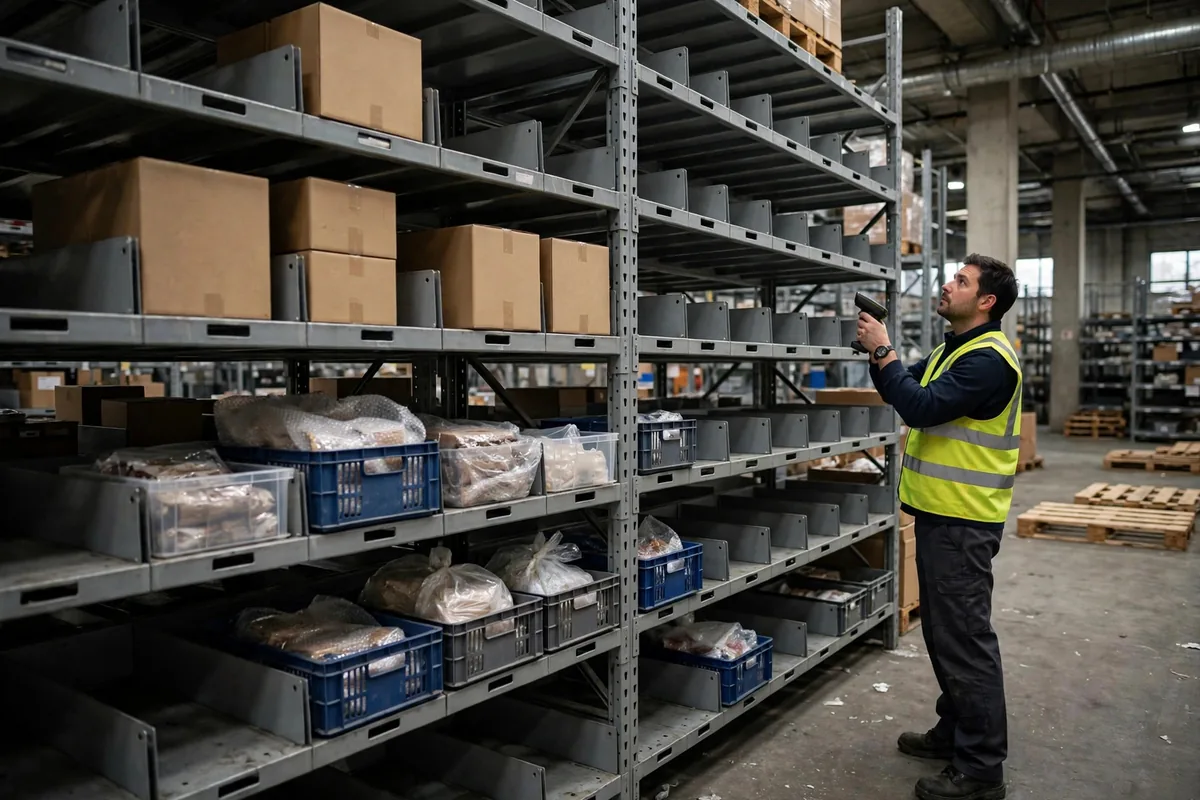
| Many categories, frequent split picks, fulfilment for several clients | Batch-level system tracking: scan the lot at receiving, transfer and picking | Cross-batch mixing appears; expiry control depends on memory; recall drills take half a day with gaps |
| Regulated goods or high unit value | Serial-level tracking: every unit registered, scanned at each move, recall located by unit | Regulation requires unit-level proof; complaints traced to a single item; high-value losses unexplained |
Two questions decide the tier. First, does your stock get split, mixed and recombined inside the building? If never, a disciplined batch ledger can hold. If it does, batch identity must travel with every move, and only scanning at each move makes that reliable — human memory leaks. Second, how fast must you produce the answer when something goes wrong? If a customer or regulator gives you hours, manual digging cannot meet it.
Here is the counter-intuitive finding from my cost work: for smaller warehouses, the first saving from a traceability system is usually not recall avoidance, but daily counting and searching. Illustrative calculation: a 6,000-square-metre site spending roughly 40 extra labour hours a month reconciling batch mismatches burns 480 hours a year. Carrying the batch automatically through transfers removes most of that reconciliation, a saving that happens monthly, unlike a recall that may happen twice a decade. The mirror image is equally true: a site that buys a system for appearances and scans carelessly owns expensive fiction — if the floor does not scan, the database is fiction, at full price.
Illustrative scenario two: a pet food fulfilment warehouse in East China handled two clients in one building; only one client's products carried a formal batch traceability requirement. To keep things simple, the site ran one basic ledger for everything. When a problem lot surfaced, the affected stock sat in locations mixed across both clients, the trace took a day and a half, and outbound for both clients paused throughout. Afterwards they implemented batch-level tracking for the regulated client only, kept the ledger for the other, and physically separated storage. Correct calculation: spend where the risk actually sits, not uniformly across the building.
Recall payback: no scare numbers, no pretending the risk is zero
My payback formula has no adjectives in it. Annualised risk cost equals the annual probability of a recall multiplied by the real loss from a single recall. Build the single-loss figure from four items: write-offs and returns handling, overtime and stopped shipments, customer claims and penalties as defined in your contracts and regulation, and a conservative estimate of lost follow-on orders. For probability, use your own or comparable operators' history over five to ten years — never an invented frequency.
Illustrative calculation: a site estimates a single recall loss at 400,000 and, from its own history, expects roughly two events in ten years — an annual probability of twenty percent, giving an annualised risk cost of 80,000. Batch-level tracking narrows a recall from "the whole lot" to "specific batches shipped to specific customers," cutting the assumed single loss to 120,000 and the annualised risk cost to 24,000: 56,000 of risk removed per year. Add the roughly 480 reconciliation hours saved annually, set the combined figure against the system's five-year average annual cost, and the payback period falls out of the arithmetic. Notice what is absent: any line called "peace of mind." If a benefit cannot be written as a number, I do not let it justify a purchase. Spread over order volume, the same figure follows the logic in warehouse automation cost per order.
The closing conclusion is, as always, a calculable one. Run four calculations before you sign anything: consumables from your own daily volume, hardware from peak workstations, software on a five-year total, and risk from your real recall history. Once those four numbers sit on one page, warehouse traceability system cost stops being a sales argument. And if the arithmetic says a disciplined spreadsheet plus batch numbers is enough for your current volume, believe it — tighten reconciliation discipline, and revisit the decision when volume doubles.
By Lao Zhou, Logistics Cost Analyst