
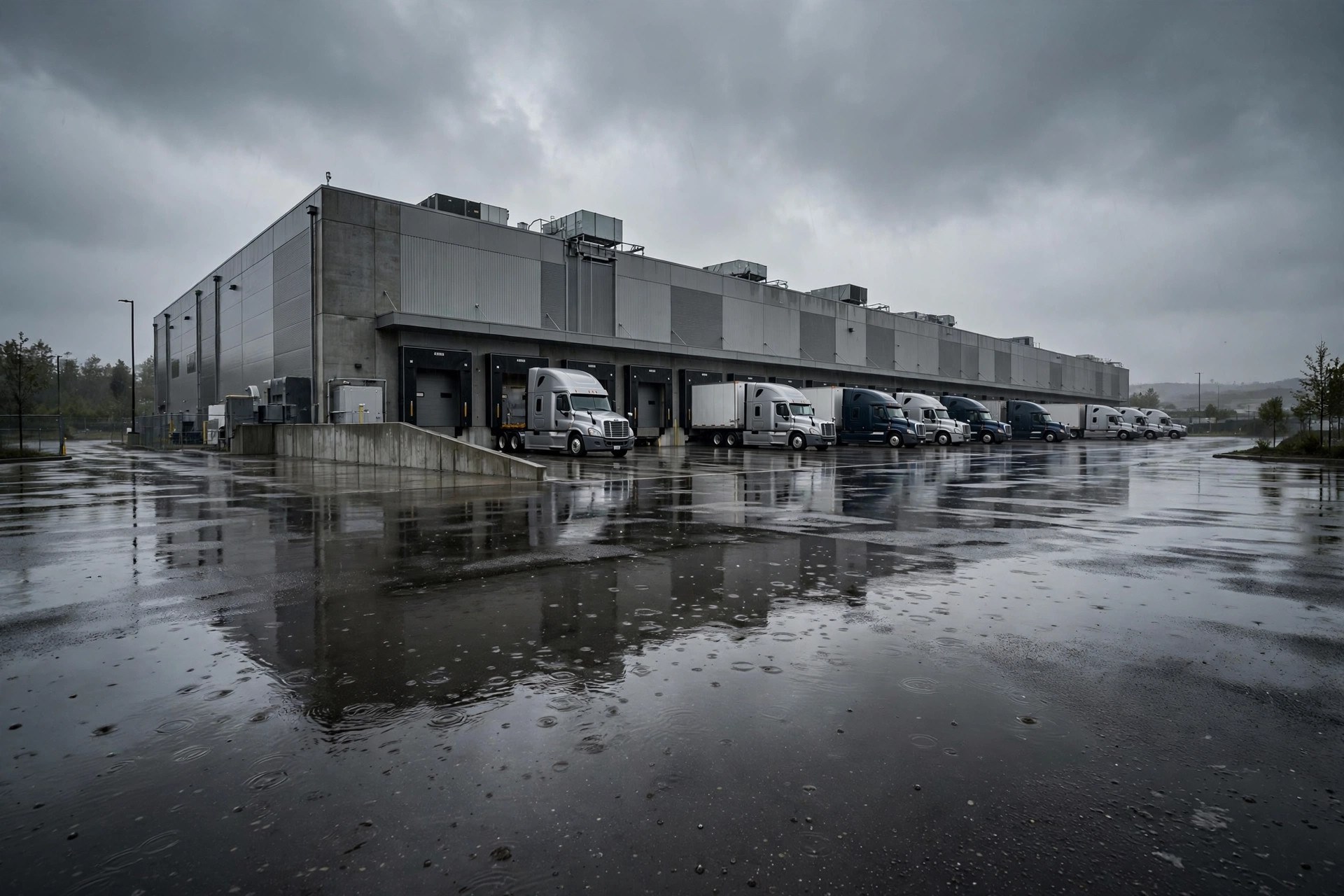
We had a client — an auto-parts distributor in Pennsylvania, leasing about 120,000 square feet. In March 2026, they got a Notice of Violation: no industrial stormwater permit, no SWPPP (Stormwater Pollution Prevention Plan), no BMPs (best management practices), no stormwater sampling. Four items, and the pattern was simple — they hadn't done any of them.
The penalty line read: up to $68,445 per violation, per day, under the Clean Water Act. Per day. Per violation. The owner's hands were shaking when he showed me the letter. That's not a fine — that's a meter running.
First, the mechanics: what a SWPPP actually is
Most warehouse people hear "SWPPP" and assume it's the environmental agency inventing paperwork. Strip it down: it's a plan that answers one question — when it rains on your facility, where does the dirty water go, and how do you manage it? In most US states, a warehouse with dock operations, parking lots, or outdoor storage likely needs an industrial stormwater permit (NPDES), and the SWPPP is the price of admission.
A compliant plan comes down to four things:
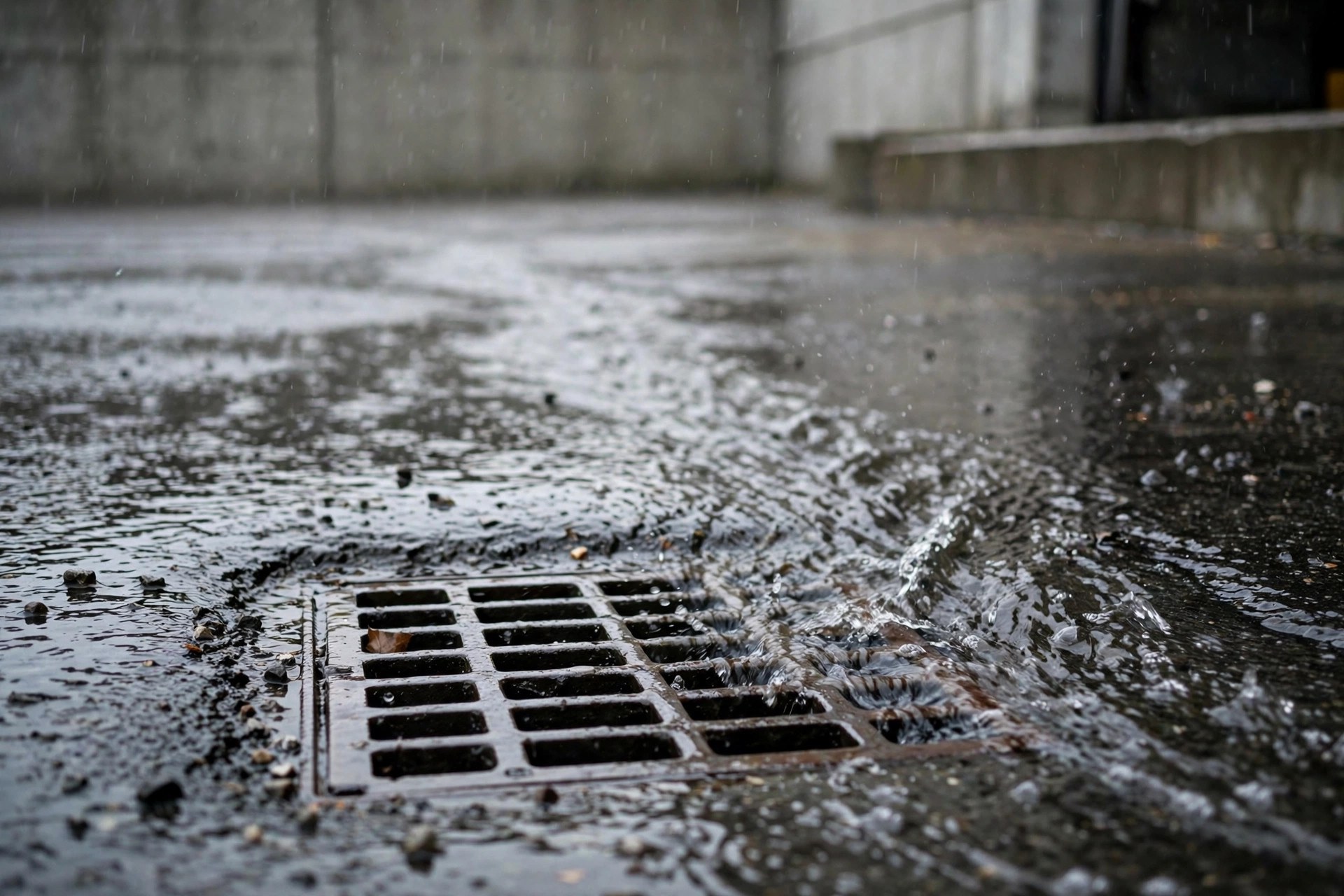
- Map it. A site plan marking every storm inlet, drainage flow path, oil and chemical storage point, and dock area. The inspector's first move on site is comparing that map to what they actually see.
- Spell out the BMPs. Spill berms and absorbent socks at the dock, marked storm inlets, sealed fueling areas, covered dumpsters. Small money — but it has to be in the plan and actually done.
- Assign people and schedules. Who is responsible, how often they walk the site, what they check when it rains. A beautiful plan nobody executes is scrap paper.
- Sample and report. Collect stormwater samples on the permit's schedule, send them to a lab, fix and document any exceedances. This is where most warehouses fail — the plan exists, the samples don't.
The sampling failure is the most common one we see: the plan is beautiful, the BMPs are in place, and sampling gets assigned to "whenever we have time." Then an inspector asks for two years of sampling records, and there are none. A plan you can't evidence is a plan you don't have.
One more thing vendors learn the hard way: a SWPPP is a living document, not a binder on a shelf. You expand the dock, switch chemical suppliers, restripe the parking lot — the site changes and the plan doesn't, and the inspector's first move is comparing the two. Our rule of thumb: update the plan whenever the site changes in a meaningful way, and review it at least once a year, with the update log kept on file.
And do a pre-rainy-season walkthrough — in California that's usually October. Half a day: are the inlets clear of trash, are the absorbents fresh, is the spill kit actually where the plan says it is? Half a day of prevention against a seven-figure exposure.
The insider angle: why SWPPP belongs in your 3PL contract
Here's the part only the vendor side ever sees. Most tenants sign warehouse leases with zero language about environmental liability. The landlord thinks, "I just collect rent — you run the operation." The tenant thinks, "I'm just renting — environmental is the landlord's problem." They kick the can back and forth until the fine arrives — and the agency does not care what your contract says. Liability follows the discharge, and the discharge follows the operator.
Another client learned this the expensive way: a forklift leaked hydraulic fluid on the dock apron, nobody cleaned it up, one good rainstorm washed it straight into a storm inlet, and a neighbor photographed the whole thing. The inspector's first question was the SWPPP — they didn't have one. Then the permit — didn't have that either. I can't say what the settlement cost, but it was an order of magnitude more than hiring a consultant to write a SWPPP.
The counterintuitive part: a SWPPP isn't the agency's weapon against you — it's your shield. After an incident, a company with a complete SWPPP, documented execution, and inspection records lands in a different penalty universe than a company with nothing. Enforcement runs on evidence chains: plan, execution, records. With all three in hand, you have something to negotiate with.
Let me scare you with the exposure math, because every tenant should see it once: that Pennsylvania client had four violations. Had they dragged their feet for 60 days, the theoretical exposure would have been 4 violations x 60 days x $68,445 — over $16 million. That's the theoretical ceiling, and real settlements land far below it — but negotiations start at that number and work down. Whether you hold a SWPPP decides if you're negotiating down from $16 million or from something much smaller.
One note on pricing games, since this is my home turf: some 3PLs bury environmental compliance inside the management fee; others quote it line by line. Before you sign, ask — who writes the SWPPP, who maintains it, who pays for sampling — and put the answers in a contract exhibit, not a handshake. Tenants love a verbal "no problem." Verbal doesn't count when the fine arrives.
Next time you negotiate or sign, ask these three questions
One: "Whose name is on this property's industrial stormwater permit and SWPPP? Show me the latest update." — Do they have one, and is it current?
Two: "Who maintains the dock and parking-lot BMPs — berms, absorbents, inlet markings — and how often are they checked?" — Is anyone actually executing?
Three: "If we get an environmental fine, how does this contract split responsibility and cost?" — Get the ugly part in writing before you sign.
Nobody watches your stormwater until something goes wrong — and then it goes very wrong, very fast. Fines are billed by the day; compliance is bought by the year. You can do that math yourselves.
By Susan, 3PL Sales Director


