The fire inspector climbed his ladder, stretched out a tape measure, and then turned to look at me. You know that look — like he'd caught a kid playing with matches in the kitchen. "Less than a hand's width," he said, pointing up. "Code wants 18 inches of sprinkler clearance."
Eighteen inches. 457 millimeters. Roughly the length of your forearm. And our little warehouse nearly died on that forearm.
Here's the thing about running a small warehouse. We've got about 30,000 square feet, decent ceiling height, five levels of racking. Rent goes up every year. Our clients' inventory grows every year. Stacking higher is the default survival move — one more pallet level means not renting a second building, and trust me, a small operation like ours cannot afford that kind of money. So "stack it higher" became the unofficial house rule: fill the top beam, then squeeze another layer on top of the cartons, then double-stack pallets where nobody's looking. Nobody ever thought about the little red things on the ceiling and the legal distance between them and our boxes.
Until inspection day.
The Fine Costs More Than the Rent
A buddy of mine runs a warehouse about our size over in Ontario, California. Last year, the fire department found his top rack level sitting just a few inches below the sprinkler heads — a whole row of racking, all of it in violation. He got cited and ordered to fix it: either bring the top level down or pay to redesign the sprinkler system. For two weeks his forklifts did nothing but shuffle pallets around, his clients' freight had nowhere to go, and he ended up renting temporary space next door just to survive the cleanup.
Here's the counterintuitive part, and I want every small warehouse owner to hear this: the rent you save by stacking higher can get wiped out — with interest — by a single fire-code correction. Rent savings trickle in month by month. A correction order hits like a meat cleaver. That extra pallet level you squeezed in? A year's worth of savings from it might not even cover the labor to re-slot everything plus the temporary storage. And if there ever is an actual fire, with the spray pattern blocked by your over-stacked goods, good luck arguing with the insurance adjuster about your payout.
Which brings me to story number two — the insurance renewal. This year our carrier sent out a loss-control engineer with a laser distance meter. He walked the whole building, stopped at the high-bay racking, pointed at the top level and asked, "How much clearance is that?" My stomach dropped. The renewal terms came back with a new condition: fix the sprinkler clearance by a deadline, or the premium goes up next year. I won't say by how much — let's just say it would've bought barbecue for the whole crew several times over. Insurance companies are sharper than fire inspectors on this one, because when things burn, it's their money on the line.
How to Actually Measure the 18-Inch Clearance
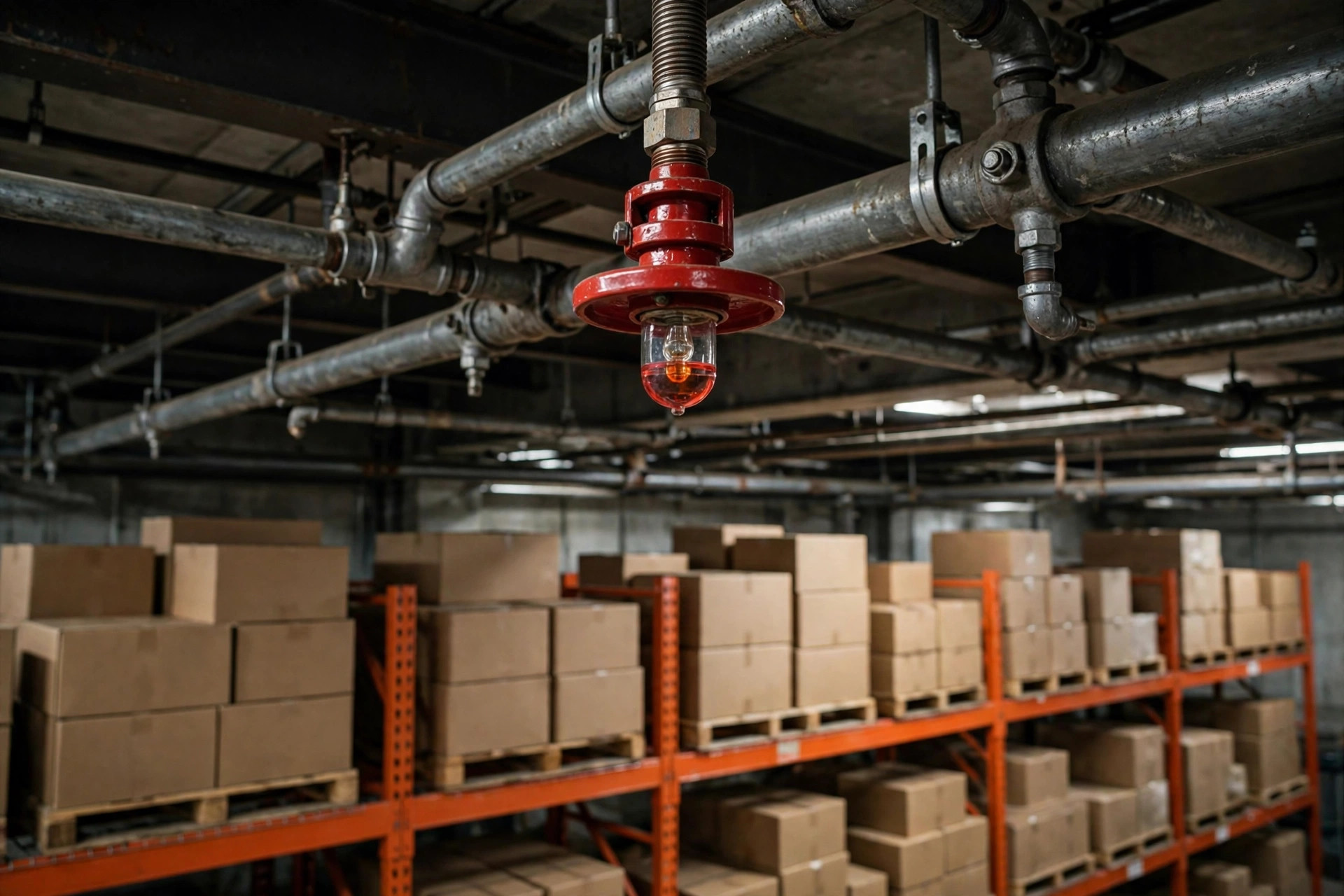
A lot of people — past me included — measure from the wrong spot. The 18-inch rule (NFPA 13, for standard spray sprinklers) is measured from the sprinkler deflector — that little disc under the head that spreads the water — straight down to the highest point of your storage. Not to the pipe. Not to the ceiling. To the disc. Upright heads sit differently than pendent heads, which makes it even easier to get wrong.
The cheap fix: buy a laser distance meter, ride up on a forklift or a lift platform (safely, please), aim at the deflector, and shoot downward. Subtract the short distance between the head and its own deflector, and that's your clearance. Don't climb around with a tape measure — dangerous and inaccurate. We do this once a month now. Our safety guy spends five minutes walking the main aisles, eyes on the top levels only, because inventory moves — compliant this month doesn't mean compliant next month when new freight shows up. Sprinkler clearance isn't a one-time renovation. It's an operating habit.

Paint Your Limit Lines: A Small-Warehouse Clearance Checklist
Big companies hire fire-protection engineers to produce drawings and hydraulic calculations. We can't afford that. But the scrappy version works just as well. Here's our checklist:
First, find out what kind of sprinklers you actually have. Get up there (or dig out the building drawings) and check: standard spray, or ESFR (early suppression, fast response)? This is the big trap — ESFR heads require 36 inches (914 mm) of clearance, not 18. Plenty of older buildings have a mix, or the landlord upgraded half the system years ago. If you assume 18 inches everywhere while half your ceiling is ESFR, you're in trouble. Know your head type before you claim compliance.
Second, paint a limit line on every rack row. Our method is embarrassingly low-tech, and the inspector nodded approvingly: red spray paint on the uprights, with the line set at the deflector minus 18 inches (or 36 for ESFR zones), plus a couple of inches of margin for safety. Nothing on the top level goes above the red line. Forklift drivers can see it from across the aisle — a hundred times clearer than a drawing. For bulk-stack areas with no racking, paint the line on the floor and the columns too, because that's where the tallest stacks live and where violations love to hide.
Third, police the "temporary" stacking. Nine times out of ten, a clearance violation isn't a racking-design problem — it's a "temporary" problem. Peak season blows up, so two layers go in the aisle "just for now." The returns area grows a cardboard mountain. A client drops off an unexpected load with nowhere to put it, so it sits under a sprinkler head "for two days." Our rule now: anything above the red line, even "temporary," gets moved within 24 hours, and the safety guy does a photo walk at end of shift, posted to the group chat. The fire code doesn't care whether your violation is temporary or permanent.
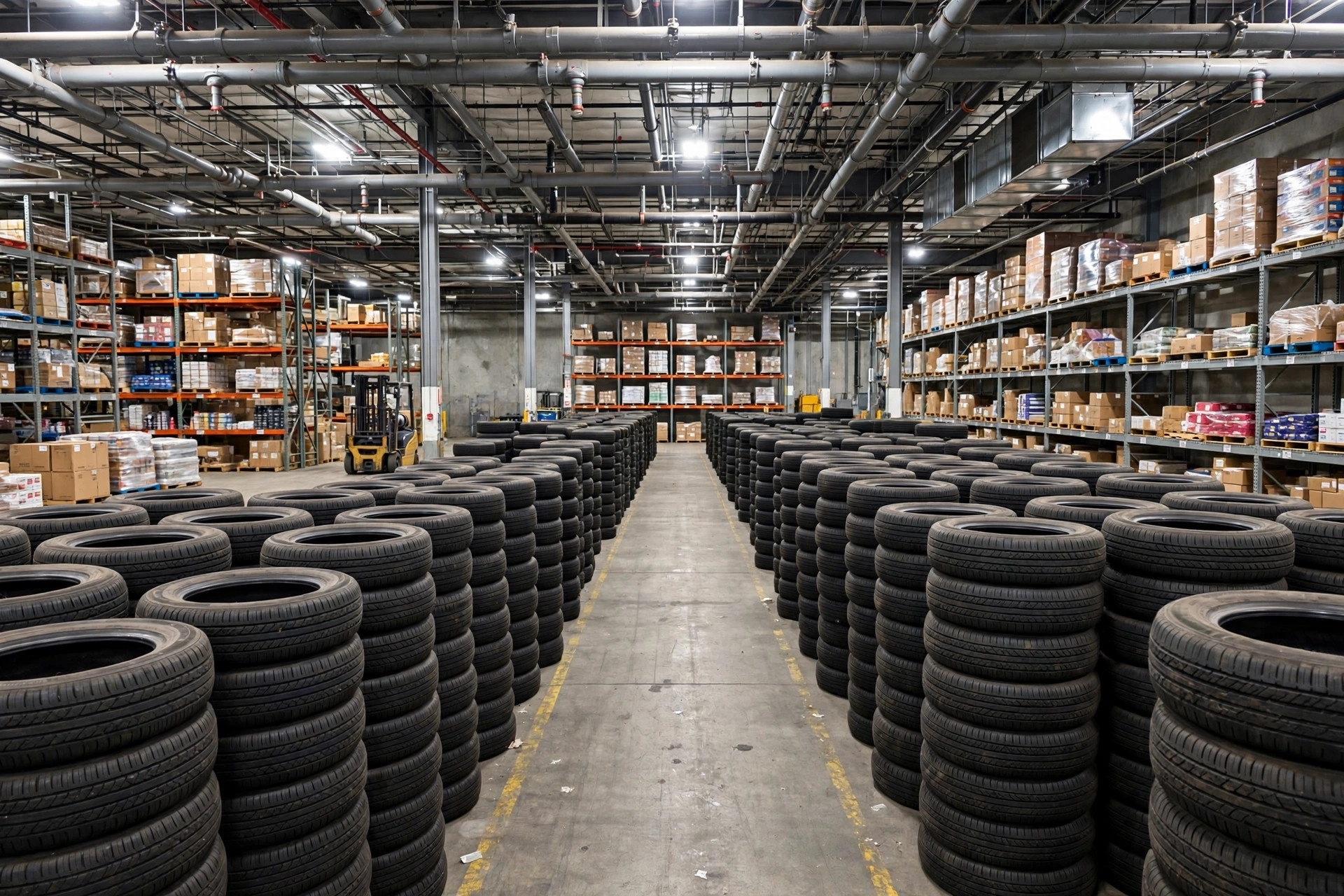
Fourth, hazardous commodities play by tougher rules. The 18/36-inch numbers are the baseline. If you're storing plastics, rubber tires, or other high-hazard goods — or your storage height crosses into high-piled storage territory — the requirements get stricter, and you may need in-rack sprinklers. Check NFPA 13 and your local fire department's latest requirements rather than guessing. We mostly handle ordinary carton goods, so this hasn't bitten us yet, but the moment your client mix changes, reassess.
Three Things I'd Tell Another Small Warehouse Owner
One, don't wait for the inspector to measure for you. Ask your local fire department for a pre-inspection walkthrough — many will do it free or cheap — and let them tell you what's wrong. Getting guidance before a citation, versus fixing things after one, is a completely different experience in both money and dignity.
Two, put clearance in your client agreements. We learned this the hard way: a client demands more storage, the stacking goes over the line, and then whose fine is it? Our contracts now say the client pays for any fire-code correction caused by their over-height goods. Awkward conversations up front beat ugly fights later.
Three, do the full math before you stack higher. Write down what one extra level actually saves you in rent per year. Then write down what a correction probably costs — re-slotting labor, temporary storage, a possible premium bump. Put the two numbers side by side, and you'll see exactly what those 18 inches are worth. After we did this, we voluntarily dropped our top level by half a tier. The rent savings were imaginary. Compliance is real.
Big companies have fire-protection teams. We don't. Big companies can absorb a correction order. We can't. Which is exactly why we have to guard those 18 inches harder than anyone. Paint the line on the rack — and in your head.
Small warehouses have their own way of surviving: not with deep pockets, but with sharp eyes.
By Xiao Ma, Small Warehouse Owner