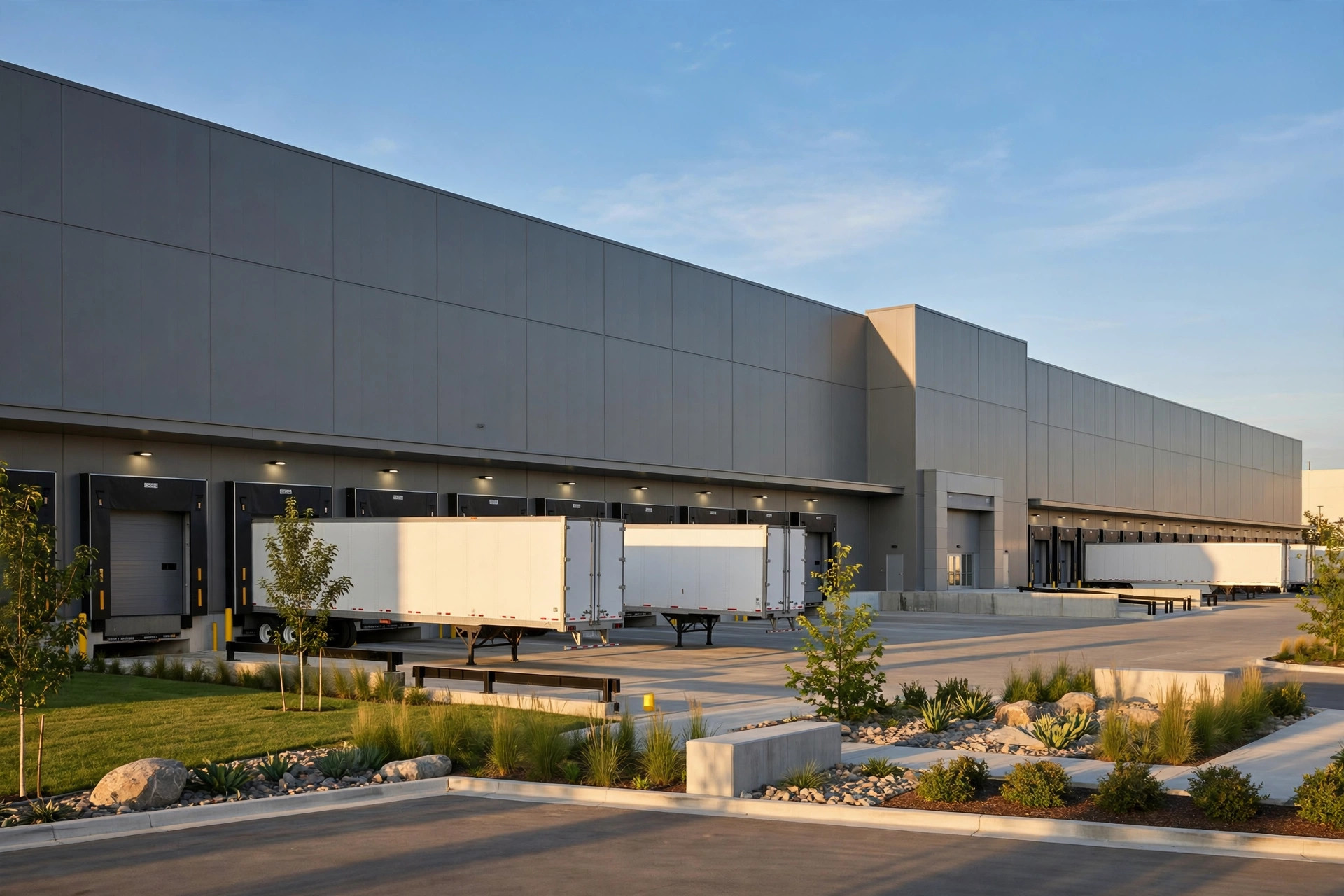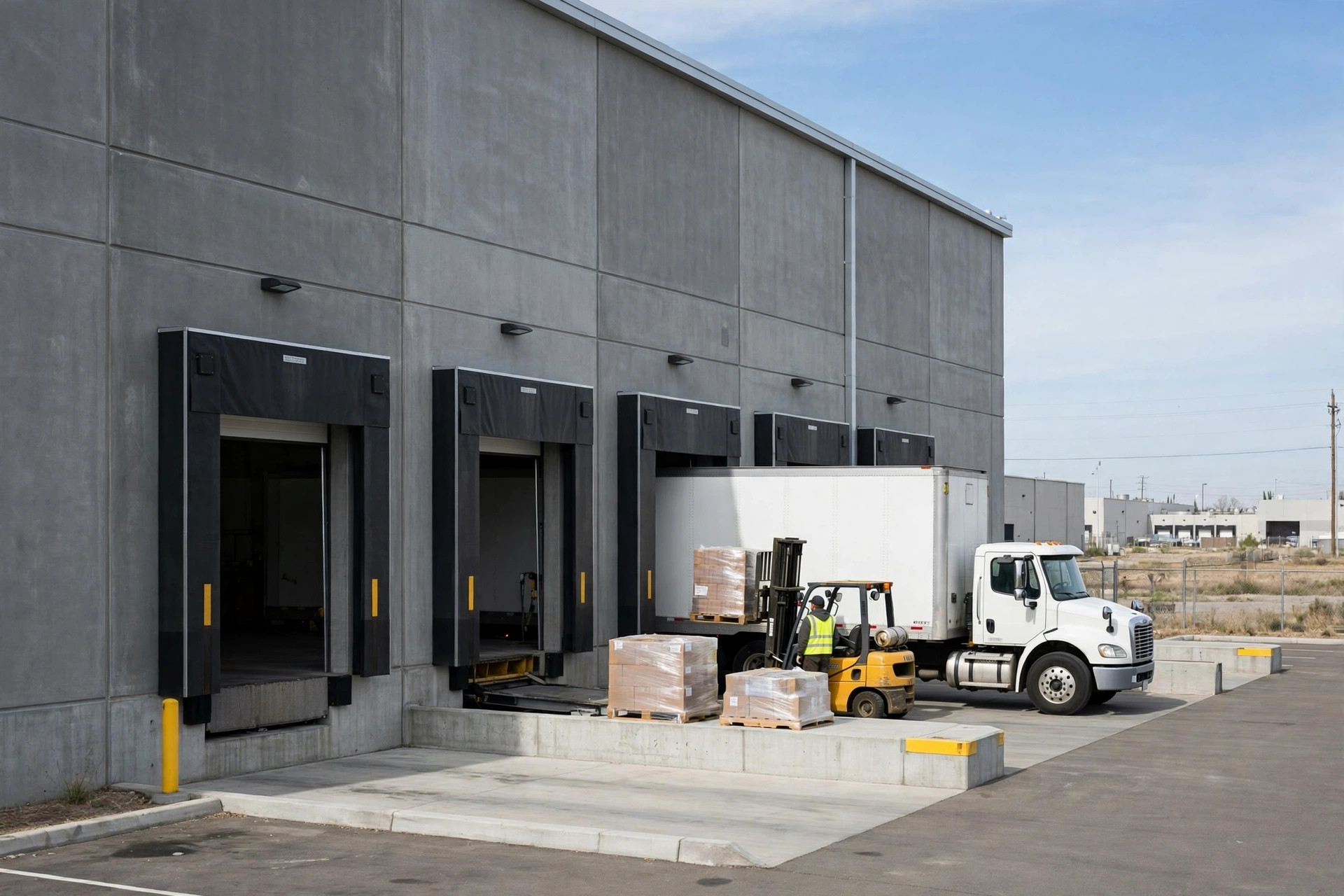
"Don't worry," the landlord's broker said, sliding the draft lease across the table. "The entire building is fully insured under our building policy."
My friend — a first-time warehouse tenant who had just signed on a 120,000-square-foot space in Ontario — exhaled with relief. He figured he'd just saved himself a small fortune in premiums. Three years later, a roof leak turned 20,000-plus units of apparel inventory into rags. That's when he learned the landlord's policy covered the roof. His ruined goods, his three months of dead business — nobody's policy touched any of it.
I've heard that line at the negotiating table for twenty years, and almost every time I hear it, I worry for the tenant. The landlord's insurance and your insurance cover two completely different things. The gap between them is the most overlooked, most expensive clause in a warehouse lease.
What the landlord's policy actually covers: just the shell
The landlord carries commercial property insurance on the building shell — the walls, the roof, the foundation, the structural bones. If the building burns or the roof collapses, the landlord uses that policy to rebuild.
Here's what it doesn't cover: your inventory, the $300,000 you spent on offices and a mezzanine, the rent and payroll you keep paying while the building sits unusable, or the third-party injury claim when someone gets hurt inside your operation.
And there's a twist that stings: in most triple-net leases, the landlord's insurance premium gets passed through to you as part of operating expenses. You're paying for the landlord's policy every month — and mistakenly believing it protects you. Paying for coverage you don't actually have. That's gap number one.
The four policies the tenant has to buy
What the landlord won't cover, you cover yourself. A standard tenant insurance stack has four pieces:
Tenant property insurance. This covers your tenant improvements, racking, equipment — and most importantly, your inventory. When fire or water hits, the real money sits on those racks: millions of dollars in goods. The landlord's policy won't go near it.
Business interruption (BI). The warehouse burns, shipments stop, customers leave, payroll continues. This policy covers lost profit and fixed expenses during the downtime. I've watched too many tenants insure their goods but skip BI. The goods got reimbursed. The company didn't survive.
Commercial general liability (CGL). A delivery driver breaks a leg on your dock, a visitor gets clipped by a forklift — the claim lands on you, the party actually operating the warehouse, not the landlord. Industrial leases commonly require $1M per occurrence / $2M aggregate. That's market convention; your lease and policy terms are what actually govern.
Workers' compensation. Have employees, buy it. In California it's mandatory — operating without it isn't a cost-saving strategy, it's a violation.

Of the four, tenants most often skip the first two. The reason is painfully human: right after signing a lease, cash is tightest. The broker quotes the premium, the tenant sees the annual number, and the first thought is "but the landlord already has insurance." The two policies that would save you in a catastrophe are exactly the ones that get cut.
Where the gaps actually are: three real traps
Trap one: waiver of subrogation. This is the most expensive single line in a lease, and most tenants sign it without knowing. Here's the mechanics: a fire starts because of your employee's mistake. The landlord's insurer pays to repair the building — then turns around and sues you to recover those repair costs through subrogation. Unless the lease includes a mutual waiver of subrogation, that lawsuit is coming. I saw this play out at an 80,000-square-foot 3PL warehouse in Southern California in 2023: a fire in the tenant's forklift charging area, the landlord's carrier paid out, then sued the tenant. It ended in a costly settlement. Adding a mutual waiver costs essentially nothing. Skipping it can be fatal.
Trap two: additional insured status. Leases routinely require the tenant to name the landlord as an additional insured on the tenant's liability policy — so if someone gets hurt in your warehouse and sues both of you, the landlord can defend under your policy. But almost nobody negotiates the reverse: the tenant should demand to be named on the landlord's policy, or at minimum require a certificate of insurance and written notice of any material change. I've seen landlords quietly lower coverage limits or raise deductibles mid-lease. The tenant finds out the day something happens.
Trap three: deductibles and who pays first. The landlord's policy might carry a $50,000 or even $100,000 deductible. A roof leak causes $80,000 in damage — below the deductible, so the landlord's policy pays zero, and the landlord bills you the $80,000, citing the lease clause that makes the tenant responsible for "routine maintenance." Whether a leak counts as a "building defect" or "maintenance failure" can be argued for six months. Spell it out in the lease: who covers repairs below the deductible, and at what dollar threshold insurance takes over.
The pre-signing checklist
| Risk | Landlord's policy | Tenant's policy | What to negotiate |
|---|---|---|---|
| Building structure (roof, walls, foundation) | Covered | Not covered | Confirm adequate limits; get deductible in writing |
| Tenant improvements, mezzanine, racking | Not covered | Tenant property policy | Insure to full replacement cost if you built out heavily |
| Inventory loss | Not covered | Tenant property policy | Insure at peak-season inventory value, not off-season |
| Lost income during shutdown | Not covered | Business interruption | Cover at least 6 months of fixed expenses |
| Third-party injury claims | Not directly | CGL | Naming landlord as additional insured is standard — accept it, but ask for reciprocity |
| Insurers suing each other after a loss | Possible | Possible | Mutual waiver of subrogation in the lease |
| Landlord quietly reducing coverage | Tenant unaware | — | Certificate of insurance + written notice of changes |
Three lines the tenant should say at the table
Everything above is knowledge. These three lines are the script. Say them before you sign:
Line one: "Add a mutual waiver of subrogation to the insurance clause." It costs nothing, and landlords rarely refuse — because it protects them too. A landlord who won't agree should make you nervous.
Line two: "Provide a certificate of the landlord's insurance, with written notice to the tenant within 30 days of any material change." You're helping pay for that policy through operating expenses. You have a right to know what it actually covers and whether the limits shrank.
Line three: "Define who pays for repairs below the deductible — landlord covers up to $X, tenant handles routine maintenance." Negotiate the number. The point is eliminating the gray zone, because every dispute I've ever seen came from a gray zone.
A lease is a 5-to-10-year commitment. Rent is negotiable, free rent is negotiable, and the insurance clause is the one everyone treats as "standard language" and skips. It's also the clause that decides whether you survive the day something goes wrong. Next time someone says "the whole building is insured," ask the only question that matters: the building — or my business?