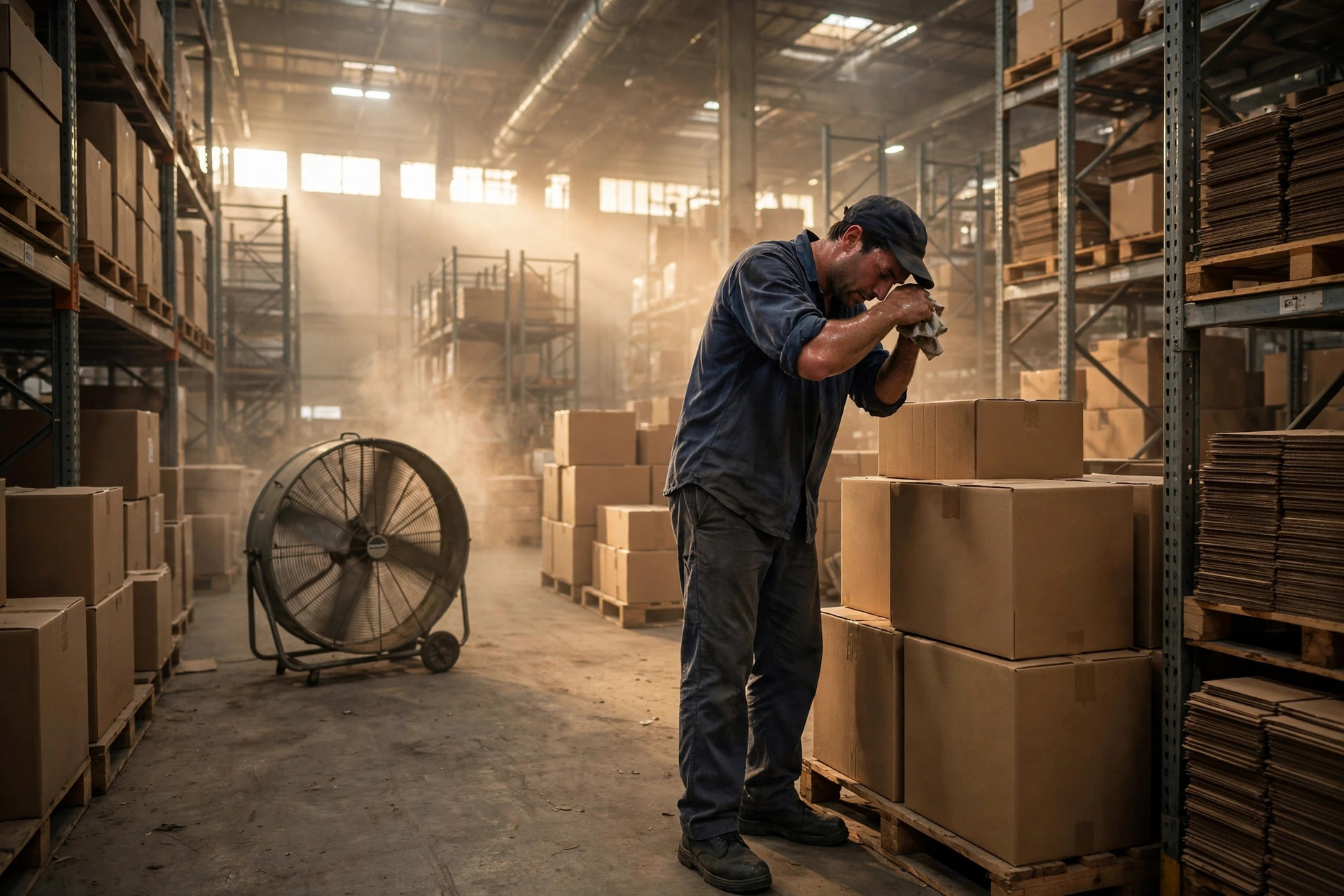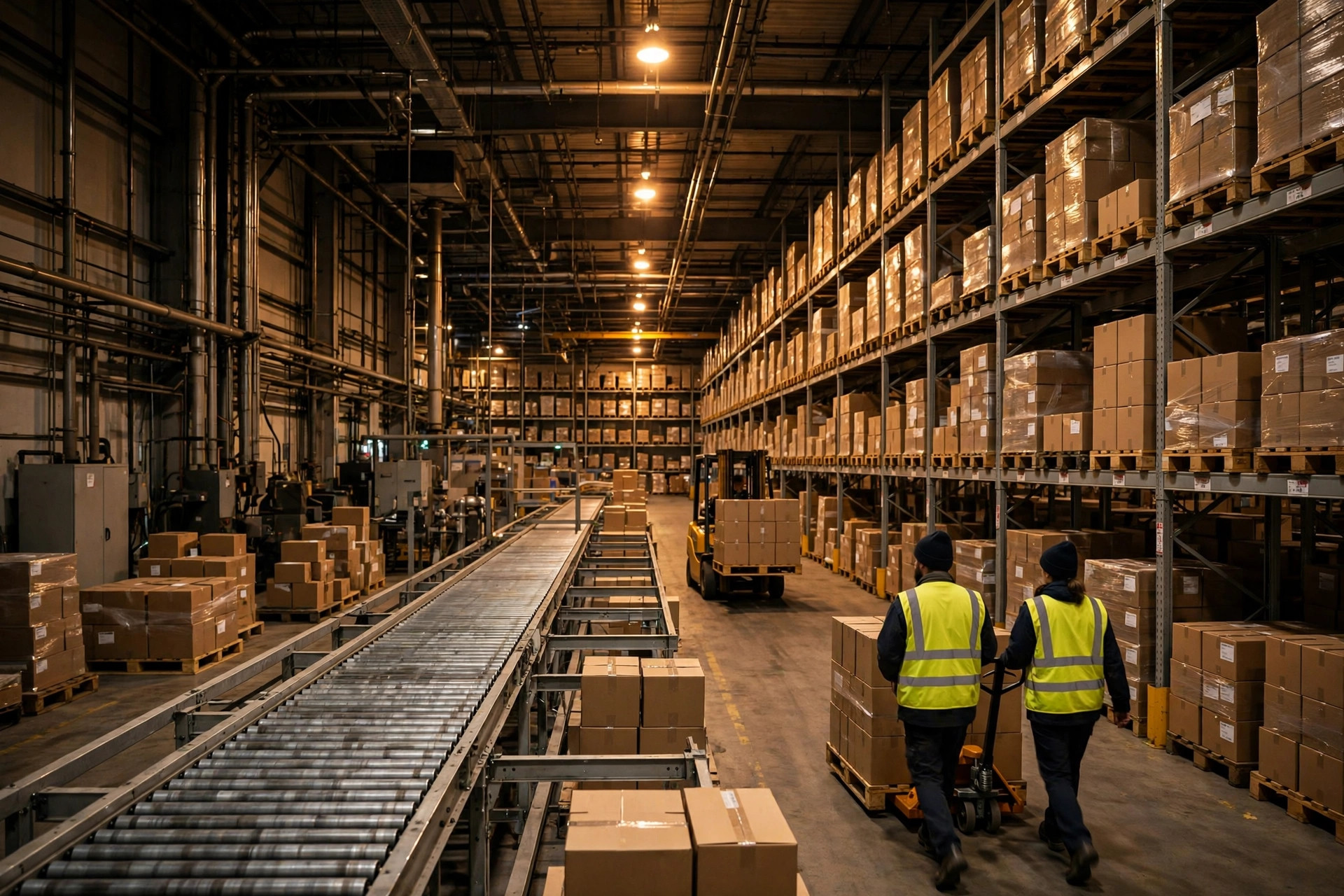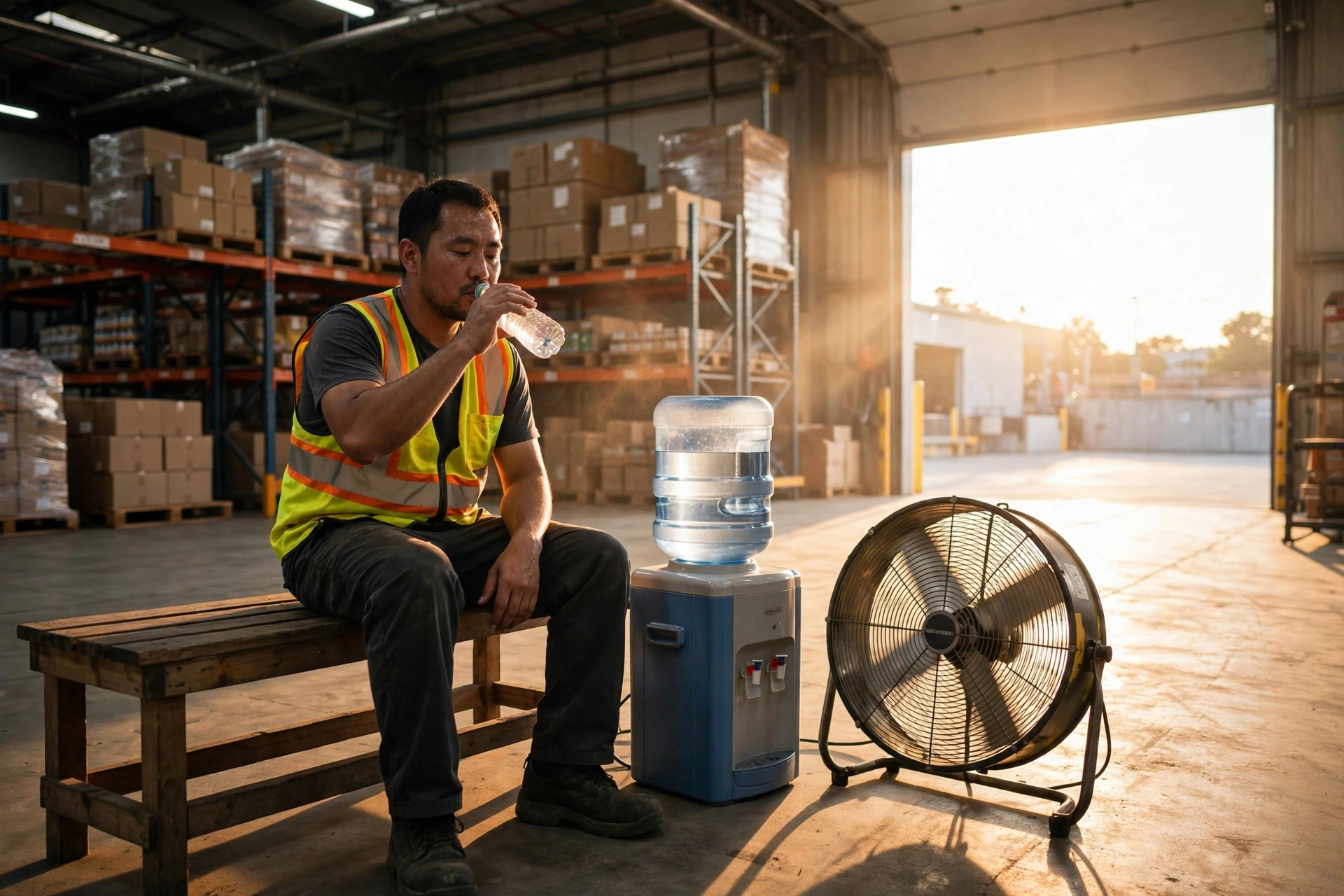
82°F. If you run a warehouse in California, tattoo that number on your brain.
To be precise: 82°F is not the legal line — the legal line is 87°F. But if you wait until 87°F to start doing something, the citation is already on its way. On July 23, 2024, California's indoor heat illness prevention standard (8 CCR Section 3396) took effect, giving indoor heat its own dedicated regulation for the first time. Outdoor heat has been regulated under Section 3395 since 2006; the indoor rule was drafted starting in 2017 and took seven years of fights to land. That tells you how contested it was.
I've walked plenty of Inland Empire warehouses where the dock doors roll up in summer and the indoor thermometer blows past 90°F while pickers keep running, soaked through their shirts. The old logic was "tough it out, it'll pass." Since the summer of 2024, toughing it out is a citable violation.
87°F Is the Legal Line — 82°F Is Your Action Line
The triggers are written in stone. Three tiers, memorize them:
Tier one: 87°F. In any indoor work area where employees are present, when the temperature or the heat index — whichever is higher — hits 87°F, the full set of prevention requirements kicks in. Note the "or heat index" part: on humid days the body feels worse than the thermometer says, and the regulation sides with the body. Appendix A of the rule has a heat index chart; a thermometer plus a hygrometer gets you there.
Tier two: 82°F. The trigger drops to 82°F in two situations: employees wearing clothing that restricts heat removal (heavy protective gear, not a standard hi-vis vest), or working in a high-radiant-heat area (near heat-sealing equipment, ovens, that kind of thing). If your pack-out line sits next to heat sealers, you're on the 82°F clock.
Tier three: heat waves. When the forecast says outdoor temps will hit 80°F and run at least 10°F hotter than the five-day average high — and you have no effective engineering controls taming the indoor heat — extra measures apply that day. Those sneaky September heat waves in the Inland Empire are the classic trap.
One exemption, don't misuse it: workers just passing through a hot zone — under 15 minutes total in any 60-minute period, with temperatures between 82°F and 95°F — are exempt. A forklift driver rolling past the dock door doesn't count. But inspectors look at actual work duration, so don't use this as a shield for people stationed near the doors all shift.
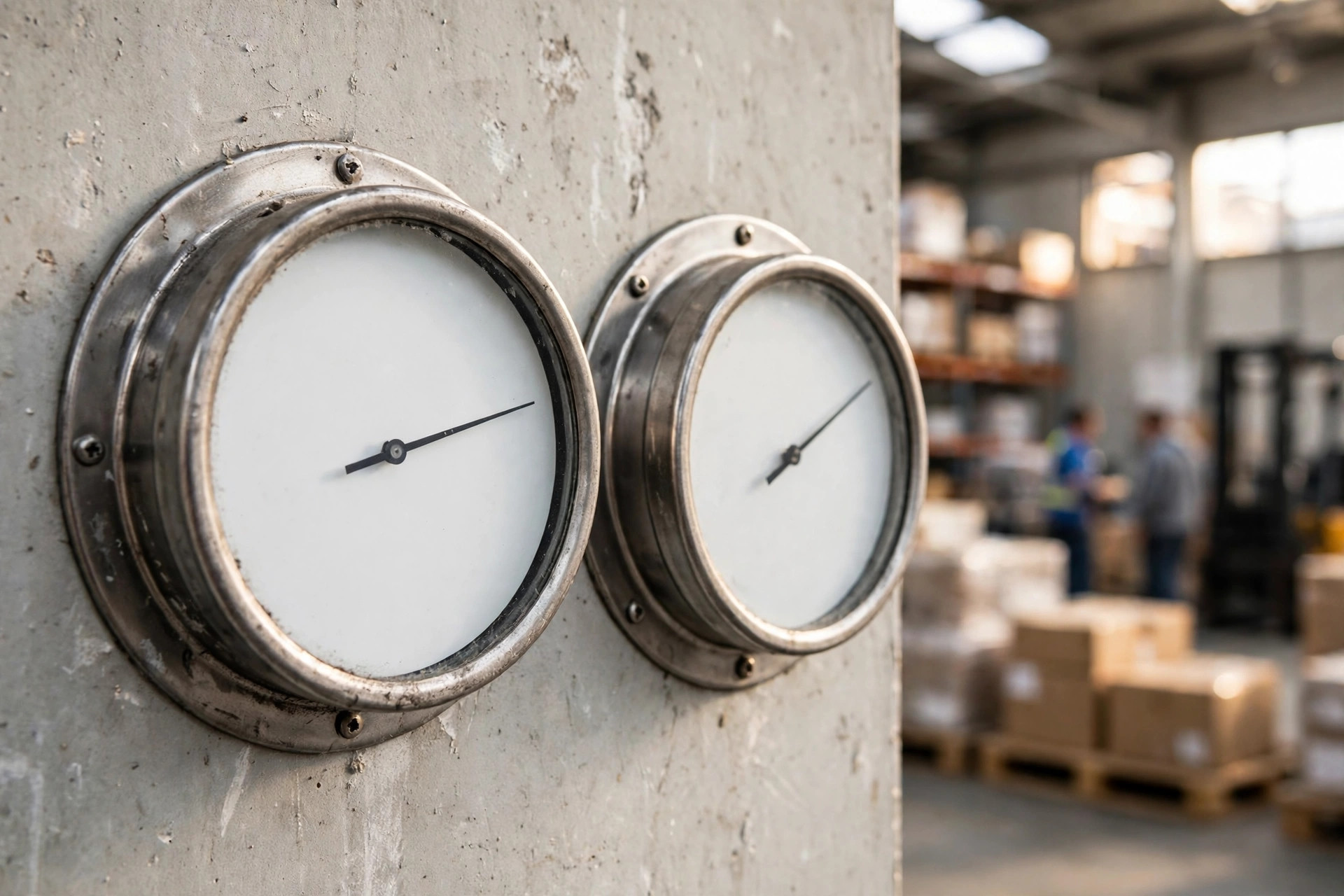
My verdict: set 82°F as your own internal action line. The regulation gives you 87°F, but temperature doesn't send a warning text. It's 82°F at noon and 88°F by two. By the time you react, that day's temperature log already has a gap in it — and gaps are evidence.
The Non-Negotiables: Plan, Water, Cool-Down Area, Training
Once the trigger is met, every one of these has to be in place. Each missing piece is another line on the citation.
A written plan. A written Heat Illness Prevention Plan covering: how water is supplied, where the cool-down area is, how temperature gets measured and logged, how training works, and the emergency procedure when someone shows symptoms. Print it and put it where employees can actually get to it. My advice: have it in the languages your people read. When the inspector asks, you can produce it and your crew can explain it — that's what counts.
Water. Fresh, cool, free, and close to work areas and the cool-down area. The indoor rule doesn't specify a per-person quantity the way the outdoor rule does, but the requirement is "enough, whenever needed." My one-liner on water: don't make employees buy their own. When the inspector asks "is there enough water?" and your answer is "they bring their own," that goes into the record and it doesn't read well.
A cool-down area. At least one, held below 82°F, shielded from radiant heat sources. When an employee asks to rest, they rest — "finish this pick first" is a sentence you never want quoted back to you. It can be humble: a bench, an industrial fan, a water dispenser. But the temperature has to genuinely stay under 82°F. The dock doorway doesn't count — doors open, heat pours in, you'll never hold 82°F there.
Temperature monitoring and records. Once triggered, you measure temperature or heat index and you keep records. Thermometer plus hygrometer, checked against the Appendix A heat index chart. What I do: two data-logging thermo-hygrometers, a few dozen bucks each, one at the dock, one at the hottest spot in the pick zone. The shift lead snaps a photo every shift and it goes into the group chat archive. When the inspector shows up, records beat explanations a hundred to one.
Training. Employees and supervisors both get trained: symptoms of heat illness, prevention, emergency procedures, what to do when a coworker looks wrong. Sign-in sheets, kept on file. Training without signatures is training that never happened.
Watch new hires for 14 days. The rule requires close observation of anyone newly assigned to a hot area during their first 14 days. The science behind it: acclimatization typically takes 4 to 14 days of at least 2 hours a day in the heat. Peak season, when temps flood in, is when this gets skipped — and when incidents happen.
Emergency response. Worker shows symptoms: recognize it, basic first aid (cooling towels, move to the cool-down area), call emergency services. Two iron rules: never leave a symptomatic worker alone, and never just send them home. Inspectors will ask about both if anything goes wrong.
What a Citation Actually Costs
Let's talk money. Cal/OSHA adjusts penalties for inflation every year. For 2025: up to $16,285 per general or regulatory violation, up to $25,000 per serious violation, and up to $162,851 per willful or repeat violation. The starting points aren't gentle either — roughly $1,000 for a general violation, around $18,000 for a serious one.
What makes it "serious"? A hazard that could cause death or serious physical harm. Heat illness has killed people; an inspector classifying indoor heat exposure as serious is not a stretch. Worse is "willful" — you knew Section 3396 was in effect and you never wrote the plan. One willful citation at $162,851 wipes out a small 3PL's annual profit.
Where do inspections come from? Employee complaints, most often. One person goes down with heat exhaustion, a couple more feel dizzy, somebody makes a phone call, and the inspector walks in. First three things they ask for: the written plan, the temperature logs, the training sign-ins. Got none of them? It's going to be a long conversation.
One caveat: if 2026 brings adjusted penalty numbers, go by whatever Cal/OSHA publishes on its official site — don't quote my 2025 figures back at an inspector.
Two things you can do this week:
First, order two data-logging thermo-hygrometers today — one for the dock, one for the hottest corner of your pick zone. Have the shift lead photograph the readings every shift and drop them in the work group chat. Starting tonight, you'll actually know the temperature in every corner of your building.
Second, print three copies of the written plan — office, dock, break room. Add a one-page "recognizing heat illness symptoms" sheet to onboarding and get every employee's signature. Paper and signatures are the only language that works in front of an inspector.
One question to leave you with: what's the temperature in the hottest corner of your warehouse right now? If you don't know, the answer starts with the thermometer you hang up tonight.