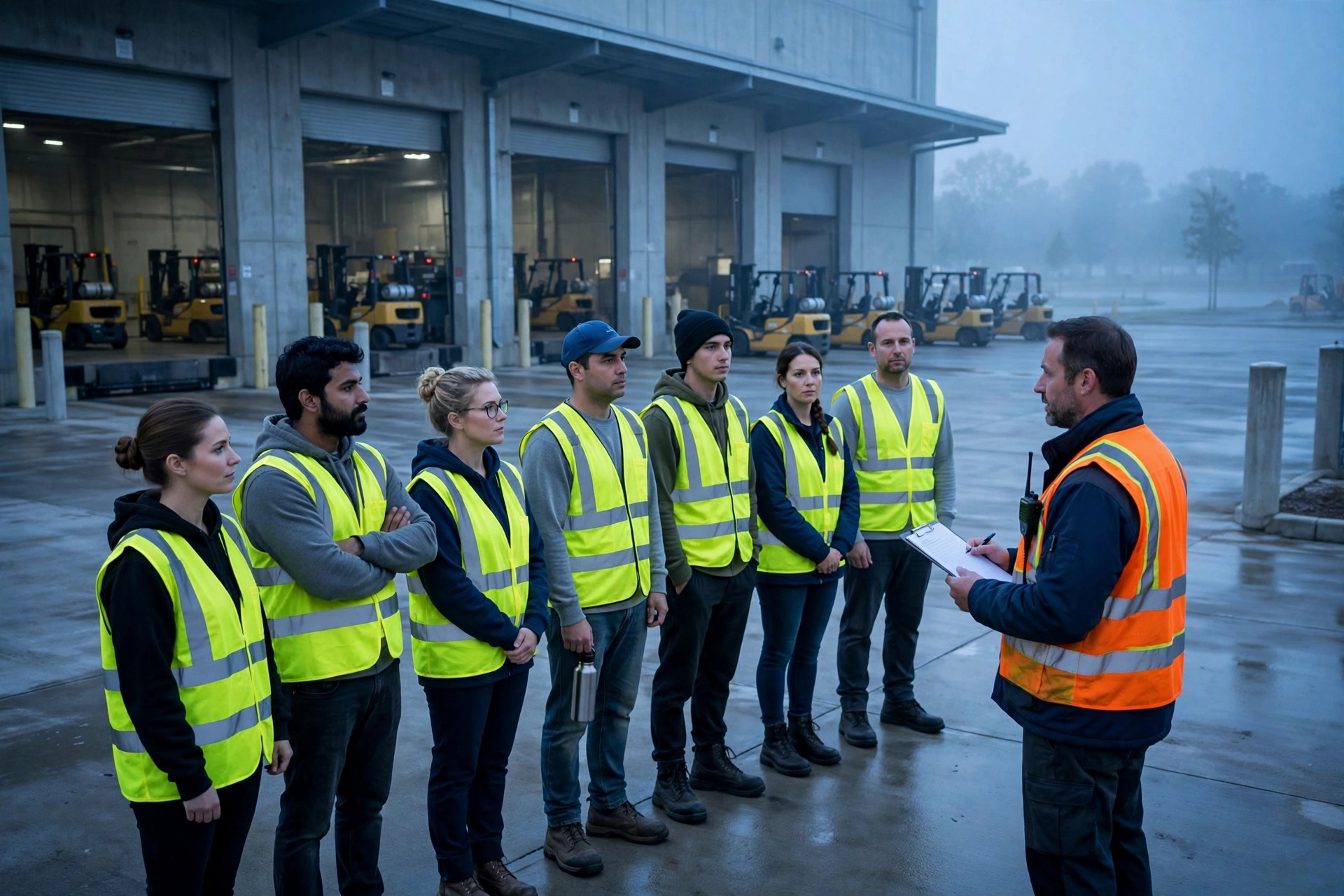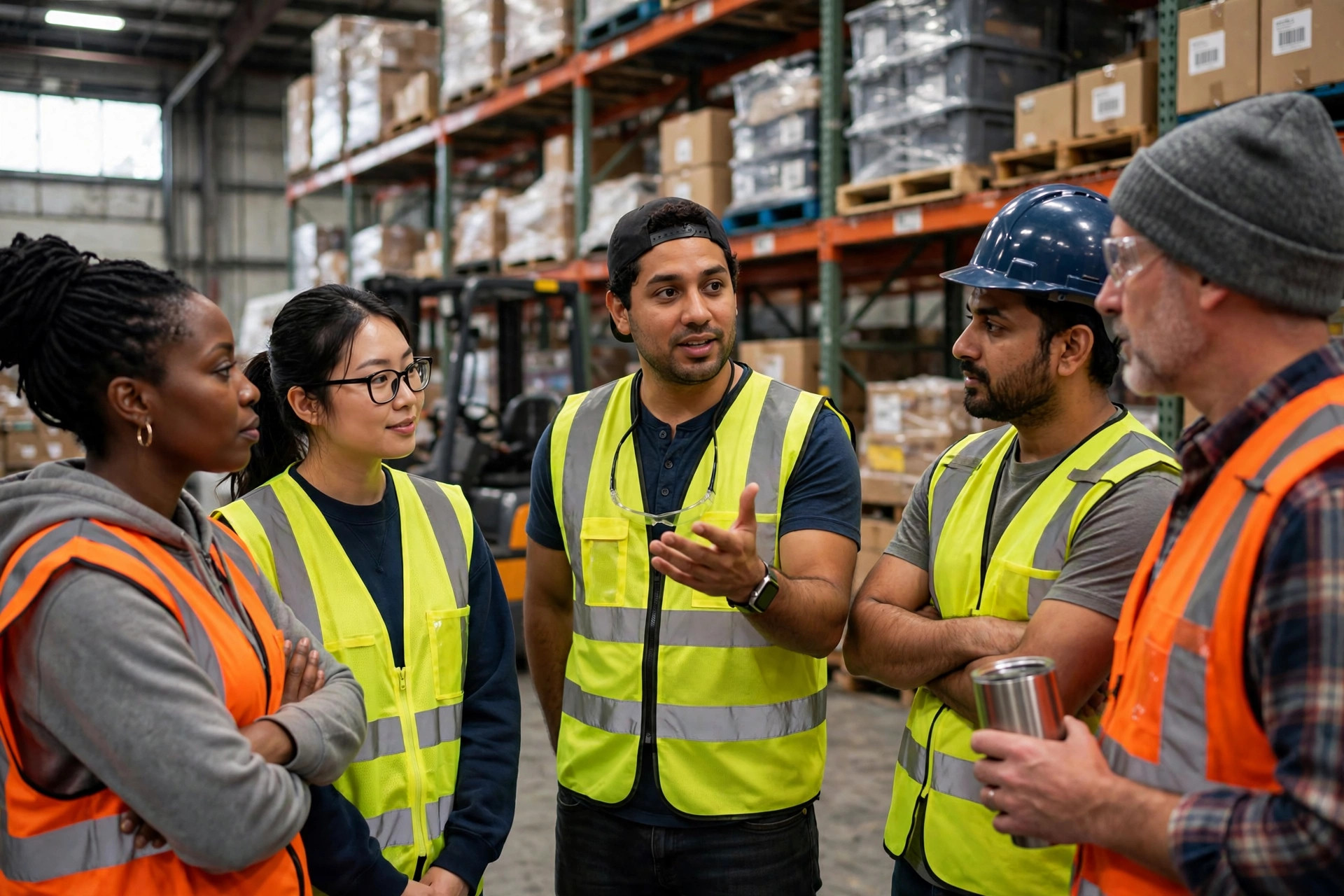
Thanksgiving week, 2023. Dallas, Texas. Our 180,000-square-foot DC — 143 of the 210 people on the floor, a Hispanic crew.
It's 5:40 in the morning, Black Friday orders are already blowing up the conveyors, and I'm calling roll at the inbound dock. I get to number 47. A kid named Edgar doesn't answer. The guy next to him nudges him, and only then does he react. I was calling his English name — the name on his badge — and he didn't recognize it as his.
That's when it hit me: nearly seventy percent of the building. I'd spent ten years managing warehouses, and the biggest crew I ever ran was eighty percent Hispanic. Until that morning I hadn't admitted it: I'd been running an English-only operation over a Hispanic workforce for three years, and the bill came due in three installments.
What English-Only Management of a Hispanic Crew Actually Costs
Let me be straight with you: if you don't run the numbers, you'll never feel how much it hurts.
The first bill came in 2021, Ontario, California. A 160,000-square-foot 3PL warehouse, 120 people on the floor, about 95 of them Hispanic. Back then I was a believer: "You work in America, you speak English." Safety training, morning huddles, performance reviews — all English, no exceptions. One year of that: voluntary turnover 38% against an industry average around 25%. Nine forklift scrapes, four of them traced directly to misunderstood instructions. Pick error rate 1.8%, half again higher than our sister building.
Then we changed how we ran the place — I'll get into the details — and the next year looked like this:
| Metric | English-only year | Bilingual year |
|---|---|---|
| Annual voluntary turnover | 38% | 11% |
| Forklift / equipment scrapes | 9 | 2 |
| Pick error rate | 1.8% | 0.7% |
| New-hire 90-day retention | 54% | 83% |
| Leads promoted from within | 20% | 65% |
The crew didn't suddenly get smarter. I just stopped making them guess.
Run the money and it stings worse. Hiring, training, and ramp-up waste on one floor worker runs $3,500 to $4,500 by conservative math. Going from 38% to 11% turnover in a 120-person building keeps about 32 more people a year — $110,000 to $140,000 saved, before a single accident shutdown or damaged shipment.
So here's the uncomfortable truth: it's not that Hispanic workers won't learn English — it's that your management style turns them mute. Put someone in an all-English environment where they can't follow and can't speak up, and their options are: guess and get it wrong, or stay quiet and quit. The language barrier never bills the worker. It bills the boss.
Breaking the Language Barrier: Three Levers, Nothing Fancy
I used to dream about "full bilingual transformation." Forget it. Three levers do the job.
One: bilingual leads. The single highest-return move, bar none. Our rule: any shift bigger than 15 people gets a lead who speaks both — English good enough to read a work order, Spanish good enough to explain the job. I'll promote a rough-English veteran the crew respects over a polished-English outsider with zero Spanish, every time.
Real story. Summer 2022, we were standing up a new sort line before peak. SOPs all in English. I hired an outside supervisor — great English, two weeks in, the crew hated him, and UPH ran 30% below the old line. I pulled him off and promoted José, four years with me. His English was "slow down" and "follow me" and that's about it. But he translated the SOP line by line into Spanish, drew pictures, taped them at every station. A week later the new line was beating the old one by 12% on UPH.
Two: bilingual where it matters, not everywhere. Translating everything is expensive and nobody reads it. Our rule: anything that keeps people alive — safety signs, fire exits, lockout/tagout, forklift charging warnings — goes bilingual, word for word. Daily reports, KPI boards, schedules — bilingual headers and key numbers. Day-to-day notices, party flyers — Spanish first, English second. System work orders and the WMS screens stay English — one language there means fewer mistakes.
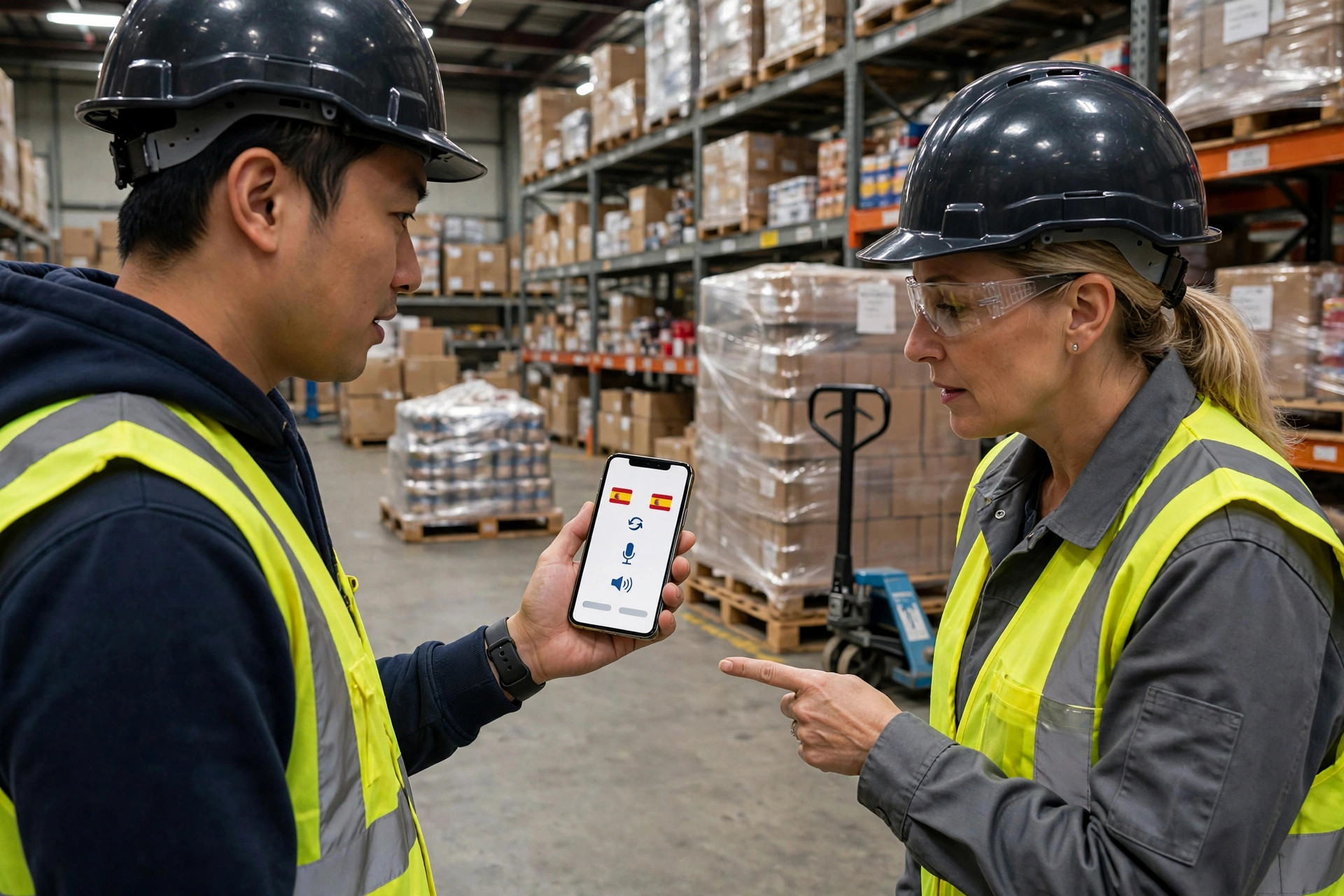
Three: translation apps aren't cheating, they're tools. I used to think pulling out your phone mid-shift was unprofessional. Then I did the math: a picker who spends three seconds translating an instruction versus a supervisor standing around helpless — which one is more professional? Day one of onboarding, IT installs a translation app on every new hire's phone. Unclear in huddle? The phone comes out, on the spot. No shame in it.
Why Safety Training Has to Be in Their Language
This one cost us blood. Winter 2020, Dallas: a kid, three weeks on the job, got clipped by a swinging trailer door at the dock. A dozen stitches. The investigation found he'd "attended" safety training — back row, English slide deck, understood nothing, signed the sheet.
After that we made it iron law: safety training is delivered in Spanish by default, test included. Not "a Spanish version is available" — trainer, slides, exam, and hands-on drills all run in Spanish. OSHA audits the paperwork in English — fine — but training has to land. That's the whole point.
One more detail: a lot of the crew carry a built-in deference to authority. The trainer asks "got it?" and everyone nods. Our fix is reverse testing — we don't ask if you understood, we make you show us. Lockout/tagout? Hang the lock yourself. You pass when you do it right.
The result: in the three years after that Dallas accident, that building logged zero lost-time incidents. Zero. We used to have two or three a year.
Hispanic Crew Culture: Work With It, Not Against It
Managing this crew, cultural differences aren't a "respect" question. They're a money question. Working with the grain is cheaper.
Family comes first — so make scheduling human. A lot of the crew have big families, and weekends are family time. Force weekend shifts and turnover spikes. Our approach: weekend shifts are voluntary sign-up with a $1.50-an-hour premium. It always fills — because the money's real, and "voluntary" beats any team-building event. Kid's first day of school, family emergency — our policy is approve first, paperwork later. One of my guys sent me a Spanish voice message at 5 a.m.: his kid had a fever. I texted back: "Go. Take care of your kid." He stayed five years and became a lead. Tell me what that text was worth.
Holiday scheduling goes out early — no ambush staffing. Christmas and New Year's are the official holidays, but for many of these families the real dates are Christmas Eve and Three Kings Day in early January. The sign-up sheet goes out two months ahead — pick your days, conflicts go to a draw plus comp time. Christmas 2023: 210 people in the building, holiday absenteeism 4%. Our sister building staffed by ambush — 18% no-shows, covered by temps, error rates doubled. All it cost us was two sheets of paper, sent early.
On authority: get off the pedestal and get on the floor. Their culture keeps its distance from "the boss," but none at all from "the guy who works alongside us." I don't run huddle from my office — I run it standing at the sort line. Lunch is in the employee cafeteria, no special table. An old supervisor once told me: "Chen, your Spanish sounds like a dog chewing a bone, but the guys will run through walls for you, because you don't act above them." Crude. True.
The Promotion Ladder: What Actually Keeps People
Everything above is about stopping people from leaving. This one is about giving them a reason to stay.
A guy grinds on the floor for three, five years. His English is still rough, but he outworks everybody. No way up, and the warehouse down the road offering twenty cents more takes him. Our ladder is posted on the break-room wall, in both languages: picker → flex → team lead → shift lead → supervisor. The criteria for each rung, in writing. English is not a gate — shift lead requires fluent Spanish and a clean work record. Supervisor requires reading English reports and basic English communication, and the company pays for night-school English classes.
José walked that ladder: picker in 2019, night-shift supervisor today running 60 people. His story travels the building faster than any raise — there's a future here if you earn it.
The numbers back it up. The two years our internal promotion rate for leads went from 20% to 65% were also our two lowest-turnover years. People aren't machines. People need to know that doing good work gets seen.
Three Things I'd Tell Any Peer
First: stop asking "why haven't they learned English yet" and start asking "have I made myself understood." Management is your job, not theirs.
Second: a bilingual lead is the highest-ROI investment you'll make — better than new equipment, better than a new system. One good lead is worth three supervisors.
Third: native-language safety training isn't a courtesy, it's survival. One accident costs more than a decade of bilingual training.
That's how we run our building now. Not perfect, but it works. People stay, freight moves, accidents are down, money's saved. No secret to it: treat people like people, and say it where they can hear it. The rest — they'll outwork your expectations.
By Chen Feng, Warehouse Operations Manager