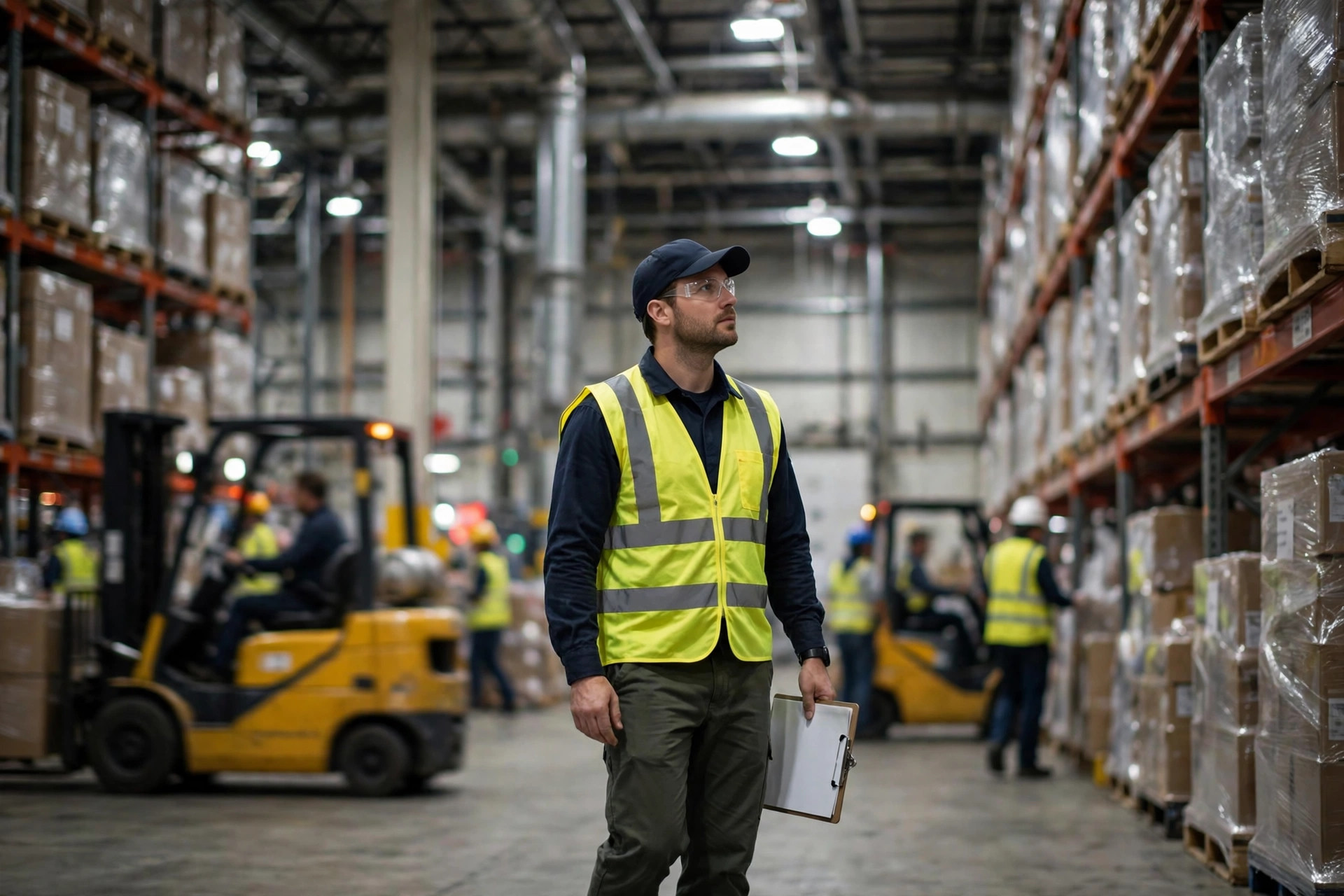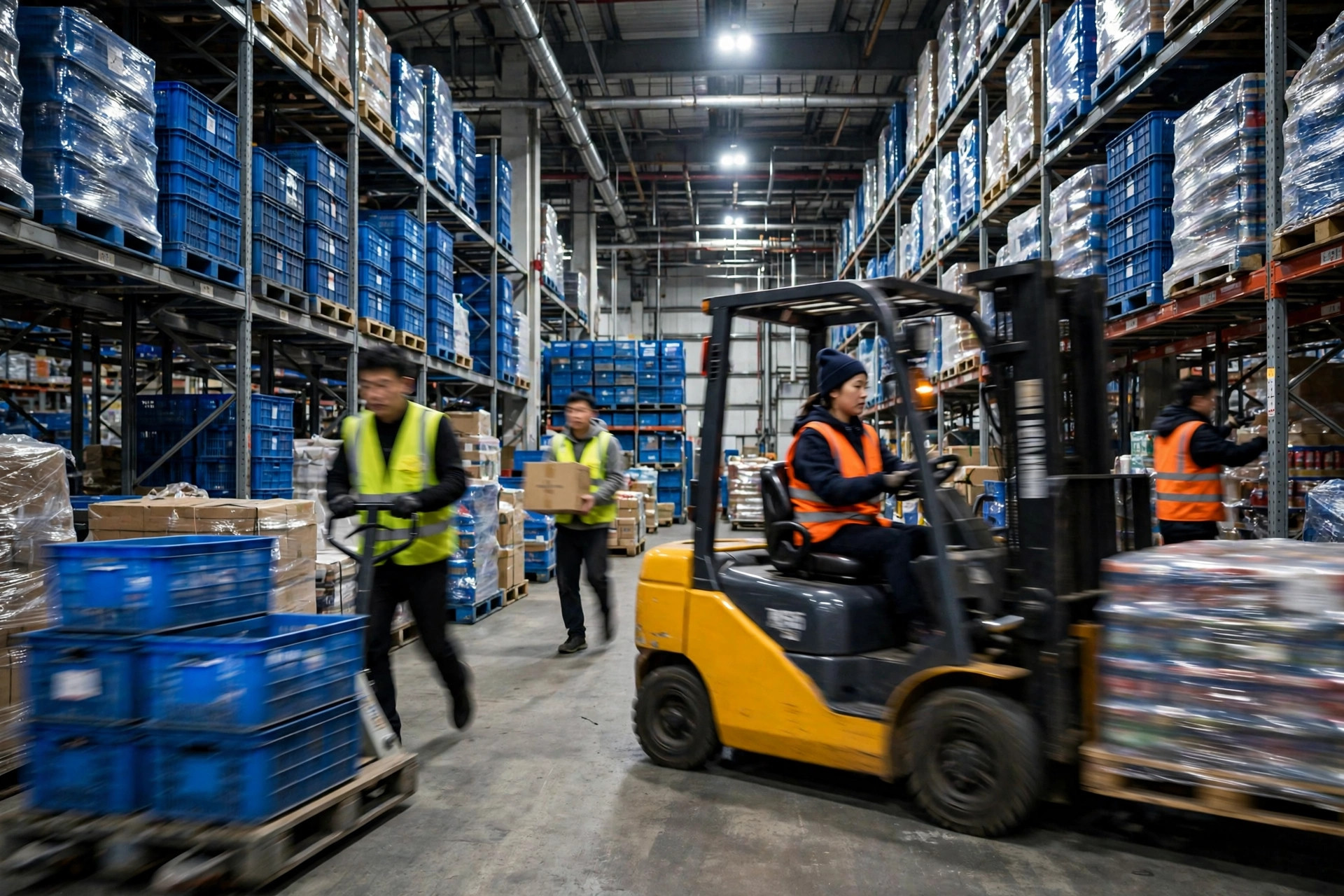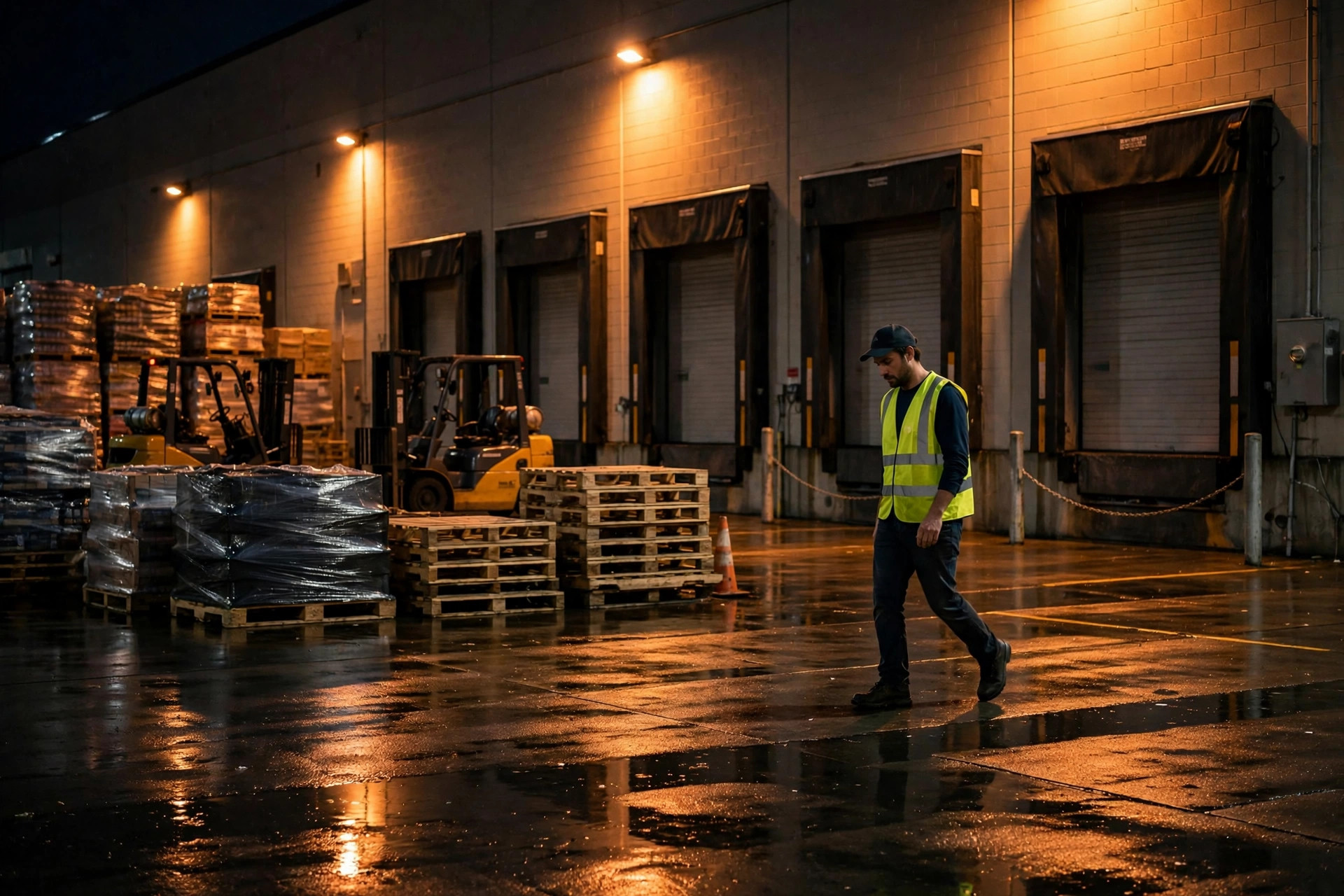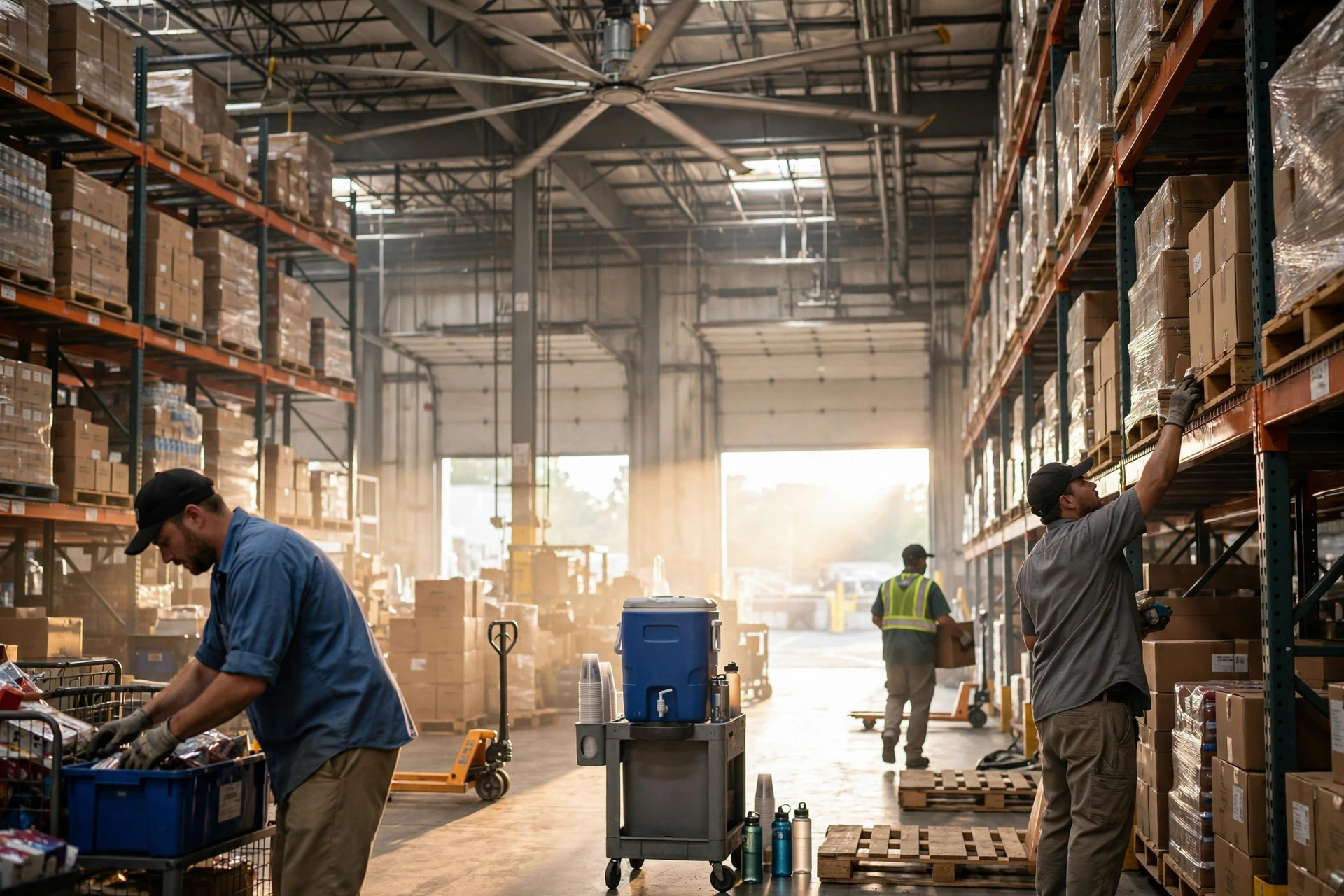
The thermometer zip-tied to a rack upright at a cross-dock in Fontana read 93°F at 2 p.m. last August. The manager's office, forty feet away, was a comfortable 74. Nobody in that building had ever measured the temperature where the pickers actually worked — until a Cal/OSHA consultant did it for them, and the number came back hot enough to trigger a full set of legal obligations the company didn't know it had.
That was two years after California's indoor heat illness prevention regulation (CCR Title 8, Section 3396) took effect on July 23, 2024. If you run a warehouse in California and still think heat illness rules are an outdoor-construction problem, you're already behind.
The temperature triggers hiding in your building
The rule kicks in under three conditions: indoor temperature at or above 87°F; at or above 82°F when employees wear clothing that restricts heat removal; or at or above 82°F in high-radiant-heat areas. For most warehouses without special PPE or radiant heat, the magic number is 87°F — roughly 31°C.
Here's what makes this tricky in practice: a warehouse is not one temperature. In that Fontana building, receiving by the dock doors hit 96°F because the metal doors baked in the afternoon sun, while the packing area sat at 88. High-bay racking, dock levelers, battery-charging corners, and shrink-wrap stations all run hotter than the office. A single reading at the front desk tells you nothing.
So step one is not buying fans. It's mapping. My recommendation: spend a few dozen dollars on button-style temperature loggers or small recording thermometers, and stick them at six to eight locations — the pick modules, packing stations, receiving docks, charging area, mid-level racking, and the break area. Log for two weeks through the hottest stretch. That temperature map tells you where you stand relative to the legal thresholds, and it tells you where cooling money will actually do something.
One nuance worth knowing: the rule exempts "incidental" exposure — temperatures between 82°F and 95°F for less than 15 minutes in any 60-minute period. But anything at or above 95°F, for any duration, is in scope. Unloading a steel shipping container in August routinely exceeds 100°F inside. That is not incidental.
Water, cool-down areas, and the paperwork that actually matters
Compliance boils down to three things: water, cool-down areas, and a written plan with records. Each one has a common failure mode.
Water has to be fresh, suitably cool, free, and close to the work — at least one quart per employee per hour. The failure mode I see constantly: the water cooler lives in the break room, a three-minute walk from the pick line. During peak, nobody stops for three minutes. Put water stations along the pick aisles. Ice it in summer. Lukewarm water sitting in a jug might as well not exist.
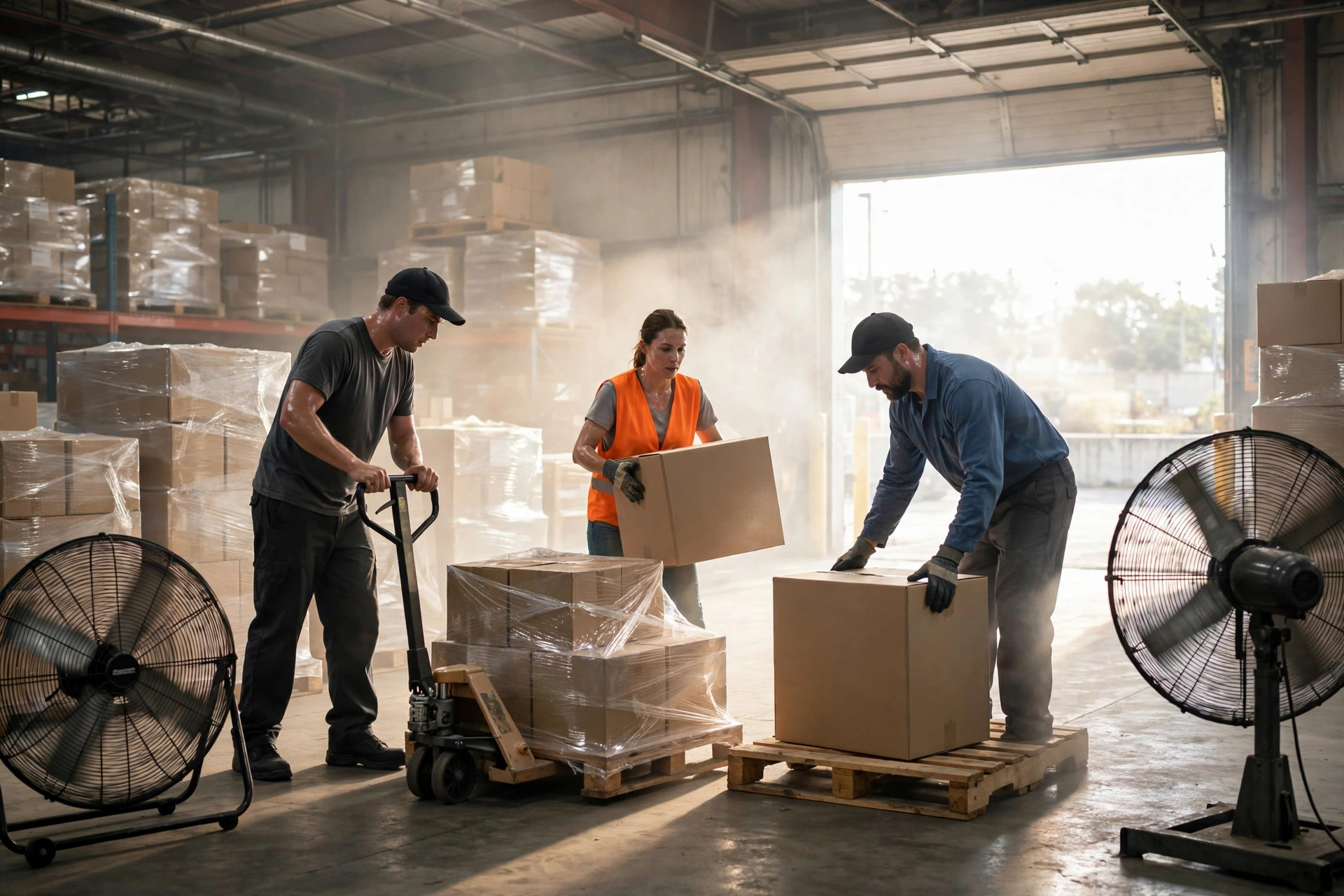
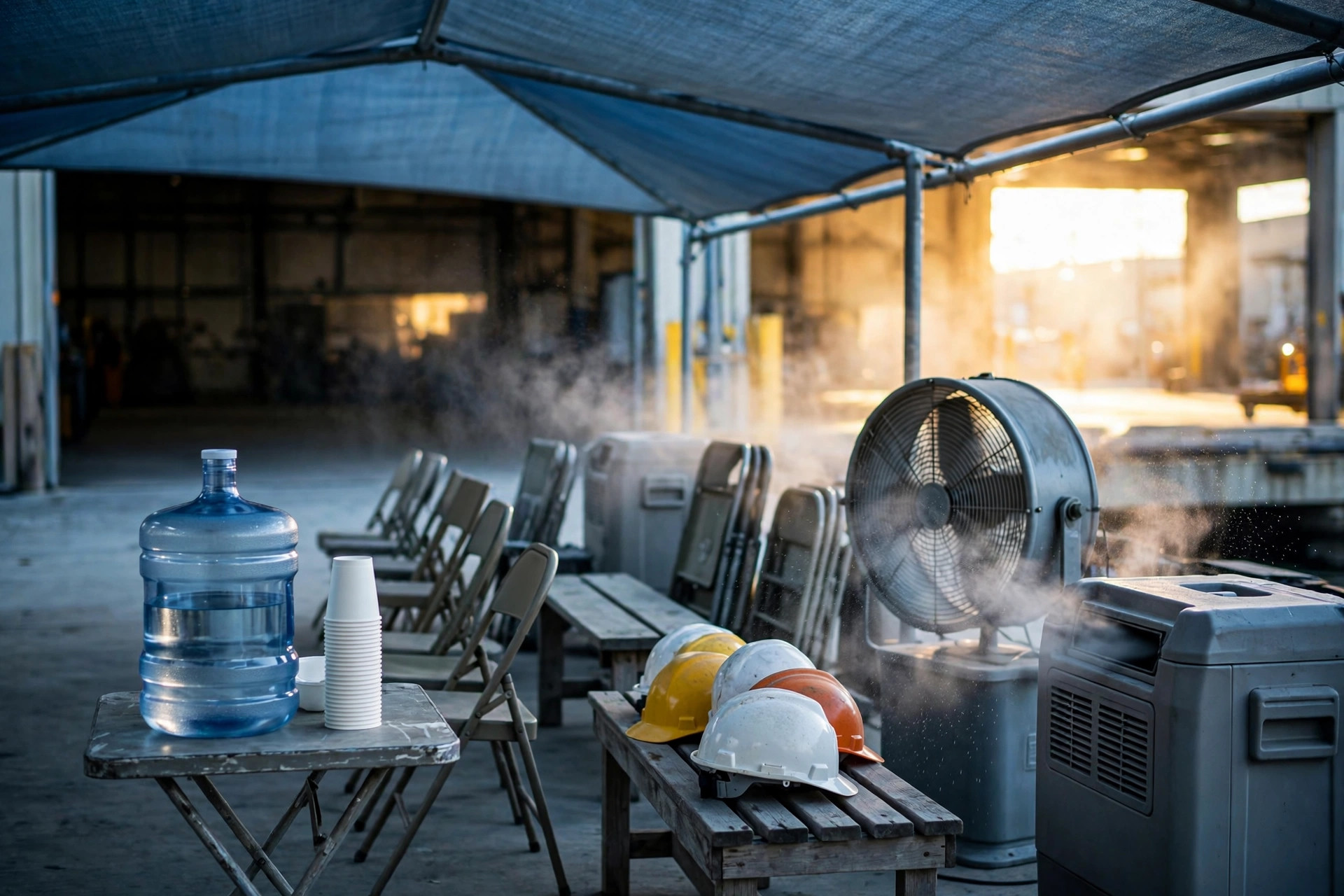
Cool-down areas must be maintained below 82°F, as close to the work area as practicable, with water available inside. The practical move I've seen work well in Southern California's dry heat: section off an area near the docks with shade cloth, add industrial fans and evaporative swamp coolers. Evaporative cooling can pull a zone down 10-15°F at a fraction of air-conditioning cost. The honest caveat: swamp coolers lose their magic in humid climates. Physics doesn't negotiate.
Then the written Heat Illness Prevention Plan — the piece most warehouses skip, and the first thing an inspector asks for. It has to cover water access, cool-down area locations, temperature monitoring procedures, emergency response, acclimatization for new and returning employees, and training — written in languages your workforce actually reads. If your pickers are predominantly Spanish-speaking, the plan needs a Spanish version. Training isn't a one-time onboarding slide; it has to cover symptom recognition (dizziness, nausea, confusion are the red flags), what to do, and who to call.
Acclimatization deserves emphasis. The rule requires graduated exposure for new hires and employees returning after time away. An Ontario 3PL I know hired 40 temps for peak and put them straight on full-intensity 10-hour shifts. By day three, two were in the ER with heat illness. Temporary and seasonal workers are the highest-risk group. This requirement is not paperwork — it's the difference between a close call and an ambulance.
Keep monitoring logs, too: date, time, location, temperature, who measured. When an inspector walks in, records are everything. No records, no proof, no defense.
Peak season doesn't pause for the thermometer
So you're compliant on paper. Now the harder problem: freight still has to move when it's 95°F outside. Heat-hour productivity loss is real, and you have two choices — plan for it or absorb it chaotically.
My judgment: planned beats chaotic, on cost, every time. Chaotic means heat incidents, call-outs, quits (summer turnover in SoCal warehouses is already brutal), and eventually a citation. Planned means moving heavy work to the coolest hours.
One Riverside e-commerce warehouse runs a playbook I'd copy: June through September, all container unloading shifts to 5-9 a.m.; the 10 a.m.-4 p.m. window gets light picking and packing only, with heavy pallet moves and high-bay putaway paused or rotated; mandatory 10-minute cool-down breaks every two hours, paid. Their numbers: peak-heat hourly throughput dipped about 12%, but they had zero heat incidents all summer and turnover ran nearly a third lower than the previous year. On a total-cost basis, that's a winning trade.
One uncomfortable truth for some buildings: if your roof and wall insulation are terrible and the interior runs hotter than outside, spot cooling only goes so far. Roof reflective coating or powered exhaust ventilation is the real fix — not cheap, but if you're staying in that building five more years, the money gets spent one way or another. I wouldn't tell a small warehouse to install full-building AC; the electric bill eats the ROI. Sequence it: measure first, spot-cool second, building-level retrofit third. Don't reverse the order.
A note on the federal picture: federal OSHA has been working on a heat injury and illness prevention standard for years, but as of now it remains in the rulemaking stage — not a finalized national mandate (check OSHA's site for the latest status). Outside California, you're mostly dealing with state rules and OSHA's general duty clause. But the direction is obvious: California moves first, others follow. Building this program now is insurance, not overhead.
So here's my question for you: do you actually know the temperature where your people work — or do you just know the temperature in your office? If the answer is the second one, order the loggers this week. That number changes every decision that follows.