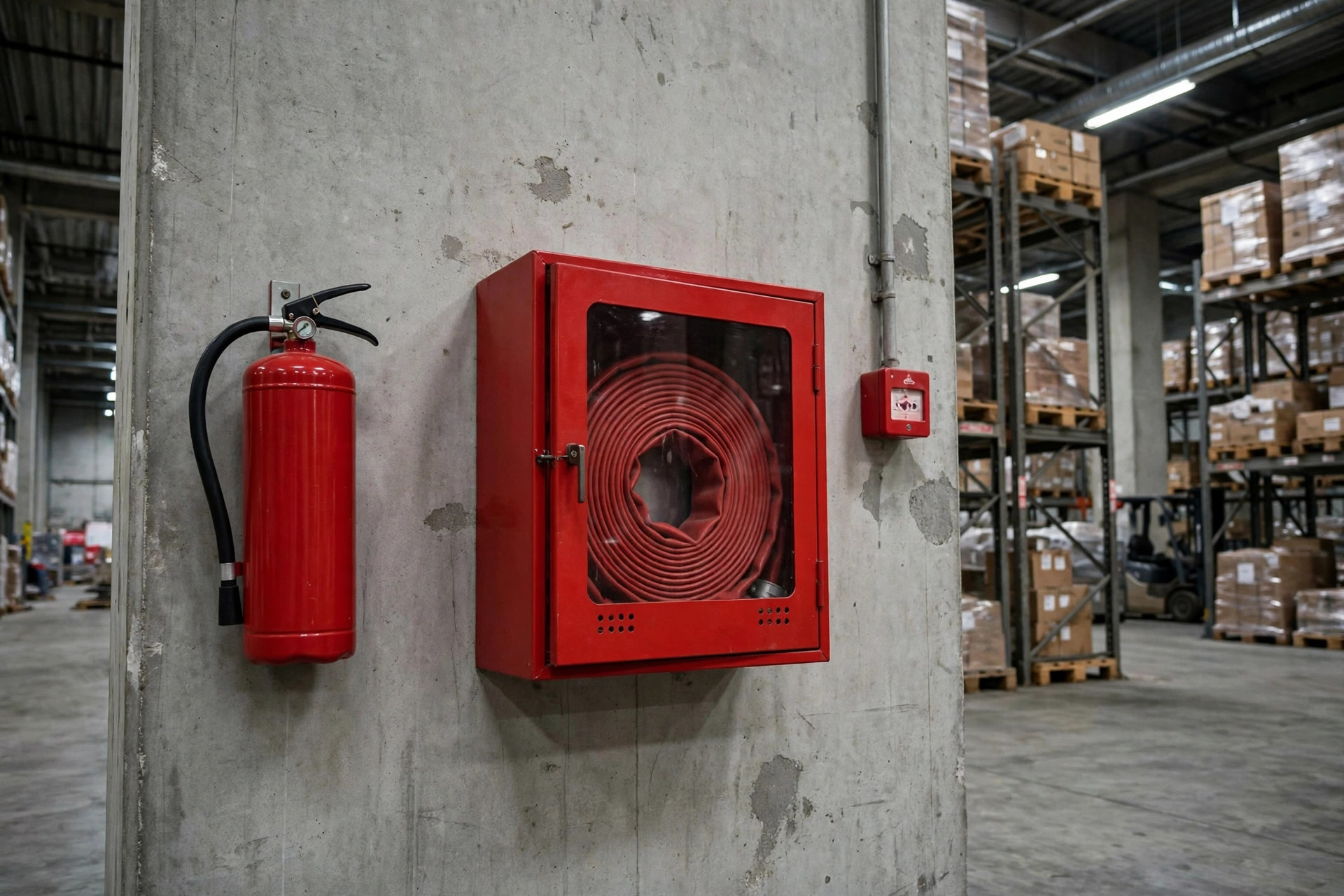
Here's the cruelest irony in warehouse fire protection: the system may only get used once in the building's entire life, and precisely because of that, nobody maintains it. I've walked into pump rooms where the pump hadn't turned in half a year and a control valve sat half-closed — and nobody knew. If your sprinklers ever open, the pump room decides whether they save the building or just make noise. This is the inspection checklist I actually use. Take it.
The Diesel Engine That Hadn't Turned in Six Months
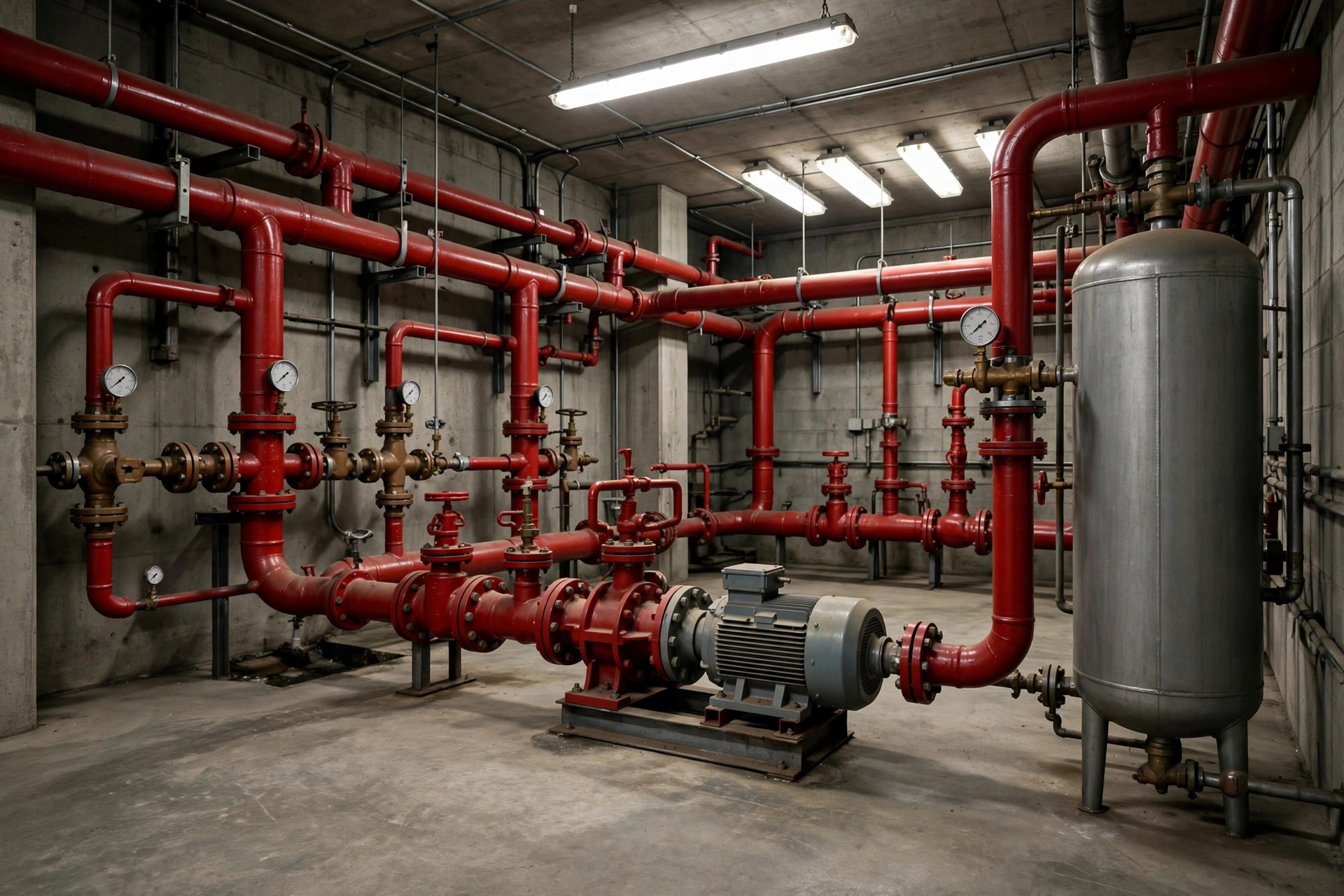
Push open the pump room door and a wave of damp air hits you. The lights work. The pump is red, the pipes are red, everything looks fine at first glance. The pressure gauge needle sits in a reassuring position, though there's dust inside the glass. The valve handwheels carry a thicker layer — one touch tells you nobody has turned them in months. The diesel engine block feels cool. Not the warm-after-a-run kind of cool, the room-temperature kind. The controller panel glows green, as if to say: all good. But a green light only means there's power. It says nothing about whether the pump will turn.
Fire pumps don't fear age. They fear idleness. Park a diesel engine for six months and the problems accumulate quietly: fuel oxidizes and goes stale, batteries drain, coolant level drops, and something may have nested in the exhaust. The worst one I ever saw: the drive belt snapped mid-test with a crack — dry-rotted from sitting. On the day of a real fire, that pump is a red-painted paperweight.
NFPA 25, the Standard for the Inspection, Testing, and Maintenance of Water-Based Fire Protection Systems, is blunt about this. Diesel-driven fire pumps get a weekly no-flow churn test, running a minimum of 30 minutes. And here's the part people skip: the test must start the pump automatically, by simulating a real pressure drop — not by pressing the start button on the controller. The automatic start chain itself is what you're verifying. Electric pumps get a lighter requirement: a no-flow test of at least 10 minutes, generally monthly, though certain situations (buildings beyond the fire department's pumping capacity, for example) push electric pumps to weekly testing as well.
My rule for every warehouse is simple: someone qualified stands there and watches the whole run. Listen for anything off. Confirm the start was automatic. Write down the start and stop pressures. Check oil, coolant, and battery charge while you're there. Ten minutes, thirty minutes — it's a coffee break. A pump that "looks new" means nothing. A pump that "ran last week" means everything.
The Valve Someone Closed by Hand, and the Pressure Tank Quietly Losing Air
The second most common killer in the pump room is a valve that got moved. A maintenance crew shuts one during repairs. A retrofit team closes one during a racking change. Someone turns one "just to be safe" during inventory — and forgets to reopen it. Every handwheel looks like it's in place, but is it fully open or half open? Nobody knows.
NFPA 25 requires control valves to be verified in their normal, fully open position every month. Valves with seals or locks get their seals checked too. After getting burned by this once, I made it policy: padlock the critical valves, and only the fire safety manager holds the key. Anyone who needs to move a valve signs it out, restores it immediately after, and signs it back. Is it a hassle? Sure. It's a smaller hassle than discovering a closed valve during a fire.
Then there's the pressure maintenance tank — the vessel nobody looks at. The needle drops a little this week, a little more next week, and nobody treats it as a signal. Eventually the jockey pump starts cycling on and off constantly, and by then the system has been telling you for weeks: something is leaking. A fitting is weeping, or a sprinkler head is seeping. Trace it and you'll usually find the source. Don't wait until the jockey pump burns out to go look at the tank.

Everyone has seen the red sprinkler grid under a warehouse ceiling — impressive stuff. But the pipe network is just the hands and feet. The heart is in the pump room. An unmaintained pump room turns that entire ceiling grid into decoration. Fire protection has one more fatal trait: it produces nothing. No output, no KPI, no bonus — it always lands with whichever department gets it "on the side." I've watched too many facilities scramble to backfill test logs the week before the fire marshal's visit. Beautiful paperwork, dead pump.
One more thing worth its own mention: gauges. NFPA 25 calls for pressure gauges to be recalibrated or replaced every five years. Plenty of warehouses run ten-year-old gauges where the needle points wherever it pleases. During your walkthrough, spend an extra minute: is the gauge within its service life, is the glass fogged, is the needle sticking?
The Checklist You Can Start This Week
Keep it simple. Tape this inside the pump room door:
- Weekly: run the diesel pump 30 minutes, automatic start only, qualified person present for the full run; check oil, coolant, and battery voltage
- Weekly or monthly: run the electric pump no-flow test for 10 minutes; log start and stop pressures
- Monthly: verify every control valve is fully open; check seals, chains, and locks — padlock critical valves and control the key
- Quarterly: walk the gauges — readings, fogged glass, sticking needles; flag any gauge past its 5-year calibration for replacement
- Annually: run a full flow test through rated flow and 150% of rated flow, and compare against the pump's factory performance curve
- Every time: sign and file the test record — the first thing a fire inspector asks for is that logbook
The frequencies above come from NFPA 25. Your local authority having jurisdiction (AHJ) may require more — when in doubt, follow the stricter rule.
One honest question to close with: has anyone on your team opened the pump room door this week? If the answer is no, item one on the checklist is to go open it right now.