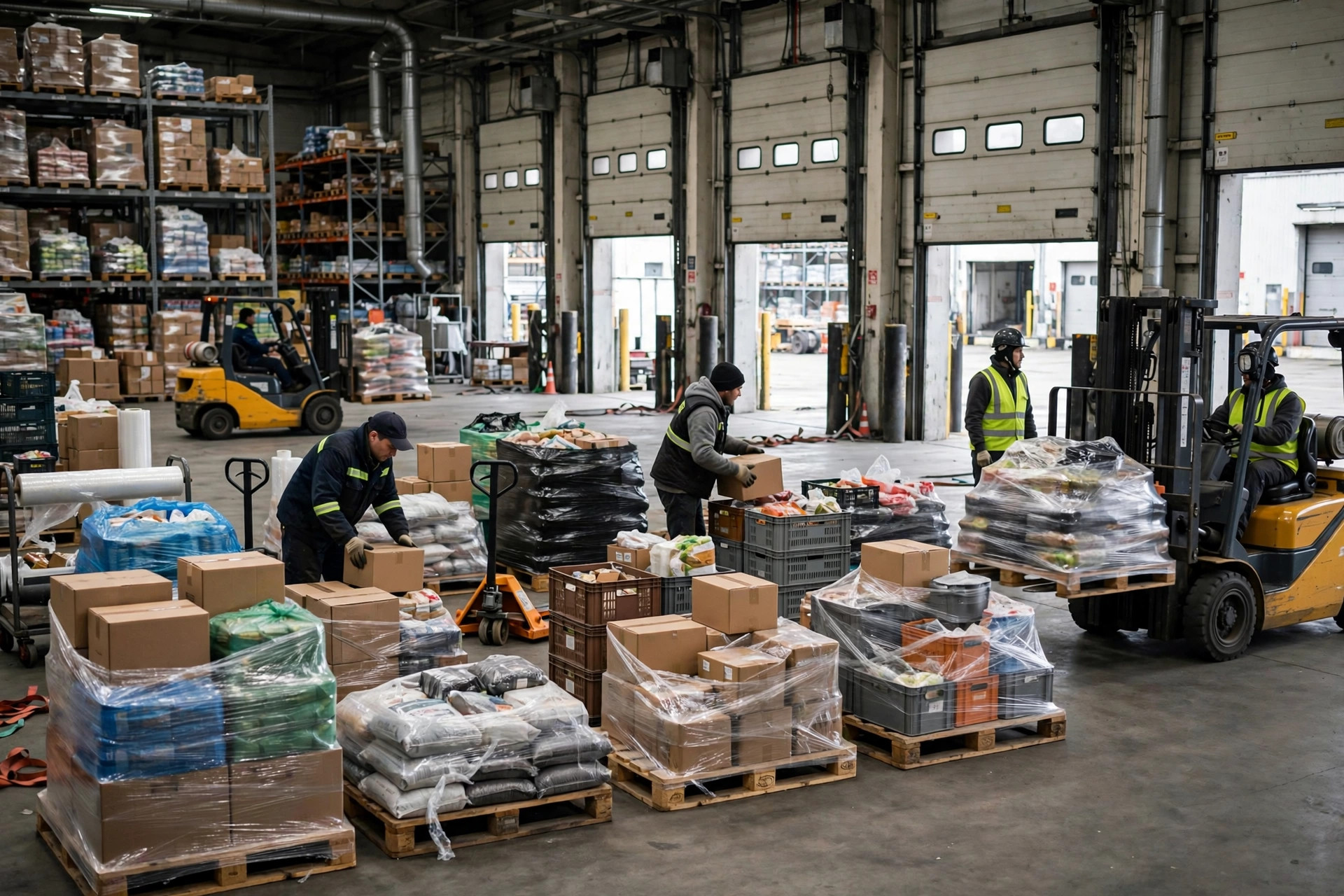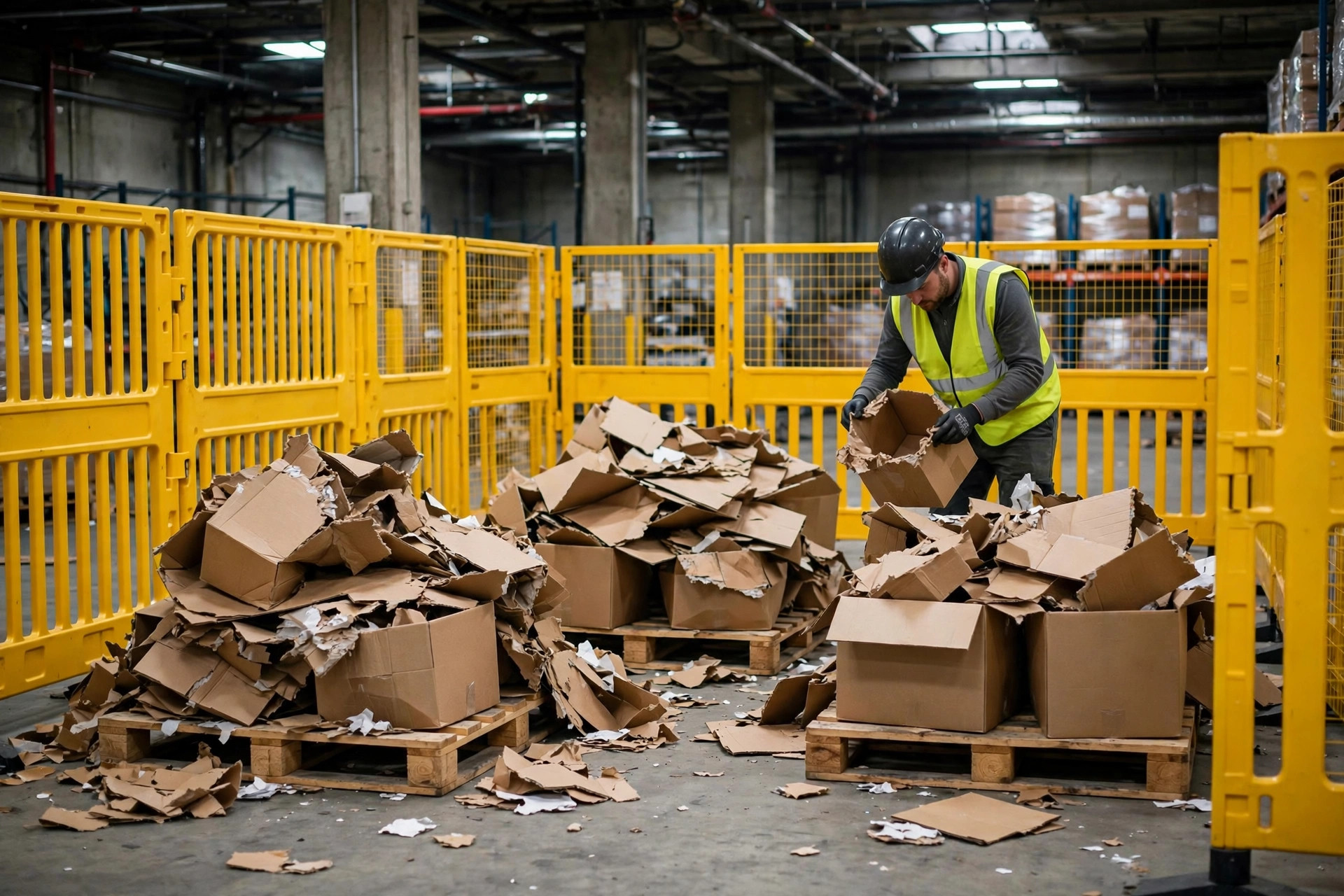
A warehouse's customer complaint handling ability rarely shows when nothing goes wrong. It shows in the first phone call after something does. A shipper calls to say the wrong item went out, an item is missing, or a parcel arrived damaged, and the warehouse's first response usually sets the course of the whole affair: it becomes either a manageable settlement or the beginning of a lost client. According to operations managers at several third-party warehouses I have spoken with, complaints themselves are not unusual. What separates one warehouse from another is whether it has an evidence chain and a negotiation framework decided in advance, rather than improvising one each time.
One caveat about measurement first: warehouses do not count complaints the same way. Some fold end-consumer returns into the number, others count only formal claims filed by shippers, so the figures are not directly comparable. This article cites no single industry complaint rate, because no such public standard exists, and any suspiciously precise industry average deserves skepticism. What follows is about the structure of complaint handling itself.
Warehouse customer complaint handling starts with four categories
Shipper complaints come down to four categories, over and over: wrong shipment, short shipment, damage, and delay. Sorting them is not an exercise in making tables. Each category needs different evidence, and the logic of assigning responsibility differs for each.
Wrong shipment means the wrong item went out, most often two variants of the same product — a different size or color — mixed together. Short shipment means the count is short, one unit missing from a carton or one pallet missing from a load. Damage means the goods arrived but the packaging was broken or the contents were harmed. Delay means the goods did not leave or arrive on the agreed schedule, so the shipper's downstream operation ran out of stock or missed a promotion.
A case I encountered illustrates the point. After a major promotion, a beauty brand received end-consumer complaints about the wrong shade of face cream. The shipper immediately concluded the warehouse had picked the wrong item and demanded full compensation. But when the warehouse pulled the outbound verification photos for that day, picking and verification had both been correct — the problem was in the shipper's own order data, where the codes for two shades had been transposed in the system. Without that verification photo, the warehouse would have absorbed a claim that was never its fault.
A second case involved damage: a shipment of glassware arrived with roughly a third of the pieces broken. The shipper blamed warehouse packing. The warehouse produced packing photos and weight records showing the goods had left intact and at standard weight, with the damage concentrated in one carrier transfer leg. Responsibility was split by leg: the warehouse took on the improvement of its packing verification, and the transit-leg loss was handled under the carrier's current claims policy. Without an evidence chain, arguments like this are settled by whoever argues loudest. With one, they become a check of facts.
The evidence chain in complaint handling: four pieces, none optional
A defensible evidence chain usually consists of four pieces: outbound verification photos, weight records, label and tracking data, and the signed proof of delivery.
Verification photos are the most important piece. The photo should show the goods, the quantity, and the packing condition in one frame, ideally with a timestamp. Many warehouses photograph only the sealed carton, which is useless when a complaint is about something missing inside it. Weight records matter because they are machine-generated and hard to alter after the fact; a deviation between outbound weight and standard weight is often the first signal of a short or wrong shipment. Label and tracking data answer the question of where the goods went, which separates a warehouse addressing error from a carrier misroute. The proof of delivery marks the end of the responsibility chain: whether exceptions were noted at signing directly determines who bears damage liability.
Here is a counterintuitive judgment: the evidence chain protects the warehouse first, not the shipper. Many warehouse managers resist keeping photos and records, fearing they hand shippers material to pick apart. The reality runs the other way. Without evidence, a warehouse has no leverage at the negotiating table and can only argue from memory. With evidence, it can afford to admit its own share of fault, because the boundaries of responsibility are clear. Evidence does not exist to dodge responsibility. It exists to turn responsibility from an emotional argument into a factual check.
The cost side deserves the same treatment. The extra handling time that verification photography adds is a small line in labor cost. The cost of one evidence-free dispute — the hours spent reconstructing what happened, the repeated back-and-forth, and the unreasonable settlement eventually accepted to make it go away — is typically several times larger. The evidence chain is not a cost center. It is the production line for negotiating leverage.
A three-tier framework for compensation negotiation
Once responsibility is clear, negotiation itself needs a framework, or every claim becomes an emotional haggle. A workable framework has three tiers:
| Tier | When it applies | Typical resolution |
|---|---|---|
| Reship first | Goods can be replaced, timeline can be recovered | Free reshipment, freight borne by the responsible party |
| Partial compensation | Goods partly usable, or responsibility shared | Compensation by residual value or responsibility share, confirmed in writing |
| Full compensation | Goods fully lost, responsibility clearly ours | Full compensation with a written improvement plan |
The point of the tiers is not the tiers themselves. It is that negotiation shifts from "how much" to "which tier does this claim fall in." Once the tier is set, the amount has an anchor, and neither side needs to probe the other's mood. One caution: carrier-leg compensation rules follow each carrier's current policy, and the warehouse should verify the applicable claims terms before quoting anything, rather than relying on memory.
There is also a principle worth stating plainly: speed is itself a form of compensation. What shippers care about most is often not the last few dollars of a settlement but how fast the warehouse responds. The same wrong shipment, confirmed and reshipped the same day versus answered a week later, produces two entirely different shipper experiences. A fast admission is sometimes cheaper than a prolonged argument, because delay consumes the shipper's patience, and once patience is gone, the result is usually a lost client — something no settlement can buy back.
Review matters more than apology
When a claim is settled, the work is not over. Every complaint should leave a review record: which link in the chain failed, which piece of evidence helped, which piece was missing, and how to prevent a repeat. Accumulated over time, these records reveal real patterns: whether one product category's packing keeps failing, or whether one shift keeps skipping verification photos. Complaint handling without review starts from zero every time. Complaint handling with review turns complaints into inputs for process improvement.
The broader trend is a shift from firefighting after the fact to evidence chains built in up front. More warehouses are now capturing verification images as a default step in outbound processing, building the chain into the standard flow rather than digging through camera footage after a complaint arrives. The driver is not cheaper technology. It is rising shipper expectations: when end consumers are accustomed to unboxing videos and end-to-end tracking, shippers' demands for proof from their warehouses will only rise, not fall.
That leaves an open question worth watching. As evidence chains grow more complete and responsibility splits grow clearer, will trust between warehouses and shippers improve — or will the relationship start to resemble a standing preparation for a dispute? Evidence ought to be a tool of cooperation. Whether it stays one, or quietly turns both sides defensive, is something the contract terms and partnership models of the next few years will reveal.
By Dr. Chen, Supply Chain Researcher