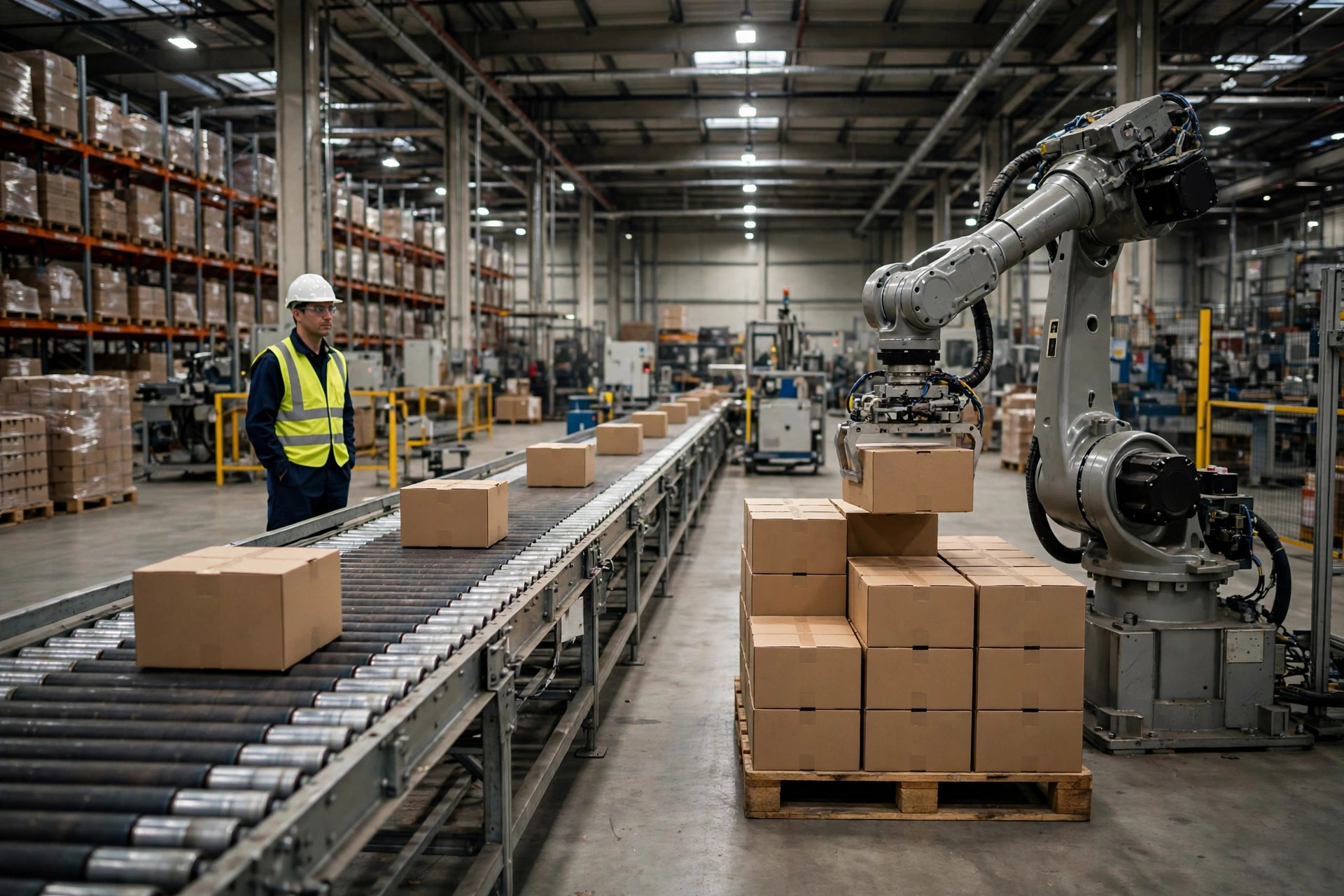
Last month a client asked me about a warehouse automation payback period of 2.8 years on an AMR proposal — should he sign? I flipped to the last page of the financial model, read three lines, and told him: with this math, the real payback starts at five years.
The integrator wasn't lying. His model just assumed everything goes right.
The Full TCO Nobody Puts in the Payback Math
Payback period = total investment ÷ average annual net benefit. Everyone knows the formula. The problem is that both the numerator and the denominator get "optimized."
Start with the numerator. The total cost of ownership of an automation project is not the number on the equipment quote:
| Cost item | What it covers | Usually underestimated? |
|---|---|---|
| Equipment | AMRs, conveyors, racking | No — it's on the quote |
| Integration | Installation, commissioning, WMS interfacing | Yes — quoted for the happy path |
| Software licenses | Fleet manager / WCS annual fees | Yes — recurs every year |
| Maintenance | Annual service contract | Yes |
| Spare parts | Batteries, drive wheels, sensors | Almost always missed |
| Cutover downtime | Lost throughput during switchover | Almost always missed |
| Training | Operator and maintenance training | Often missed |
| System upgrades | Major version upgrades, interface rework | Practically never included |
Equipment is often barely half of the eight. The last four routinely add up to twenty to thirty percent of total investment — and in payback models they show up as a single line called "other," or not at all.
The Three Line Items Every Warehouse Automation Payback Period Model Misses
First, the utilization ramp. Models assume full production on day one. That's the biggest fiction. In the projects I've seen, hitting 60% utilization in year one counts as a smooth launch: routes need tuning, the WMS interface needs rework, nobody dares a full cutover before peak season. Discount the benefits — 60% in year one, 80% in year two. That's reality.
Second, spare parts. AMR batteries, drive wheels, and LiDAR units are consumables, not lifetime components. Budget a few percent of equipment value per year for spares — the exact figure is in your contract. Leave it out of TCO and you're assuming the machines never break.
Third, system upgrades. Major fleet-software upgrades, a new WMS interface — the integrator's second visit is never free. This bill usually lands in year two or three, right when you thought you'd broken even.
Same AMR Fleet, 60% vs 90% Utilization: A Three-Year Gap
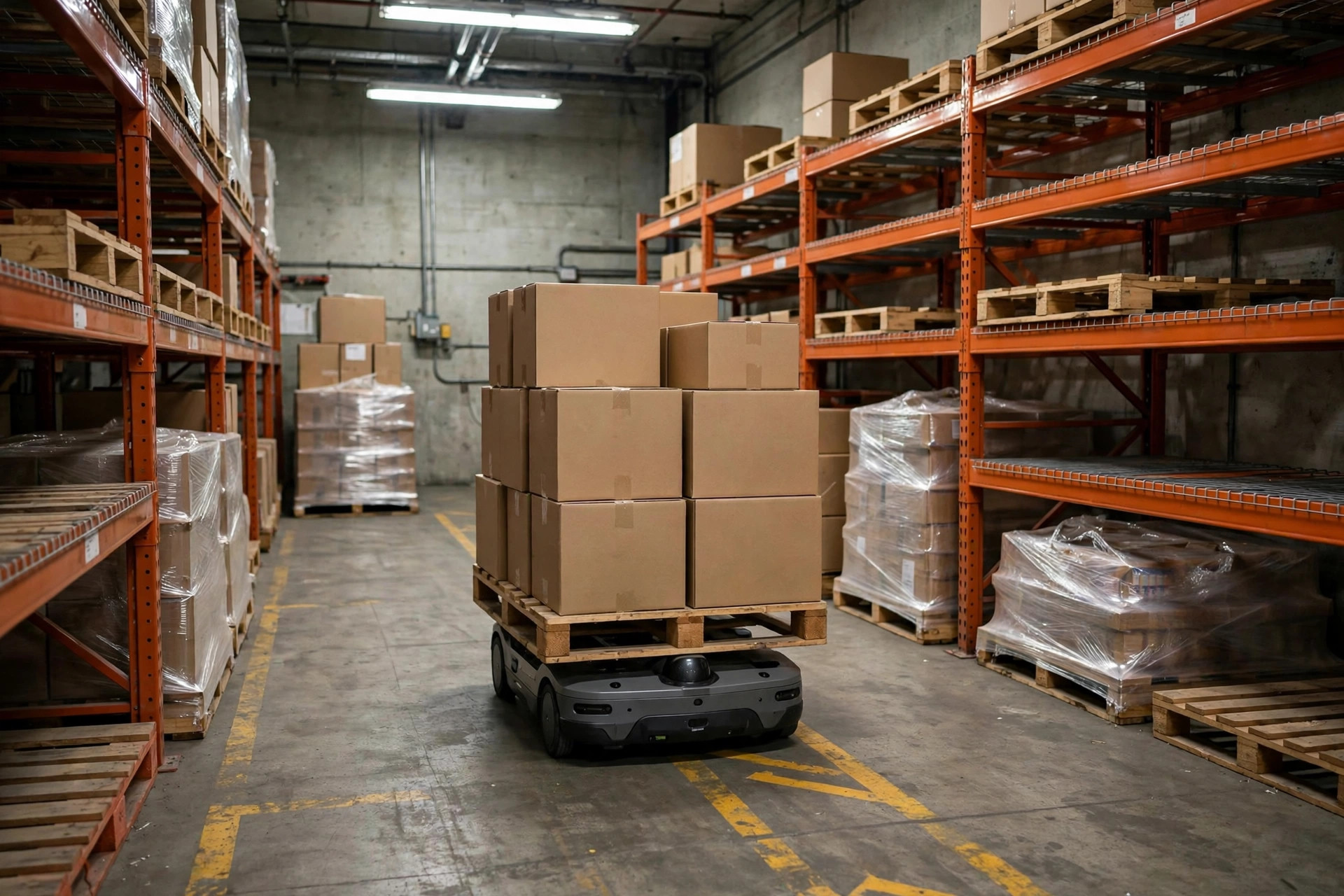
In 2024, a home-goods distribution center in California deployed eight pallet-moving AMRs. The integrator's model said 2.8 years payback, based on two shifts at full utilization. Year-one reality: routes never got fully tuned, the WMS interface was reworked twice, actual utilization landed at 55%. Add the annual maintenance contract and the first round of spares, and the project's cash flow didn't turn positive until year five. The owner's comment stuck with me: "The equipment is fine. It was the spreadsheet that was too pretty."
The table below is an illustrative model — my example numbers, not any vendor's real quote, but the math is real. Plug in your own figures:
| 60% utilization | 90% utilization | |
|---|---|---|
| Annual labor savings | 120 | 180 |
| Annual maintenance + spares | -18 | -22 |
| Annual software licenses | -10 | -10 |
| Net annual benefit | 92 | 148 |
| Project TCO | 460 | 460 |
| Payback period | 5.0 yrs | 3.1 yrs |
(Figures in 10k USD/year, illustrative)
Same fleet, same project — thirty points of utilization swing the payback by nearly two years. Fold in the year-one ramp and you're looking at a three-year gap. So whether the warehouse automation payback period is three years or seven is often not about the machine at all. It's about the utilization assumption.
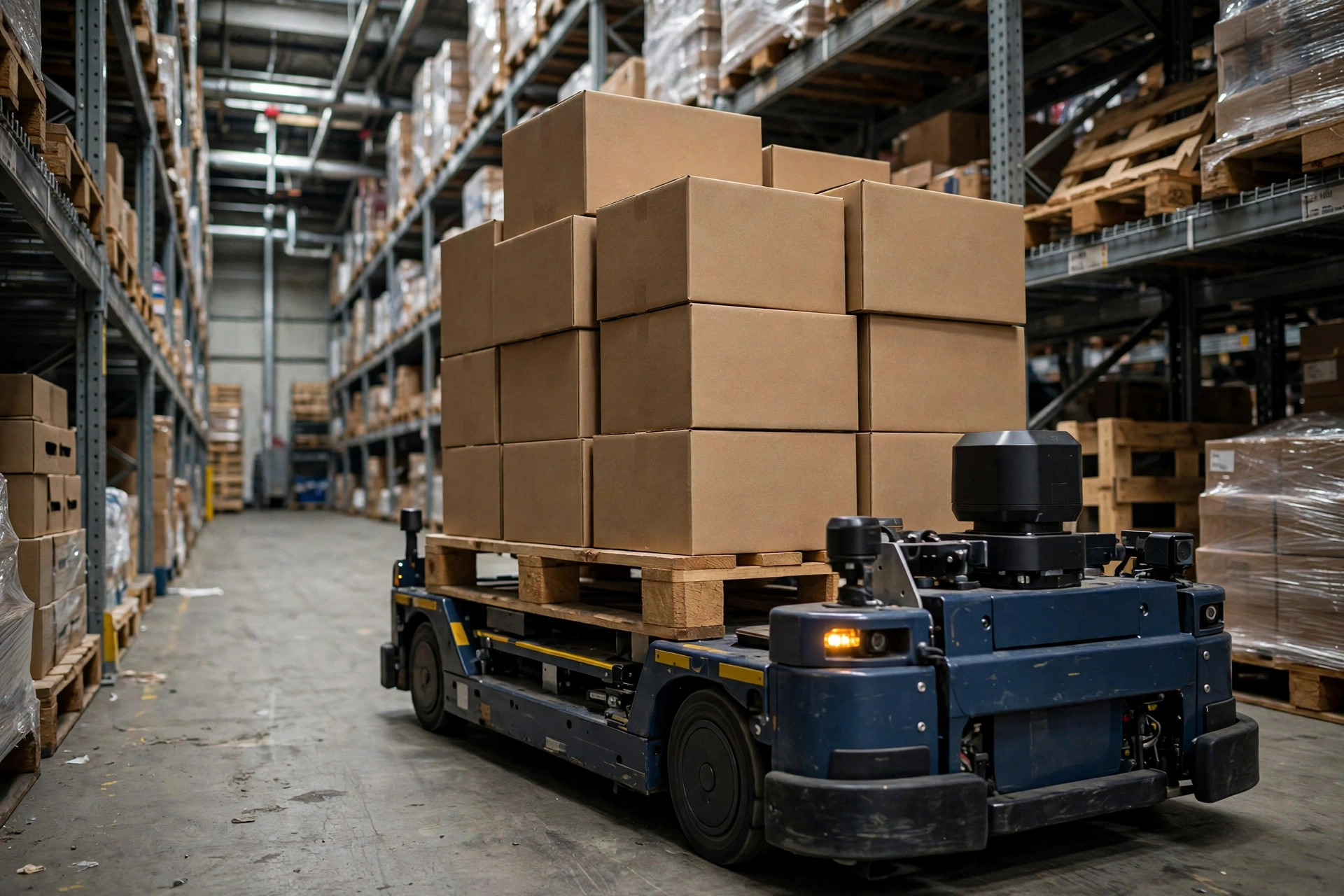
A Midwest 3PL that installed a conveyor sortation line in 2023 is the textbook case of the other missing line item: the budget listed "cutover downtime" at 5%. The actual system cutover before peak season killed two weekends of shifts, and the lost shipping throughput cost more than double the budget. Add the real number and the payback period gains a full year. Cutover downtime is paid for in capacity, not in budget — leave it out and you're assuming a system switchover doesn't affect shipping.
Counterintuitive: The Fastest Payback Is Rarely the Most Expensive Machine
An e-commerce warehouse once agonized in front of me over two options: a fully automated AS/RS, or a semi-automated "conveyor + manual pick" setup. The AS/RS saved the most labor and looked the most advanced — but its total investment was several times the semi-auto option. At their order volume, the math said eighteen months payback for semi-auto versus seven years for the AS/RS.
The owner chose semi-auto. His words: "Money goes where it earns, not where the words 'fully automated' are."
Remember this trade-off: automation level and payback speed are not linear. The more expensive the machine, the bigger the TCO numerator, and the higher the utilization and volume threshold it needs. Below that volume, the most expensive machine is the slowest payback. Your integrator won't volunteer this — his commission scales with project size.
A Three-Step Framework for Your Own Number
Stop using the integrator's spreadsheet as-is. Take it and redo three things:
Step one: list all eight TCO items. Go down the table above and ask about each one: spares included? Cutover downtime? Upgrades? For anything missing, put in your own conservative estimate. A conservative estimate beats zero.
Step two: discount benefits for the ramp. Model 60% in year one, 80% in year two — never full production. If your volume swings with seasons, discount one more notch.
Step three: payback = TCO ÷ average annual net benefit, then add one year of buffer. That buffer is for everything you didn't think of — and there is always something you didn't think of.
One calculable conclusion to close: take the integrator's payback model and change three things — year-one utilization to 60%, maintenance at roughly ten percent of equipment value per year (industry rule of thumb; your contract rules), and a separate spares allowance of a few percent. Recompute. That number is the warehouse automation payback period you can actually sign off on.
By Lao Zhou, Logistics Cost Analyst