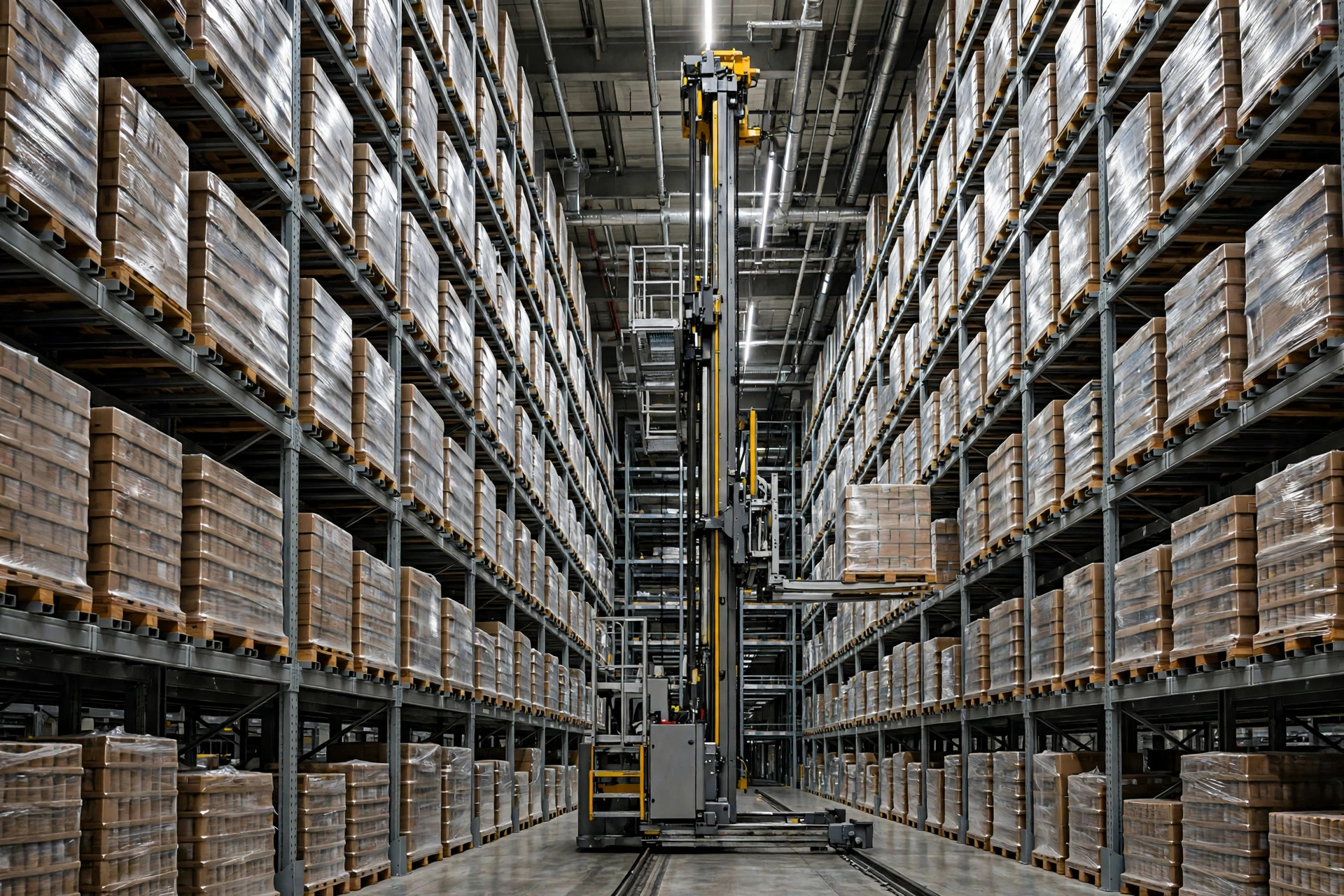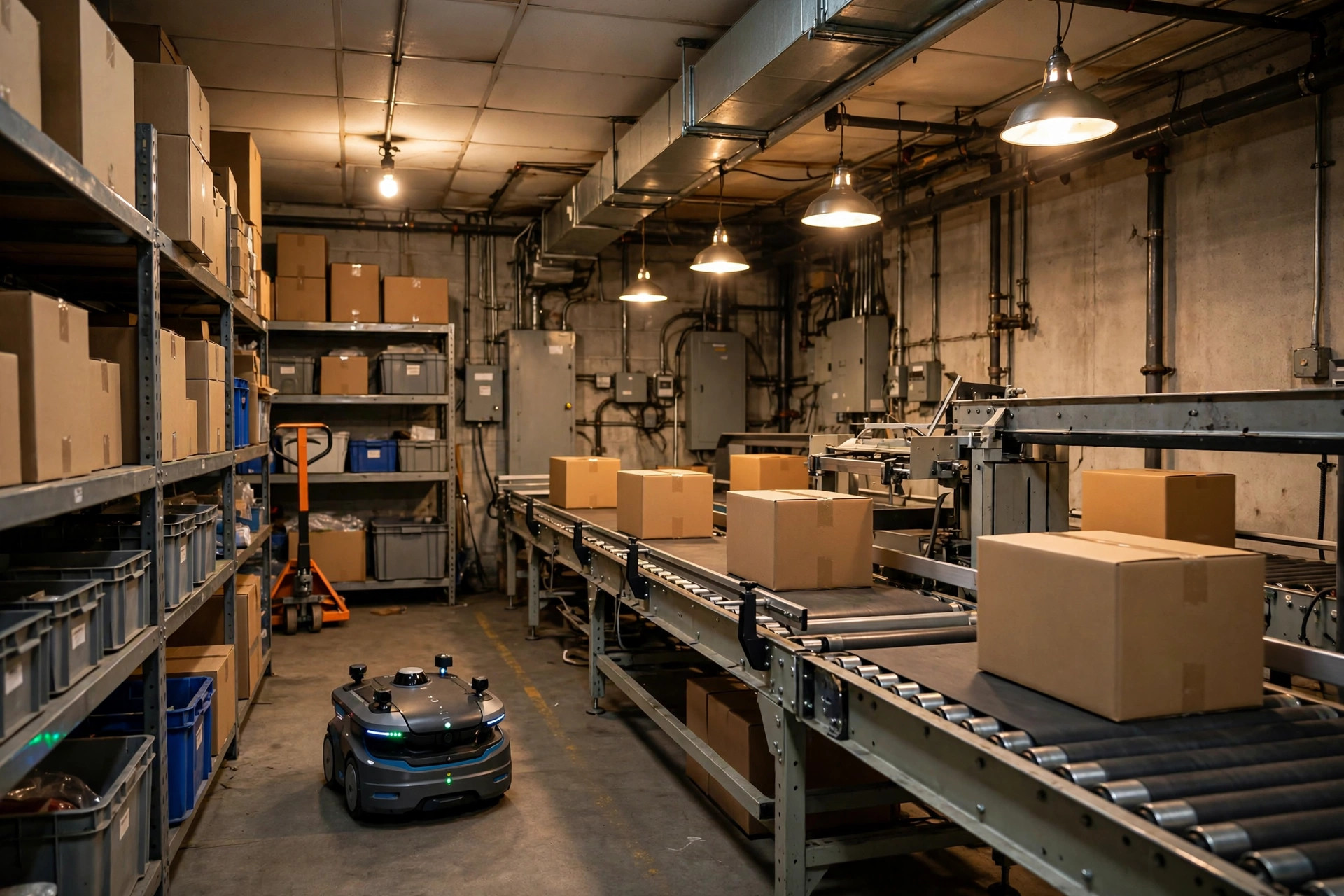
Let me start with a confession, because when it comes to automation payback calculations, I earned my scars the expensive way. Back in early 2024, our pack-out area was drowning — holiday peak season had the team working until 11 p.m. every night. Right on cue, an integrator's sales rep showed up with a slide deck: "One mini sortation line, 1,800 units an hour, pays for itself in 8 months." My chopsticks nearly fell out of my hand. But here's the thing about running a small warehouse: we can't afford to burn that kind of money. I agonized for two weeks, then signed anyway.
This summer I finally did a real post-mortem on the books. The payback period wasn't 8 months. It was 29 months. The money's gone, but the lessons are free — so here's the open-book version for fellow small-warehouse owners: almost everybody gets the payback math wrong, and the mistakes come in exactly three flavors.
Mistake #1: The payback math only counts the sticker price, never the "move-in" costs
The $64,000 quote was the bare equipment price — line plus installation. A small-warehouse owner hears "$64,000, pays back in 8 months" and starts dividing 64k by labor savings in their head.
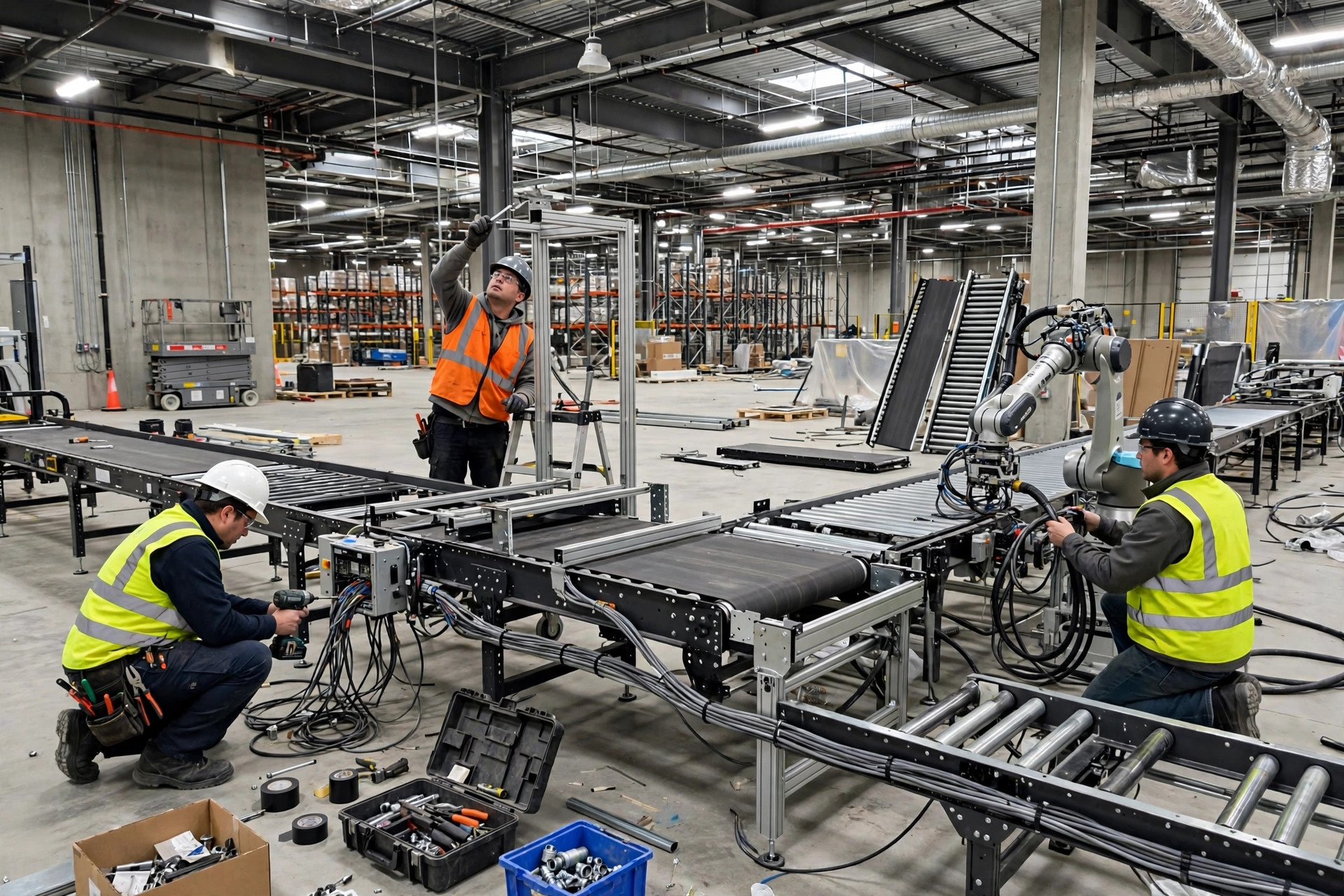
Here's what actually landed on my books: our building is leased and the electrical capacity wasn't enough, so the panel upgrade and wiring cost $10,000. The floor had settled in spots — another $5,000 to level it. Moving racking to clear space shut us down for 5 days, right during spring product launches: about 2,000 orders a day we couldn't ship, roughly $6,000 in gross margin gone. Then the integrator's commissioning crew camped out for two weeks, and our one and only IT guy shadowed them the whole time while his real work piled up.
Total all-in: $95,000 — about 50% more than the sticker price. The "8-month payback" in the deck used $64,000 as the denominator. Shrink the denominator by a third and of course the payback looks gorgeous.
The street-smart fix: total investment = sticker price × 1.35–1.5 + downtime losses. That 1.35 is a factor I backed into after comparing notes with several small-warehouse owners: in a leased building, at least one of power, floor, ceiling height, or fire code will come for your wallet. Before you sign anything, price the three unwritten line items yourself — get an electrician to quote the panel upgrade, have a contractor look at the floor, and put shutdown days × daily gross margin into the budget first. Never discover after the equipment arrives that moving in cost more than the dowry.
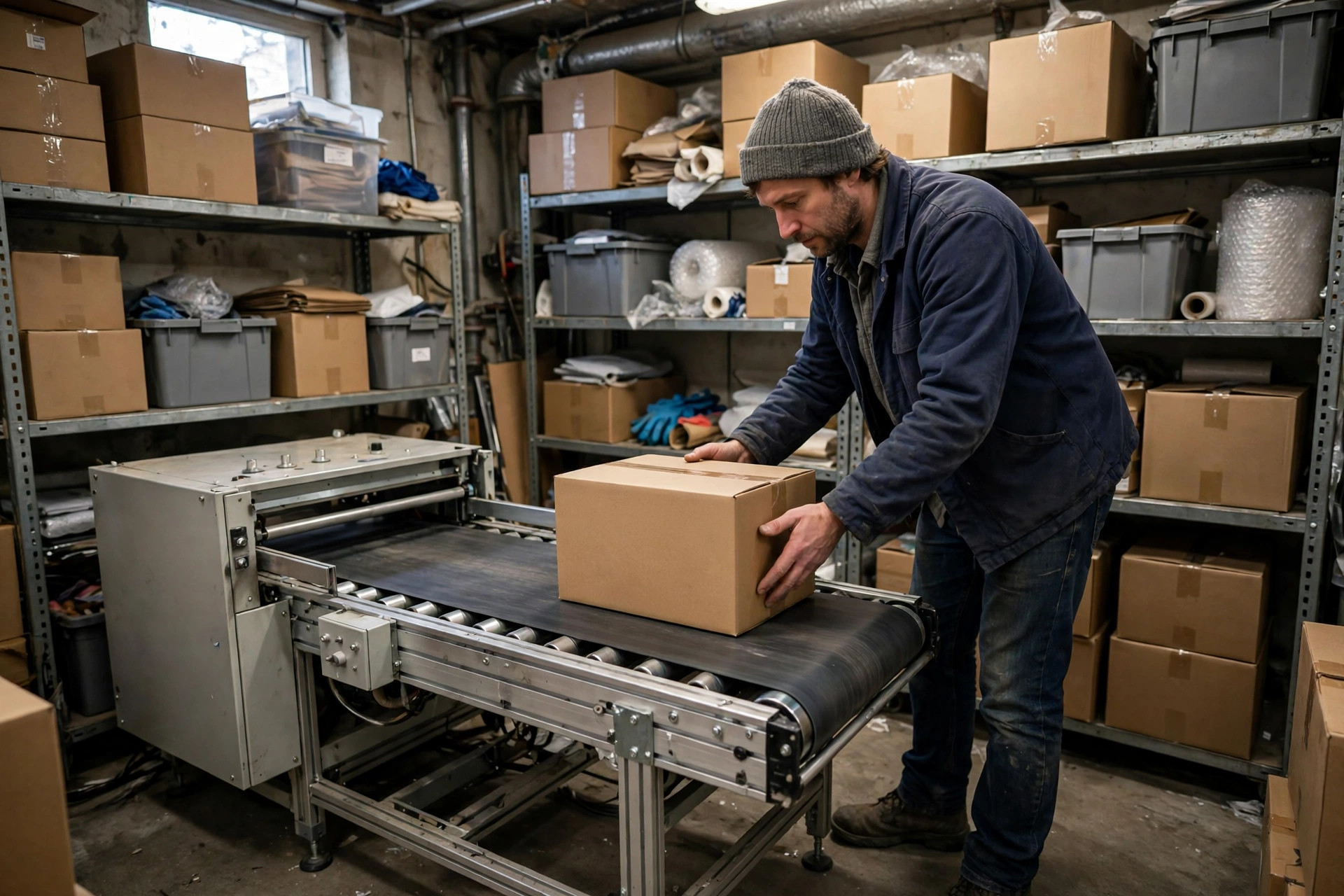
Mistake #2: Calculating ROI at full capacity, when a small warehouse only runs "full" three months a year
The sales math went like this: 1,800 units an hour, 10 hours a day, replaces 6 packers, saves $79,200 a year in labor. Beautiful on paper.
Our real volume? In the slow season we ship around 3,000 orders a day — the line runs two hours and then sits idle, humming and eating electricity. Only November through January does it run anywhere near full tilt. A small warehouse's volume curve is three peaks and nine valleys, not a straight line.
I pulled 12 months of actual outbound data and recalculated month by month: 3 peak months saving 6 workers each, 9 slow months saving 2 workers each. At $1,100 a month fully loaded per packer, that's $6,600 × 3 = $19,800 in peak season plus $2,200 × 9 = $19,800 in the slow season — $39,600 a year in real savings. Exactly half the sales-deck number.
The street-smart fix: never annualize the peak. Take your last 12 months of real order volume, derate the equipment's capacity by actual running hours, and compute the labor saved one month at a time. It's half an hour in a spreadsheet and it'll beat any vendor deck.
Mistake #3: An automation ROI with maintenance at zero — the equipment won't be that polite
The vendor's payback formula was "total investment ÷ annual labor savings," with maintenance booked at zero. And sure, year one maintenance is free — it genuinely looks like zero. But equipment ages, just like people.
Our real numbers: the year-two service contract was $4,500, year three jumped to $5,600. Belts, rollers, and photo-eye sensors are consumables — nearly $2,800 a year. A major controls software upgrade was another $2,000 quote from the integrator. Over five years, maintenance plus consumables runs close to $28,000, about $5,600 a year. Subtract that from the annual savings and the payback stretches by the better part of another year.
The street-smart fix: model maintenance climbing 10–15% a year, and always divide by a 5-year total cost of ownership. And get the year-two service price written into the contract as an addendum — the sales rep's promises are cheapest before the equipment ships. After that, everything gets expensive.
The three mistakes vs. the corrected math, side by side
| The sales deck's math (all three mistakes) | The small-warehouse corrected math | |
|---|---|---|
| Total investment | Sticker price only: $64,000 | Sticker × 1.35–1.5 + downtime = $95,000 |
| Annual savings | Full capacity × 12 months = $79,200 | Real 12-month volume, month by month = $39,600 |
| Annual maintenance | Booked at zero | Climbing 10–15%/yr; 5-yr TCO ≈ $5,600/yr |
| Payback period | 8 months | 29 months |
Same sortation line, two methods, 21 months apart. Those 21 months are a small warehouse's cash-flow life-or-death line.
The contrarian take: for a small warehouse, the trap isn't overpaying — it's buying too early
Here's the uncomfortable conclusion from my post-mortem: we didn't overpay for the line. We bought it too early. In early 2024 our daily volume was 4,000 orders; the line's economic sweet spot needed about 8,000 a day. We essentially prepaid for a future version of ourselves — and spent that year watching the equipment depreciate, eat floor space, and bill us for maintenance.
A small warehouse's biggest asset isn't equipment. It's flexibility. This month it's apparel, next month it's beauty products — change the product mix and those custom-built sort chutes start looking awkward. Big companies can preach "lights-out warehouses" because their volume is stable and their SKUs are narrow. For a shop like ours — three peaks, nine valleys, product mix all over the place — full automation is a straitjacket. That's the real trade-off: you save two workers' wages and buy yourself rigidity every time the product mix changes. Small warehouses can't afford that bet.
So our new policy: rent before you buy, semi-auto before full-auto. We leased 2 AGVs on monthly terms first and only talked purchase after three smooth months. For sortation, we started with "belt conveyor + manual sort," got the process dialed in, and will talk auto-sortation when volume earns it. Small steps, small losses.
Four street-smart rules for fellow small warehouses
- Price the three unwritten line items yourself — electrical upgrade, floor work, downtime losses. Put them in the budget before signing and your payback instantly gets honest.
- Compute savings from 12 months of real volume, month by month. Peak × 12 is a sales script, not your ledger.
- Model maintenance climbing over 5 years. The service contract starts billing in year two — don't let year one's "free" fool you.
- Rent before buying; go semi-auto first. Until volume hits the economic batch size, make the equipment wait for you — not the other way around.
One more story: my friend Lao Chen runs a warehouse in Foshan. In 2023 he bought 4 AGVs for about $36,000, then discovered his floor wasn't flat enough — another $12,500 for epoxy flooring. The move-in cost more than the dowry. His rule now: lease one unit for a two-week trial. Floor OK or not, process smooth or not — two weeks tells you everything.
Run the numbers tight, and automation is a meal a small warehouse can afford too. Small warehouses have their own way of surviving.
By Xiao Ma, Small Warehouse Owner