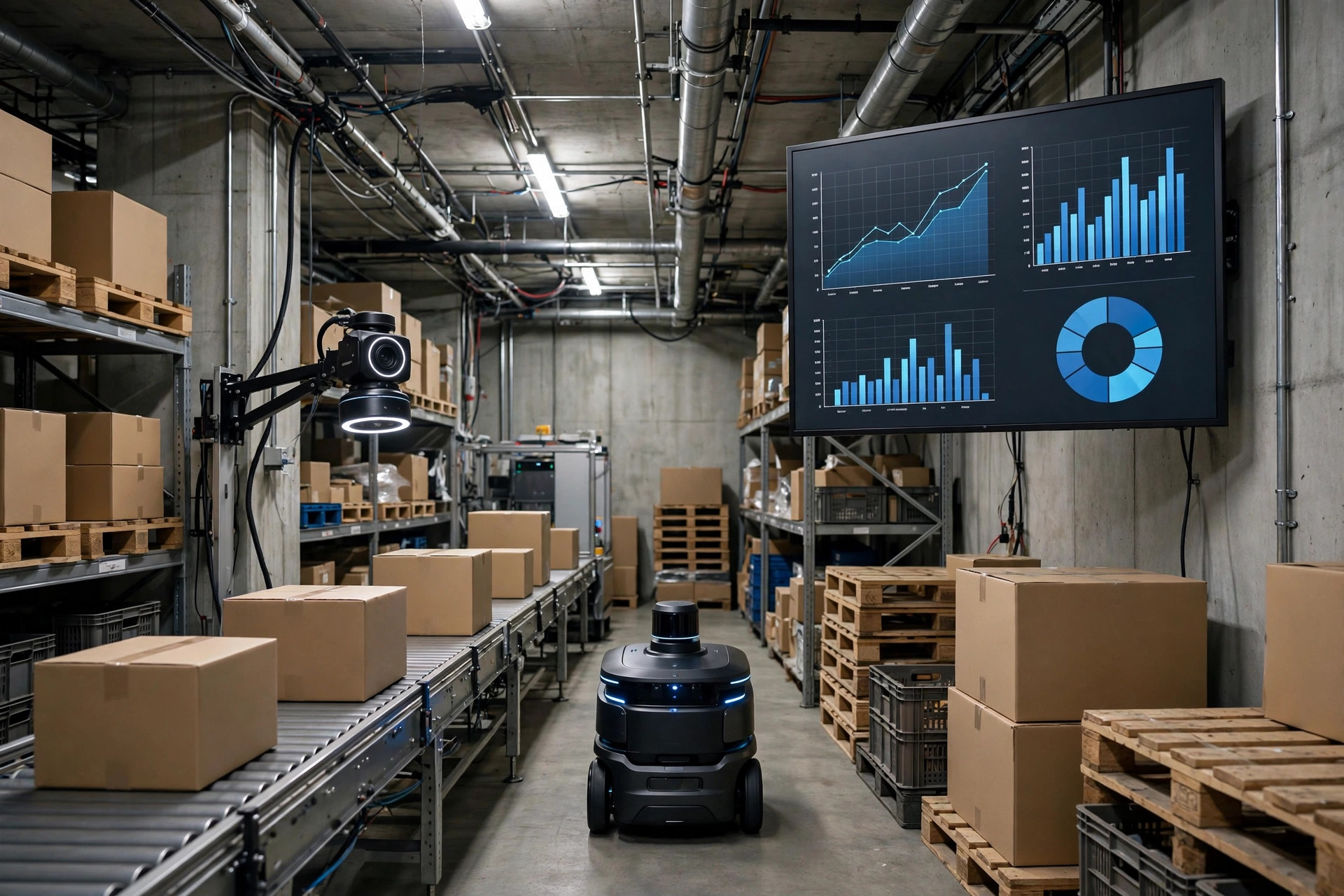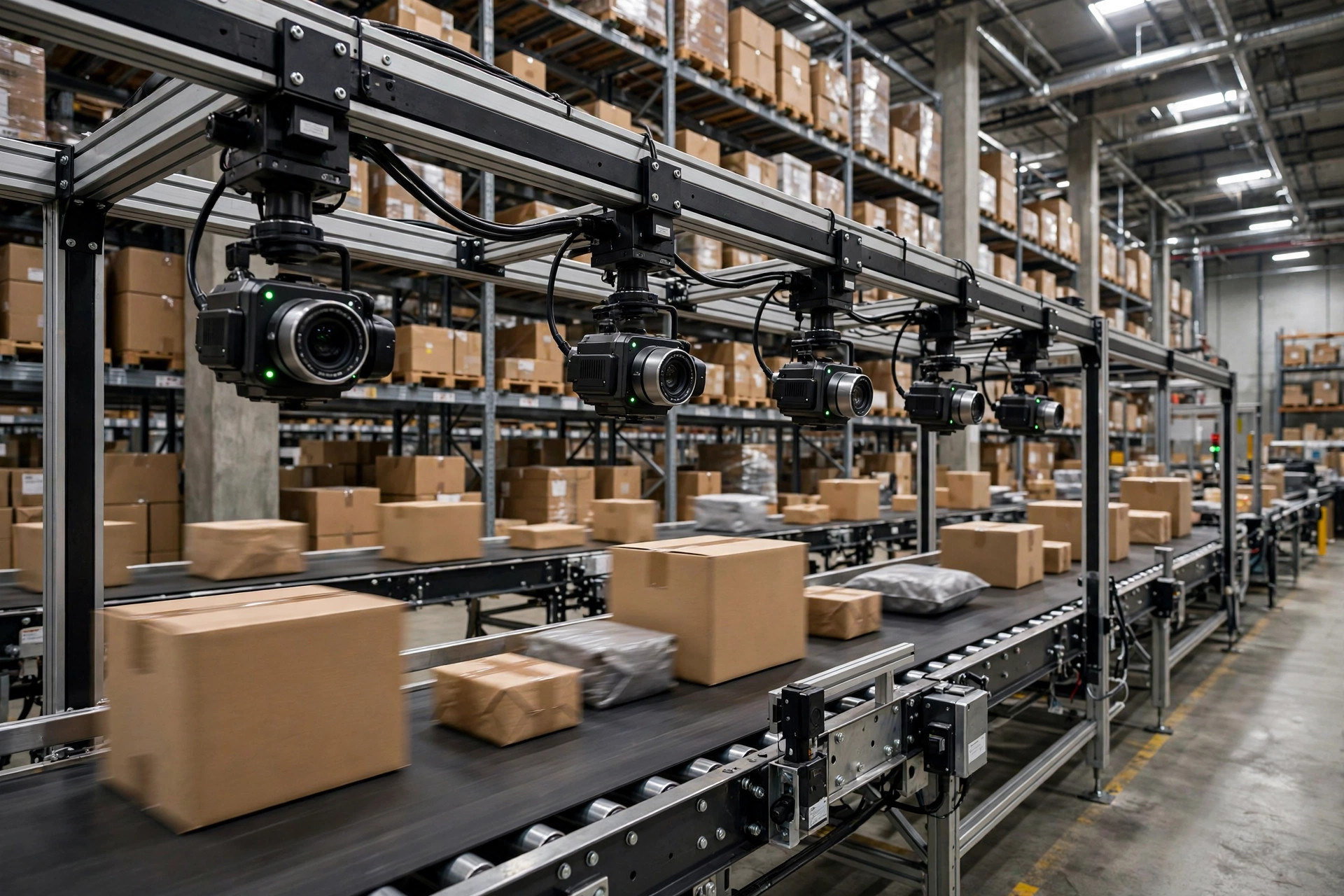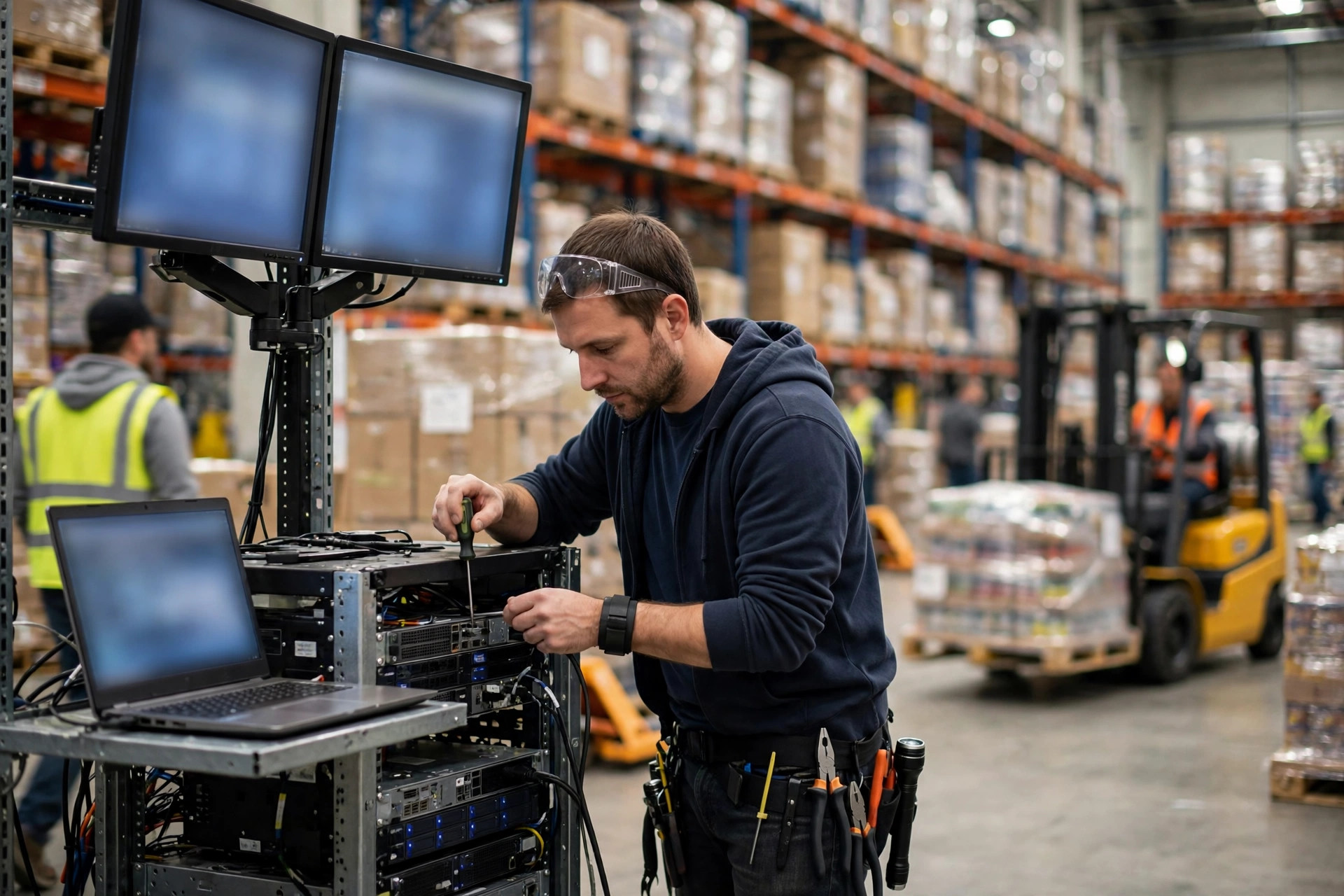
A vendor once told me their vision-picking AI was "99.9% accurate." I asked: on whose floor, on which SKUs, under whose lighting? Silence. Then the pitch deck came out, full of lab numbers. I've been in warehousing for 20 years in the US, and I've learned to translate vendor math on the spot: lab accuracy means nothing until the model has survived your building, your SKUs, and your peak season.
So here's my rule for any AI going live in a warehouse: no big-bang cutover. The AI rides along as a shadow for 30 days first. It watches, it records, it touches nothing. Then — and only then — we talk about go-live.
Shadow mode, stolen from Tesla
I didn't invent this. In April 2019, at Tesla's Autonomy Day, the company described how it validates new self-driving software: it runs in "shadow mode" on customer cars — operating silently in the background, never touching a single vehicle control, just logging "here's what I would have done" and comparing it against what the human driver actually did. Tesla later put it in writing to California's DMV: shadow-mode features run silently without actuating any vehicle controls, so new behavior gets proven against real-world conditions before it ever reaches the fleet.
The warehouse version is exactly the same shape. The AI runs; the humans run the operation; the AI's output is logged and never executed. Say you're evaluating AI replenishment suggestions: in shadow mode, the AI generates its suggestion list every day, but the list never goes out. Pickers work the original process. At end of shift, the system diffs the AI's suggestions against what the veteran operators actually did, line by line: match, mismatch, or "the AI lost its mind."
That last category matters, and it's why shadow mode is not a "pilot." A pilot puts real business at real risk on a small scale — when it's wrong, you pay. Shadow mode covers the full operation at zero risk — when it's wrong, it's just a row in a log, and shipping continues the next morning. Those 30 days buy you evidence, not confidence. When a vendor quotes 99.9%, ask for the 30-day diff log. If they can't produce one, there's nothing to discuss.
Thirty days, three numbers
When the 30 days are up, you should be holding three numbers. My checklist looks at these three and nothing else — everything beyond them is noise.
First: agreement rate. How often the AI's call matches what the human operator ultimately did. My bar is 99% or better for two consecutive weeks. Note the phrasing — two consecutive weeks, not a 30-day average. Averages hide sins. Two weeks at 95% followed by two weeks at 100% averages to a respectable 97.5%, but where did those first two weeks' problems go? Back-to-back clean weeks are what prove the model is stable rather than lucky. And track agreement by scenario: standard SKUs, odd-shaped items, and cold-chain goods get scored separately. Blend them and the weak spot disappears into the average.
Second: latency. Time from the AI receiving data to producing output. My bar: P95 latency no worse than one-third of the time a human takes for the same decision. An AI slower than your people has no business going live — the floor can't wait. This can only be measured honestly during shadow mode, under production data volumes, because after go-live, latency becomes line-side waiting time, and discovering it then is too late. Don't let anyone benchmark it on a test database with a few thousand rows.
Third: absurdity rate. The share of AI outputs that are flat-out absurd — suggesting cold-chain goods go to ambient storage, reordering a discontinued SKU, splitting one order across three waves. Mistakes a veteran would never make. My bar: zero in 30 days. Agreement rate is negotiable; absurdity is not. One absurd output means the model has no concept of your business boundaries, and that AI will hurt you today or tomorrow.
The go/no-go meeting
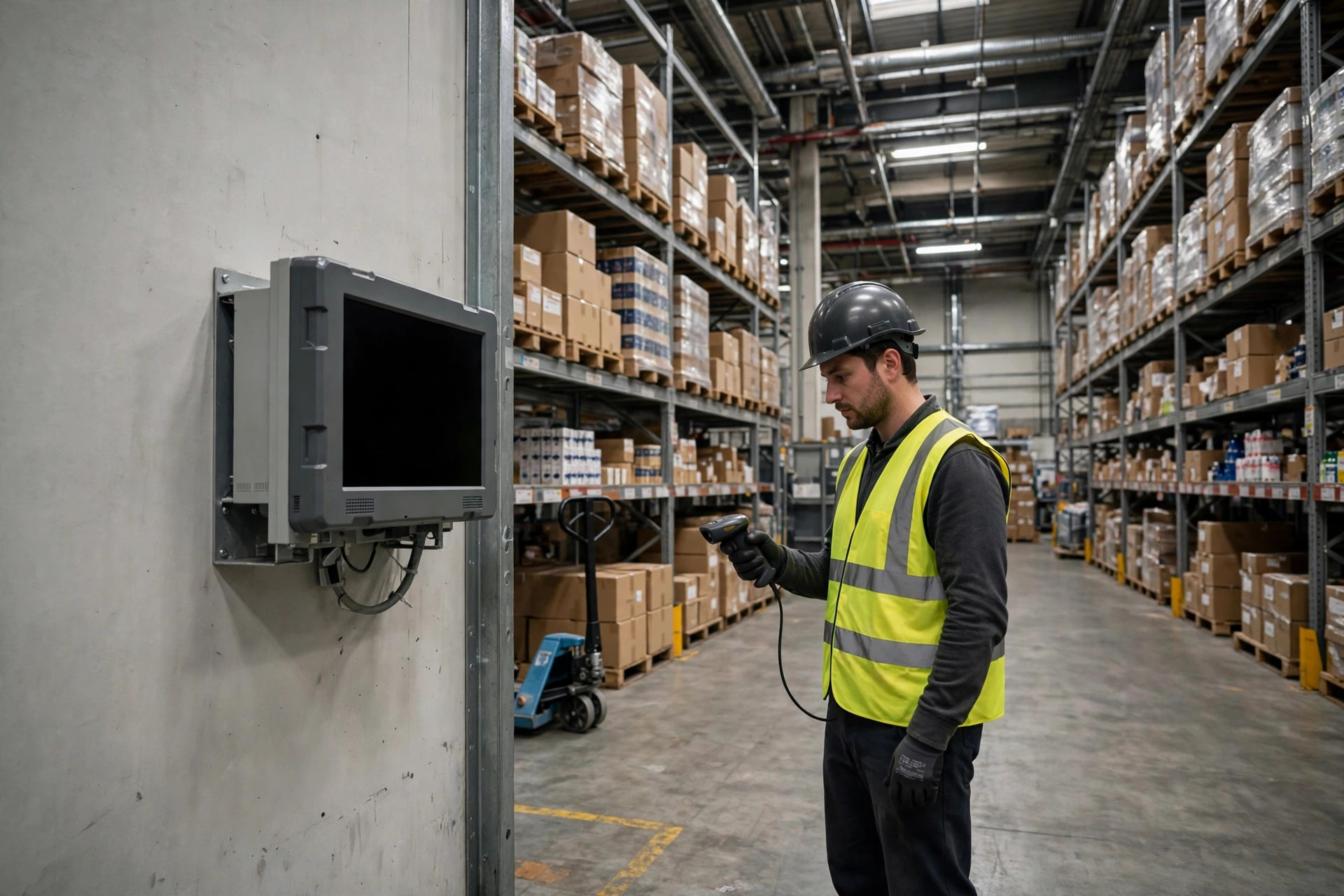
Data in hand, hold one meeting. Four parties, fixed seats: the warehouse operations lead, IT, the AI vendor, and one independent voice you trust — an outside advisor or the veteran insider who actually knows the operation. The meeting has exactly one job: compare the three numbers against the bars, and vote go or no-go.
Go means all three bars cleared, stable across the final two weeks, and the exception list at zero. No-go means any single bar missed, or a single absurd output on record. There is no middle option, no "let's keep watching." Watching for another week just means day 31 of shadow mode — the data decides. Either extend the parallel run or kill the rollout. "Go live with known issues" is not on the menu.
One more thing most teams miss: the cutover itself must be graduated. One line, one shift, one clean week before full rollout. Read the Knight Capital disaster backwards and the lesson is obvious: on August 1, 2012, the trading firm pushed new order-routing code straight into production, a dormant routine woke up on one missed server, and roughly $440 million evaporated in about 45 minutes because nobody could stop it in time. Had they run the new code on one server first, the disaster never happens. Same in the warehouse: let the AI "go live" on one shift with veterans watching for a week. That beats ten review meetings. During the graduated week, the morning huddle tracks exactly one number: how many orders did the AI touch yesterday, and how many went wrong.
Write the rollback plan before you need it
A rollback plan written after the incident is a postmortem, not a plan. Mine has three items, and all three get written and rehearsed before cutover.
One: a kill switch. The AI module in your WMS must be a configuration toggle, not a code deployment. Flip it off and the operation is back to fully manual within five minutes — rehearsed for real, not documented and hoped for. Knight Capital needed 45 minutes to go from "something's wrong" to shutting the system down manually. In a warehouse, 45 minutes is enough to mis-ship a full shift into the wrong zone and leave tomorrow's carriers queued at the dock.
Two: data quarantine. Everything the AI touched during the live period gets tagged — AI-adjusted slot recommendations, AI-merged waves, AI-changed reorder points — so a rollback can strip it out in one pass without contaminating the manual process's history. Otherwise you're reconciling AI residue for months. Define the tagging rules during shadow mode, not after cutover.
Three: a named owner. Who calls the rollback? My rule: the floor operations lead holds veto power and the kill-switch authority, no escalation to IT required, no waiting for the vendor to show up. When things go wrong, every minute is money, and by the time the approval chain finishes, the freight has already left. Put that authority in the project charter on day one, not the day it blows up.
Amazon did it this way with Sparrow, its AI vision picking arm unveiled in November 2022. Instead of a fleet-wide rollout, Amazon piloted it at the San Marcos, Texas fulfillment center, cut its defect rate by 65% during the pilot, and only then expanded deployment. If Amazon — with that scale and that engineering bench — pilots before it scales, nobody else has an excuse for a big-bang cutover.
If you're negotiating an AI project right now, add one clause to the contract: payment milestones are tied to shadow-mode acceptance. No pass, no final payment. A vendor who signs believes in their model. A vendor who won't just saved you tuition. Thirty days of shadow mode is the price of sleeping well at night.