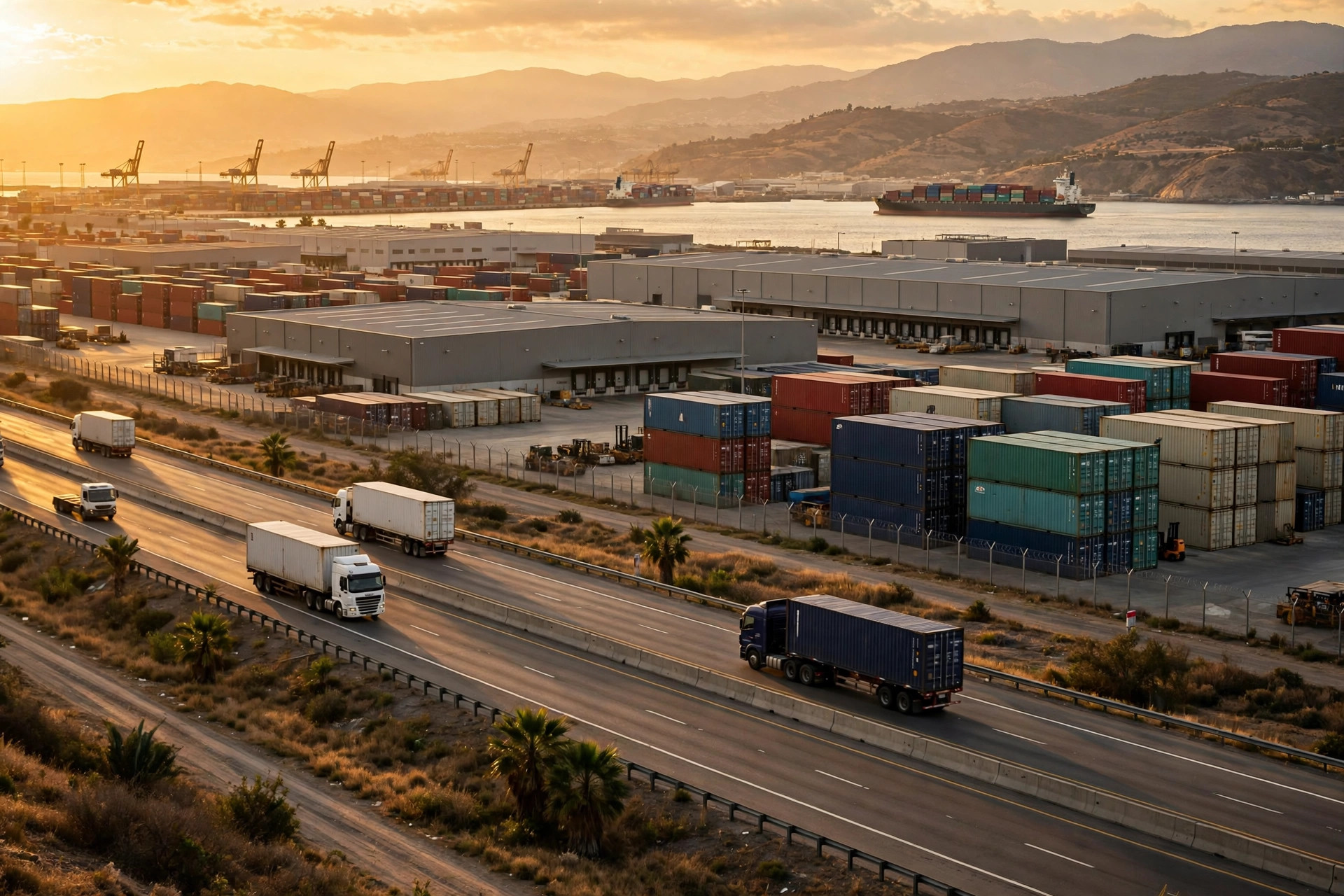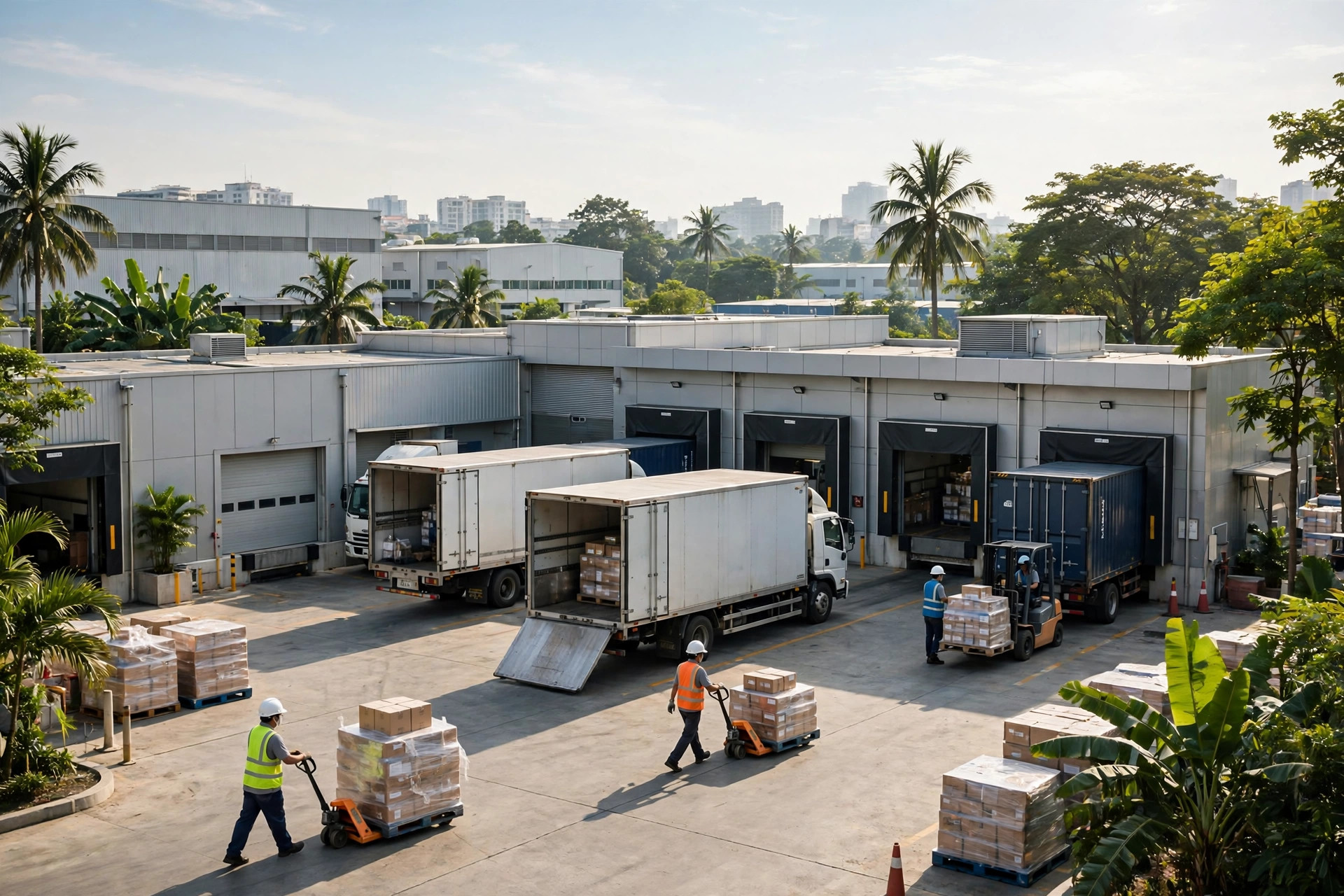
Let me start with a complaint: every time Vietnam warehouse market distribution comes up these days, it is all "hotspot" and "hidden gem" and "get in now." I have been selling cross-border e-commerce for five years, and I have rented warehouses in Vietnam and given them up too. Here is my blunt conclusion: the north and the south are two different markets. Apply southern logic to a northern lease, or northern rent expectations to a southern negotiation, and you will pay tuition either way.
My own story first. When I entered Vietnam, I believed the legend about cheap southern warehouses and went straight to the Ho Chi Minh City area. What I found was that good locations were never short of tenants. Landlords barely returned calls, rent-free periods were off the table, and rents moved up every year. Later a friend who supplies electronics factories in Bac Ninh dragged me north to look around, and it was a different world: rows of new warehouses, vacancy out in the open, real room to negotiate. Since then, my rule is fixed: always run the north and south numbers separately. Never blend them into one comparison.
Vietnam Warehouse Market Distribution, North vs South: Supply First, Rent Second
Start with the north. Under JLL's Q2 2026 figures, the northern market recorded net absorption of 145,000 sqm, a vacancy rate of 32.7%, and an average rent of $5.10 per sqm per month. Read together, those three numbers tell a story: absorption is moving, so real demand exists and this is not an empty shell game; but vacancy above thirty percent means new supply has run ahead of demand, and landlords are sitting on stock. For a tenant, that means choice and leverage. Ask around, slow down a round of negotiation, and rent and rent-free terms in the north often improve.
Now the south, under the same JLL Q2 2026 figures: leasable stock of roughly 2.5 million sqm, with about 136,000 sqm of new supply arriving in the second half of 2026. The south's problem is the mirror image of the north's. Stock sounds large, but well-located, well-equipped warehouses were already tight, and that amount of new supply does not close the gap. My lived experience of Vietnam warehouse market distribution in the south is that it is not about who negotiates the lowest rent. It is about who locks the location and the lease term first. While you are slowly comparing prices, the good warehouses are already taken by manufacturers and big sellers.
So the first north-south conclusion is blunt: in the north you are negotiating for better terms; in the south you are competing for a good spot. The playbook differs, and so does the budget. Money saved negotiating in the north can go into distribution equipment and labor; in the south, you should budget for the cost of locking space, and not lose the location by haggling over the last dollar of rent.
Five Numbers for Vietnam Distribution Site Selection: Developers, Leases, and Tenant Mix
Before signing anything, I check five numbers. I call them, unglamorously, the five lease numbers.
First, vacancy. High vacancy means the landlord is eager and your leverage is real; low vacancy means stop wasting time on price and lock the space. Second, rent, but only on a like-for-like basis: management fees, dock platforms, fire protection, whether a mezzanine is allowed. Numbers from different scopes are not comparable. Third, net absorption. Rising absorption means real industries are moving into the area, not just hype. Fourth, upcoming supply. How much warehouse space hits the market in the next six to twelve months decides whether your renewal will be comfortable or painful. Fifth, lease terms. Rent-free period, escalation caps, early exit, and sublease rights: if these four are not written clearly, the first four numbers are paper wealth.
Developer choice is another trap. Vietnam's logistics park developers come from mixed backgrounds. Some grew up in industrial real estate and get fire protection and infrastructure right; others jumped in mid-stream, and their warehouses look new while fire approvals, truck circulation, and rainy-season drainage are all problems. I learned this the wet way: a cheap new-park warehouse with good clear height, where the entrance flooded in the rainy season and trucks could not get in for two days of outbound shipments. Since then I ask three questions about every warehouse: is fire approval complete, can trucks move in both directions, and has drainage ever failed. A developer who cannot answer gets passed over.
Tenant mix matters too. A park mixing e-commerce tenants with manufacturers will fight in peak season: e-commerce wants distribution speed and flexible labor, manufacturing wants stable capacity and long leases. My preference for an e-commerce distribution warehouse is a park where e-commerce and third-party logistics cluster together, so everyone's rhythm matches and finding temp labor or a spare truck is easy. In a park full of manufacturers, a small e-commerce seller has no voice, and peak-season overtime or expansion space means joining a queue.
A Site-Selection Framework for Chinese Sellers: Follow Your Goods, Not the Hype
Finally, a decision framework Chinese sellers can use directly. Ignore the hype and ask three questions.
First, who are you selling to? Northern markets, Hanoi and surrounding provinces, or cross-border land transport point north. Ho Chi Minh City and the southern economic zone, nationwide distribution, or port outbound point south. Second, can your goods wait? If you can wait, negotiate, and want cheaper rent, the north offers room. If you cannot wait and need a warehouse before peak season, lock the south first and optimize later. Third, where is your team? If your team can operate in the north, do not force a move south, and vice versa. A warehouse your people cannot run is decoration, no matter how cheap the rent.
A few warnings from my own mistakes: cap the rent escalation in the contract and never trust a verbal promise. Write the rent-free period into an annex with a clear start date. Negotiate sublease and space-sharing rights up front, because if your business pivots, a warehouse you can hand over is rescue money. And pin down who bears responsibility for fire compliance and business licensing, because arguing about it after an incident is the most expensive conversation of all.
Vietnam's market does hold opportunity, but the opportunity is not in the word "hotspot." That is Vietnam warehouse market distribution without the hype: separate the north from the south, run the five numbers, and read the lease. It is in separating north from south, running the five numbers, and reading the lease terms line by line. A cheap rent may hide the truth of vacancy; an expensive rent may hide the value of location. Run the numbers before you sign, and warehouse rent stops being tuition.
This trick genuinely works. I have tested it myself. By Ah K, E-commerce Seller (5 yrs)