
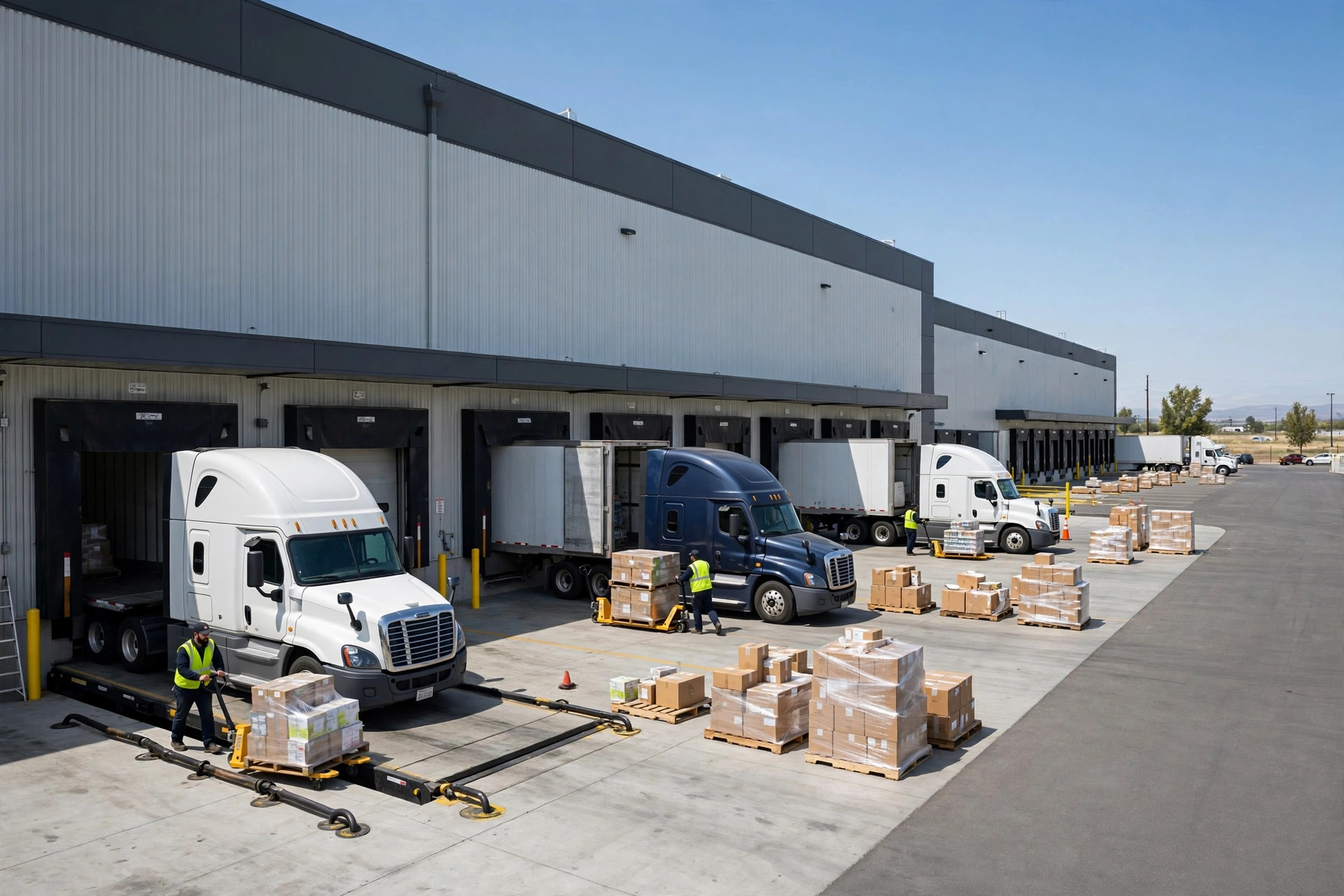
We have a client — a home-appliance seller out of Shenzhen — who spent all of 2023 debating whether to upgrade from a single West Coast warehouse to a dual warehouse setup, East plus West. The reason was painfully simple: with only a West Coast warehouse, the last-mile bills on East Coast orders hurt.
They started selling in the US in 2022 and, to keep things simple, rented space in one 3PL warehouse near Ontario, California. The first two years were smooth sailing. Then came the 2024 review: East Coast orders had quietly grown to 40% of volume — New York, New Jersey, Florida buyers piling in — and when they flipped open the last-mile invoice, their jaws dropped. A parcel weighing around 3 pounds, shipped from the West Coast to New York, costs two to three times what it costs to ship locally from an East Coast warehouse. And transit time stings even more: five to six days ground from west to east, versus two to three days locally. "Shipping too slow" started showing up in reviews. Ad spend stayed flat, but conversion was being dragged down by logistics. The founder told me something brutally honest: "I thought I was saving on a second warehouse. Turns out I handed all those savings to the carriers."
Why a Dual Warehouse Setup Actually Saves Money: Three Ledgers
Here's the thing about running two warehouses — you have to split the math into three ledgers. Miss one, and the whole calculation is wrong.
| Cost bucket | Single West Coast warehouse | East + West dual warehouse |
|---|---|---|
| Rent + handling | One set of fixed fees, low barrier to entry | Two sets of fixed fees; the East Coast site usually has a minimum commitment |
| Inbound (China to US) | One container to the West Coast, cheap full-container rates | Split shipments: one container per coast, or a West Coast container plus domestic transfer |
| Last mile (warehouse to buyer) | East Coast orders cost 2–3x more, 5–6 day transit | Zone-based shipping from the nearer site; last-mile spend drops by half or more on most orders |
See the pattern? A dual warehouse saves you money on the third ledger (last mile) but costs you more on the first two. A dual warehouse only pays off when the last-mile savings exceed the extra rent and inbound costs. One sentence — yet I've watched seller after seller run the numbers on ledger three alone, blind to the first two.
And I've seen it blow up the other way. Early in 2024, an apparel client doing fewer than 800 orders a month on the East Coast opened an East Coast warehouse on a peer's advice. The result? The minimum rent and handling fees ticked away every single month, and spread across 800 orders, the fixed cost per order was higher than the last-mile premium they'd been paying before. Three months later they shut it down, tens of thousands of dollars poorer. In their words: "A second warehouse has a breakeven point, and my volume never got there."
Here's the contrarian take: bigger isn't better, and earlier isn't better, when it comes to a second warehouse. If East Coast orders are under 30% of your volume — or your East Coast monthly orders can't cover one facility's fixed costs — a single warehouse plus swallowing the last-mile premium is the more profitable choice. Do the math first, open the warehouse second. Never the reverse.
Dual Warehouse Order Routing Rules: Four Switches
Once the warehouses are open, which site ships each order comes down to routing rules. Don't underestimate them — good rules cut last-mile costs in half; bad rules leave your East Coast site stocked out while the West Coast one overflows, and the cross-warehouse transfer fees end up costing more than the last-mile savings ever did.
Routing really comes down to four switches, in priority order:
| Switch | How to set it | What your 3PL won't volunteer |
|---|---|---|
| ZIP-code zoning | Split by the buyer's ZIP prefix: east goes east, west goes west | Don't draw the line at the Mississippi — draw it at the cost breakeven line; some central states cost about the same from either side, so check live quotes |
| Inventory waterline | Auto-switch to the other warehouse when stock drops below the safety level | 3PLs set the "safety level" conservatively by default, which quietly forces you to hold more inventory; set that number yourself |
| Delivery promise | Orders with a 2-day promise ship from the nearer warehouse | Cross-warehouse orders need their own SLA math — don't blend them with local shipments |
| Cost fallback | When all else is equal, pick the cheaper last-mile quote | Some 3PLs' "smart routing" quietly defaults to their own facilities — "smart routing" sometimes means "smart diversion" |
Remember this: the routing decision has to be in your hands. Plenty of 3PL contracts keep routing logic as a black box — the system decides, and you can't even override it. Before opening a second warehouse, negotiate control of all four switches and get it written into a contract appendix.
One more insider detail from the provider side of the table. Some 3PL quotes hide a "system routing fee" or "order allocation fee," charged per order. A few dozen cents looks harmless until you're doing tens of thousands of orders a month. Worse is the cross-warehouse transfer: the East Coast site stocks out, you move a pallet over from the West Coast, and the transfer fee plus domestic linehaul sometimes costs more than just shipping last-mile from the West Coast in the first place. So the contract has to spell out: who decides on transfers, and who pays? Anything left vague is a blank check you've just signed.
Dual Warehouse Insider Traps: Three Holes in the Routing Rules
Trap one: the "fake dual warehouse." Some 3PLs don't actually operate their own East Coast facility — they subcontract to a small local warehouse. Your goods come in through the West Coast in a full container, then get broken down and trucked to that small site — handling fees and transfer costs stacking at every step. Last mile gets cheaper; total cost gets higher. Before signing, ask one question: "Is the East Coast warehouse self-operated? Can I visit?" If they won't let you see it, something's off. Dear clients — ask it out loud, don't be shy about it.
Trap two: "inventory hostage." Two warehouses mean two sets of safety stock for the same SKU — your inventory capital doubles overnight. Worse, some 3PLs' replenishment advice still runs on single-warehouse logic: the East Coast site stocks out with no warning, and by the time you notice, the expedited transfer fee has already hit your account. Run your own replenishment plan for a dual setup; don't rely entirely on the 3PL's system — that system is tuned for their warehouse efficiency, not your wallet.
Trap three: "SLA immunity." Read the SLA clause carefully — "the 3PL shall not be liable for delays resulting from routing adjustments." In plain English: whichever warehouse ships, however late it arrives, they don't pay. The delivery promise is written for you; the exemption is written for them. Cross it out during negotiation, or rewrite it as "routing follows the plan confirmed by the client; the 3PL bears delivery responsibility under the confirmed plan."
Next Time You Negotiate a Dual Warehouse Contract, Ask These Three Questions
Question one: "Who controls the routing rules? Can I adjust the four switches myself, and do changes take effect in real time?" — If the decision isn't in your hands, your second warehouse is just doing free labor for the 3PL, and every dollar of last-mile savings becomes their margin.
Question two: "How are cross-warehouse transfers charged? Are there per-order junk fees like system routing or order allocation fees? Give me the full list." — A quote with murky surcharges is a trap no matter how low the headline rate looks; it all comes back with interest sooner or later.
Question three: "What's the East Coast warehouse's minimum commitment? What happens if I fall short, and what's the early-termination penalty?" — Calculate the breakeven point before deciding to open. If the volume isn't there, a single warehouse plus the last-mile premium beats opening a warehouse as charity.
One last honest word. Going dual isn't really a logistics question — it's an arithmetic question. The last-mile savings are real money, but so are the second warehouse's fixed costs. Do the three-ledger math first, get control of the routing rules second, and plug every hole in the contract third — in that order, the second warehouse makes money. Reverse the order, and it's just a money pit.
By Susan, 3PL Sales Director


