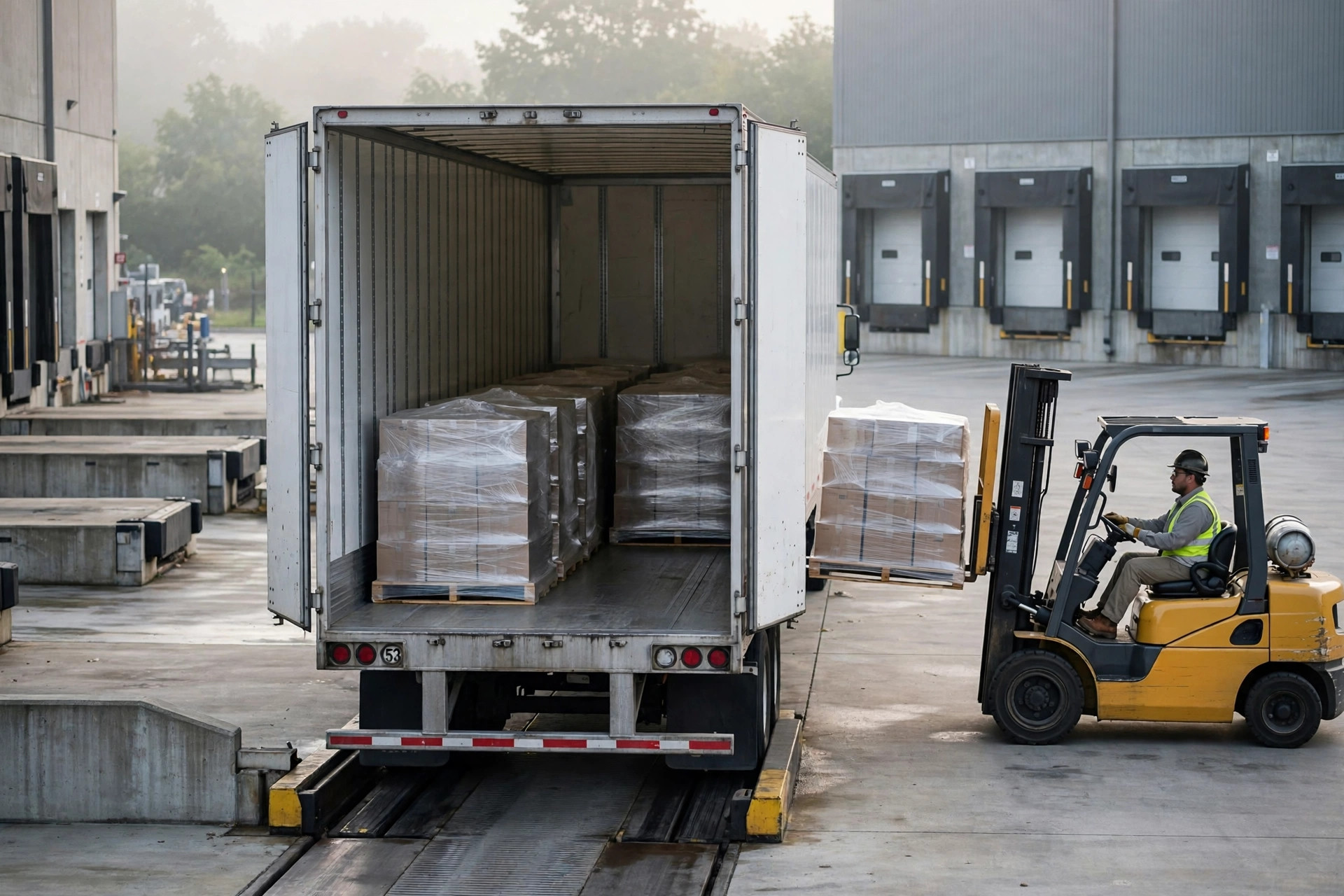
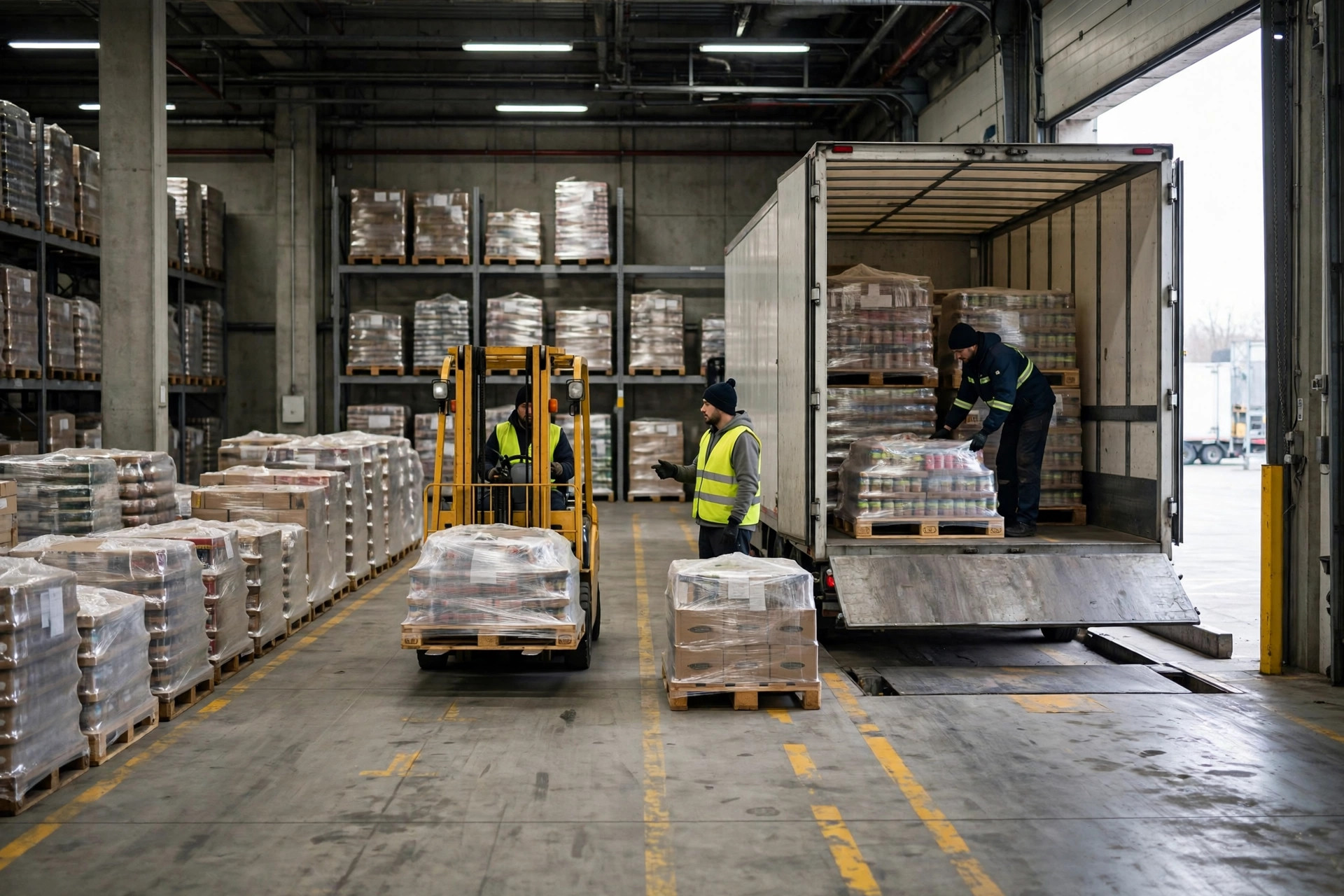
Let me tell you, after all these years on the road, what I fear most is not a long route. It is a messed-up order. TMS route planning multi-stop backhaul is the work that fixes that: not drawing a pretty line on a screen, but making the truck, the freight, the driver, and the clock all line up.
One morning I stood by a warehouse dock in California's Inland Empire and watched a dispatcher stare at a sheet. One truck, fourteen stops for the day, spread across three towns. The freight was already loaded when someone realized the first delivery was buried at the back. That is the whole job in one picture. Get the order wrong and the best truck in the fleet cannot save the day.
Here is the load I still remember. As an example: the driver left at seven in the morning with fourteen stops. Some stops only accepted freight between nine and eleven. One stop had a hard two o'clock deadline. Another sat down a narrow alley where a big truck could not enter, so a smaller vehicle had to meet it. The dispatcher had sequenced the stops by distance from the warehouse. It looked tidy. On the road it fell apart. At the first stop, unloading meant digging past a dozen other shipments while the dock crew waited. At the third stop, the receiver said the morning window had passed and to come back in the afternoon, so the truck had to loop back in the evening. Fuel burned, hours burned, and by dusk three stops were undone while warehouse phones kept ringing.
The lesson is plain: multi-stop delivery is not won by driving fast. It is won by sequencing right. Get the sequence wrong and nothing else matters.
TMS Route Planning Multi-Stop Backhaul: Load in Reverse, Deliver in Order
There is an old rule in this business: load in reverse. The freight that comes off first goes on last, and the freight that comes off last goes on first, so that at each stop the door opens onto exactly the shipment due there, with no digging. Simple to say, impossible to do by hand at fourteen stops. Which stop takes freight when, which road jams at what hour, which shipment cannot be stacked under, which one needs refrigeration — it all tangles together, and changing one stop means recalculating the whole sheet.
That is the sequencing work a TMS does. It takes in each stop's receiving window, each shipment's size and weight, and each vehicle's capacity, and produces a delivery sequence, then works backward to a loading sequence. The dock crew loads by the sheet, the driver drives by the sheet, and at each stop there is no digging. I tell warehouse crews the loading sheet is the delivery sheet written backward. Only in a system does that saying come true.
One thing people get wrong: time windows matter more than distance. Two stops close together does not mean they can run back to back. One takes freight in the morning, the other in the afternoon, with lunch and traffic in between, and a driver forced to pair them just sits by the roadside. A good sequence groups stops with matching windows together and leaves mismatched stops for another truck or the second half of the day. Short distance does not save time. Matching windows save time.
Driver time has to be counted too. Rules on continuous driving and rest apply; check the latest official policy for the exact limits rather than taking anyone's word for them. I have seen sheets packed so tight that by afternoon the driver was running on fumes, the last stops done on willpower alone. A plan has to leave room for driving time, rest, and waiting at docks. Trucks are made of steel. Drivers are not.
TMS Route Planning Multi-Stop Backhaul: Why the Return Load Is Decided Before Departure
Now the return trip. Plenty of trucks run out full and come back empty, which means a day's work earns half a day's money. The old dispatchers' way was to settle the return load before the truck left: what time will it be near which town, is there freight going the right way, can it load inside the driver's available hours? Backhaul is not something a driver finds on the road. It is a second leg planned before departure.
Take the same fourteen-stop truck as an example. By evening it would be near another town. The dispatcher had called a warehouse there the day before and booked a shipment ready at five in the afternoon, heading back toward home base. On an illustrative calculation, fourteen outbound stops plus one return shipment on the same truck beats sending two trucks out, and the driver does not have to run an empty night road. That is an example calculation, not a promise; the real saving depends on roads and loading times.
Here is the counter-intuitive judgment: sometimes driving a little out of the way to pick up a return load beats driving straight home empty. Do not judge it by miles alone. Judge it by what the whole truck produces in a day. A hundred empty kilometers are pure cost. Thirty extra kilometers to collect a load going your way makes the day's arithmetic look better, not worse. But the reverse is just as true: chasing a small load that costs the driver three hours of waiting and a missed rest break loses money. Whether a return load is good does not depend on whether it is on the way. It depends on whether it breaks the driver's clock or the next day's dispatch.
Then there is the canceled stop. As an example: one Friday afternoon, a customer says it will not take delivery today, and the truck is already rolling. Manual dispatch means a round of phone calls and a rebuilt sequence. The real test of a TMS is not how fast it calculates, but whether it can re-plan on the spot: drop the canceled stop, re-match the remaining windows, decide whether the return booking still holds, and tell the driver whether to finish early. A system that can only plan and cannot re-plan quits the moment something goes wrong on the road.
Test a TMS Before You Buy It
Here are a few practical tests I give shippers and warehouses. First, hand it a real week of orders and check whether the loading sequence is reversed — does the first stop unload without digging? Second, cancel one stop and change one window on purpose, and see whether it produces a new sequence within minutes instead of making you start over. Third, ask how it handles the return load: can it plan the return freight together with the outbound route, or does it only think about the return after the outbound is done? Fourth, ask how it guards driver time, so the sheet it produces never pushes a driver past the limit. Fifth, ask whether it talks to the warehouse system, so the loading sheet, the delivery sheet, and the proof of delivery are one set of data instead of hand copying twice.
Manual planning versus TMS planning, side by side:
| Comparison | Manual planning | TMS multi-stop planning |
|---|---|---|
| Planning fourteen stops | By experience; one change means recalculating everything | Windows, sizes, and vehicles calculated together; changes can re-plan |
| Loading order | Easy to load in order and dig at the stop | Loaded in reverse delivery order; unload directly at the stop |
| Time windows | From memory; easy to miss | Stops with mismatched windows are separated automatically |
| A stop cancels | Phone calls, one by one, to rebuild | Sequence and return booking re-planned after cancellation |
| Return load | Depends on the dispatcher's contacts, found on the fly | Planned into the same day's plan before departure |
| Driver time | Discovered too late, after the sheet is full | Driving and rest margins built into the plan |
Having said all that, no system replaces a dispatcher's knowledge of the road. Which alley a big truck cannot enter, which warehouse has no one on the dock after three in the afternoon, which customer likes to check the paperwork before unloading — a system does not know those on day one. People have to teach it, rule by rule. The system is a helper, not a substitute. The dispatcher's job is to turn road knowledge into conditions the system can use, and then let the system lay out a dozen sheets a day in order.
Trucks not running empty, miles not wasted. Sequence right, load right, return load settled — and the day ends with drivers not worn out, customers not chasing, and warehouses not in chaos. That is what good multi-stop delivery looks like.
By Shifu Zhao, Trucking Veteran (15 yrs)