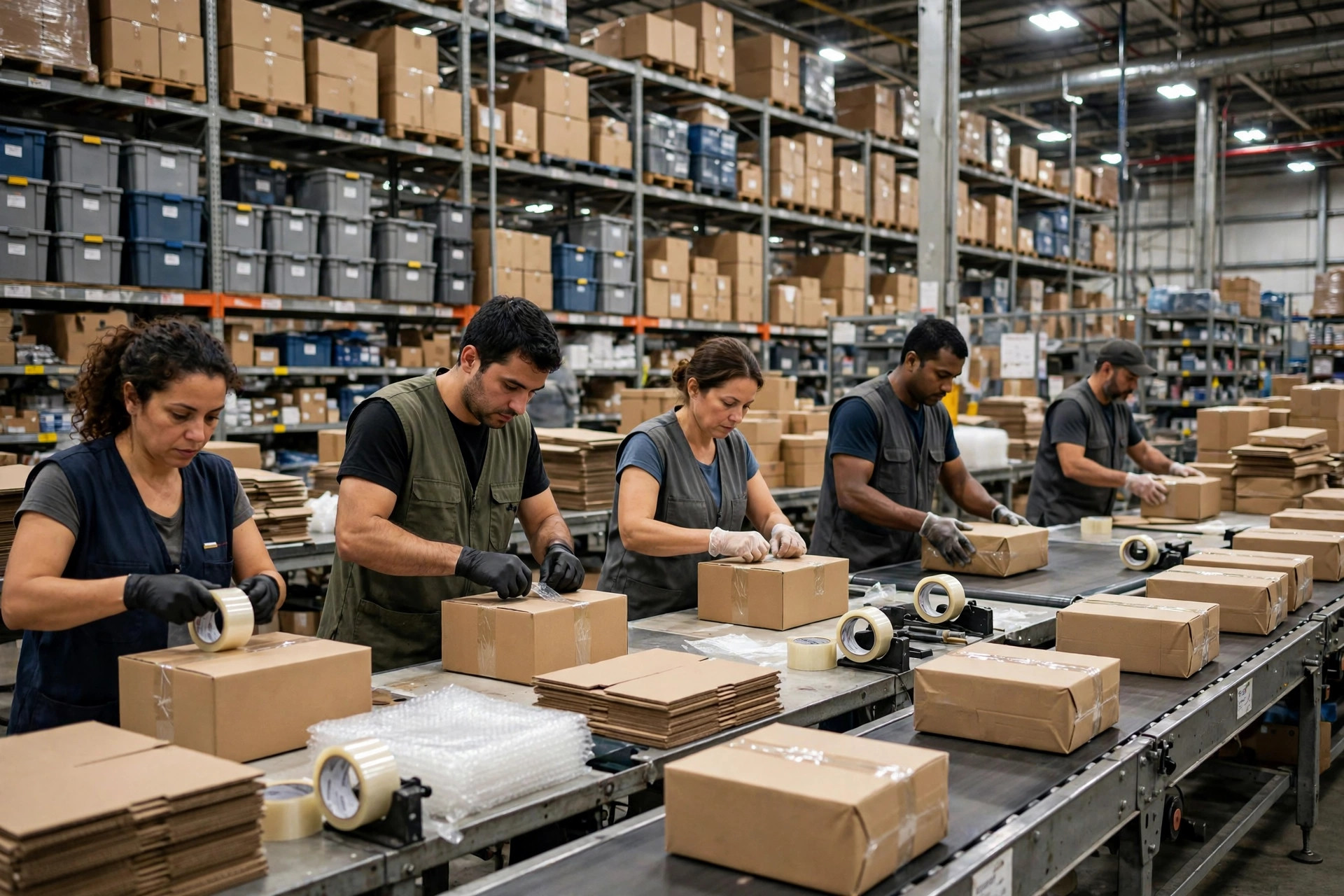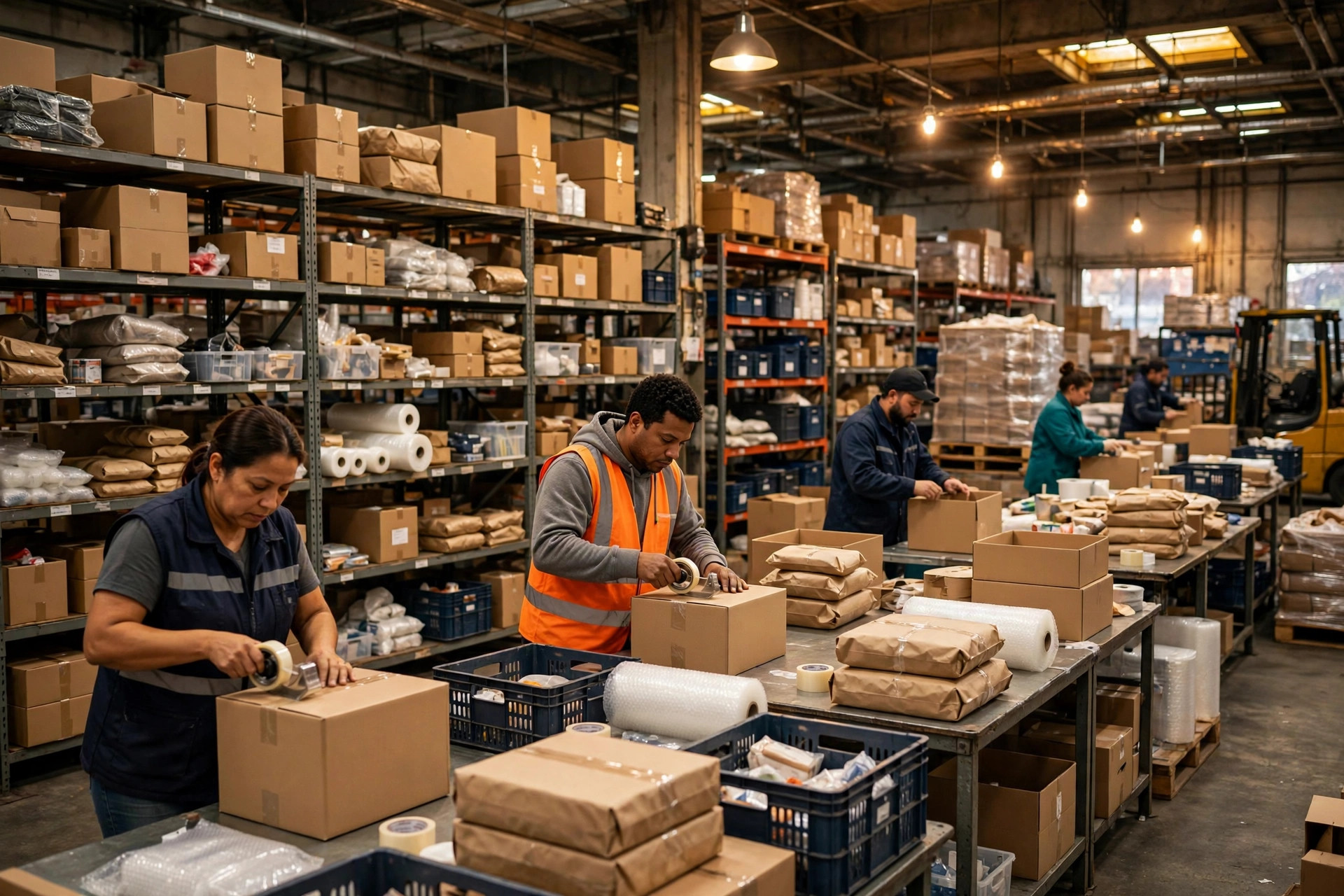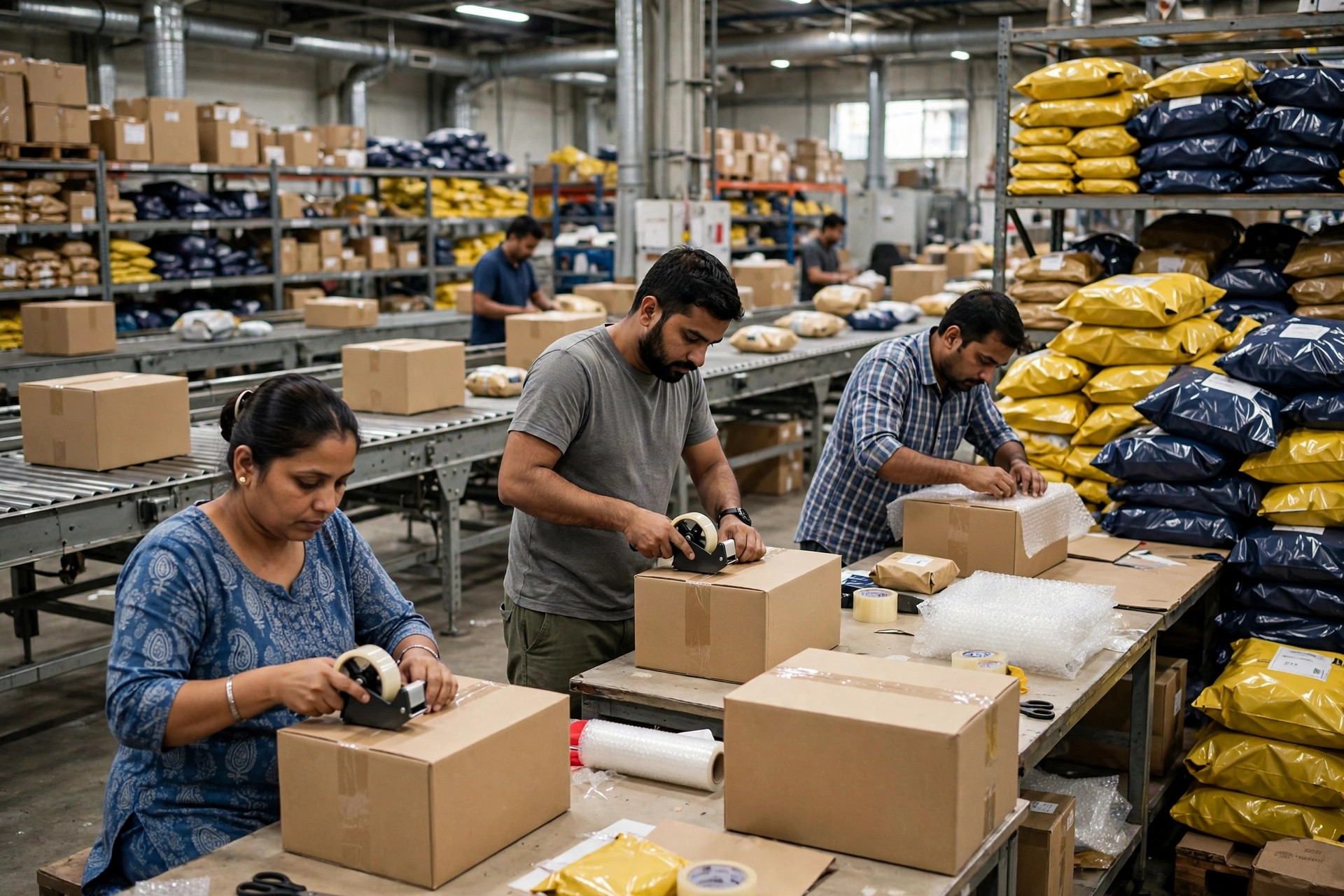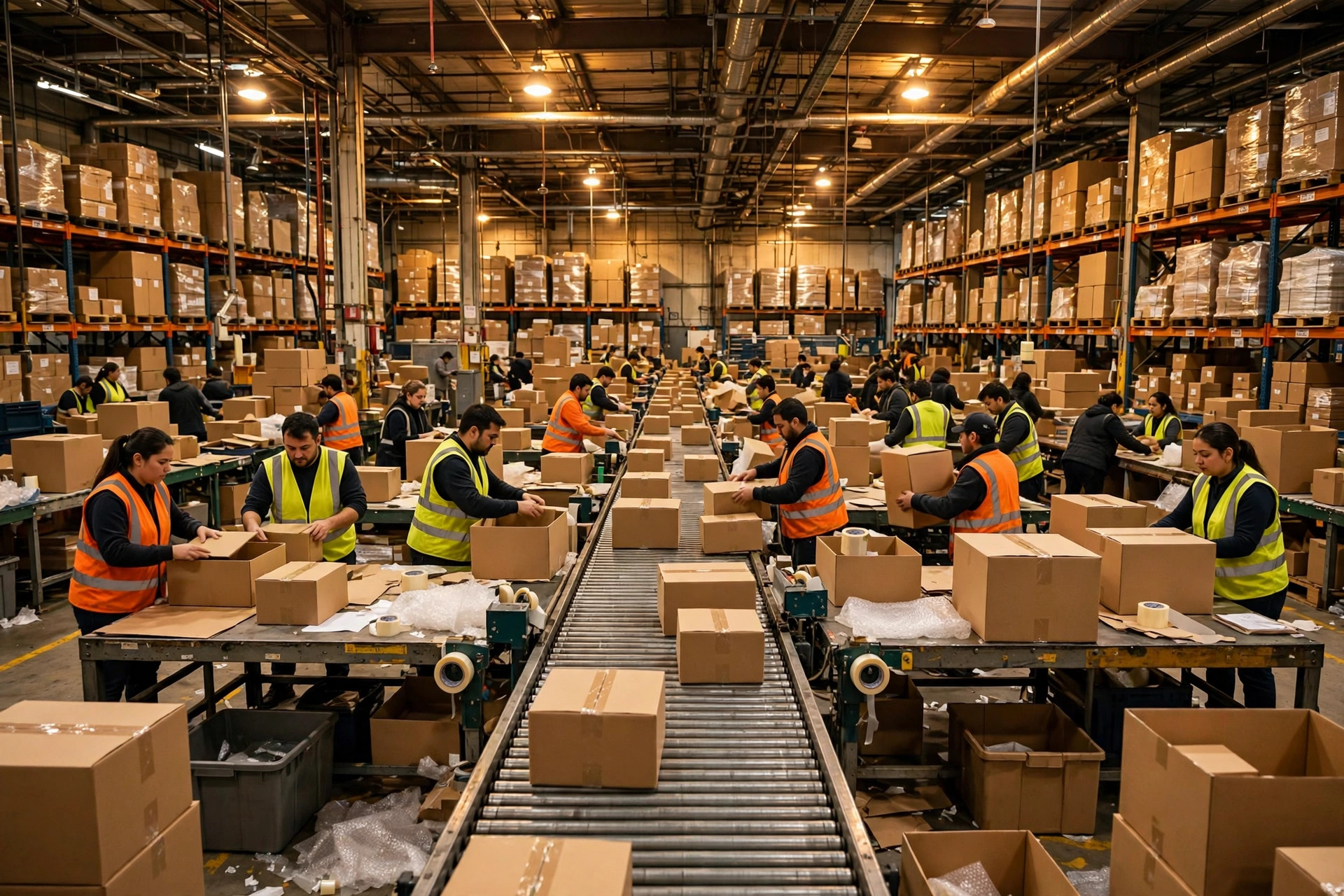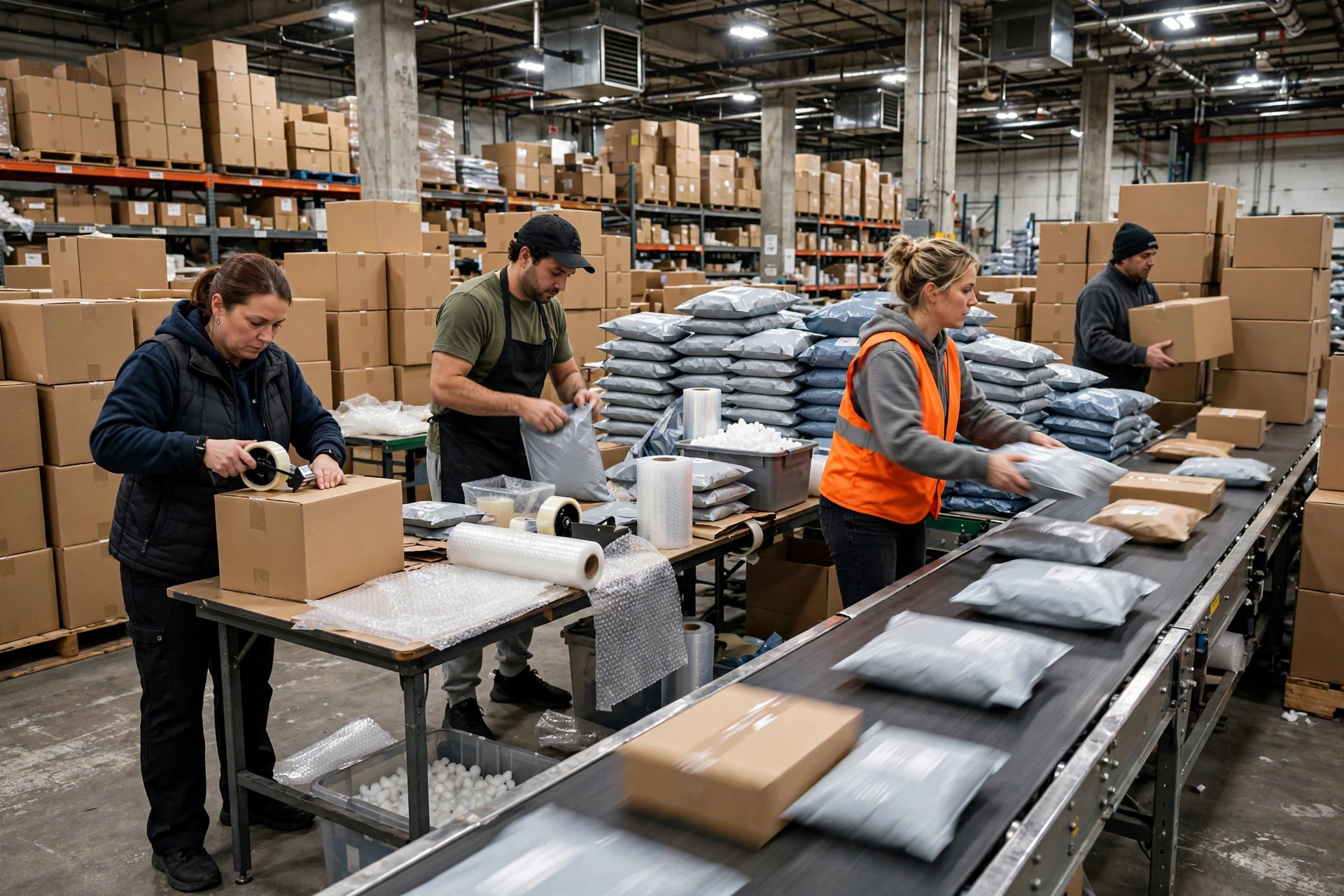
Last month I walked a 50,000-square-foot 3PL warehouse in Ontario, California, for a seller in the beauty-tools category. On a normal day they push about 800 orders, the team runs tight, on-time rate looks great. Then a late-September livestream moved 12,000 orders in three hours, and the three days after that ran at more than seven times their daily baseline. The warehouse fell apart. A line of packers stretched down the packing row, nothing had been pre-packed, and the carrier pickup was still booked on the normal once-a-day schedule. The owner's words stuck with me: "We sold everything, and I spent the whole week terrified."
I believed him. Livestream selling on TikTok Shop doesn't ramp, it pulses. Normal days trickle, then the gate opens for an hour or two and orders spike five to ten times over. A traditional peak season at least gives you a Black Friday to plan around weeks ahead. Livestream pulses come per session, one after another, fast and close together. If your fulfillment operation still runs on its everyday rhythm, it's not the orders that blow up. It's the warehouse.
Know the size of the wave three days out
A pulse isn't the scary part. Not knowing how big it is — that's the scary part. I've watched too many sellers ask their ops lead before a stream, "roughly how much will this one move?" and get "we'll see." In fulfillment language, "we'll see" translates to "zero preparation."
The disciplined way is to work backwards from three things. First, the host's track record. If the same creator moved 6,000 orders in a two-hour stream last time, and this session runs three hours with platform traffic coupons stacked on top, expect at least as much, probably more. Second, the product mix. A livestream almost always has one or two hero SKUs driving seventy to eighty percent of orders. Those SKUs get pre-packed: cartons, dunnage, labels applied ahead of time, so post-stream it's scan-and-ship, not rip-and-pack under fire. Third, baseline times multiplier. A daily baseline of 800 orders times a historical peak pulse of seven — staff and slot for 6,000 orders at the top. Better to have people standing around for half a day than orders with nobody to touch them.
There's a calculation most sellers never run: whether pre-packing is worth it. Pre-packing ties up stations and labor in advance, and if the stream underperforms, you un-pack everything — pure waste. My rule: pre-pack only the hero SKUs, and only the single most certain one. For that beauty-tools seller, the hero curling-iron kit was projected at sixty percent of orders, so they pre-packed to eighty percent of forecast. Long-tail SKUs stayed on normal pick. Pre-pack wrong, and the cost is an hour or two of labor to undo it. Skip pre-packing, and the cost of a jammed packing row on surge day is late-shipment penalties and one-star reviews. Check the platform's latest official policy for the exact late-shipment and cancellation penalties — they're not light, and that math isn't hard.
Slotting has to make room for the pulse too. Three days before the stream, hero SKUs move to the pick faces closest to packing, and the golden pick zone temporarily doubles by borrowing space from slow movers. Move them back three days after. People call this a hassle, but if a picker walks an extra twenty meters per order on a 6,000-order day, that's 120 extra kilometers — the added labor and error rate cost far more than one re-slot.
On surge day, what runs out first is people and trucks
When orders pulse tenfold, packing capacity doesn't come from equipment. It comes from people. A fixed crew staffed for normal volume can brute-force one day of overtime, starts making mistakes on day two, and collapses by day three. The right move is locking in labor early: keep a standby agreement with your staffing agency and confirm headcount 72 hours before the stream. Day-one temps shouldn't be expected to perform — put them on the simplest work, pre-packing, label application, moving boxes, and keep your veterans on picking and verification. Split into two shifts instead of running twelve-hour marathons; the cost of fatigue-driven errors exceeds one extra shift's wages by a mile.
And here's the thing nine out of ten sellers forget before a stream: booking extra carrier pickups. One daily pickup works for a normal day. When three days of volume turn into three or four thousand parcels a day, show up unannounced and the driver either can't fit your freight or never had your stop on the route. The play is to call the pickup station before the stream with an estimated parcel range and ask them to hold capacity, then check actual volume at noon on surge day and request a second run that afternoon. Miss the advance notice and a same-day extra pickup is nearly impossible to get — everyone's surging in peak season.
Returns are the second half of the pulse, and this is where plenty of sellers stumble. Livestream buying is impulse buying, so return rates run noticeably above baseline — count on it. Set up the reverse flow before the surge: carve out a dedicated returns staging area, don't let it bleed into forward pick locations, and have the returns inspection criteria written down so temps can execute them. Otherwise returns pile up in receiving, forward stock has nowhere to go, and the whole building's flow breaks down.
Now the trade-off I have to state plainly. Elasticity costs money: pre-pack labor, standby temps, reserved slots, pre-booked trucks — all sunk cost if the stream fizzles. So elasticity can't be unlimited; it has to track the forecast. My rule of thumb: staff and slot to eighty percent of your historical maximum pulse, and stage packaging materials to one hundred percent of forecast. Packaging is cheap — overstocking it doesn't hurt. Labor is expensive — plan to eighty percent and cover the rest with overtime and temps. That way a real surge doesn't break you, and a dud doesn't bleed you.
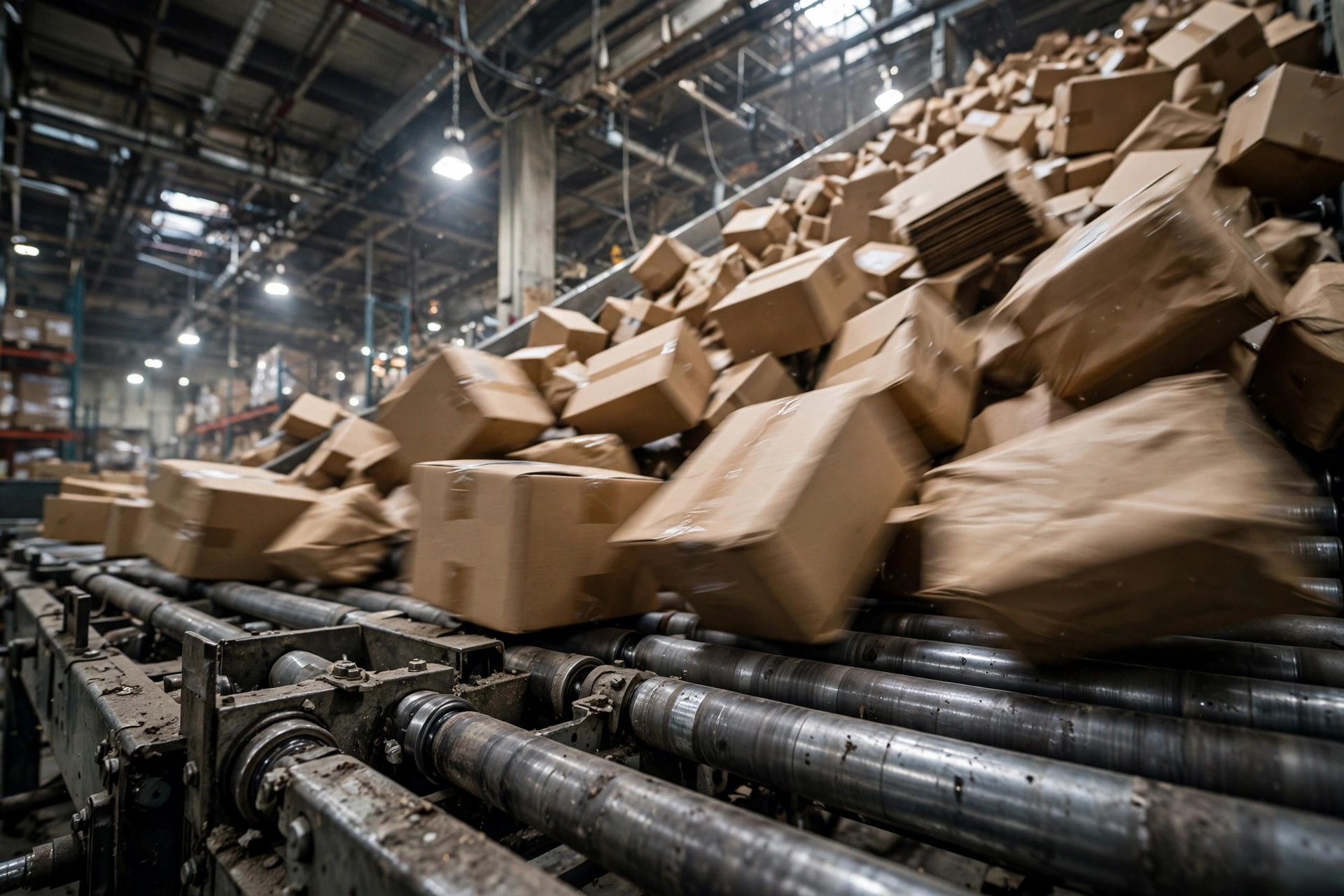
Here's the 72-hour pre-stream checklist. Walk it line by line:
72 hours out: Lock the order forecast and hero SKUs. Move hero SKUs to the golden pick faces, expand the pick zone temporarily. Confirm temp arrival times with the staffing agency. Give the carrier station your parcel estimate and book the extra pickup. 48 hours out: Finish pre-packing hero SKUs to eighty percent of forecast. Stage packaging — cartons, dunnage, label stock — to one hundred percent of forecast. Clear the returns staging area and post the inspection criteria on the wall. 24 hours out: Walk the packing flow once, assign every temp a station. Raise the safety-stock alert threshold on hero SKUs in the system. Confirm stream timing and coupon tiers with the ops lead and calibrate the forecast one last time. Stream day: Check actual volume at noon, decide on the afternoon extra pickup. Watch packing throughput hourly — if it slips, pull people from picking immediately. Three things matter that day: outbound, pickup, exceptions.
Surge volume was never about how big your warehouse is. It's about how much homework you did in the three days before the stream. Do the homework and a tenfold pulse is just a busy three days. Skip it and even a threefold pulse can put you on the bad-review leaderboard.