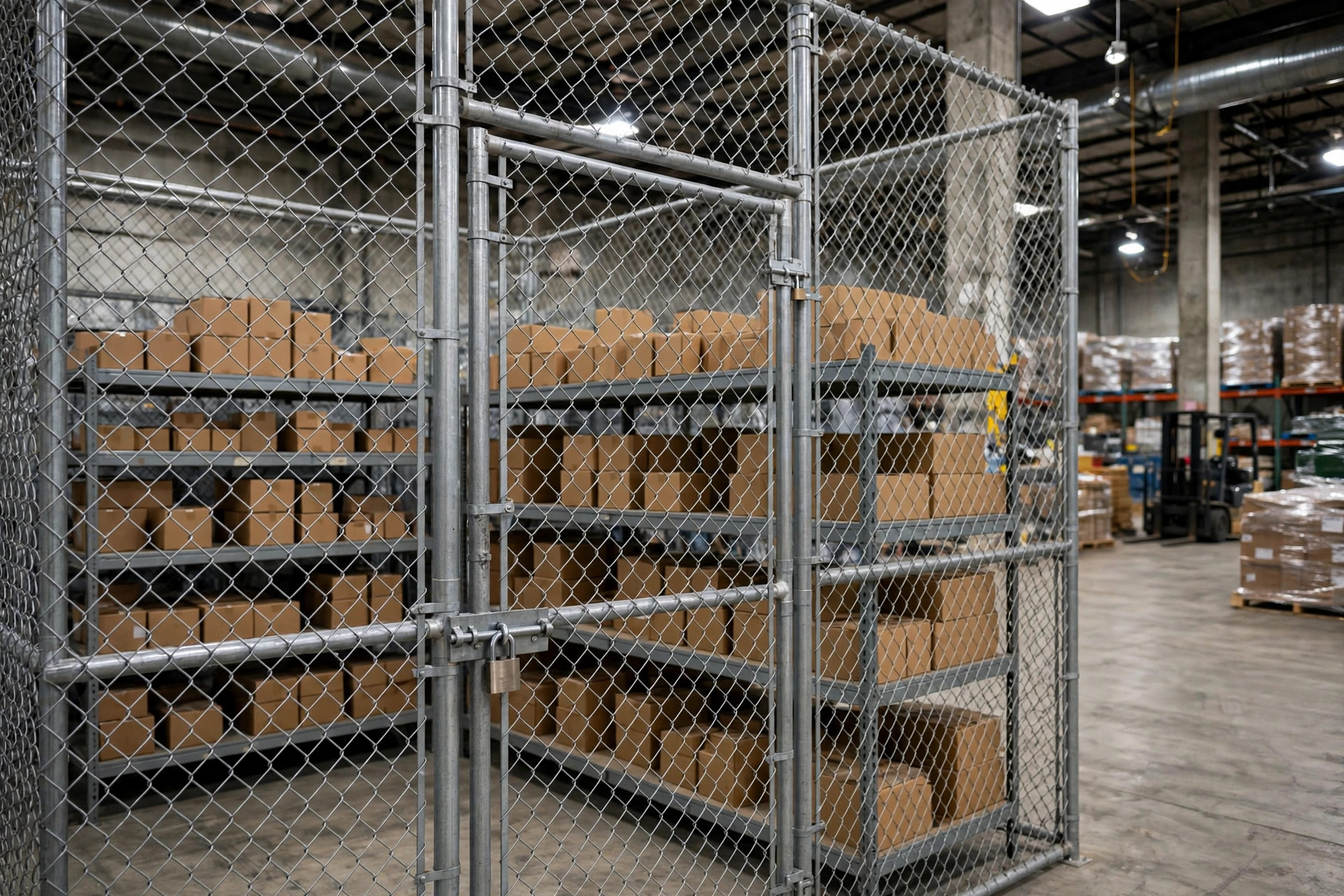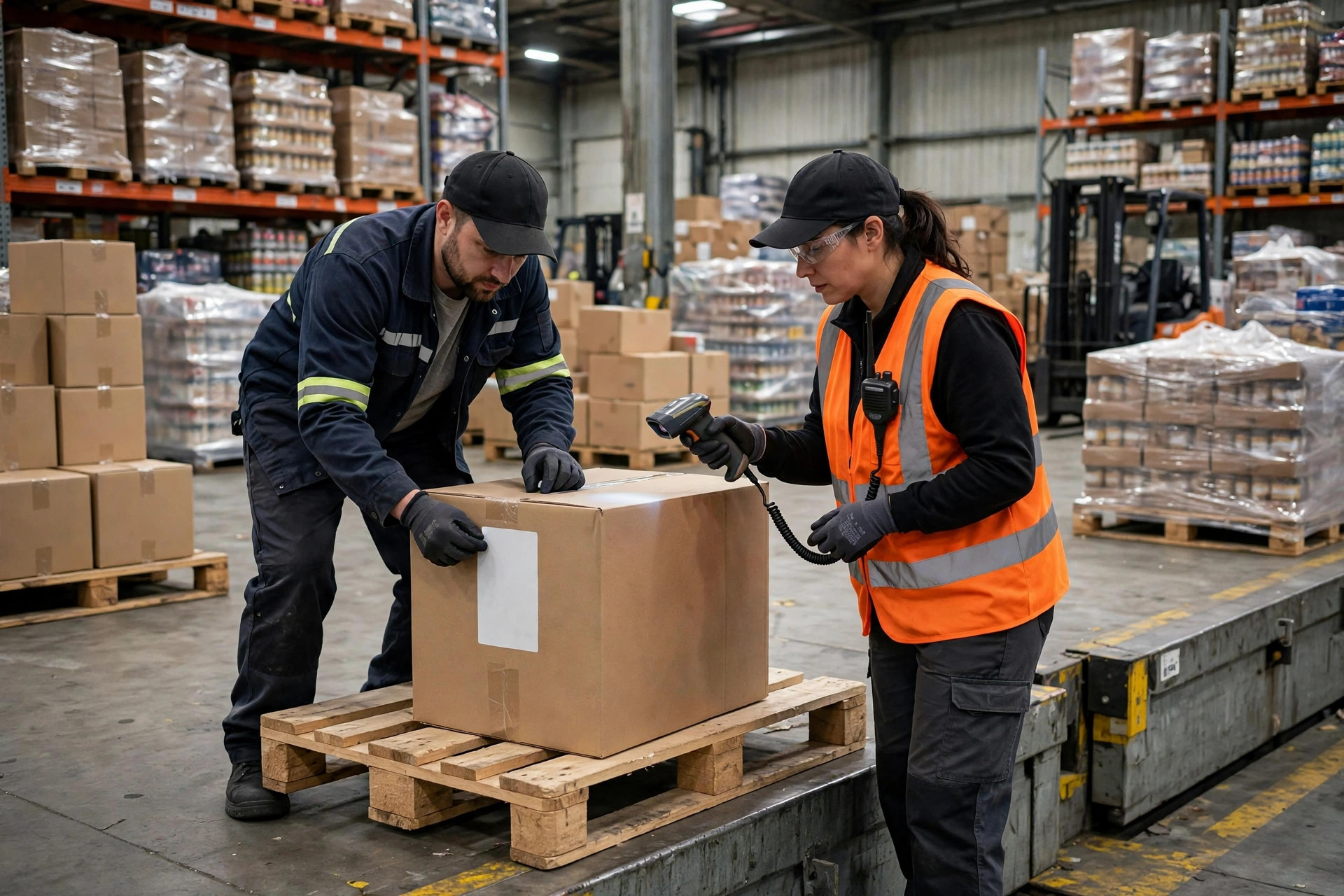
Let's start with the math. Take a warehouse with 12,000 SKUs and 30,000 locations, counted twice a year. Counting in-house: 20 people, 3 overnight shifts, overtime at 1.5x, 12 hours a night, $25 an hour — that's $27,000 in overtime alone. Add half a day of stopped shipping lines, plus the error claims left behind by 94% accuracy, and you're burning close to $100,000 a year. A third-party inventory counting service — RGIS, WIS, that type — finishes in 2 days, doesn't stop your lines, and hits 99%+ accuracy. Which one is actually cheaper? I am allergic to words like "feels expensive" and "feels cheaper." Let's talk numbers.
Third-Party Inventory Counting Fee Structure, Decoded
RGIS, WIS, and their peers don't publish a fixed price list anywhere I could find. I asked around and cross-checked with peers — the structure is consistent: a base mobilization fee plus volume-based counting fees, with night shifts and travel billed separately. Final pricing per their official quotes.
| Fee component | What it covers |
|---|---|
| Base mobilization | Crew size, equipment (scanners, terminals), and the team lead |
| Volume-based counting | Per location, per SKU, or per unit — large sites usually price per location |
| Night/weekend premium | Extra for overnight work, varies by vendor |
| Travel | Actual expenses for out-of-town projects |
The verbal ballpark I heard: tens of dollars per person per hour, with the formal quote driven by count volume — and I will say it again, specifics per their official quotes; site size, region, and season all move the number. Don't trust any "national standard price list." There isn't one in this business.
In-House vs Third-Party: Cost Comparison
Using that 12,000-SKU warehouse as the example (figures are that site's measured numbers, to give you a sense of scale):
| Cost item | In-house (2 counts/year) | Third-party (2 counts/year) |
|---|---|---|
| Direct labor | ~$54,000 (overtime) | Included in the quote |
| Line stoppage | ~$20,000 for two half-days | $0 (daytime counting, lines keep running) |
| Equipment | Scanner wear, label printing, a few thousand | Included in the quote |
| Error cost (accuracy gap) | 94–95% accuracy, ~$30,000/year in error claims | 99%+ accuracy, error cost drops sharply |
| Hidden cost | Burned-out crews, rising turnover | Internal coordination labor (see below) |
| Total | ~$100,000/year | Quote + coordination, roughly 60–80% of in-house |
Notice the real story: the biggest in-house costs aren't overtime. They are the error cost of mediocre accuracy and the stoppage loss — neither shows up as its own line on the P&L, but both bleed real money.
4 Signals That a Third-Party Count Is Worth It
Hit two or more of these and stop hesitating:
- Accuracy below 97% for two counts in a row. Below that number, the count itself loses money — nobody trusts the numbers, so the whole exercise is wasted.
- Average monthly count-error losses × 12 exceeds the vendor's annual quote. Add up a year of mis-ships, short-ships, and customer claims. This is the hardest line.
- High stoppage cost. Before peak season or quarter-end close, half a day of stopped lines costs more than the vendor.
- No dedicated counting team. Every count is a scratch crew trained from zero — accuracy will never climb.
Flip side: under 3,000 SKUs, simple layout, a standing count team, accuracy stable above 98% — keep it in-house. That money isn't wasted, so don't spend it elsewhere.
Counterintuitive Truth: Your Site Prep Sets the Ceiling on Their Accuracy
Let me say something unpopular: many people hire a third-party counter hoping to be hands-off, as if the money buys 99% accuracy by itself. Wrong. The ceiling on their accuracy is the site condition you hand them. Blurry barcodes, mixed storage, receiving still moving while the system isn't frozen — count fast all you want, it's garbage in, garbage out.
In November 2024, a 3PL in South China with 12,000 SKUs counted in-house: 4 overnight shifts, half a day of stopped lines. Post-count sample audit came back at 94.6%, and error claims over the next two months ran into the thousands of dollars. The owner swore "next time we hire a vendor." In March 2025, a home-goods seller's warehouse with 8,000 locations hired a third-party firm: two weeks of prep per the checklist — barcodes re-labeled, dead stock moved out, receiving frozen on count day. The vendor finished in 2 days, the in-house team ran an 8% independent sample audit, and the pass rate was 99.2%. Same kind of money. The difference was coordination.
So the correct division of labor: pay for professional counters, and free your own people to do sampling audits and variance analysis. Get the division wrong and the money is wasted.
Field Coordination Checklist: Don't Let Bad Coordination Eat the Savings
The most expensive part of a third-party count isn't the service fee — it's the re-counts and stoppages caused by your own coordination failures. Our checklist, in timeline order:
Two weeks before:
- Finalize the zone map; every zone numbered; the vendor takes work by zone
- Barcode legibility sweep: re-label the blurry, missing, and duplicated ones now
- Move dead and damaged stock out or into a separate zone — don't make counters sort for you
- Agree on the system freeze window in writing: how receiving/shipping runs during the count
On count day:
- One — and only one — in-house coordinator on the floor full-time, the sole authority on exception SKUs
- Exception channel: mismatched quantities get re-checked on the spot, not batched at the end
- Badges, meals, and parking sorted in advance — don't make the crew wait 30 minutes at the gate
Acceptance:
- Independent sample audit of 5–10%, drawn by your team, not the vendor's self-report
- Variances closed within 48 hours; variances not closed in time don't count
- File the count report: initial counts, audit counts, variance causes — archived for reference
The Calculable Conclusion
My rule: the ending must compute. The decision formula:
If (average monthly count-error loss × 12 + annual in-house overtime cost + annual stoppage loss) > third-party annual quote × 1.3, hire the vendor.
The 1.3 multiplier bakes in your internal coordination cost (prep, coordinator, sample audits) with margin to spare. Don't ask "can we afford to hire them." Ask "how much does counting in-house actually lose us each year." Once the math gets that far, the answer speaks for itself.
By Lao Zhou, Logistics Cost Analyst