Thailand TISI certification is the gate that decides whether warehouse equipment bound for Thailand moves on schedule or stalls at the border. It behaves less like a test report that can be attached to a shipment and more like a system in which the certificate holder, the laboratory test, and the factory inspection all have to line up before anything moves, a lesson more than one supplier has learned the hard way in the last two years.
What Thailand TISI Certification Actually Governs
According to publicly available guidance from certification bodies, TISI is the Thai Industrial Standards Institute, operating under Thailand's Ministry of Industry. It both writes Thai Industrial Standards and runs the conformity assessment system that decides which products may carry its mark. Thailand runs a dual system: mandatory certification and voluntary certification side by side. Products on the mandatory list must hold a certificate and the mark before they can be imported or sold; products outside that list may still apply voluntarily, and the mark then functions as a visible signal rather than a legal permission. The mandatory list spans electrical equipment and accessories, construction materials, vehicles, consumer goods, and other categories, and it is revised over time, so any second-hand copy of the list should be treated as a starting point only. The current official list is the only version worth planning against.
The point that most often trips up warehouse equipment exporters is granularity. Regulation does not see "warehouse equipment" as one thing. A shipment described in a contract as racking plus ancillary equipment may contain several regulatory objects at once: the steel racking structure itself, and alongside it chargers, control panels, motors, and drive components that fall under electrical product rules. Ask whether "the machine" needs certification and the answer will usually be vague, because the question is pitched at the wrong level. Break the shipment down to components and functional modules, check each one against the mandatory list, and the picture becomes actionable. That decomposition is the first real step in the whole process, and skipping it is how otherwise careful exporters end up reworking a shipment that is already built.
In procedural terms, the mandatory path links several steps that cannot be rearranged at will. The exporter confirms which standard applies and files an application, with a Thai company acting as certificate holder. Samples go to a recognised laboratory for testing, inspectors visit the factory to assess the quality management system behind the product, and only when both pass is a certificate issued, with supervision to follow. Holding an ISO 9001 certificate tends to make inspection smoother, but it is not a substitute for it: inspectors look for incoming, in-process, and final inspection records tied to the specific product. Technical documentation is generally prepared in English or Thai, and the mark must sit above the applicable standard number, with certificate, mark, and holder's name all consistent; a mismatch in any one of the three can surface later at customs or acceptance, when it is most expensive to fix.
Thailand TISI Certification: Whole Machines Versus Components
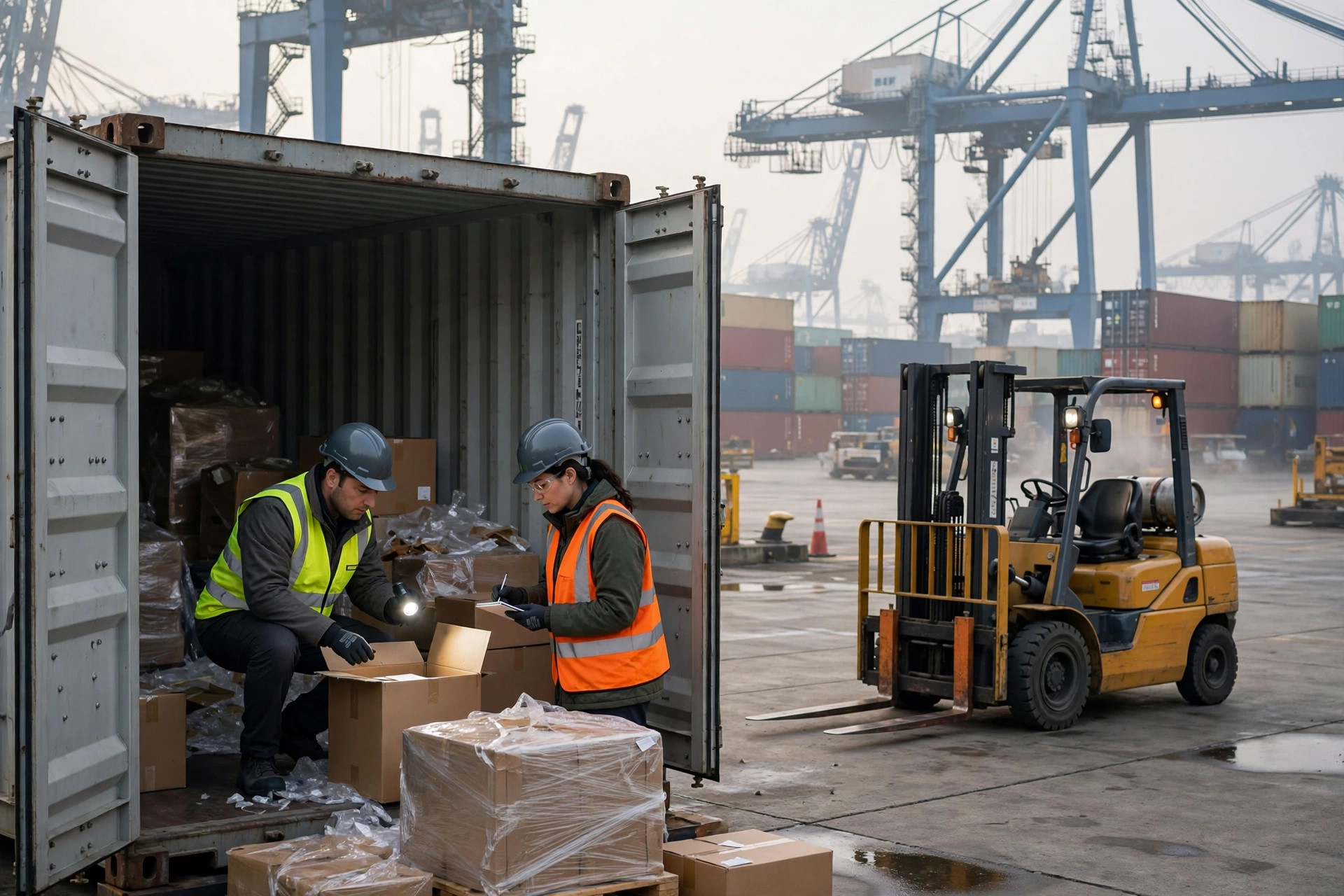
In the second half of 2024, a steel racking exporter from Ningbo supplied a third-party warehouse outside Bangkok. The contract covered racking and ancillary equipment as a single delivery, and the factory duly prepared material reports and load calculations for the racking. What it did not prepare was proof for the forklift chargers and electrical control cabinets travelling with the same order. The customer's compliance team raised the gap after arrival, and the factory had to send fresh samples and redo Thai-language labels, a delay of more than a month that pushed the installation crew's start date back with it. The failure was not a missing document in isolation; it was a category error at the start, treating a multi-component shipment as one regulatory object when the system regulates it as several.
Early in 2025, a conveyor equipment supplier from Suzhou bid for a logistics park project in Bangkok and met the same system from the opposite side. The tender did not cite a legal mandate, but it scored voluntary certification marks. The supplier applied for voluntary certification for its conveyor control cabinets, going through testing and factory inspection much as a mandatory applicant would, except that the driver was commercial rather than legal. The certificate changed nothing in law and a great deal in business: it gave the project owner a visible reason to trust the supplier, and when two further sorting lines were ordered later, the compliance stage passed almost without discussion. The same institution, in other words, plays two different roles depending on context. Mandatory certification is a legal threshold; voluntary certification is sometimes a commercial threshold. Confusing the two leads exporters to underestimate risk on one shipment and to miss opportunity on the next.
The Three Most Common Points of Return in Thailand TISI Certification
Applications most often loop back away from the laboratory bench. The first is the certificate holder. A certificate must be held by a Thai company, which means the exporter cannot hold it directly and must settle the local partner, its willingness to cooperate, and the boundaries of its responsibility before testing begins; finding that partner late often means restarting. The second is labelling and language: the form of the mark, the standard number printed beneath it, and the accuracy of Thai-language documentation must all match the certificate, and a misprinted label means rework across a manufactured batch. The third is consistency between sample and mass production: a sample prepared with care, followed by a production run that quietly changes a component supplier or a structural detail, will not match the test report.
Counting the Cost: A Budget Table and a Shipping Sequence
A realistic budget for Thailand TISI certification cannot be reduced to the testing invoice. The table below sets out the cost structure an exporter should confirm line by line; actual amounts vary by product, laboratory, and factory circumstances, and should be confirmed against the latest official policy and service quotations.
| Cost item | When it arises | Can it be avoided | Where it is usually underestimated |
|---|---|---|---|
| Sample testing | Early in the application | No | A retest adds a full cycle |
| Factory inspection and preparation | Around testing | No | Inspector travel and document preparation time |
| Thai documentation and labelling | Before production | No | Rework of a full batch after a label error |
| Sample and document logistics | Throughout | Can be optimised | Cross-border waiting time |
| Local certificate holder service | Before application | No | Process restart if the partner changes |
| Rectification and retest reserve | Throughout | Unwise to cut | Treating the reserve as savings leaves risk on the shipping date |
What usually decides whether an order makes or loses money is not any single row of that table but the collision between a timing rule and a project schedule: a mandatory product cannot be imported before its licence is granted, so a shipment loaded in hope rather than in sequence risks warehousing charges, rescheduling, and lost confidence. The reliable way to plan is to work backwards: fix the date the certificate must be in hand, schedule production, testing, and inspection in reverse, and only then fix the shipping date. Any change between sample submission and mass production should pass an internal check on whether it affects the tested model; if the answer is unclear, the change should wait.
Two counter-intuitive judgements follow. The first is that early certification is often cheaper than late certification: an exporter that writes compliance into its tender can price with confidence, while one that certifies after winning pays for rush work and rework out of margin. The second is that holding a certificate does not guarantee smooth customs clearance, since customs checks certificate, holder, model, quantity, and physical goods against each other, and a valid certificate with a mistyped model can still be held. Certification is necessary without being sufficient; the remaining work is consistency across every document in the shipment.
Looking ahead, the direction of travel is reasonably clear: the mandatory list is revised periodically, categories are added and requirements adjusted, and a conclusion drawn from today's list will not automatically hold for next year's version of the same product. The question worth carrying forward is therefore not only whether this particular order needs certification, but whether the exporter has made list review, model-change review, and certificate-holder management into routine annual work rather than a fire drill attached to each order. Treated as a one-off task, every revision becomes a fresh crisis; treated as a standing capability, it becomes a routine update, and the difference will show up in both the quotation and the delivery record.
By Dr. Chen, Supply Chain Researcher