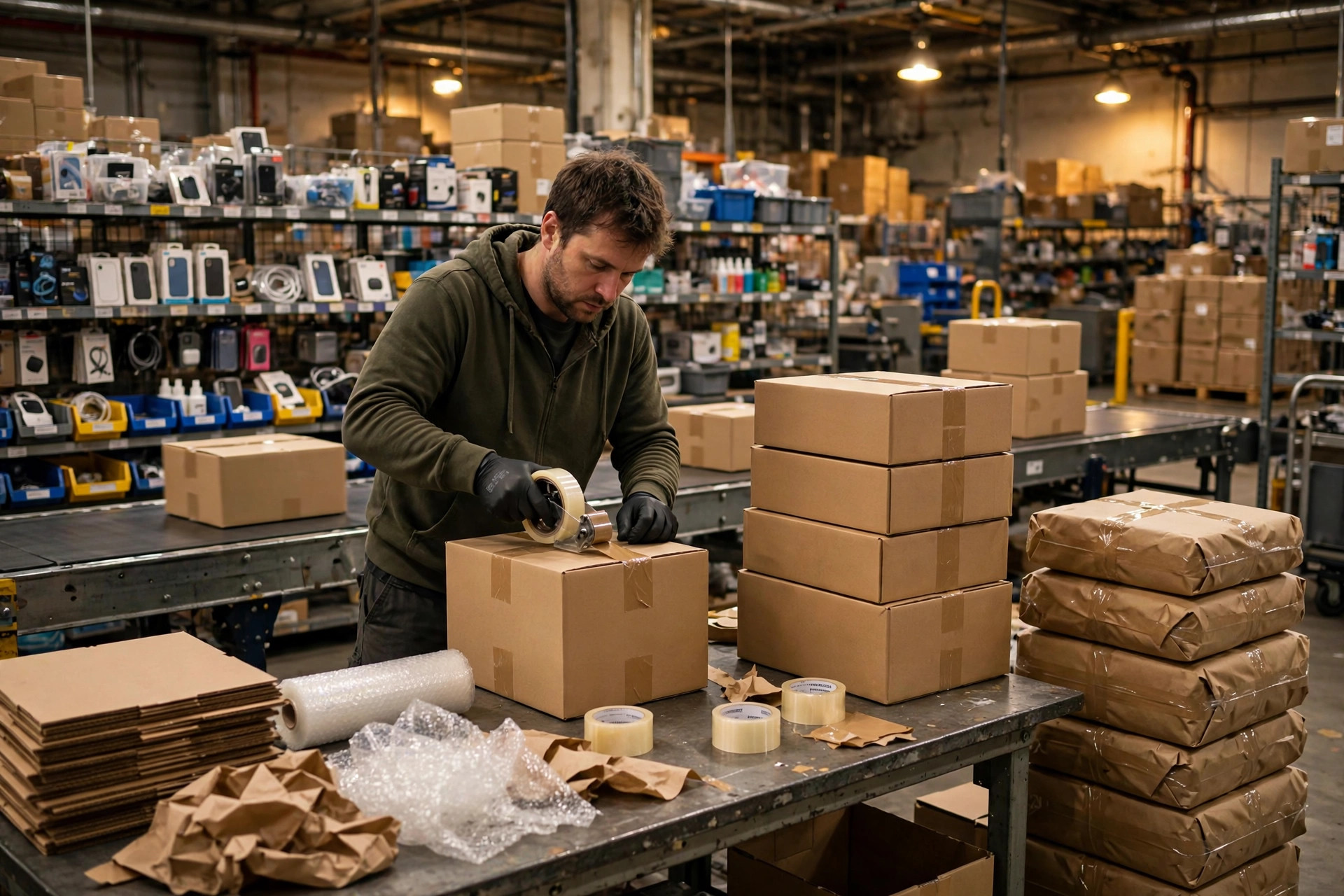
We have a client who sells small home goods. He joined Temu's semi-managed program around the middle of last year, and three months later he came to me to talk about a warehousing contract. His first words were: "Susan, the more I sell, the more I lose — and I keep running out of stock, while the platform keeps pushing me to cut prices."
I asked him to open his books, and one look told me what was wrong. His pricing was guesswork: glance at a competitor's price, undercut it by a dollar, list it. His stocking was guesswork too: selling well, order more; selling slowly, let it sit. In the Temu semi-managed model, pricing and inventory are two ends of the same rope. Pull only one end, and the other end will drag you over sooner or later.
First, let us get the rules of the model straight, so nobody runs it with a fully-managed mindset. Under Temu semi-managed, your goods sit in your own US warehouse or a 3PL warehouse. You propose the price, and the platform benchmarks it against comparable listings — price clearly too high, and your exposure gets squeezed. You ship the orders yourself: typically dispatch within 0 to 2 business days of the order, provide tracking within 24 hours, and deliver within 5 to 7 business days (check the latest requirements in your Temu Seller Center). Returns come back to you as well, and Temu's return policy is generous to buyers, with many categories allowing returns for up to 90 days. On fees, Temu publishes no public rate card; the figure most often quoted in seller circles is a combined 8% to 15% of the sale price for semi-managed, but your own seller agreement is the only number that counts — never price your goods off somebody else's fee schedule.
Temu Semi-Managed Pricing: Know Your Floor Before You Chase the Price Cut
Our client's first mistake was not knowing his floor price. His math was: factory cost plus a share of ocean freight, plus 20% margin, equals the selling price. Warehousing was not in there. Returns were not in there. Platform fees were calculated at the lowest possible rate, and ad spend never made it into the sheet at all. With a price built like that, every time Temu's benchmarking said "you could go lower," he went lower. Cut once, lose a little. Cut three times, start paying customers to take your product.
My first piece of advice to him was simple: list every cost of one order before you set a price. Take his little night light, selling at $12.99 (illustrative scenario): factory cost plus freight worked out to about $4.20 per unit, US warehousing and handling about $1.10, last-mile delivery about $2.80, platform fees at roughly 10% about $1.30, and return losses at a 10% return rate about $0.60. That adds up to about $10.10, leaving under $3 of margin at $12.99. Let the platform talk you down by one dollar, and a third of your margin is gone. If you do not do this math first, every dollar you cut comes straight out of your own pocket.
Here is a counterintuitive point: the cheapest listing on Temu is not necessarily the one making the most money. Traffic does lean toward low prices, yes — but if the extra volume is all loss-making orders, you are paying for ranking with your own cash. What actually runs long-term is sitting where the platform thinks your price is fair and you still make money. The method we tested with this client is three price tiers: a high tier that protects margin, a middle tier that drives volume, and a low tier for clearing stock. One product moves between tiers at different stages instead of carrying a single price from launch to clearance.
There is another wrinkle many sellers miss: semi-managed pricing is not a one-time proposal. The platform keeps benchmarking your price against comparable listings across the marketplace. A price that passes the comparison today may not pass next month. So your pricing needs a "negotiation band" — at least 8% to 10% of headroom between your listed price and your floor (illustrative figure, based on this client's night-light cost structure). When the platform asks you to cut, you have room to cut. When a promotion comes along, you have room to give. Sellers who list right at their floor price from day one have nowhere to go: the first promotion forces them to sell at a loss, and skipping it costs them traffic. Stuck either way.
Temu Semi-Managed Inventory Balance: Stockouts and Overstock Both Cost You
Pricing covered — now stocking. Our client's second mistake was treating inventory as "the more, the better." One night light sold well, so he shipped three months' worth from China to his US warehouse in one go. Then Temu ran a benchmarking round, a competitor cut its price, his daily orders fell by half, and he was left sitting on more than two months of stock. Warehousing fees kept coming, cash was locked in boxes, and he had no money left to launch new products.
Where is the balance point? I told him to plan around turnover, not quantity. Start with your daily order volume, then look at your replenishment cycle: production in China plus ocean freight to a US warehouse takes three to four weeks at best (based on actual logistics lead times), and the sales during that window are your safety stock. Safety stock plus in-transit stock plus 7 to 10 days of buffer (illustrative) is what this round should hold. Every unit beyond that is rent you are paying to your own warehouse.
We set up a simple tiered stocking method for him, and I will share it here: Category A is your volume driver, the bulk of your sales — hold about 30 days of stock, because a stockout here costs the most, so a little extra is worth it. Category B is your steady seller — hold 15 to 20 days and top up on a rolling weekly cycle. Category C is long-tail items and new products — hold 7 to 10 days to test the water, order more only if they move, stop if they do not, and do not get sentimental about them. The method is not complicated. The discipline is reviewing the numbers every week and moving items between tiers as sales change.
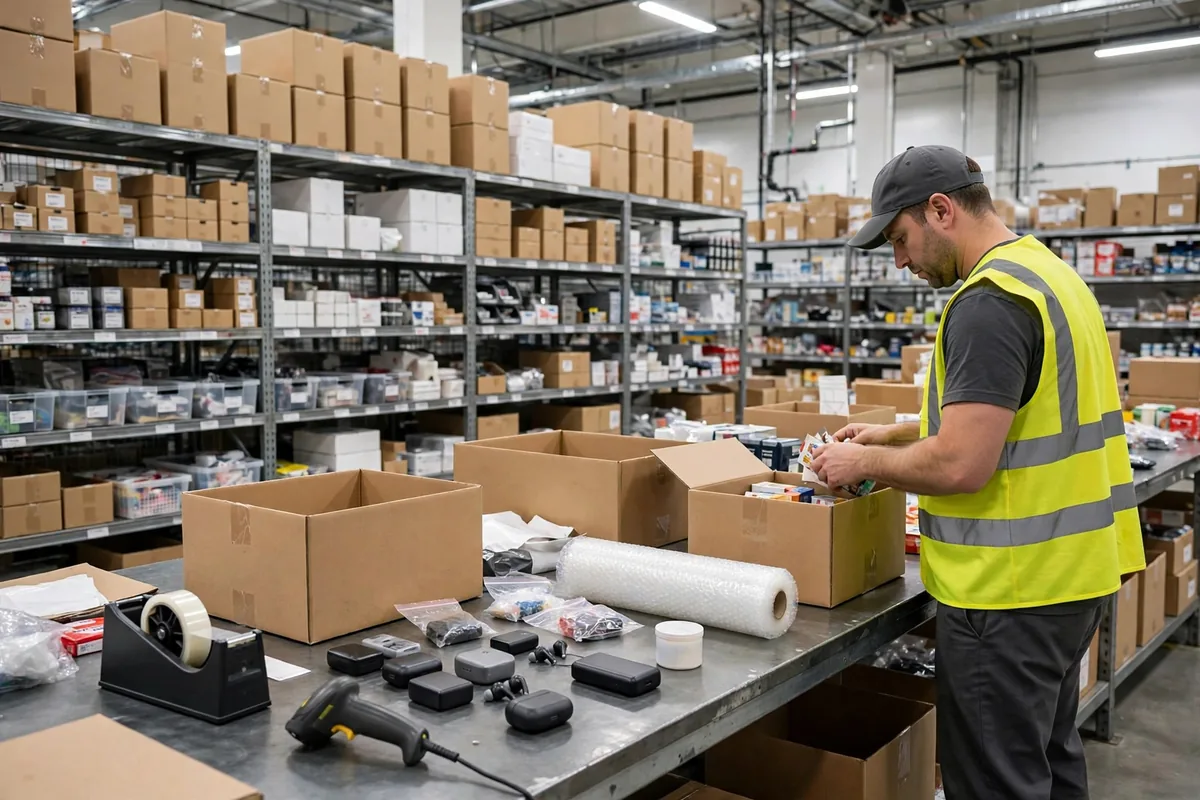
And here is an insider detail only someone on the 3PL side would tell you: most sellers negotiate a warehousing contract on unit price alone and never ask about payment terms or return handling. Under semi-managed, returns are yours to handle, and the cost difference between your options is enormous — destroy the return, refurbish and relist it, or ship it back to China. We have a client whose returns get refurbished and repacked in the US warehouse and listed again, at under a third of the cost of a new unit (illustrative scenario). The money saved there is exactly the headroom that lets him shave his price and win ranking. When you negotiate a contract, ask about those things, or your profit will quietly bleed away through returns.
| Area | Common approach | The balance point |
|---|---|---|
| Pricing | Undercut the competitor by a dollar | Calculate the full-cost floor first, keep an 8%–10% negotiation band |
| Price cuts | Cut whenever the platform asks | Rotate three price tiers, use the low tier only for promotions |
| Stocking | Ship three months' worth when something sells | Stock by turnover: A ~30 days, B 15–20 days, C 7–10 days |
| Returns | Let returns pile up | Refurbish and relist, and agree the 3PL's return-handling price upfront |
One honest word that the client side never likes hearing: Temu semi-managed is neither a bottomless race to the bottom nor a market you can buy with low prices alone. It tests two things — your ability to do the math, and your patience with inventory. The lowest price in the world means nothing if orders cannot ship on time and returns are handled badly. Two months after our home-goods client adjusted along these lines, his order volume had not grown much — but his margin came back, and his warehouse stopped drowning in stock. He told me later that he finally dares to sign up for platform promotions, because there is room in the price and stock in the warehouse.
Next time you negotiate a contract, remember to ask these three questions: how much does return refurbishment cost, how is excess storage charged, and are peak-season overtime fees included in the handling rate? Once you have those three answers, you will know whether this 3PL is genuinely cheap — or only cheap on the quotation sheet.
By Susan, 3PL Sales Director