Here is the conclusion up front: if you are shipping warehouse equipment to Sri Lanka, price the SLSI certification work before you quote, not after the containers reach Colombo. Before anything ships, confirm three things: whether your product falls inside Sri Lanka's mandatory certification scope, whether the test reports you already hold will be accepted there, and whether the model numbers on the certificate match the models actually leaving your factory. Get any one of those wrong and everything downstream turns into rework. SLSI is the Sri Lanka Standards Institution, the country's standards and conformity assessment authority. Which products are mandatory, which route applies, and which documents are required all follow its latest published policy, so do not price a 2026 shipment off a 2023 experience.
Why SLSI Trips Up Warehouse Equipment Exports
Warehouse equipment looks like ordinary industrial goods, but at the destination port it is routinely treated as cargo whose identity needs proof. Racking, forklifts, conveyors, lifting gear, and electrical control cabinets either carry loads, run on power, or move around people, so an importing country is entitled to ask who vouches for their safety. SLSI certification is the local version of that vouching: evidence that your product meets the standards Sri Lanka has adopted. With the paperwork in order, customs clearance has something solid to stand on. Without it, your shipment is an argument waiting to happen.
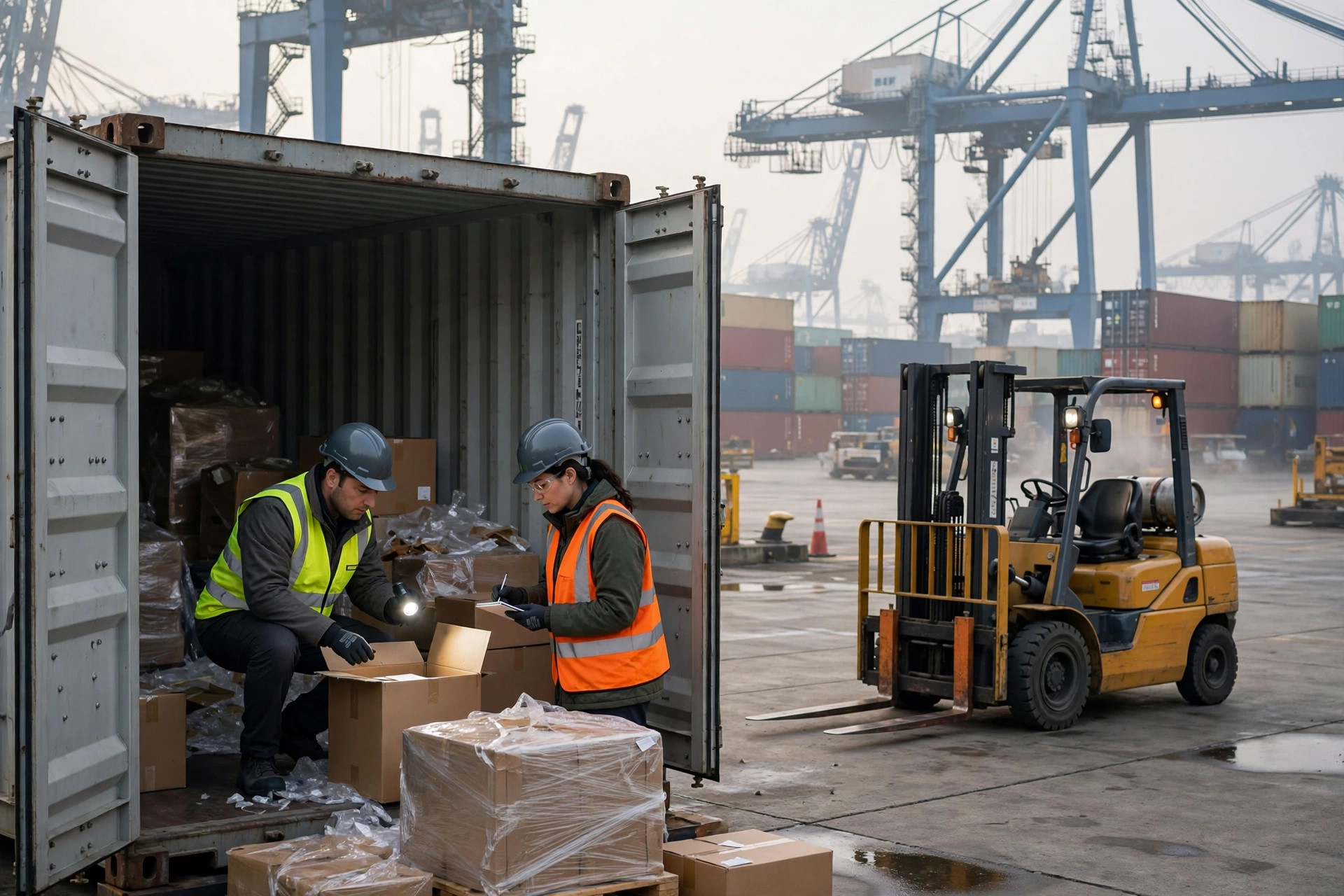
I have seen this exact pitfall three times. The first was in autumn 2023, when a light-racking maker in Dongguan shipped three containers to Colombo, a cargo worth several hundred thousand yuan. The contract said only "compliant with international standards" and never mentioned SLSI. On arrival, the buyer was asked for additional certification documents, the goods sat in the port area for two extra weeks, and demurrage accumulated day by day until it had eaten a large share of the margin on the whole order. Certification was eventually completed and the goods were released, but delivery slipped by a month and the end customer nearly switched suppliers. The lesson stuck: the same customer later sent me model numbers, materials, and load ratings before quoting, and within a week we had ruled two accessories out of the mandatory scope, saving a round of testing nobody needed.
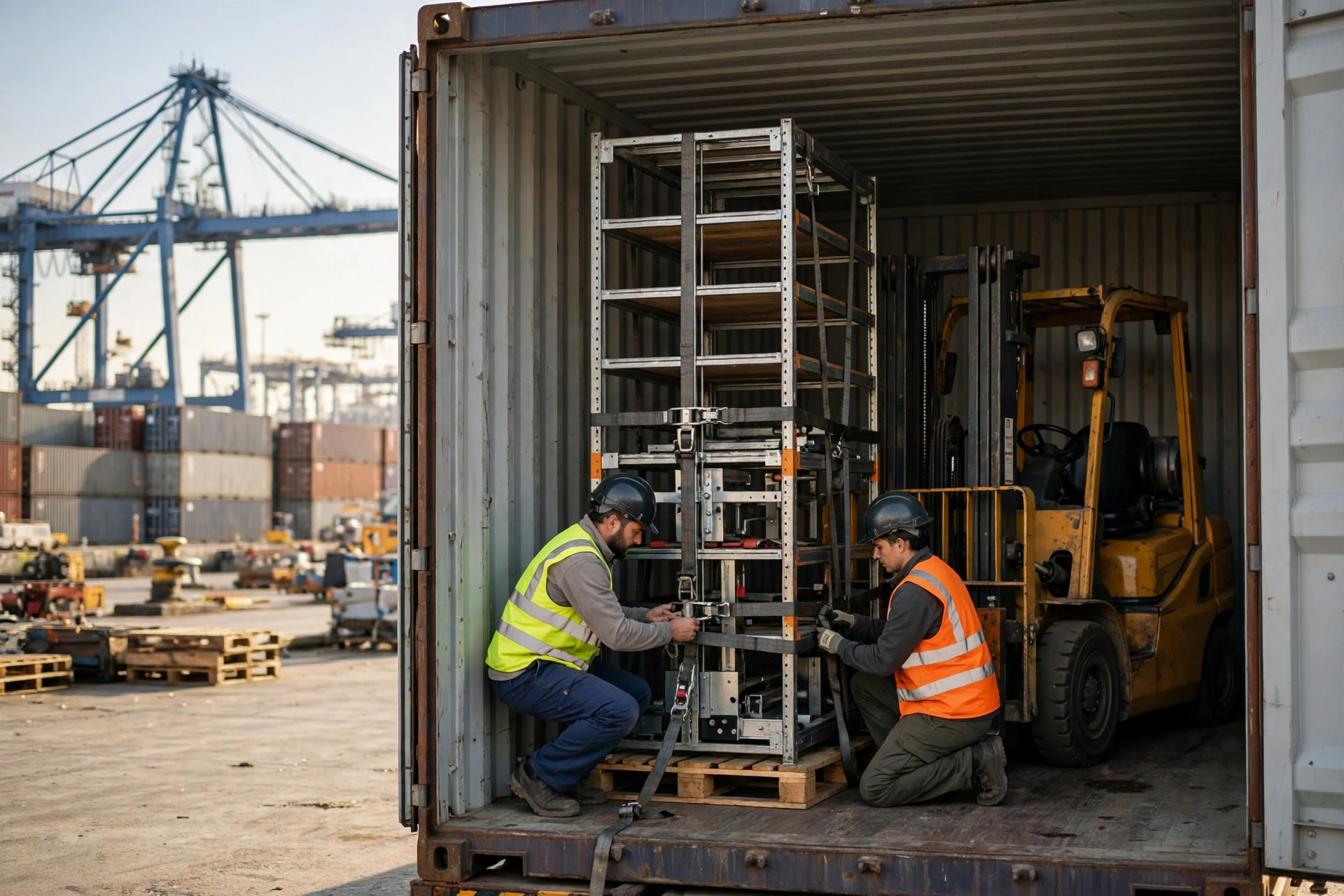
The third story is the one worth repeating. In early 2025, a conveyor builder in Ningbo won an order for a Colombo sortation center: conveyors plus control cabinets across two containers. The project manager opened with one question: can testing be finished at home? My answer was to confirm first whether SLSI would accept their existing reports, and if so, which laboratories it recognized. That check took four days and decided whether the next two months would be smooth or wasted. They tested domestically at a recognized laboratory, the file passed on the first submission, and the equipment arrived on schedule. Same job, same product; the only difference was the order of operations.
The SLSI Certification Route, Step by Step
Step one, confirm scope model by model. Break the shipment list down so each model gets its own line: product name, purpose, key parameters, and whether it is powered. Check each line against the latest published list, ideally through a local agent in Sri Lanka. Do not judge by product family. A light-duty shelving unit and a heavy-duty beam rack can face very different treatment even though both are called "racking." Put the result in writing and keep it on file.
Step two, settle the testing route. If you already hold international test reports, ask whether they are accepted, which laboratories are recognized, and how report validity is counted. If you have no usable report, send samples for testing. One detail decides whether that money is well spent: the sample must match the production model exactly. Change one motor or switch steel suppliers and the report may no longer cover what you ship. Photograph the sample before dispatch and keep batch records; ten minutes of documentation here can save ten days of argument later.
Step three, build the document pack. A pack that survives scrutiny usually contains the application form, product manual, model list, test reports, factory information, and a declaration of conformity. Every document must carry identical model numbers, parameters, and company names, character for character. Translations deserve a technically competent translator: mistranslate a rated load and the clearance officer has every reason to hold the cargo.
Step four, check the certificate the day it arrives. Do not celebrate first; verify the certificate number, product models, standard referenced, validity period, and certificate holder, line by line. If a character is wrong, request a correction immediately. Clearing customs with a certificate carrying the wrong model is barely better than having no certificate at all. Store the original and scans separately, and keep a copy set with the shipment file.
Step five, connect certification to clearance before booking the vessel. Bundle the certificate, test reports, packing list, and invoice into one folder and send it to the destination port's clearance agent for a pre-check. Book the ship only after the pre-check passes. This is the single most valuable item on my go-live-night checklist: no matter how tight the vessel schedule is, never ship before the documents have been pre-checked.
Breaking Down the Bill: Time and Cost Structure
Certification cost is never one number; it is a chain of numbers. The table below is the version I use when breaking the bill down for clients. Amounts are given as orders of magnitude only; exact figures depend on the latest official policy and the actual quotation.
| Cost item | Usual scale | How to keep it down | What failure costs |
|---|---|---|---|
| Testing fees | The largest item, driven by how many tests apply | Send the right sample once, avoid retesting | Wrong sample means paying the testing fee twice |
| Certification and agent fees | Mid-range, including local liaison | Submit a complete file pack, minimize back-and-forth | Each round of supplementary documents costs weeks and the delivery date |
| Sample freight | Several thousand to tens of thousands of yuan, depending on size and weight | Confirm sample and production model together, ship no extras | Wrong sample doubles freight and testing spend |
| Translation and notarization | Small, but not optional | Use a translator who knows the technical terms | A mistranslated parameter can hold the shipment |
| Port demurrage and rework | Uncapped, and the most expensive | Ship only when certification is complete | One delayed container can wipe out the order's profit |
The schedule needs the same treatment. Confirmation takes days, testing takes weeks, document review takes weeks, and the clearance pre-check takes days. Add a two-week buffer on top of the sum before promising a date to a customer. Any salesperson who quotes certification as a single neat number of weeks has almost certainly forgotten the time that document corrections consume.
The Usual Failure Points: A Go-Live-Night Checklist
I have seen this pitfall three times, so I send this list unchanged to every client. First, model mismatch: the certificate names one model, the shipping documents name another, and the port holds the cargo. Second, expired reports: a test report has a validity window, and last year's report does not cover this year's shipment. Third, undeclared powered parts: the control cabinet is declared but its motors and power modules are not separately confirmed, and corrections drag past the vessel date. Fourth, translation errors: a wrong unit or rated value, and the clearance agent will not sign. Fifth, treating the certificate as the end of the story: a product redesign, a supplier change, or a factory move all require a fresh check of whether the certificate still covers the product.
Here is the counterintuitive part: holding an SLSI certificate does not guarantee clearance. The certificate is one link in a compliance chain that also includes packing, invoicing, and origin documents. The trade-off deserves a clear-eyed look too. Cutting the sample scope to save one round of testing saves a small amount of money while gambling the delivery date of an entire container and the trust of the customer. That is a bad bet every time. The correct order is compliance first, cost second, never the reverse.
So the closing line is simple. For warehouse equipment heading to Sri Lanka, SLSI is not a stamp you remember the week before shipment. It is a cost item to include in the quotation and a block of time to reserve in the schedule. Confirm the scope, get the sample right the first time, and pass the pre-check before booking the vessel. Do those three things and your cargo will not be paying tuition in the port area of Colombo.
By Lin Xiao, WMS Implementation Consultant