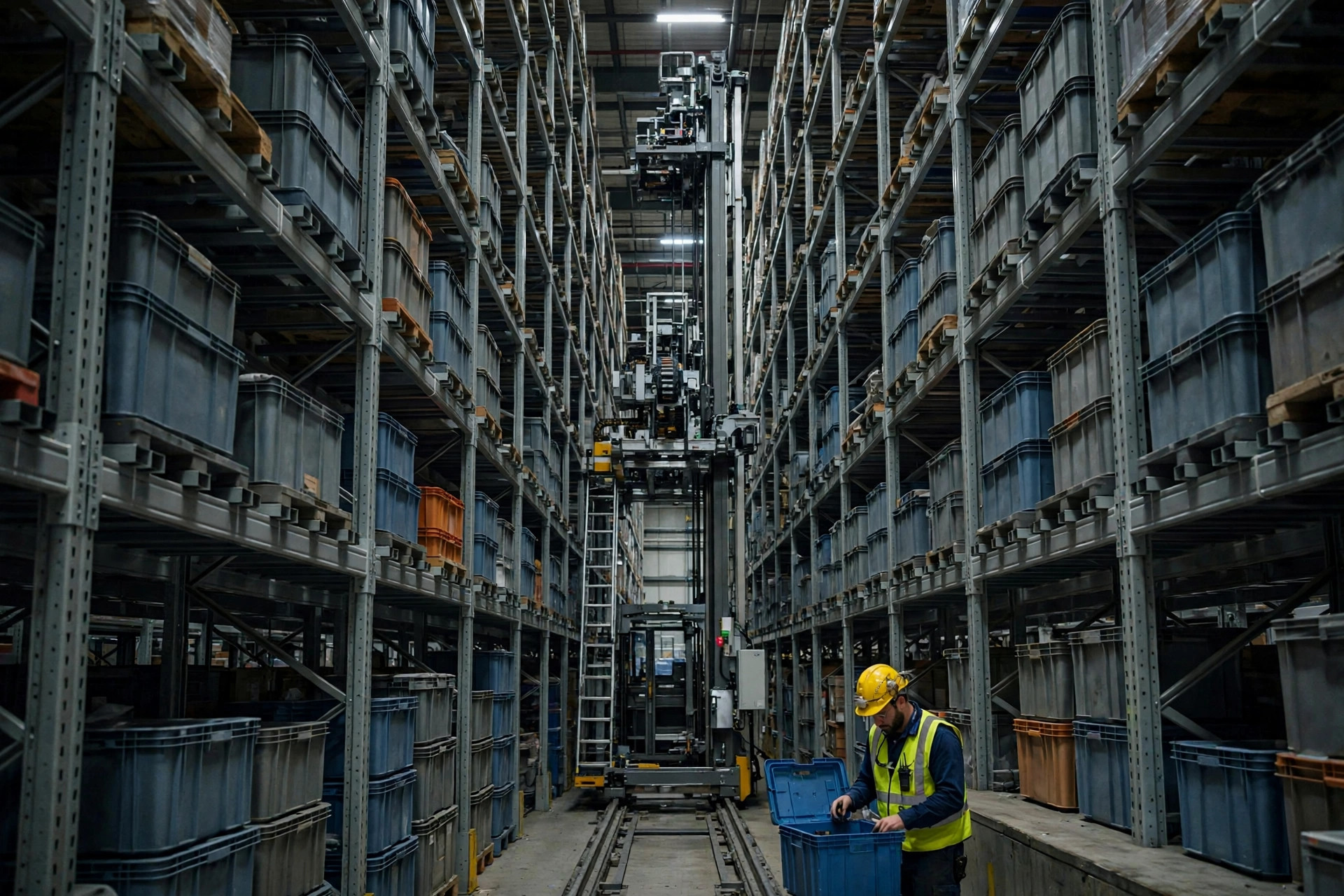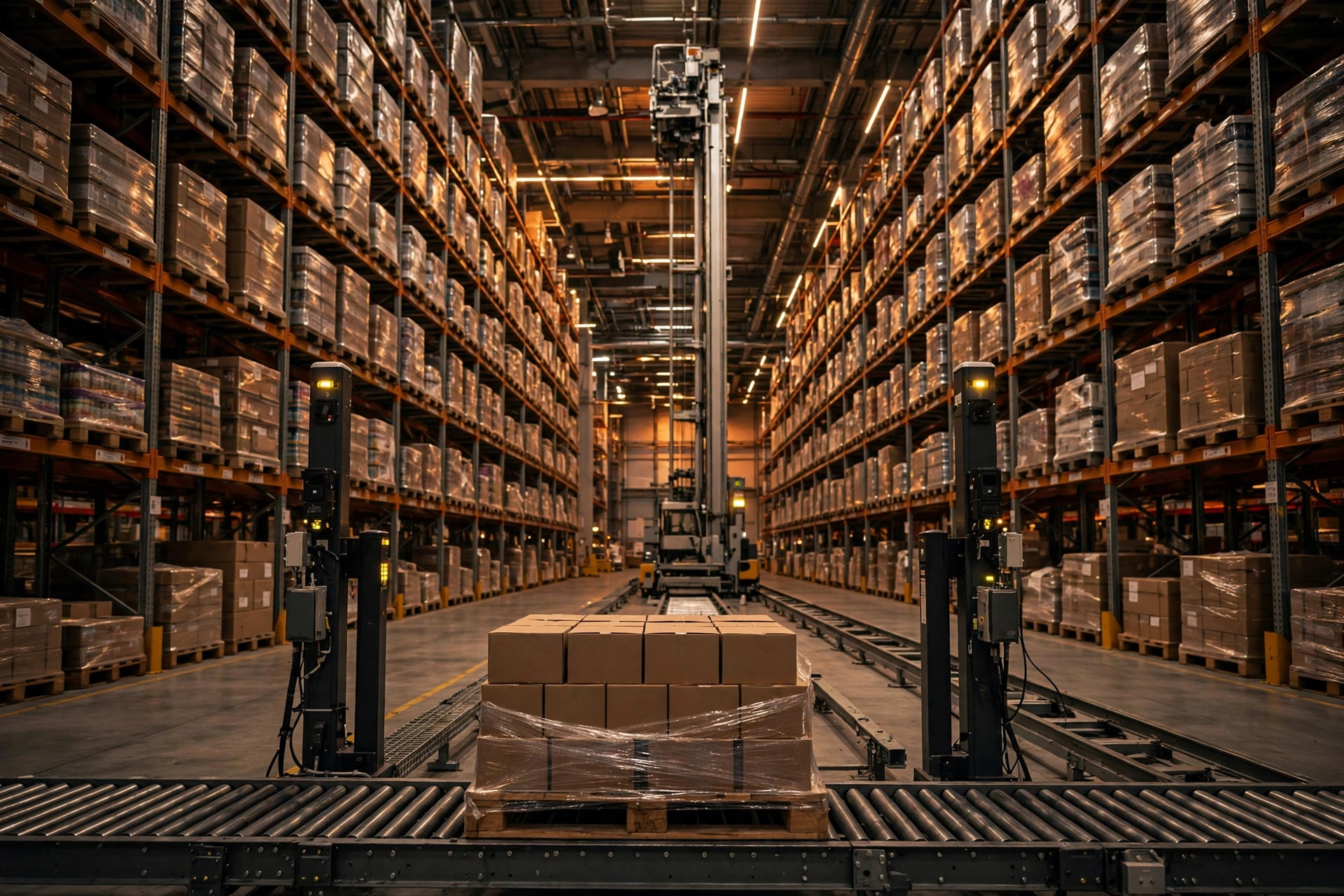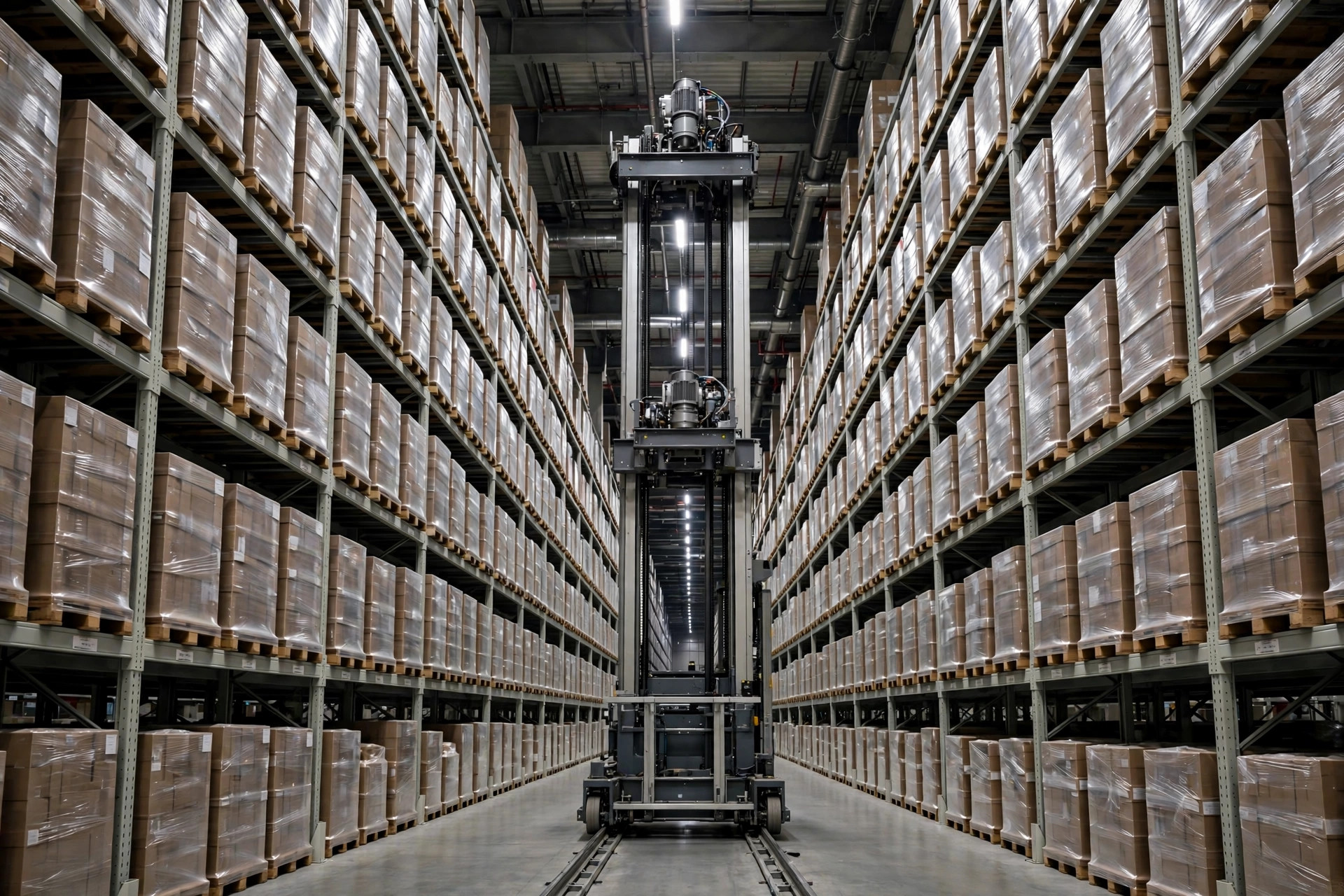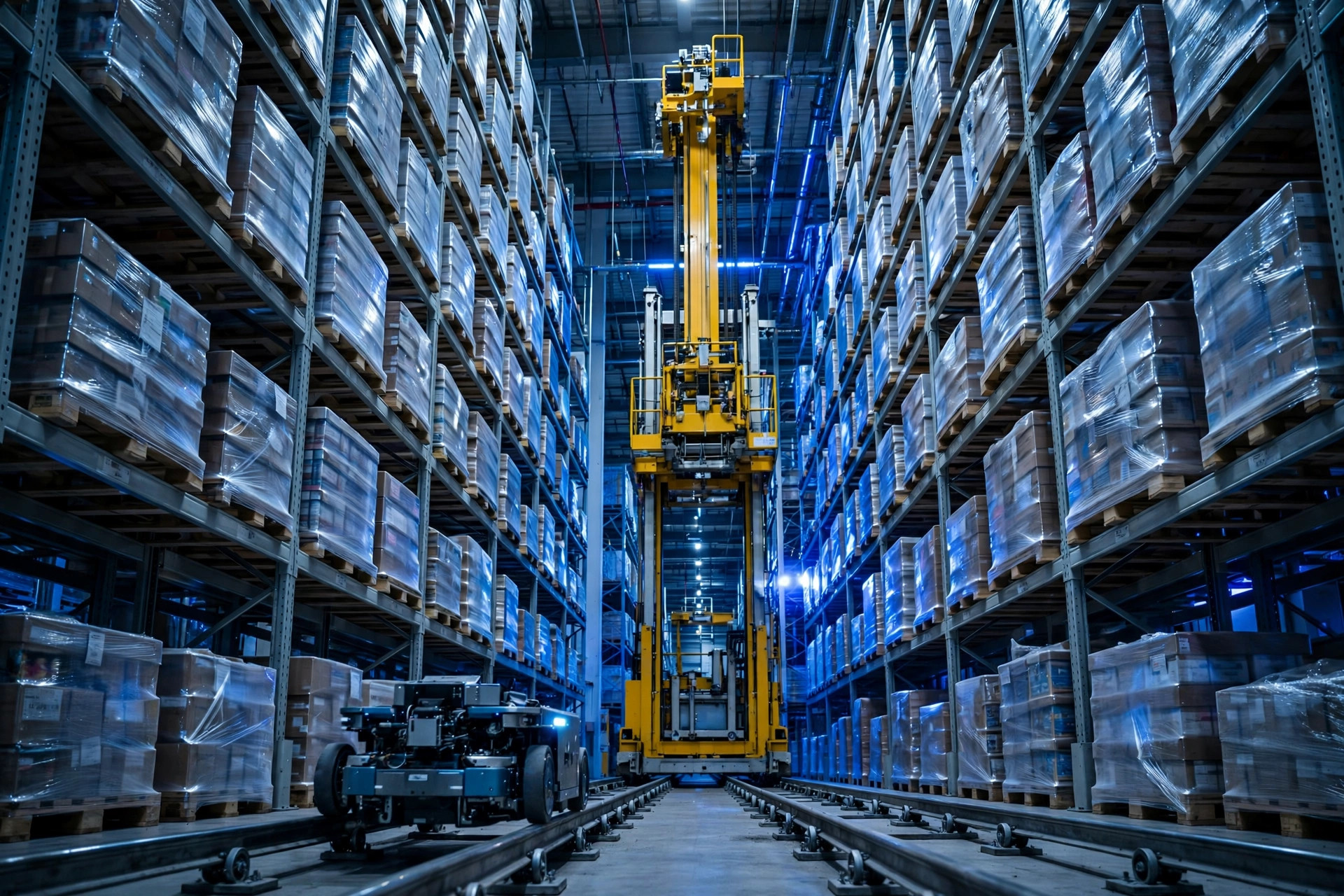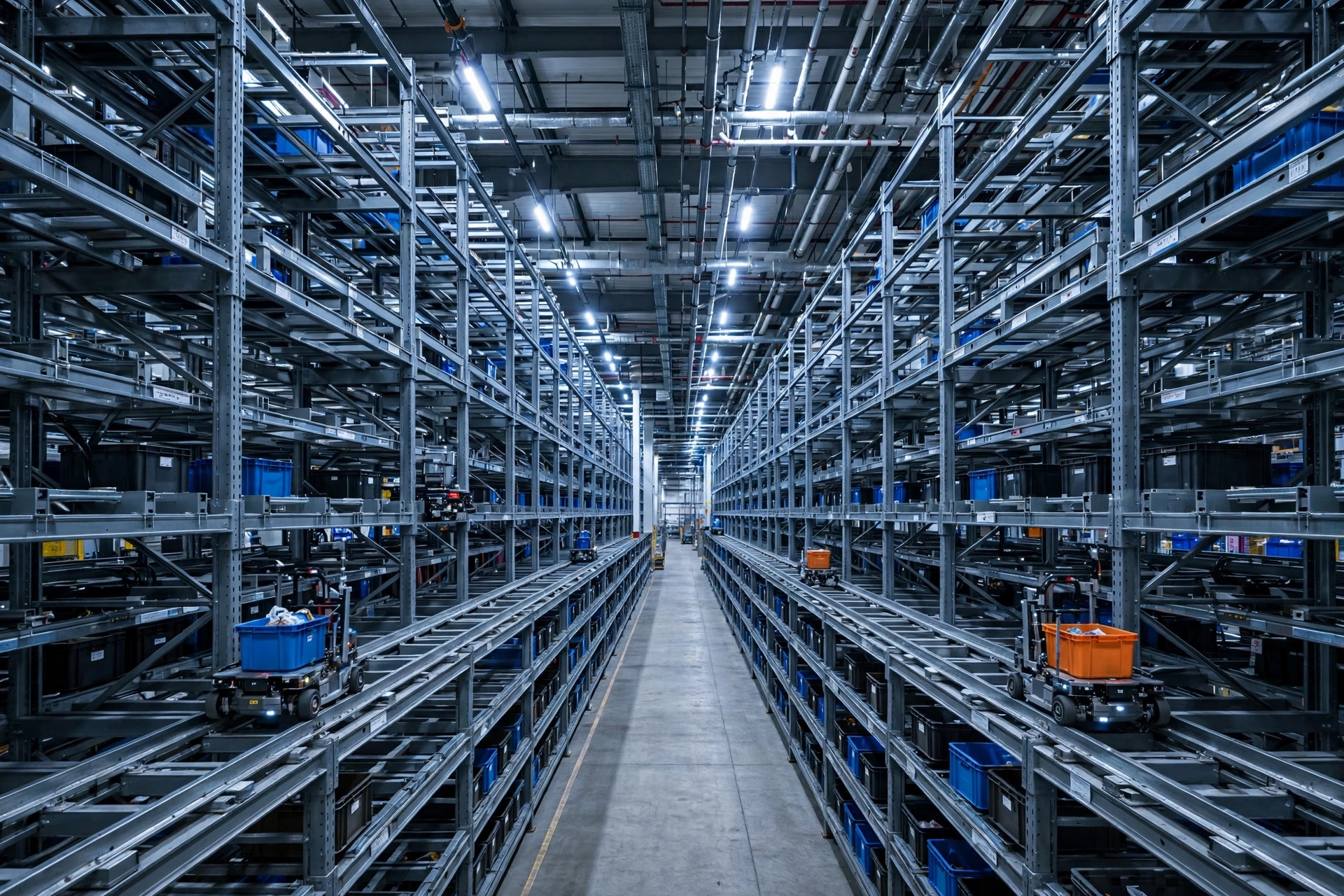
Over the past two to three years, a clear shift has shown up in the automated storage RFPs and proposals I have reviewed: shuttle-based systems appear far more often, while a decade ago this category belonged almost entirely to stacker cranes. The shift itself is not surprising. What deserves closer thought is the level at which the debate still happens — too many discussions remain stuck on "which technology is more advanced." From the projects I have studied after the fact, selection failures are rarely about the technology itself. They are about using the wrong selection criteria.
Start with the public numbers
According to reporting by Modern Materials Handling, Stephen Schwietert of TGW has stated publicly that because multiple shuttles can work simultaneously on different levels of the same aisle, a shuttle system can reach 5 to 10 times the per-aisle throughput of a conventional crane-based miniload. In the same coverage, Kenneth Hayer of Swisslog noted that each lift can perform roughly 500 vertical transfers per hour and reach the top of a 45-foot rack in about three seconds.
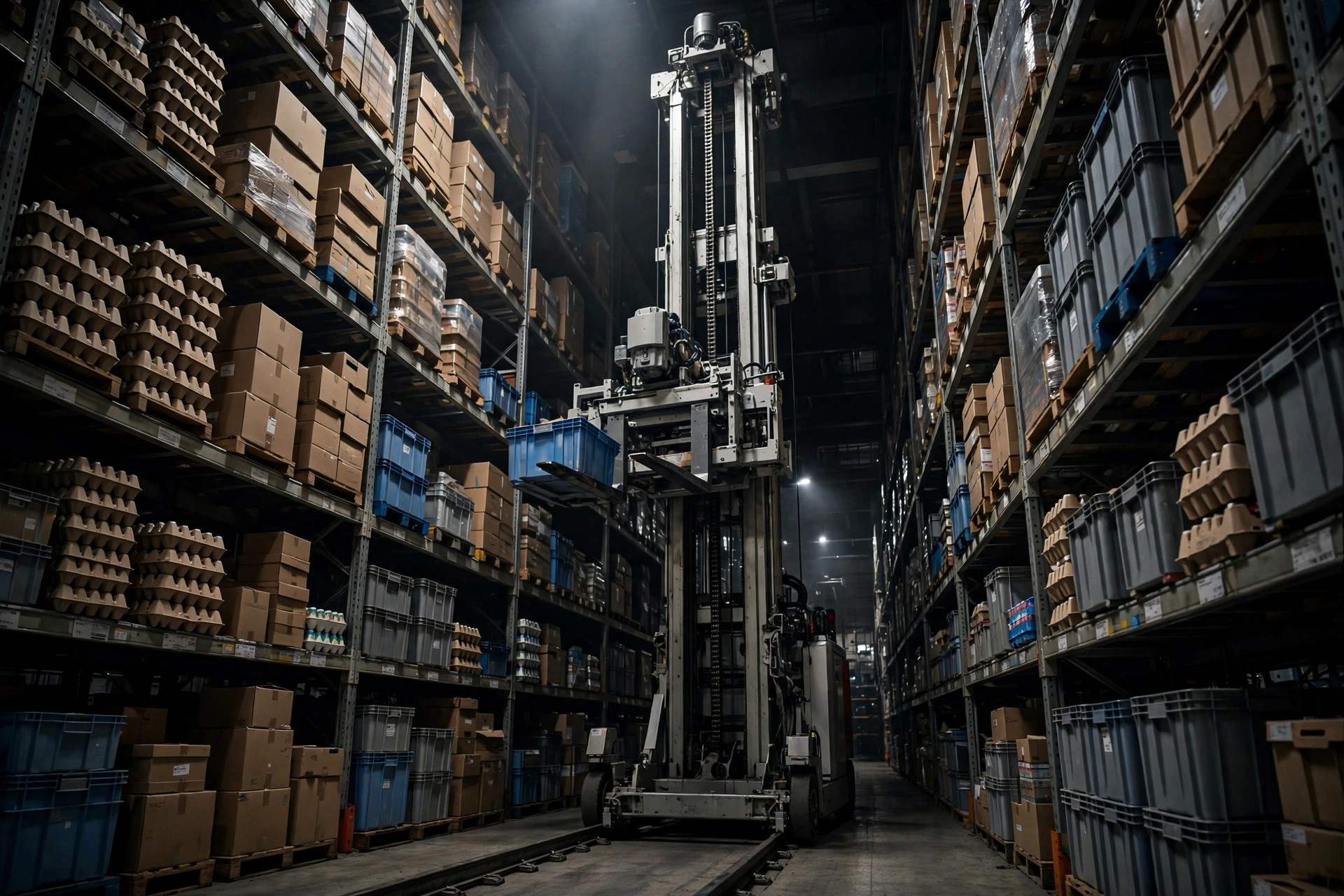
These figures only make sense inside the architectural difference, and they are easy to misread without it. A stacker crane follows a "one machine per aisle" logic: a single crane serves every level of the aisle, tasks are inherently sequential, and the crane itself is the throughput ceiling. A shuttle system follows a "one vehicle per level, lifts at the aisle end" logic: horizontal travel is distributed across shuttles on each level while vertical travel is concentrated in the lifts, so the ceiling moves from the crane to the lift. The "5 to 10 times" figure therefore describes the headroom of a parallel architecture over a serial one — not a multiple every shuttle project will actually achieve. Real-world results depend on lift configuration, wave planning, and SKU distribution, and any honest reading of vendor statements has to discount for that.
Attribution: order-line structure is what really decides
Judging by throughput multiples alone, the tempting conclusion is that shuttles will simply replace cranes. That is the most common trap in selection. Across the projects I have visited and reconstructed, the variable that actually decides between the two routes is not order volume — it is order-line structure, and the reasoning is worth spelling out.
The logic is simple, though glossy numbers tend to bury it. The crane's bottleneck is serial: one machine executes one retrieval at a time, so the more order lines per wave and the more fragmented the waves, the longer the queue in the aisle. The shuttle's advantage is parallel: many vehicles retrieve on different levels at once, so the more lines there are, the more the parallel architecture pays off. But the shuttle's bottleneck is equally real: you can add as many vehicles as you like, yet there are usually only one or two lifts per aisle, and vertical capacity at the aisle end is the true ceiling that no number of shuttles can bypass.
So the real yardstick for selection is a two-dimensional structure — order lines multiplied by wave density — not "orders per day." Two warehouses with identical daily order counts, one averaging two or three lines per order and the other averaging a dozen, may need opposite technologies. Selecting on order volume is like choosing shoe size by body weight: the number is accurate, but it measures the wrong dimension. That mismeasurement, more than any technical shortcoming, is the root cause behind most of the wrong choices I have seen.
In the fall of 2024, I visited a third-party warehouse in the American Midwest serving fashion e-commerce. Roughly forty thousand SKUs, more than thirty thousand order lines a day in peak season, waves sliced very thin — over a dozen waves a day during promotions. With their crane-based system, the pain was never the crane's speed; it was the waiting between waves, as hundreds of retrieval tasks queued inside a single aisle. After switching to shuttles, the project lead put it plainly: "It's not that the vehicles are fast. It's that nobody queues anymore." In that operation, the shuttle's value was not retrieval speed but the conversion of serial waiting into parallel work.
A second case ran in the opposite direction. An auto-parts warehouse with just over twenty thousand SKUs, but order lines heavily concentrated in the top two thousand SKUs, fewer than ten thousand lines a day, and highly predictable waves. They evaluated both routes seriously and chose the crane. The manager's reasoning was refreshingly honest: our bottleneck is replenishment rhythm, not outbound pace — paying shuttle money to fix a bottleneck we don't have would be wasteful. Same four words, "automated storage," two opposite answers, and order-line structure was what separated them.
A selection framework
Putting several project reconstructions side by side, the dividing lines can be summarized in the table below. It is not a scoring model — there are no standard answers in selection — but it can keep you from walking confidently in the wrong direction.
| Dimension | Shuttle route | Stacker-crane route |
|---|---|---|
| Throughput structure | Parallel per level, many vehicles working at once | Serial, one crane serving the entire aisle |
| Fitting order profile | High line counts, fragmented waves, volatile volumes | Moderate line counts, regular and predictable waves |
| SKU distribution | Scales well with large, long-tail SKU pools | Cost-effective where SKUs are concentrated and fast-moving |
| Scalability | Add vehicles to grow throughput, racking and building untouched | Growing throughput usually means adding aisles, tied to construction |
| Single point of failure | One vehicle down matters little; the lift is the critical part | Crane failure stops the whole aisle |
| Investment and maintenance | Higher upfront investment, spares spread across many vehicles | Simpler structure, concentrated maintenance points |
The most underestimated row in this table is the single point of failure. Many people equate "more vehicles" with "more reliable," yet a shuttle system's reliability hinges on its scarcest one or two components — the lifts. The crane's failure mode, by contrast, is blunt: when the crane stops, the aisle stops, with no ambiguity. The two architectures carry completely different risk shapes, and spare-parts strategy and contingency plans have to follow — a point that selection discussions routinely gloss over.
Trend-wise, e-commerce order fragmentation will continue, and the shuttle share of greenfield projects will most likely keep rising. That does not spell the end of the stacker crane: facilities with generous clear height, heavier goods, tight budgets, and stable order profiles remain its home turf. Technology transitions are rarely simple replacements; they are redrawings of the boundary of fit.
One open question to close with: if per-vehicle costs keep falling over the next few years and shuttle economics reach today's crane price band, where does the dividing line move? By then, "crane or shuttle" may become a false question, and the only question left will be: does your order-line structure deserve that degree of parallelism?
By Dr. Chen, Supply Chain Researcher