Amazon changed the rules again. That is not news, that is Tuesday. Shopify self-fulfillment stopped being my side project the month my FBA fees went up. I sat there looking at the numbers and realized something I should have realized a year earlier: I was renting my own business from a landlord who rewrites the lease every quarter.
So I moved. Not everything, not overnight. I kept my top two SKUs on FBA and moved the rest to self-fulfillment from my own Shopify store, with an overseas warehouse in Los Angeles doing the picking, packing, and shipping. Eighteen months later, my Shopify channel is the one I control, the one I understand, and — here is the part that surprised me — the one with the better margin on most orders. This is how I run it, what it costs, and where it blows up.
First, the Complaint: FBA Works Until It Does Not
Let me be fair. FBA is great when you are starting out. You send stock, Amazon stores it, picks it, ships it, handles the returns. You focus on the listing. But once you are doing real volume, the bill stops looking like a service fee and starts looking like a tax. Storage fees climb in Q4. Long-term storage fees punish you for the slow movers you cannot clear. And every fee change lands with about as much warning as a weather forecast.
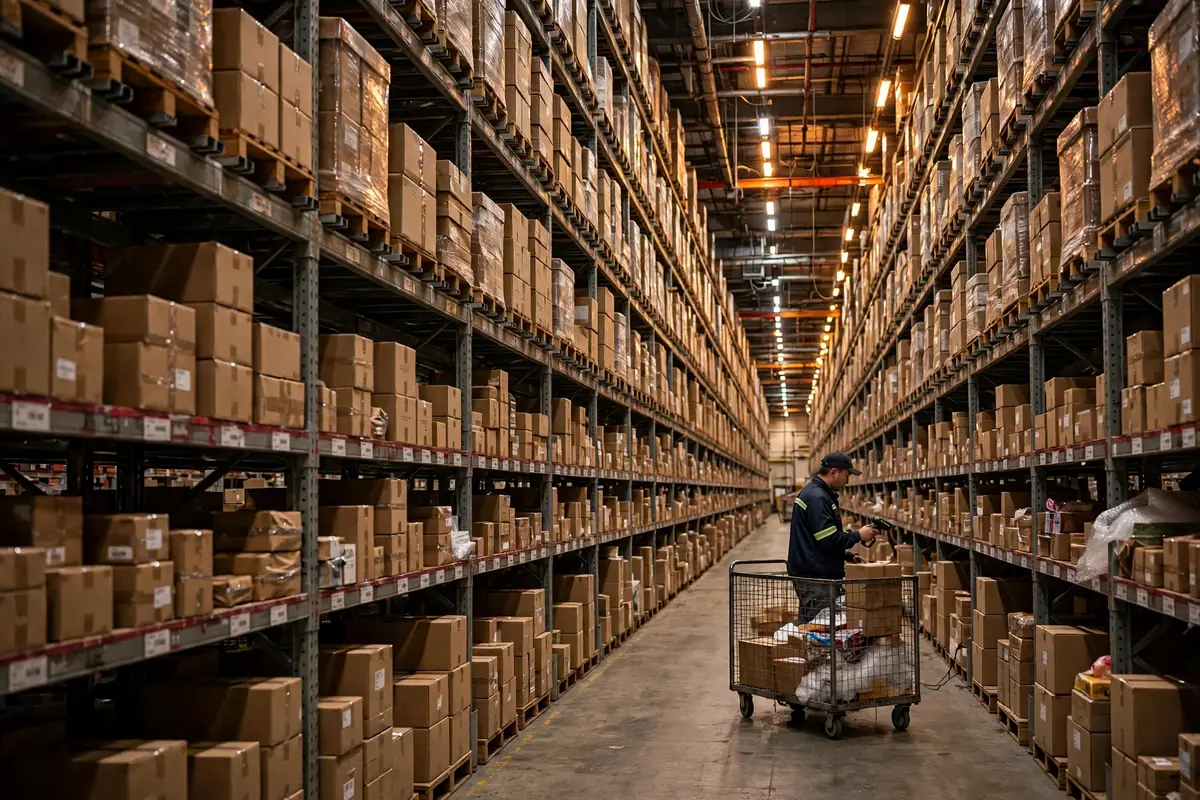
My breaking point was a Q4 two years ago. I had roughly 40 days of stock for my hero product in FBA, and the storage bill for that one month was bigger than my entire ad spend. That is when I started running the numbers on self-fulfilling from my own Shopify store with an overseas warehouse — a third-party warehouse in the US that holds my stock and ships orders for me. Same idea as FBA, minus the marketplace, minus the surprise fees.
How Self-Fulfillment Orders Reach the Warehouse
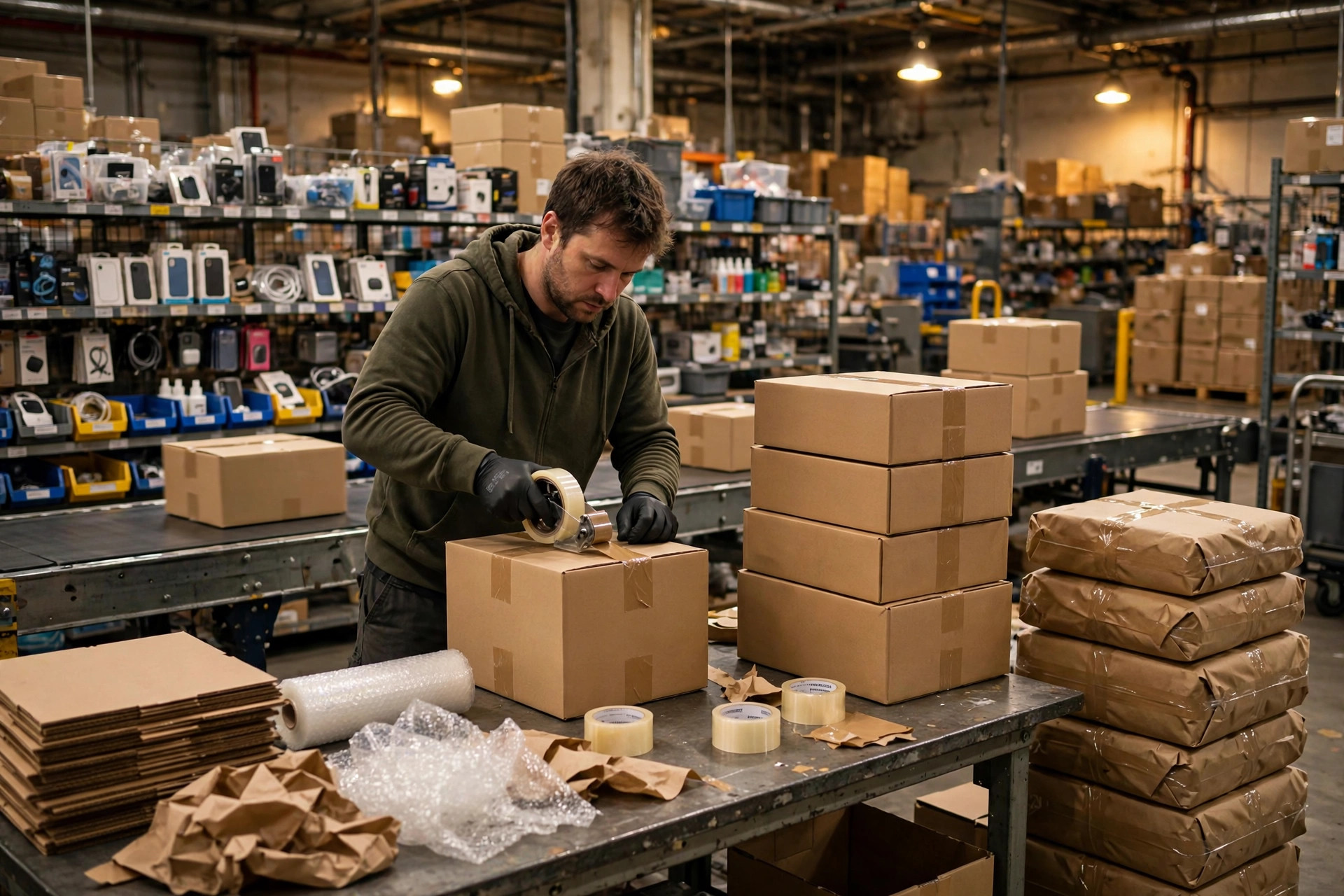
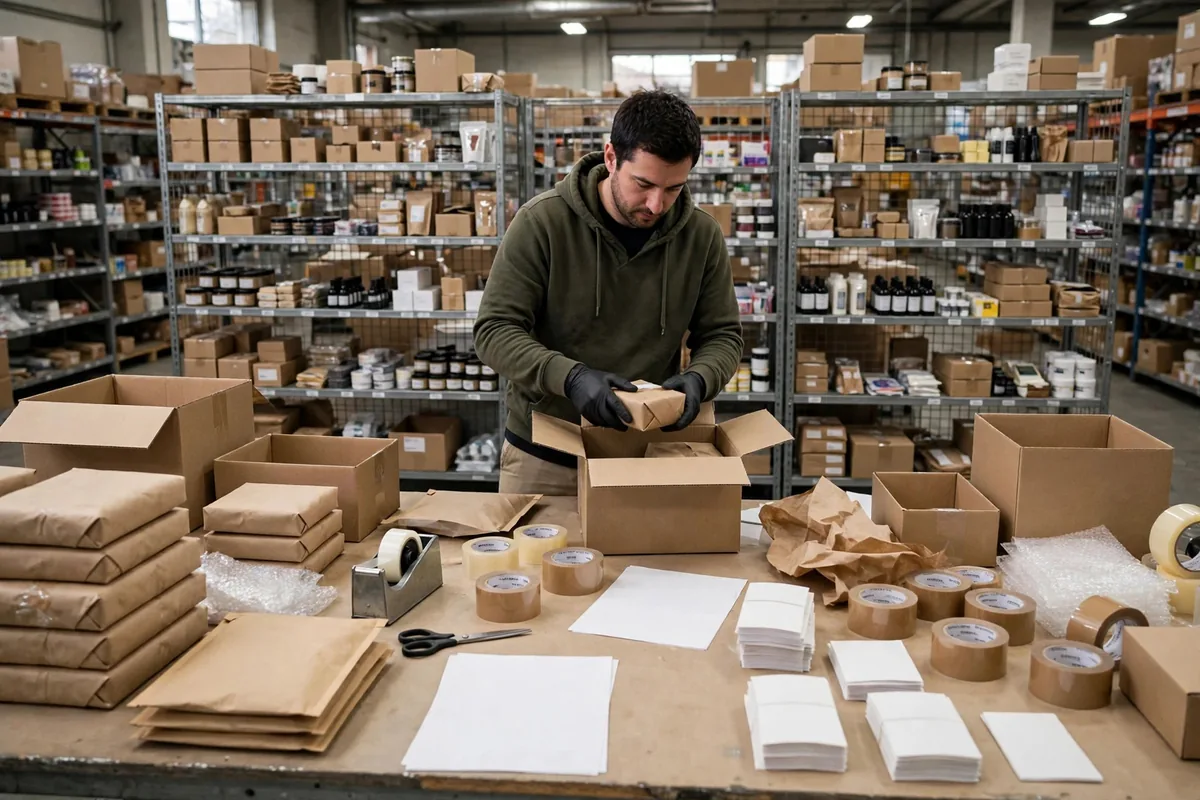
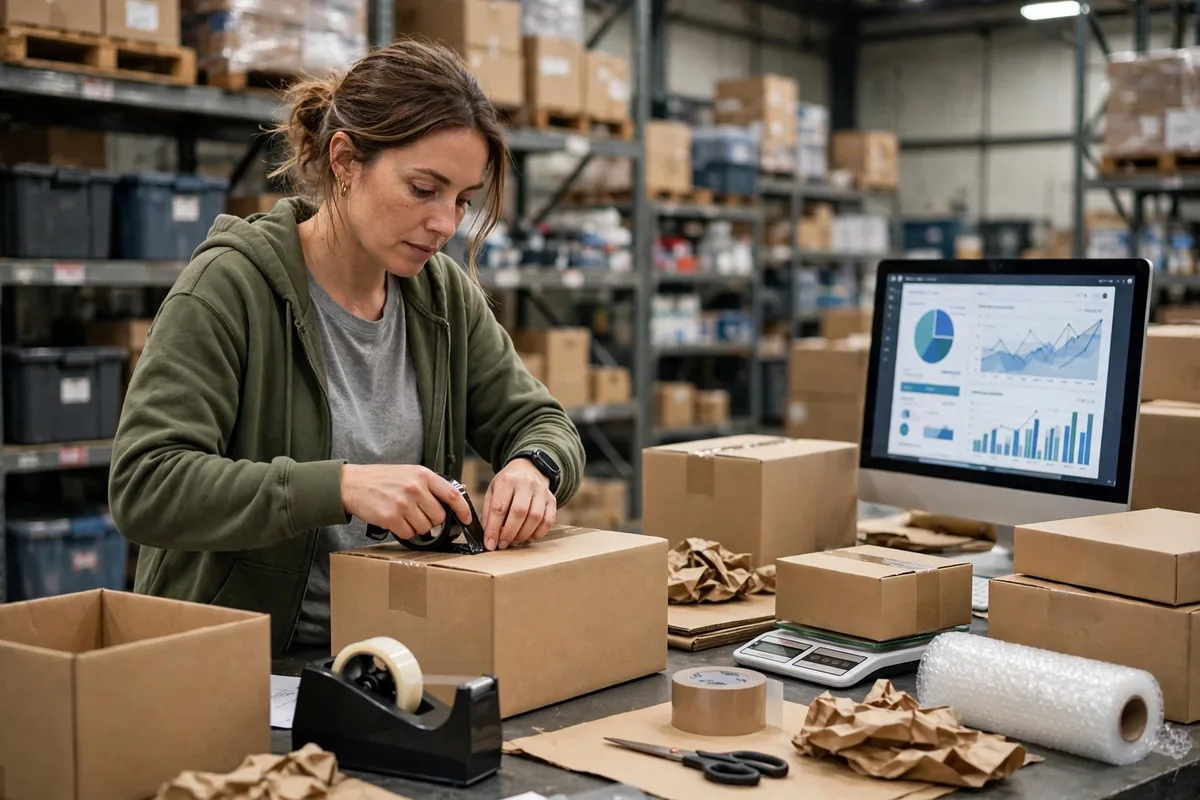
Here is the Shopify self-fulfillment flow I run today, and it has survived two peak seasons without a rewrite. An order comes in on Shopify. My warehouse system pulls it automatically through the Shopify API — no one retypes anything, because retyping is where mistakes live. The warehouse team picks, packs, and prints the label from the carrier account I chose. Tracking syncs back to Shopify, the customer gets the notification, and I watch it all from a dashboard.
The setup took me about two weeks, most of it spent on boring things: getting the product data clean, agreeing on the packing standard, and testing the API connection with ten real orders before I let it touch live traffic. My advice: do not skip the test orders. The ten test orders found three problems — a wrong SKU mapping, a packaging size mismatch, and a carrier account that had not been activated for the service I wanted. Finding those in a test cost me an afternoon. Finding them in peak season would have cost me a week.
Self-Fulfillment vs FBA: The Cost Table
Numbers time. This table is my own tested Shopify self-fulfillment scenario for a typical $28 product, based on my actual rates and a mid-size monthly volume. Your rates will differ — carrier contracts, warehouse pricing, and product size change everything — so treat this as a shape, not a quote.
| Cost per order | Self-fulfillment (my tested rates) | FBA (my tested rates) |
|---|---|---|
| Pick, pack, and handling | $2.80 | $4.10 (fulfillment fee) |
| Storage, per unit per month | $0.35 | $0.90 (peak-season average) |
| Last-mile shipping | $5.20 | Included in fulfillment fee |
| Packaging materials | $0.60 | $0 |
| Returns handling | $3.50 per return | $0 (mostly) |
| Total, typical order | $8.95 | $5.00 + storage |
Wait — FBA looks cheaper? On a single order, yes, and that is the trap. Look at the full month instead. FBA's storage bill grows with every unit sitting there, and the referral fee — around 15% on my category, which is a marketplace cost, not a fulfillment cost — comes out of every sale before I see a cent. On my Shopify channel, there is no referral fee. The payment processing is about 2.9%, and the rest stays with me. At my volume, the blended margin on self-fulfilled Shopify orders runs about 8 to 10 points higher than the same product on Amazon. That is the number that matters, not the per-order fulfillment fee.
Stock Levels and Three Blowups in Self-Fulfillment
The single most important number in self-fulfillment is your stock level, and mine is simple: never let any live SKU fall below 30 days of cover, and reorder at 45 days. I learned this the hard way. In my first self-fulfilled peak season, my best seller hit zero stock for six days in December — six days, the best six days of the year. I lost roughly $9,000 in sales by my own estimate, and the listing's ranking never fully recovered.
How I set the level now: take the last 30 days of daily sales, add 20% for growth and seasonality, multiply by the supplier lead time in days plus a 10-day buffer for ocean freight delays. Then check it every Monday. It takes me twenty minutes a week, and it is the highest-paid twenty minutes in my business.
First, the stockout. You already read mine. The fix is the 45-day reorder rule above, plus a safety rule: when a SKU hits 15 days of cover, it goes on my personal watch list, and I do not wait for the warehouse to tell me. I call the supplier myself.
Second, overselling. When the same stock feeds Shopify and another channel, the inventory counts drift. I oversold 34 units of a bundle once because a manual stock adjustment on one channel never synced to the other. The fix: one inventory source of truth, synced automatically, and a daily reconciliation report that I actually read. If your channels do not share one stock number, you will oversell. It is a matter of when.
Third, returns with nobody to collect them. This is the one new sellers never plan for. A customer returns a parcel, the carrier delivers it to your overseas warehouse, and nobody tells you. The parcel sits on a shelf. After a while the warehouse charges storage, or worse, disposes of it. My rule now: every return gets a return label with a tracking number I can see, and every Friday I check the returns shelf report. A returned product that is never processed is not a return. It is a donation to the warehouse.
One more thing about last-mile carrier accounts. Do not put all your volume on one carrier. I run two: a national carrier for most orders and a regional carrier for the West Coast, where it is both cheaper and a day faster for me. When one carrier has a bad week — and they all have bad weeks — I shift volume to the other in an afternoon. A single-carrier setup is a single point of failure wearing a discount as a disguise.
I am not telling you to quit Amazon. FBA still moves volume, and my top two SKUs are still there. I am telling you to own a channel where nobody rewrites your lease every quarter, where your margin is yours, and where a stockout is your mistake to fix rather than a fee you pay to someone else. I built this Shopify self-fulfillment setup in two weeks, and it paid for itself in the first peak season. This one I personally tested, and it works.
By Ah K, E-commerce Seller (5 yrs)