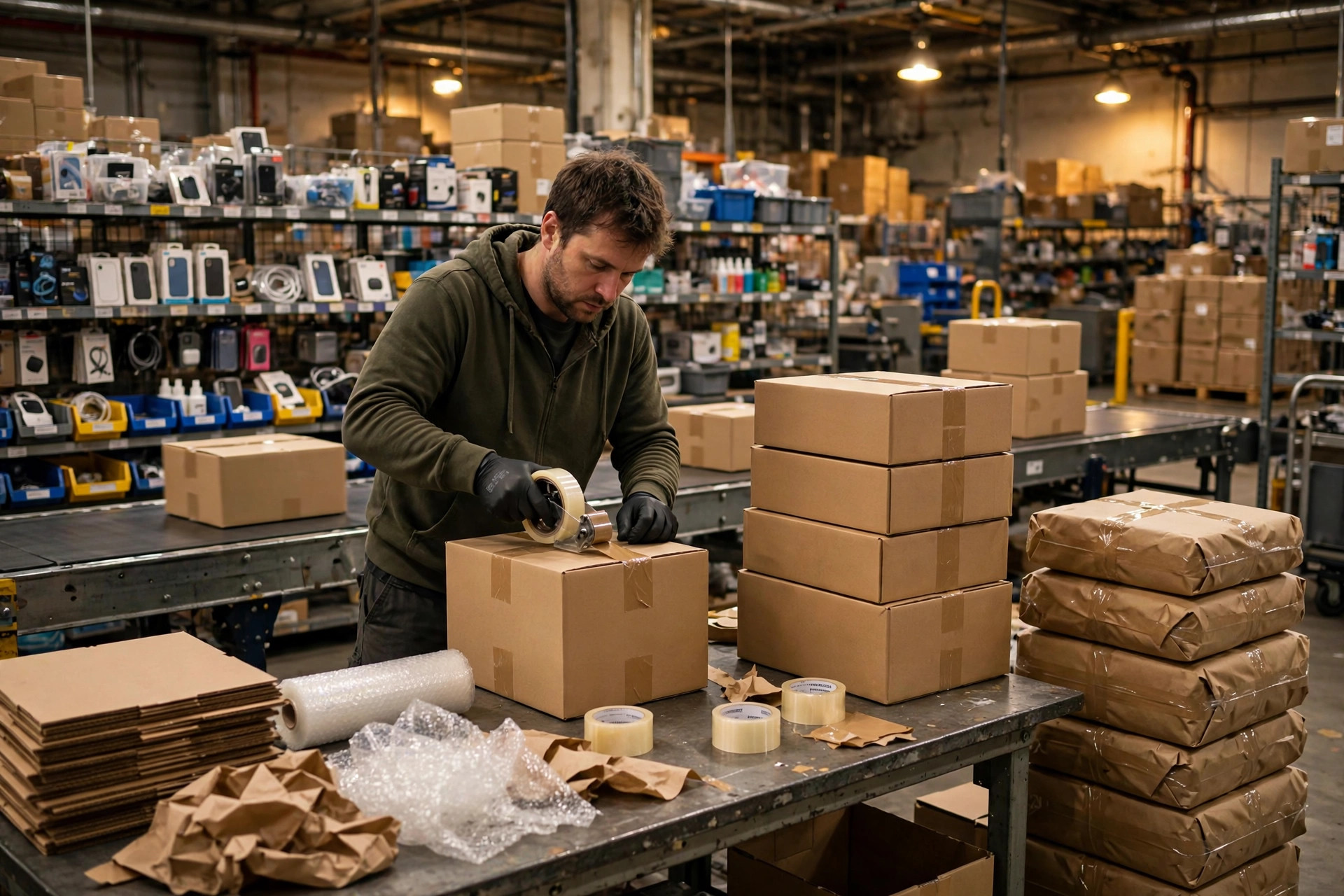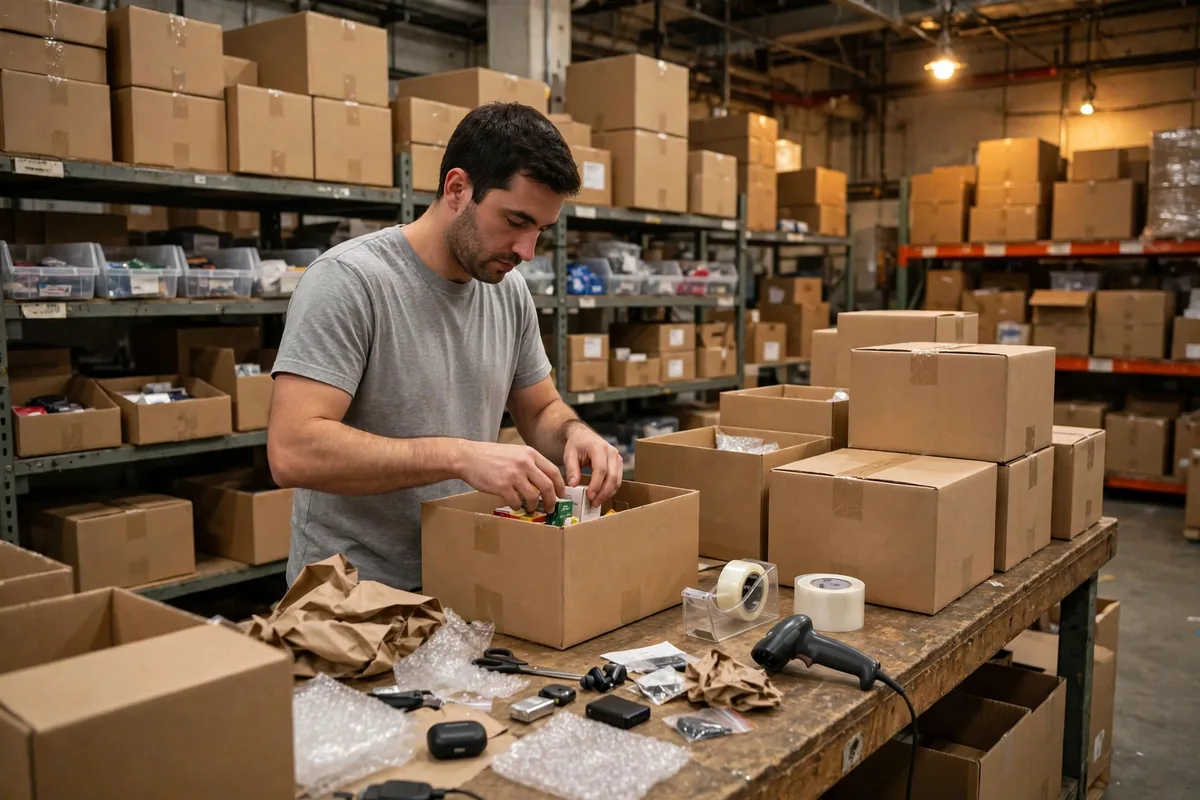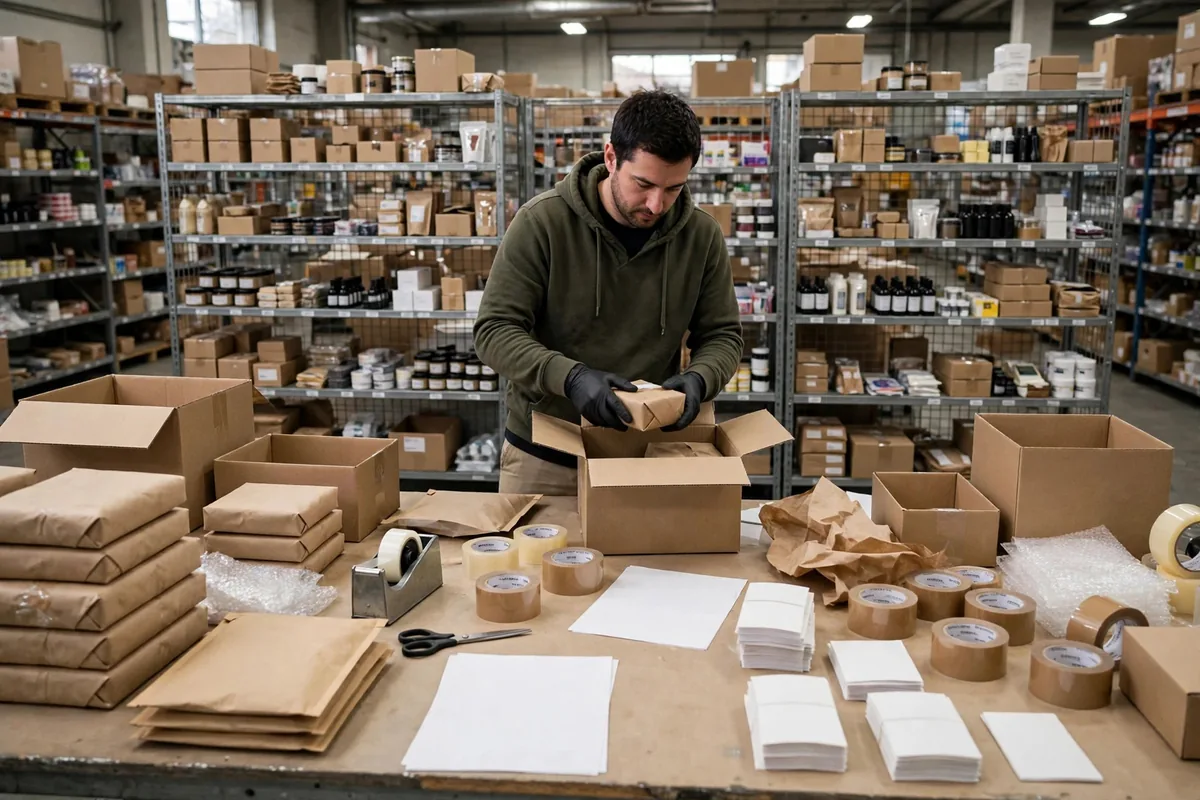
Let me be blunt about shopee southeast asia seller warehouse strategy: almost every expensive mistake I have made came from one comforting idea — "stock a little on both sides, just to be safe." The result? A batch in the China warehouse, a batch in Kuala Lumpur, another squeezed into Manila. Every warehouse held too little to sell through, so when stock ran out, all three ran out together. When returns came back, all three took returns together. I spent more and sold no more.
When I started on the Malaysia site in 2023, that was exactly my setup: a partner warehouse in Shenzhen shipping cross-border parcels, and a local warehouse in Kuala Lumpur shipping local orders. It looked like walking on two legs. Then came the first big promotion. The breakout product was a storage box selling for around thirty-odd yuan. The China warehouse still had four hundred plus units. The Kuala Lumpur warehouse had barely sixty left, and replenishment by sea took two weeks. I watched the local warehouse go out of stock, watched the store rating slide, while those four hundred units in China could only trickle out by cross-border post — and the longer the delivery time stretched, the more buyers cancelled. That was the day I learned the real lesson: betting on both sides means betting on neither.
Shopee Southeast Asia Seller Warehouse Choice One: Pick Your Main Battlefield First
The core of shopee southeast asia seller warehouse strategy is not choosing a warehouse. It is choosing a main battlefield. Southeast Asia is not one market. Malaysia, Thailand, Vietnam, the Philippines, Singapore — different languages, different delivery-time expectations, different return habits. No small seller can build deep inventory in five countries at once. The money and the attention are not there.
Here is what I do now, and it is almost boringly simple: look at the last three months, find the site with the most organic orders, and make it the main battlefield. That site gets a local warehouse, stocked deep enough to survive a full promotion cycle. Every other site ships cross-border from the China warehouse, with no local warehouse at all. It looks conservative. In practice it concentrates limited cash where orders actually come from.
In the second half of 2024, my main battlefield was Malaysia. The Kuala Lumpur warehouse held exactly three products: one traffic driver, one profit item, one repeat-purchase item. The traffic driver was stocked deepest, because during promotions it decides whether the store gets traffic at all. The profit item sat in the middle. The repeat-purchase item was stocked shallow, but never allowed to run out. With just those three products, turnover in the local warehouse actually worked, and rent spread across each order came out lower than back when I had spread five products thinly across the shelves. Here is the counter-intuitive part: fewer SKUs make a local warehouse more profitable. Many sellers think more SKUs means more money. In reality it means chopping your cash into small pieces and scattering them on shelves.
Count the Cost All the Way to the Return — That Is Where the Money Goes
Most sellers cost this out as head-haul plus rent. That misses the biggest line: returns. Return logic in shopee southeast asia seller warehouse operations is nothing like domestic e-commerce. A cross-border parcel shipped from China, once returned by the buyer, basically never comes back to China — it goes to a local warehouse or gets abandoned, which means the product value plus the shipping cost are both gone. A local warehouse return comes back to your own shelf, gets inspected, and can often be sold again.
This is the comparison table I actually use. The figures are my own operating magnitudes; carrier quotes change, so check the latest published rates before you act:
| Cost item | China warehouse direct shipping | Local warehouse (Kuala Lumpur example) |
|---|---|---|
| Inbound cost | Low, one parcel at a time | High, bulk head-haul plus customs clearance |
| Delivery time | Slow, worse during promotions | Fast, same-day or next-day local delivery is normal |
| Return handling | Mostly abandoned, product value lost | Returns to your shelf, resellable, loss contained |
| Cash tied up in stock | Low, ship as ordered | High, stock must be bought in advance |
| Restock cycle when out of stock | Short, ship from China anytime | Long, sea freight plus clearance easily runs two weeks or more |
Read that table and the rule writes itself: direct shipping is for testing products and long-tail items; local warehouses are for proven bestsellers. The worst move is pushing an unproven product into a local warehouse — that is paying real money to subsidize uncertainty.
There is one more return trap I have to call out separately, because it genuinely stung. In early 2024, a sizing problem caused a cluster of returns on my Thailand site. The local warehouse asked whether I wanted the goods shipped back to China. I asked the freight quote and nearly dropped my phone: one return parcel's international shipping cost more than the selling price of the item itself. We cleared it locally at a low price instead. Since then my rule has been: before any batch leaves for Southeast Asia, assume it is never coming back, and set the price and the stock depth on that assumption. If you can live with that assumption, then talk local warehouses. If you cannot, stick to direct shipping and keep testing.
Shopee Southeast Asia Seller Warehouse Stocking Depth: by Site, Not by Gut Feel
I used to set stocking depth by gut feel. The result was either stockouts or dead stock. Now I grade sites into three tiers. Main battlefield: bestsellers stocked to roughly 1.5 times one promotion cycle's sales. Secondary site: only the traffic driver, depth capped at about a week's sales. Everywhere else: zero inventory, pure direct shipping.
Thailand is my secondary-site play. The Bangkok warehouse holds exactly one traffic-driving product, stocked shallow. When it sells out, I wait for the next sea shipment, and I accept a few days out of stock. Thailand's order volume cannot support a deep warehouse, and forcing it would just lock cash onto shelves. Vietnam gets no warehouse at all — Ho Chi Minh City orders all ship direct from China. Delivery is slower, but given that site's average order value and return rate, direct shipping works out cheaper.
Here is another counter-intuitive judgment: a local warehouse is not better because it is closer. It is better because it is more certain. A site with uncertain volume turns a warehouse into rent paid on uncertainty. A site with certain volume makes money even if the warehouse is a day or two slower. Warehouses serve certainty, not distance on a map.
Three Pits I Already Fell Into So You Don't Have To
Pit one: switching your main battlefield the night before a promotion. Seeing a promotion on one site and stuffing its warehouse a week out — the sea freight misses the window, the goods arrive after the promotion ends, and sit for three months. Change your main battlefield at most once a year. Before a promotion, replenish only; do not switch warehouses.
Pit two: selling the same listing at the same price from both the local warehouse and direct shipping. Buyers are not stupid. Local delivery is faster, and that speed is worth a slightly higher price. Pricing both channels identically gives away the local warehouse's speed advantage for free.
Pit three: no threshold on returns. My rule: if a single product's return rate stays above a line I can accept for two straight weeks, delist it and fix it — no replenishment, no toughing it out. Many sellers keep topping up a high-return product until the losses pile up, because they refuse to admit that product does not fit that site.
In the end, shopee southeast asia seller warehouse strategy is not about having more warehouses. It is about making choices. One main battlefield, three hero products, returns assumed one-way before you ship, cash concentrated where orders actually come from. I have tested this myself and it works — in the second half of 2024, running this way, my Malaysia site's stockouts visibly dropped and the cash locked in inventory came down. Warehouses do not win by being many. They win by being right.
By Ah K, E-commerce Seller (5 yrs)