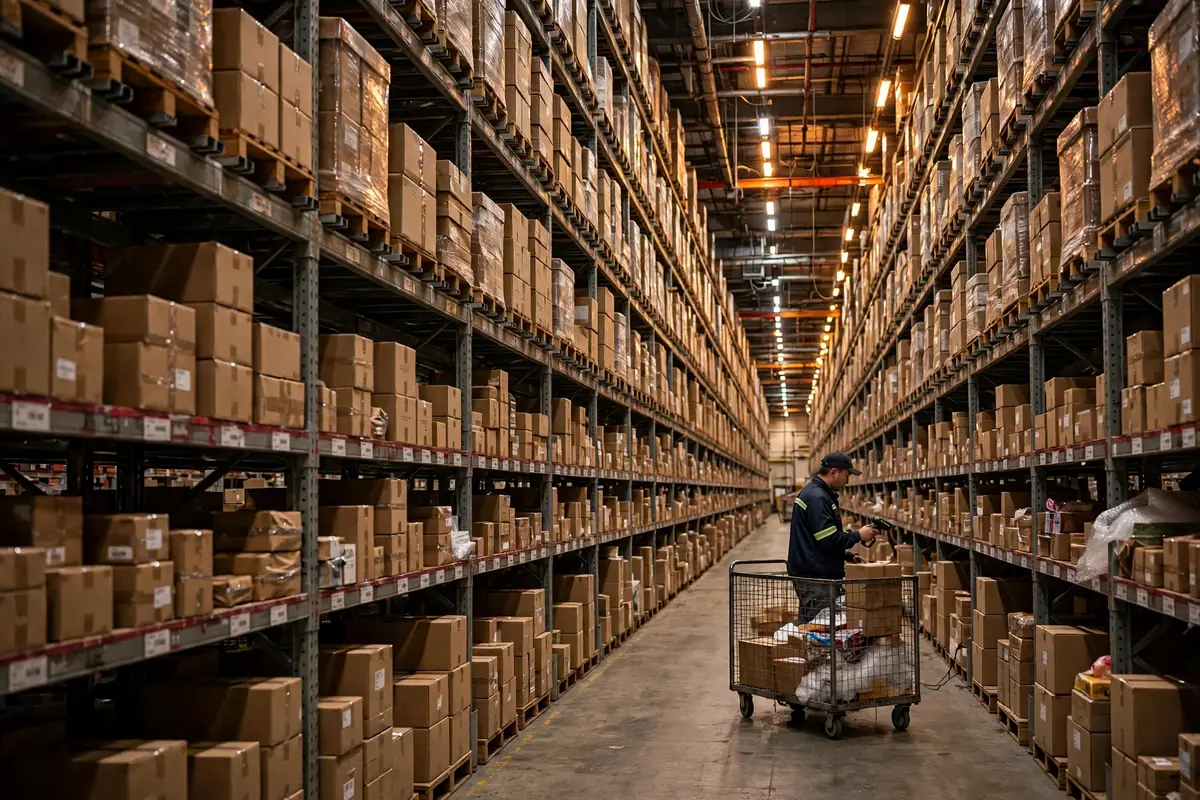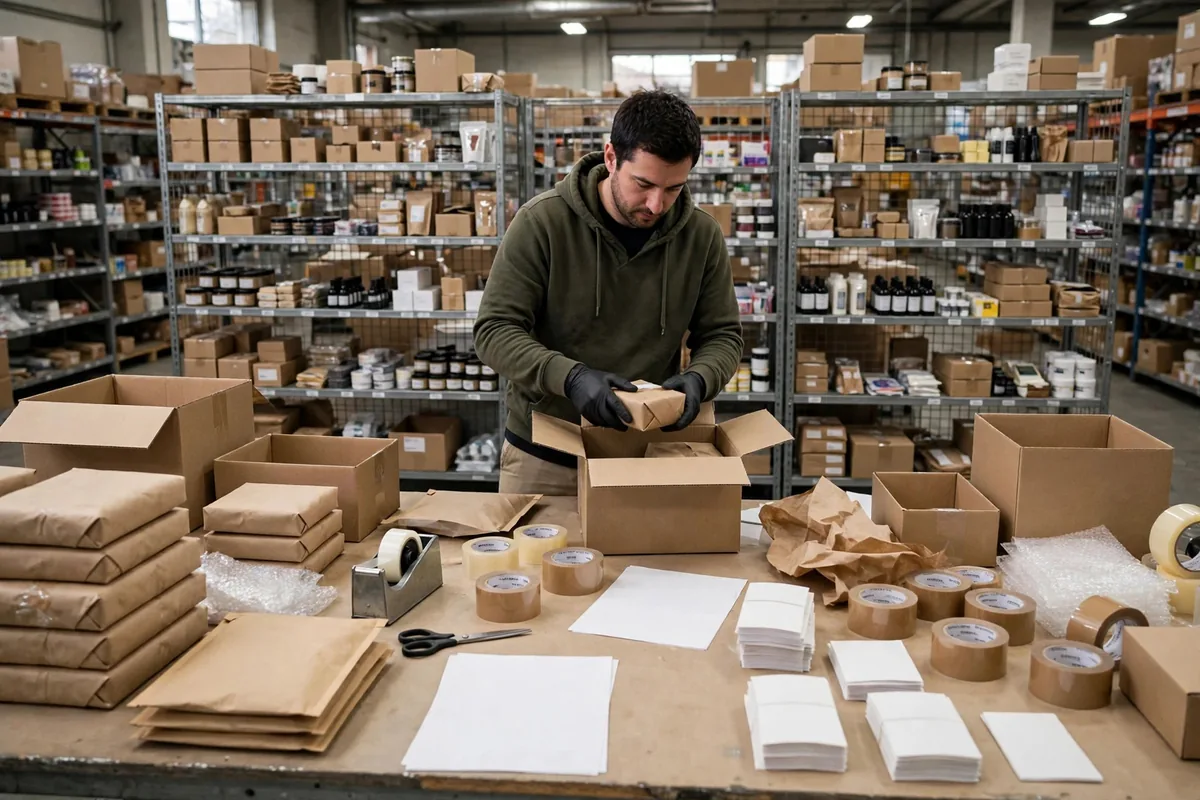
Bottom line first: SHEIN semi managed seller warehouse fulfillment is not a cheaper version of full management. It is the same job with the responsibility moved from the platform to you. The platform asks for delivery in roughly seven business days, and that clock starts the moment the order is placed. If your warehouse is half a day slow, the road has nothing left to give. Before you switch to semi-managed, answer one question honestly: can my warehouse pick, pack, and ship an order on the day it arrives? If the answer is no, fix the rhythm first.
SHEIN Semi-Managed Is Not a Savings Model — It Is a Different Division of Labor
Most sellers get the first calculation wrong. They see that semi-managed usually means no onboarding fee, no monthly rent, no commission, and no advertising fee, and they conclude the model is cheaper. I have seen this mistake three times: the commission saved comes back as warehouse cost, rush shipping, and penalties.
Get the rules straight first, and check the platform's seller center for the latest policy. Under fully managed, the platform handles fulfillment and the seller supplies goods. Under semi-managed, the seller ships the order and the platform supplies traffic and orders. A semi-managed seller owns inventory, picking and packing, logistics, tracking-number upload, and returns. The platform does not manage your warehouse. It only watches your delivery time.
| Fully managed | SHEIN semi-managed | Self-operated | |
|---|---|---|---|
| Who ships | Platform | Seller | Seller |
| Where inventory sits | Platform warehouse | Seller or overseas warehouse | Seller warehouse |
| Fee shape | Platform takes a cut | Usually no onboarding fee, no monthly rent, no commission, no advertising fee (per latest platform policy) | Varies by platform |
| Delivery pressure | Platform carries it | Seller carries it, roughly seven business days | Seller sets the promise |
| Returns | Platform process | Seller plans it from day one | Seller plans it |
Here is the counterintuitive part: the most expensive thing in semi-managed is not freight. It is the days you believed you could ship on time and did not. A warehouse that takes two days to pick and ships the next day has already burned nearly half the window before the parcel moves. One customs inspection or one carrier backlog, and the order is late. The SHEIN Fulfillment Service, the platform-fulfilled option, charges a commission of roughly 10 percent, with an application threshold of about five million dollars in annual revenue, zero commission for the first thirty days in the US and EU, and a penalty of roughly one dollar per late order. Those figures come from third-party guides, so confirm them against the platform's latest policy. The penalty itself is small. The real cost is what late orders do to your store weight and traffic.
Working Backwards From Seven Days: The Warehouse Rhythm
Seven days is the total budget, and the warehouse gets at most the first day. Day seven is the delivery date, linehaul and customs take the large middle chunk, and warehouse work has to fit inside one day. That is not a target. It is a floor.
Here is the step-by-step routine. Every step is written so someone on the floor can follow it without asking questions.
Step one: release waves within two hours of the order arriving. Do not wait to build a bigger batch. Semi-managed orders are fragmented by nature, and the picking time you save by batching is worth less than the half day the order spends sitting in the system.
Step two: pick and verify on the same line. The picker picks, verifies, and packs in one flow. I have seen this mistake three times: everything looks picked, but the parcels are stuck at the verification bench, the system says picked but not shipped, and the truck leaves without them.
Step three: upload the tracking number on the day of shipment. The tracking number is the evidence the platform uses to judge whether you shipped on time. My hard rule for every semi-managed seller is to upload tracking numbers within twenty-four hours. Upload late, and the platform reads it as a late shipment.
Step four: set two fixed cutoff points every day, one in the morning and one in the afternoon. Orders before the cutoff must be cleared the same day. Orders after the cutoff roll to the next wave. Write the cutoffs into the operating manual and post them on the wall.
A scenario (illustrative): a women's apparel seller in Shenzhen handling a few dozen to a little over a hundred orders a day (assumed figures). Her old routine was to pick at four in the afternoon and ship the next morning. After switching, she moved to two cutoffs, eleven in the morning and four in the afternoon, with picking, verification, and packing on one line and everything out by eight in the evening. In the first month, late orders went from weekly to zero (illustrative scenario). The rhythm changed, not the headcount.
SHEIN Semi-Managed Routing: Shipping From China or Pre-Positioning Overseas
This is the question semi-managed sellers ask me most, and my answer is always the same: look at the order mix, not at your feelings.
Shipping from China keeps inventory in one place and cash pressure low. The downside is that every order crosses linehaul and customs, which eats most of the seven-day window and leaves the warehouse no room for error. It fits sellers with many styles and small volumes who are still testing what sells.
Pre-positioning overseas makes delivery time stable, loosens the warehouse rhythm, and makes returns easier. The downside is that you have to forecast before you ship, and a wrong forecast becomes slow-moving stock overseas. It fits sellers with proven bestsellers and stable orders. SHEIN operates distribution centers in the US, including Whitestown, Indiana and Cherry Valley, California.
Amazon Multi-Channel Fulfillment now supports SHEIN semi-managed orders, which is a ready-made option for sellers already using Amazon warehouses: one pool of stock can serve two channels. But shared inventory only works if the inventory data is accurate. One oversell on one channel, and the other channel goes out of stock with it.
One more factor: the US de minimis exemption for shipments under eight hundred dollars was removed in 2025, so direct small-parcel costs have to be recalculated against the latest policy.
A scenario to show the mix (illustrative scenario): a seller has three bestsellers making up roughly sixty percent of orders (assumed figure), with forty long-tail styles sharing the rest (assumed figure). My recommendation is to put the bestsellers overseas and ship the long-tail styles from China. Bestsellers need stability. Long-tail styles need flexibility. Running both routes beats betting on one. The precondition is that the WMS can manage stock by style and by warehouse. That trade-off sits at the center of SHEIN semi managed seller warehouse fulfillment: the model rewards sellers who match the route to the product, not sellers who pick one route for everything.
Plan Returns From Day One
Returns are the part of semi-managed that sellers ignore most often. Everyone plans how goods leave. Almost no one plans how they come back. Then the first batch of returns arrives, the warehouse has no returns process, parcels pile up in a corner, and the inventory numbers drift further from reality every week.
My rule is simple: the returns process goes live on the same day as the shipping process. A return arrives, gets registered, gets inspected, and then falls into one of three buckets: fit to sell again goes back to stock, not fit to sell goes to clearance or disposal, and disputed goes to a separate holding area. Every bucket needs a location, a status, and a processing deadline.
Failure point one: tracking numbers uploaded by hand. Once order volume rises, manual upload will miss orders, and every missed order reads as a late shipment. Before go-live, confirm that tracking numbers flow back to the platform automatically and people only handle exceptions.
Failure point two: inventory shown as a single total with no split by warehouse or status. The bestseller sits in two warehouses, the system shows one number, and nobody knows where to ship from. Failure point three: counting the seven days as calendar days when the platform counts business days. Holidays, weekends, and peak-season rosters have to be planned in advance, not after the orders explode.
The sellers who make semi-managed work share one habit: they run the warehouse as part of the store, not as an afterthought to it. Get the rhythm right, and SHEIN semi managed seller warehouse fulfillment is a genuinely cheaper route. Get it wrong, and the commission you saved will come back in another form. Fix the rhythm first, then talk about volume.
By Lin Xiao, WMS Implementation Consultant