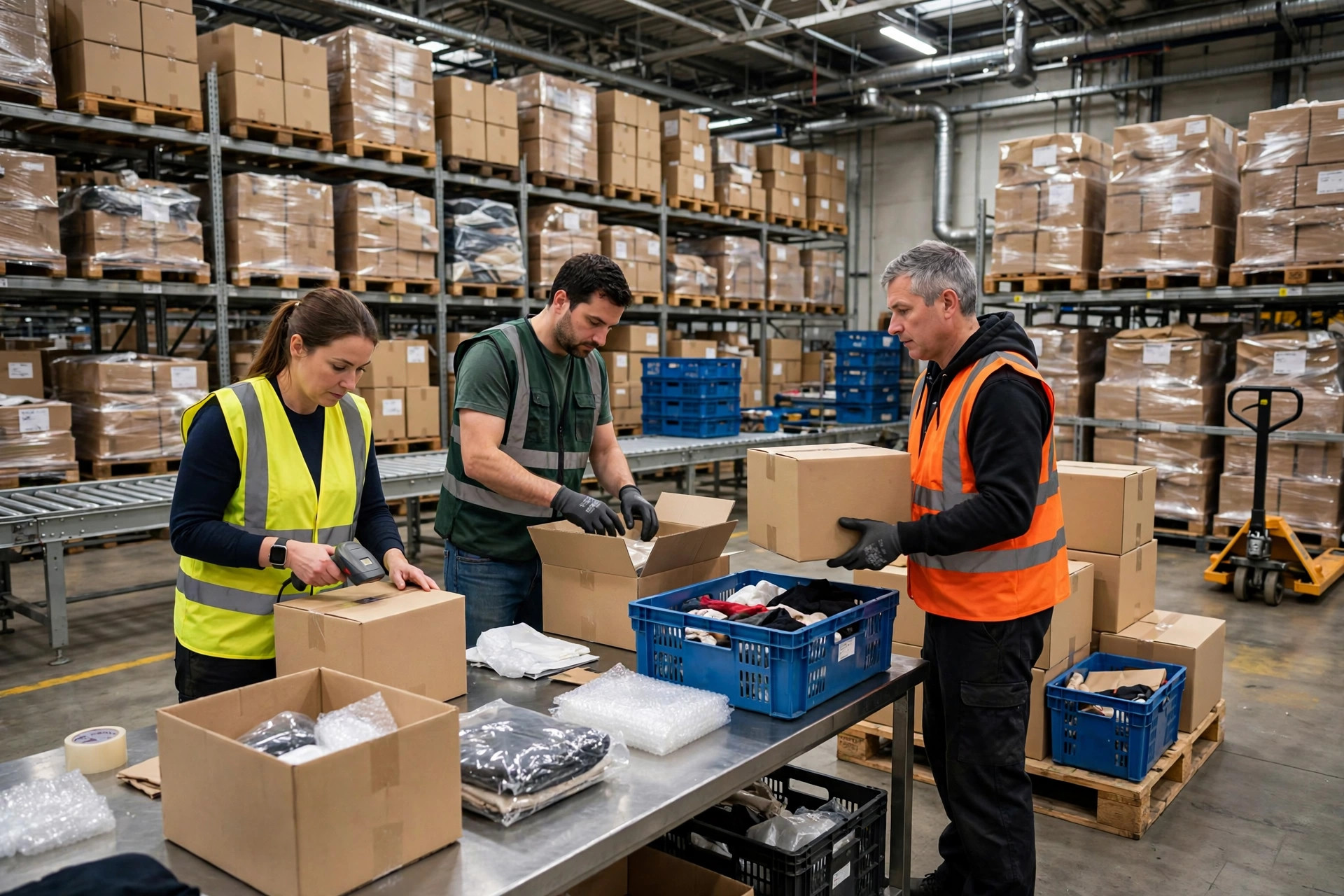
The Monday after Thanksgiving 2022, I walked into a 3PL warehouse in Ontario and found the receiving dock buried. Six hundred return parcels, stacked three deep, blocking two dock doors. The receiving lead shrugged and said they'd just scan everything into sellable stock and sort it out later.
Later never came. Within a week, customer service was selling inventory that didn't really exist — units still sitting in torn-open boxes, some missing parts, some plainly broken. The warehouse shipped whatever the system said was available. Refund requests doubled, then doubled again. By January the client was threatening to pull a seven-figure contract, and the 3PL had eaten tens of thousands of dollars in reshipments and appeasement credits.
That week taught me something I now tell every operator who'll listen: returns are not inbound freight running in reverse. They are a separate operation with their own inspection, their own inventory states, and their own rhythm. Apply your regular receiving process to returns and your books will lie to you.
Quarantine first, questions later
The first step of returns receiving isn't receiving — it's isolation. Every returned unit goes into a quarantine area first. Not one unit goes straight into sellable stock. That's the iron rule. And I mean physical isolation, not a flag in the system. The moment returns share shelf space with sellable inventory, your books are compromised, because nobody under peak-season pressure will remember which unit came from where.
Inspection grading should be fast and boring. I recommend four grades, simple enough that an inspector learns them in half a day. Grade A is resellable as-is: tags intact, no stains, no odor, straight back to sellable. Grade B needs light rework: steam it, repackage it, replace a missing accessory, and it's sellable. Grade C needs repair: broken zipper, loose seam, missing button — fixable, or it gets downgraded. Grade D is scrap: damaged beyond repair, or the repair cost exceeds the residual value.
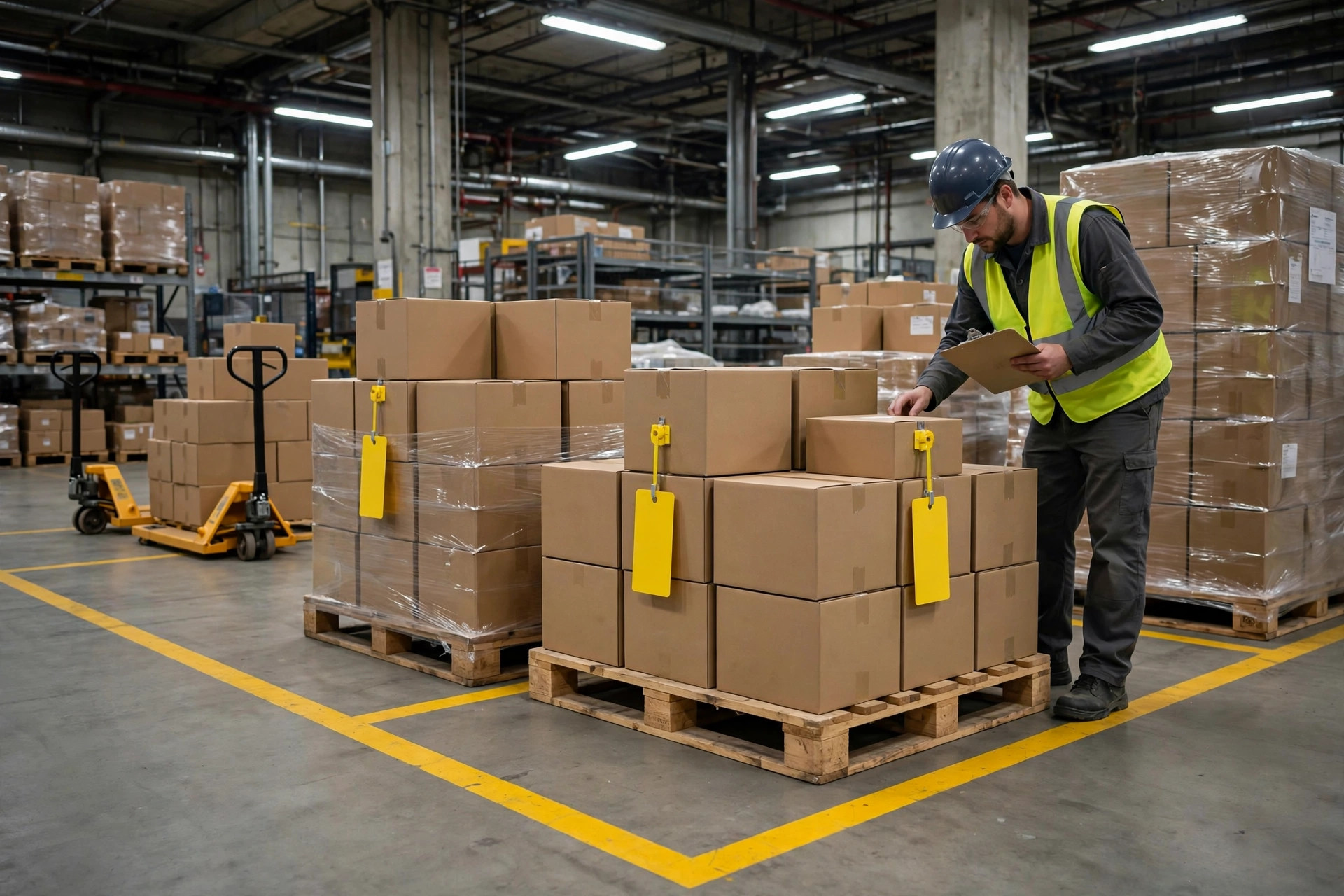
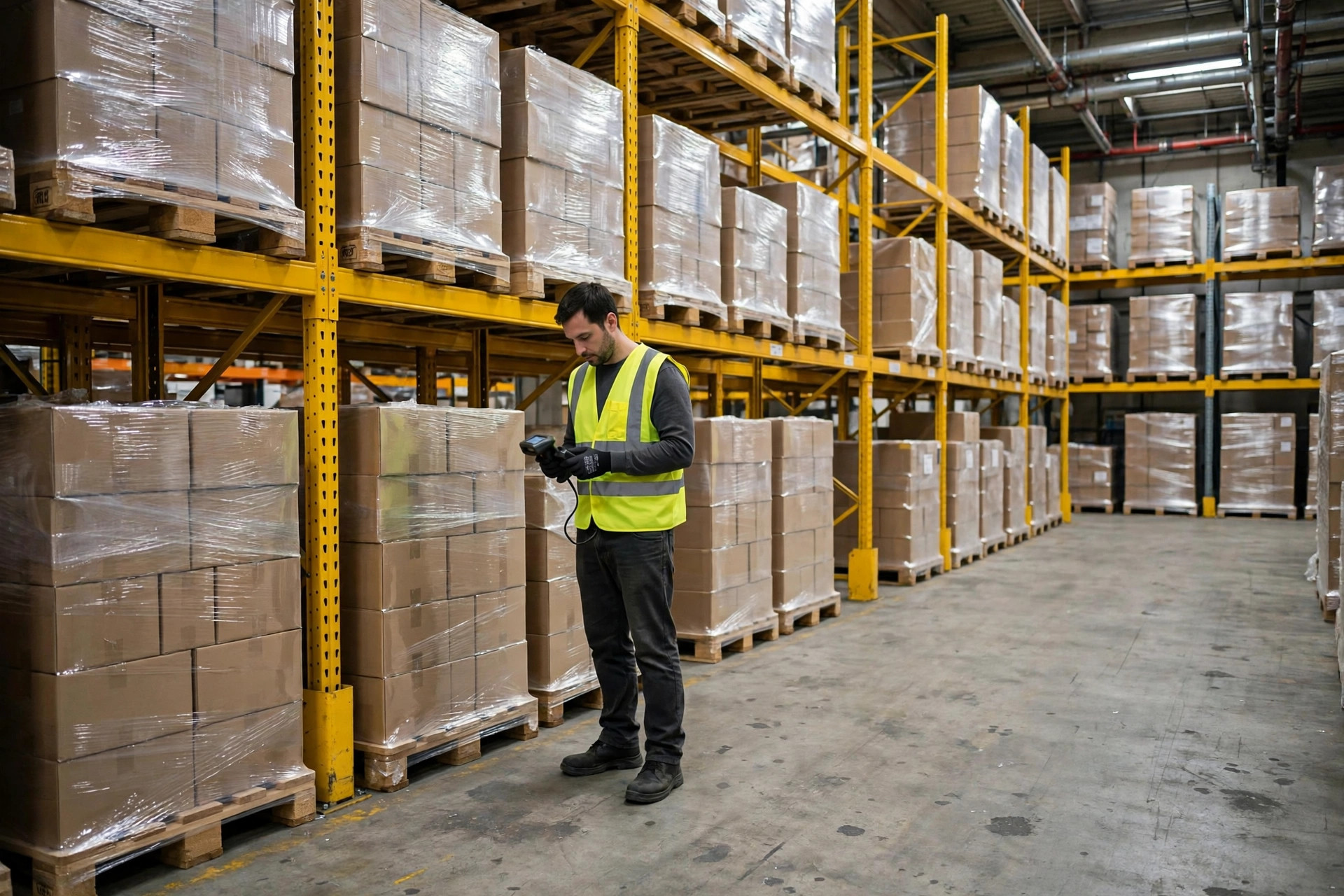
The grading motion has to be quick and standardized: scan the RMA number, verify weight, inspect visually, slap on a color-coded tag, move it to the matching zone. Color tags are the cheapest effective tool I know — green, yellow, red, black — you can read the entire quarantine area from twenty feet away. A small-appliance 3PL I visited in Ontario in 2023 equipped inspectors with scanners and tablets to snap two photos per inspection. When a customer disputed a damage claim, they just pulled up the photos. End of argument. Small investment, worth copying if you handle a lot of return disputes.
There's a trade-off nobody likes to talk about: finer grading recovers more sellable units but burns labor hours. My rule of thumb is unit value. Above roughly eighty dollars, four grades pay for themselves. Below thirty dollars, merge B and C into a single "not directly sellable" bucket — the labor you save is worth more than the marginal recovery. Small warehouses especially should resist copying big-facility SOPs. Nail the quarantine separation first; that alone prevents most of the damage.
If the system says it's available, it better be shippable
This is where the accounting breaks down. In the WMS, returns need their own inventory states: in transit, pending inspection, pending rework, pending repair, scrap hold, and sellable. The non-negotiable part: anything not in sellable state must be excluded from available-to-promise. Every "the system shows stock but pickers can't find it" mystery I have ever investigated traced back to this one leak.
Status changes happen through documents, one ticket per step. An inspection ticket moves units from pending inspection to rework or sellable. A repair order closes them out to sellable or scrap hold. Nobody edits quantities directly — quantity changes only as a consequence of a ticket, no exceptions, no "quick adjustments" by a supervisor in a hurry. The worst shortcut I've seen: a lead adding return quantities straight into a forward pick location to save time. ATP inflated, customer service oversold, and the warehouse paid for the expedited reships.
Locations need to be separate too. Returns get their own location prefix — we use RTN — completely segregated from forward pick locations. Nothing ships directly from a return location; units re-enter sellable stock through a location transfer. It sounds bureaucratic, but that's the price of clean books. One more detail that saves month-end tears: if defective units go back to the vendor for credit, park them in a dedicated "claim pending" state with quantities and values locked. Don't let them drift around the system, or reconciliation will make you cry.
The pile nobody owns
Quarantine areas are where inventory goes to be forgotten. Nobody chases you for it the way they chase an outbound order, so it accumulates — until it's out of season, depreciated, or simply in the way. The fix is two things: service levels and a daily look at three reports.
My suggested SLAs: inspect and grade within 48 hours of receipt, return B-grade units to sellable within 72 hours, batch C-grade repairs weekly, and clear D-grade scrap monthly with proper sign-off. Once the standard is written down, accountability follows. Without it, it's always "when we get around to it."
Three reports, checked daily. An aging report showing how many days each batch has sat in quarantine. A state distribution report showing how much is stuck in inspection, rework, and scrap. And the resell recovery rate — how much of this week's returns made it back to sellable. Track three KPIs and you see the whole picture: return-to-sellable cycle time, recovery rate, and scrap rate. If recovery stays under half for weeks, the problem is upstream — either grading is too strict or the product itself has quality issues. Don't just spin your wheels in the warehouse.
And the unglamorous move that actually works: anything sitting untouched for seven days gets pulled for forced re-inspection. Repair what's repairable, scrap the rest. Hesitation is the most expensive inventory there is — every square foot of quarantine space is rent burned on goods going nowhere.
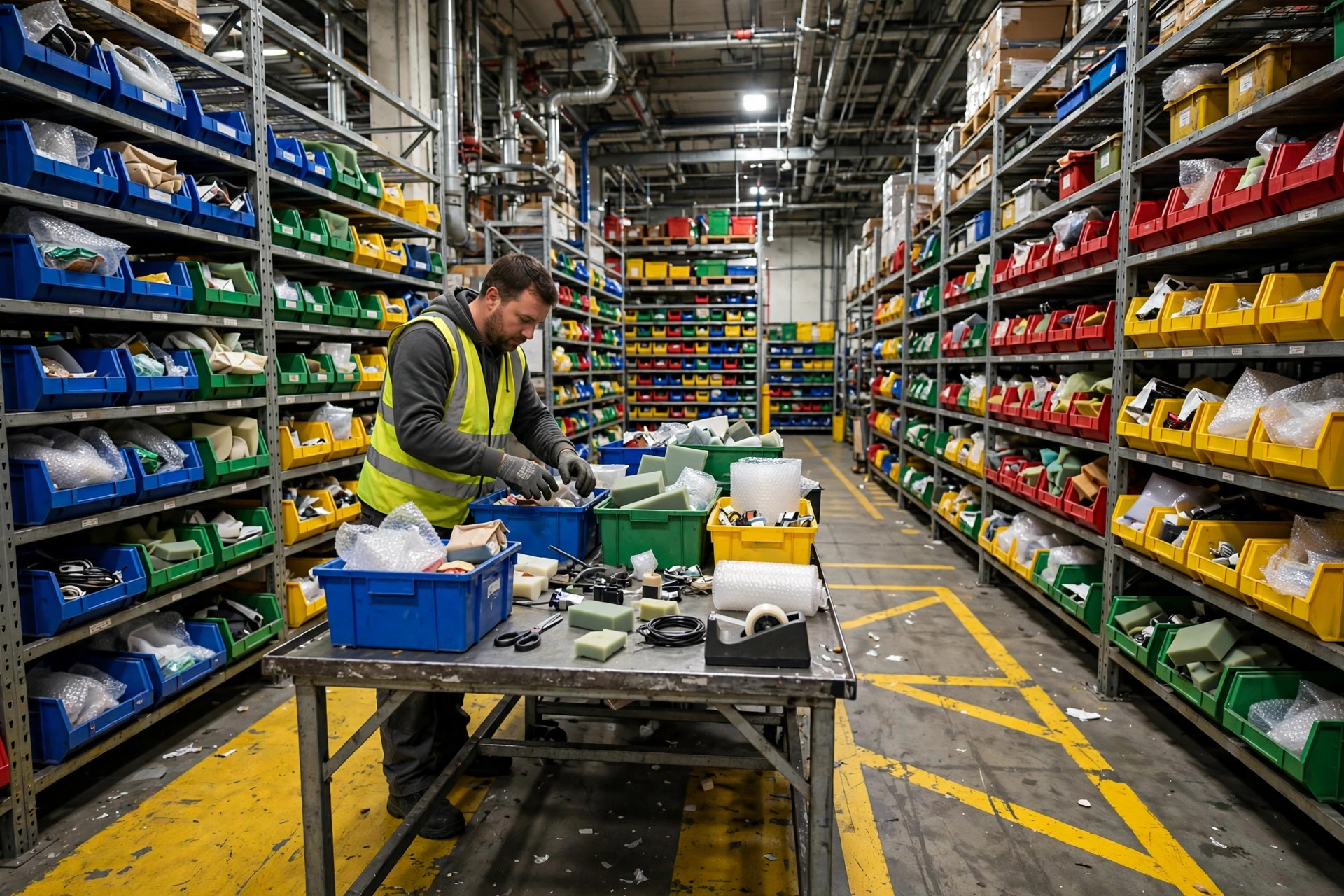
Returns accounting comes down to three things: where the goods physically are, what state the system thinks they're in, and how fast they move. Get those three right and returns stop being a black hole in your books.
Here's the question I'd leave you with. Clean books only tell you what happened after the fact. Every returned unit is really asking why it came back in the first place. If you ranked your last three months of return reasons, could you cut the number-one reason in half next quarter?