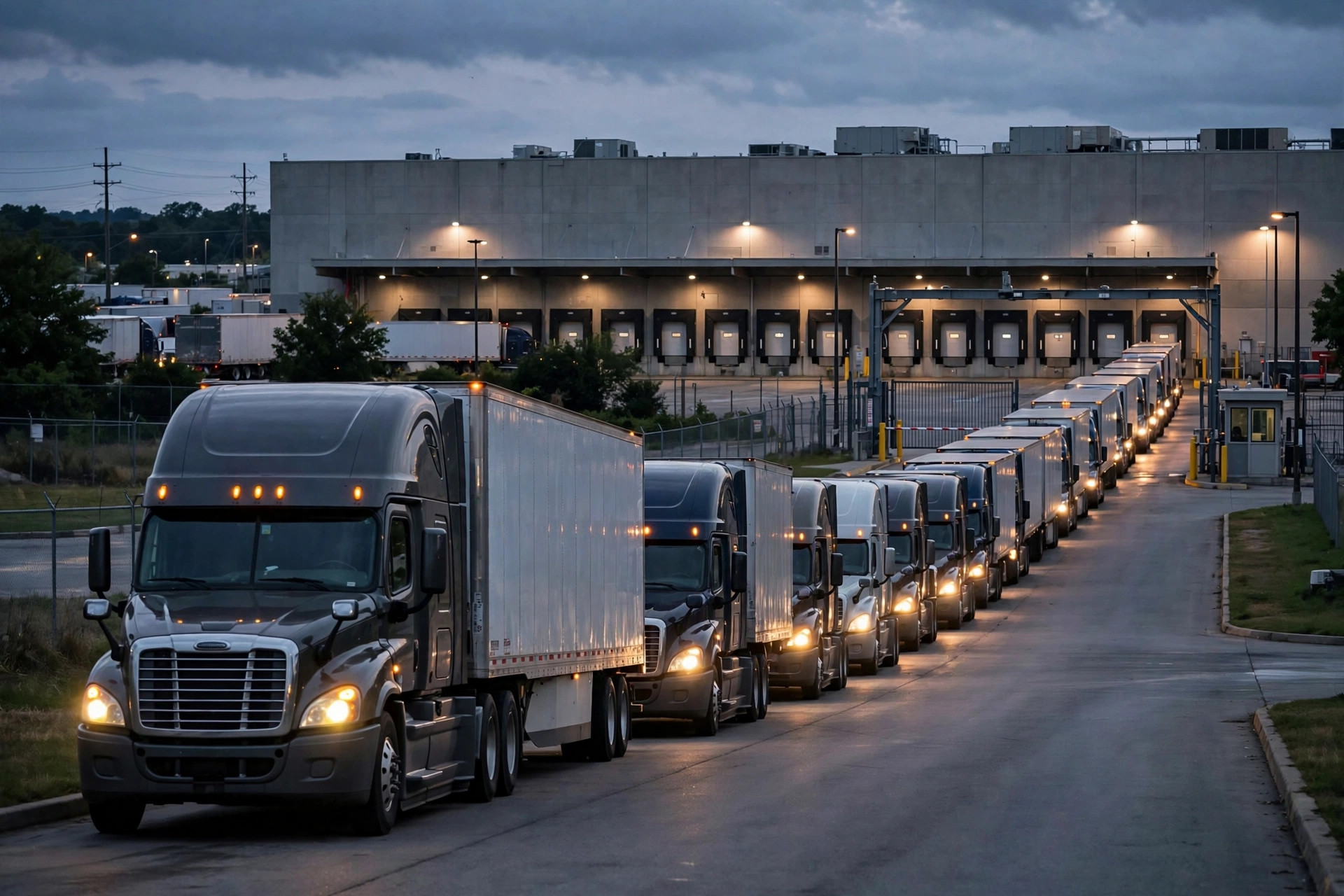
Let's start with the bill — the trailer dwell time bill.
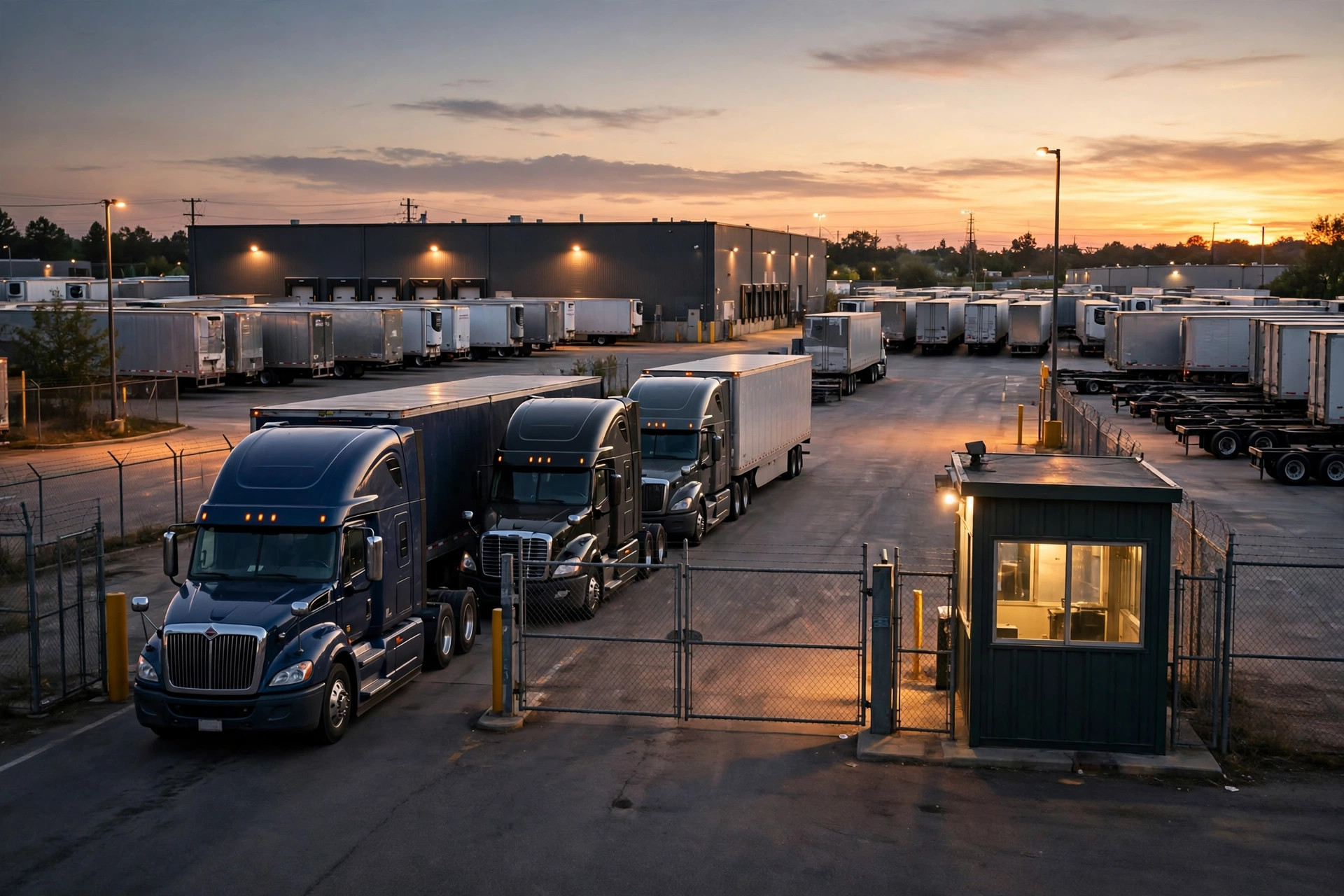
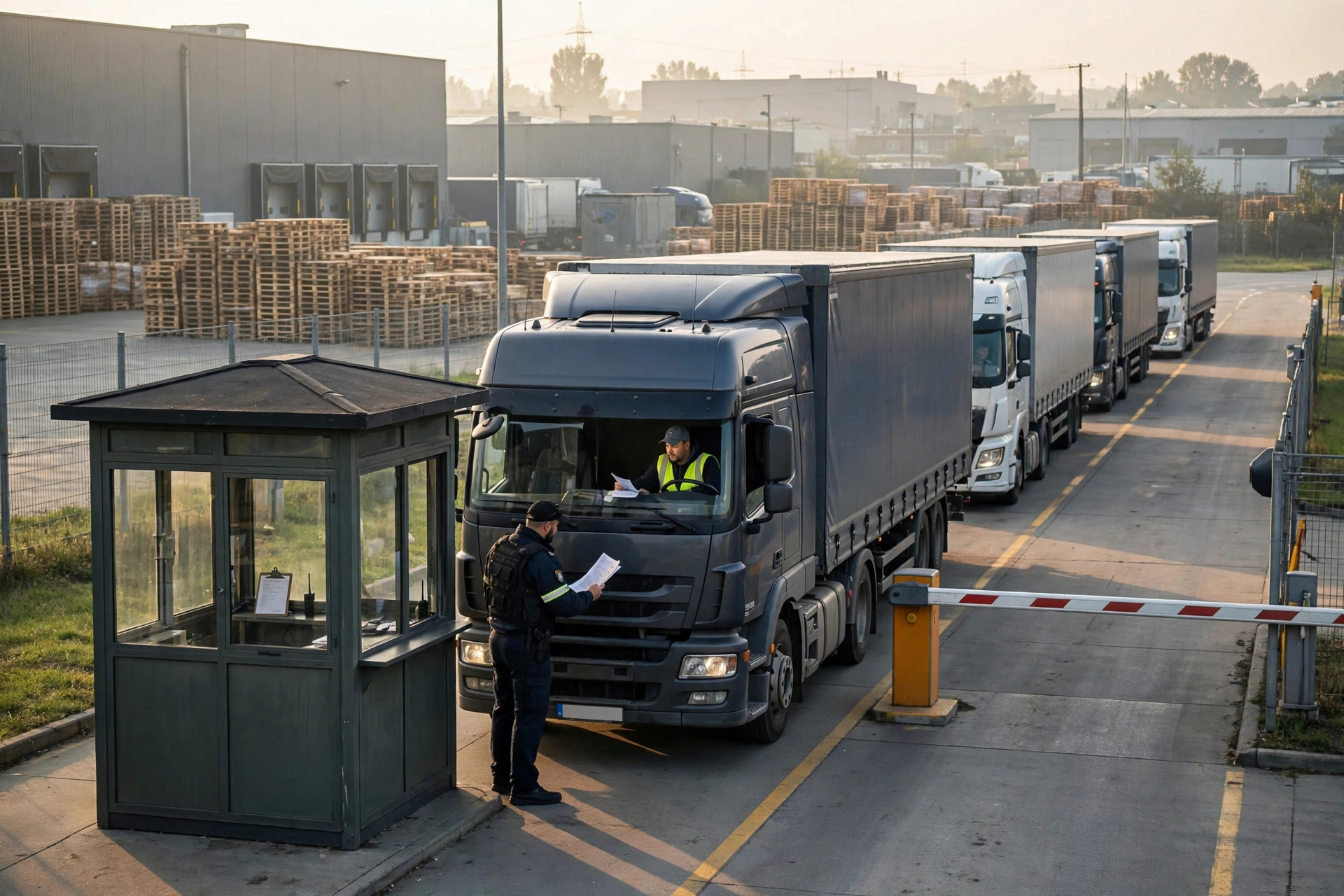
In the fall of 2024, I audited a 3PL warehouse in Ontario, California: 120,000 square feet, 40 dock doors, roughly 80 trailer arrivals a day. I spent three days going through the gate log. At peak hours, the average trailer dwell time — gate-in to dock — was 3.8 hours.
Then I asked finance to pull the month's carrier invoices. Detention charges: $88,000.
$88,000 a month. $1.06 million a year. Not one dollar of it became inventory on a shelf, picking productivity, or customer experience. It was money spent purely on waiting.
That money was wasted.
Where the trailer dwell time money actually goes
Most people think the cost of queuing is just detention fees. Not quite. Detention is only the visible part. I broke this yard's waiting cost into four line items, each with its own math:
(Model yard: 80 arrivals/day, 22 working days/month, 250 days/year; detention at $50/hour — the low end of the industry's typical $50–$75 range — with 2 hours of free time, the standard US trucking practice.)
| Cost item | Math | Annual cost |
|---|---|---|
| Detention paid out | 1,760 arrivals/mo × 40% detained × 2.5 extra hours × $50 | $1,056,000 |
| Wasted yard-jockey hours | 80/day × 40% × 1 hour of pointless shuffling × $30/hr × 250 days | $240,000 |
| Carrier "difficult facility" premium | 30% spot volume × $30/load surcharge × 528 loads/mo × 12 | $190,080 |
| Inventory carrying cost of idle trailers | 1,760/mo × $50,000 load value × 8% ÷ 365 ÷ 24 × 3 idle hours × 12 | $28,932 |
Total: about $1.52 million a year.
The fourth line is the interesting one. I expected the carrying cost of freight sitting in the yard to be significant. It came out under $30,000 a year — less than 2% of the total. Financially, it's a rounding error. Next time someone justifies a YMS with "inventory carrying cost," show them this table.
The real structure: detention is 70% of the problem — that's the main battlefield. Wasted jockey hours and the carrier premium are about 15% each — the flanks. The YMS business case lives and dies on those three.
One more number worth isolating: of those 3.8 hours, actual loading and unloading took about 40 minutes. The other three hours were pure process idle — waiting for the guard to log the truck in, waiting for dispatch to find a door over the radio, waiting for the previous trailer to move. The yards with the longest queues are rarely the busiest yards. They're the ones with the worst appointment discipline.
The same yard, 90 days after yard management went live
In early 2025, this warehouse deployed a SaaS yard management system. Here's the investment, line by line:
| Investment | Amount |
|---|---|
| Subscription, $2,500/mo (within the industry's $500–$5,000/mo per-site SaaS range) | $30,000/yr |
| One-time implementation: gate tablets, license-plate cameras, WMS integration | $28,000 |
| Total year-one investment | $58,000 |
Three moves. No magic:
First, carriers book appointment slots online. Arrive more than 30 minutes late and the door auto-releases to whoever is waiting; no-show twice and you're restricted to off-peak slots for two weeks. Discipline comes from the system, not from dispatchers arguing on the phone.
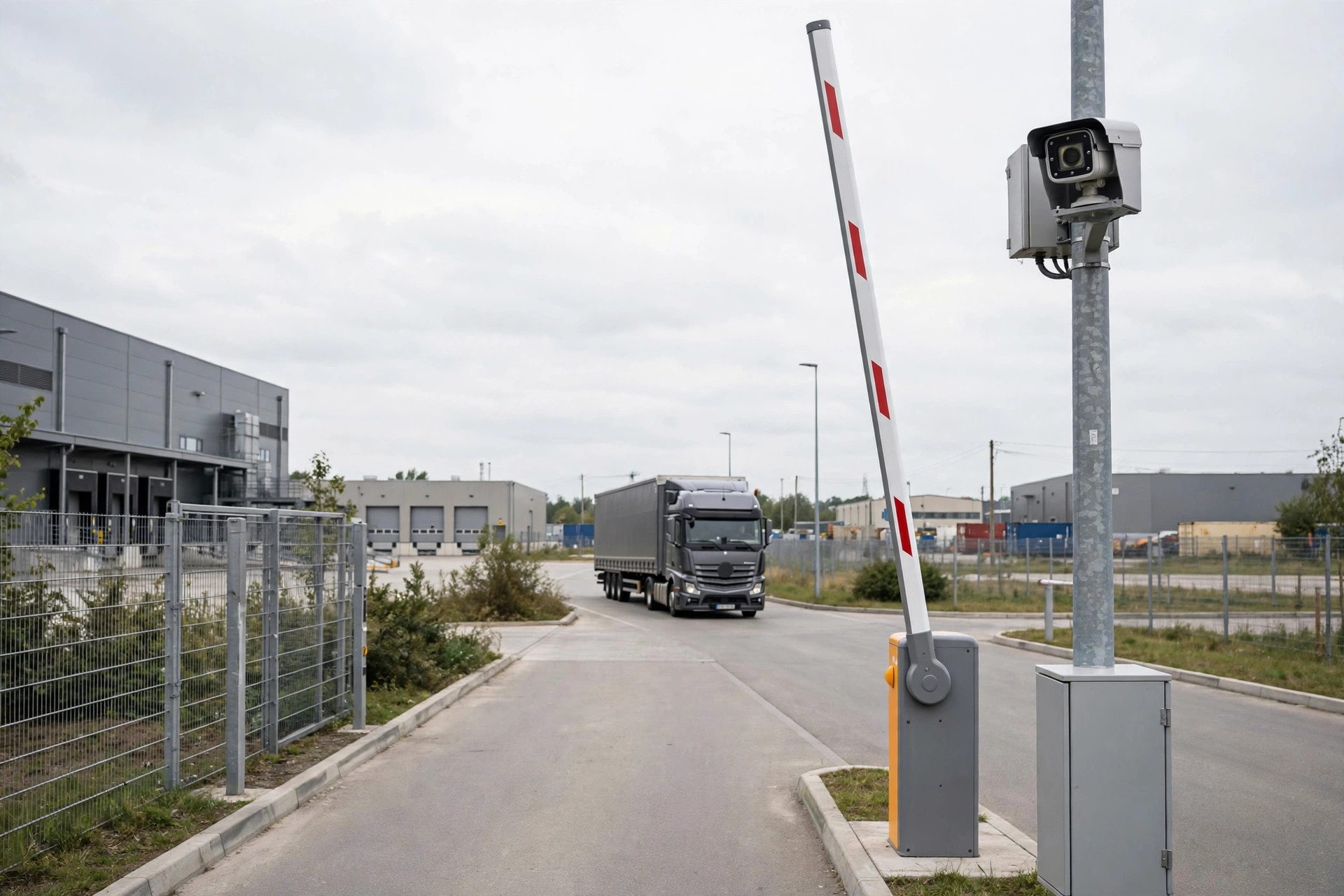
Second, self-service gate check-in with license-plate recognition. The guard went from "handwritten log plus calling dispatch" to "scan and wave through." Per-truck gate time dropped from 12 minutes to 2.
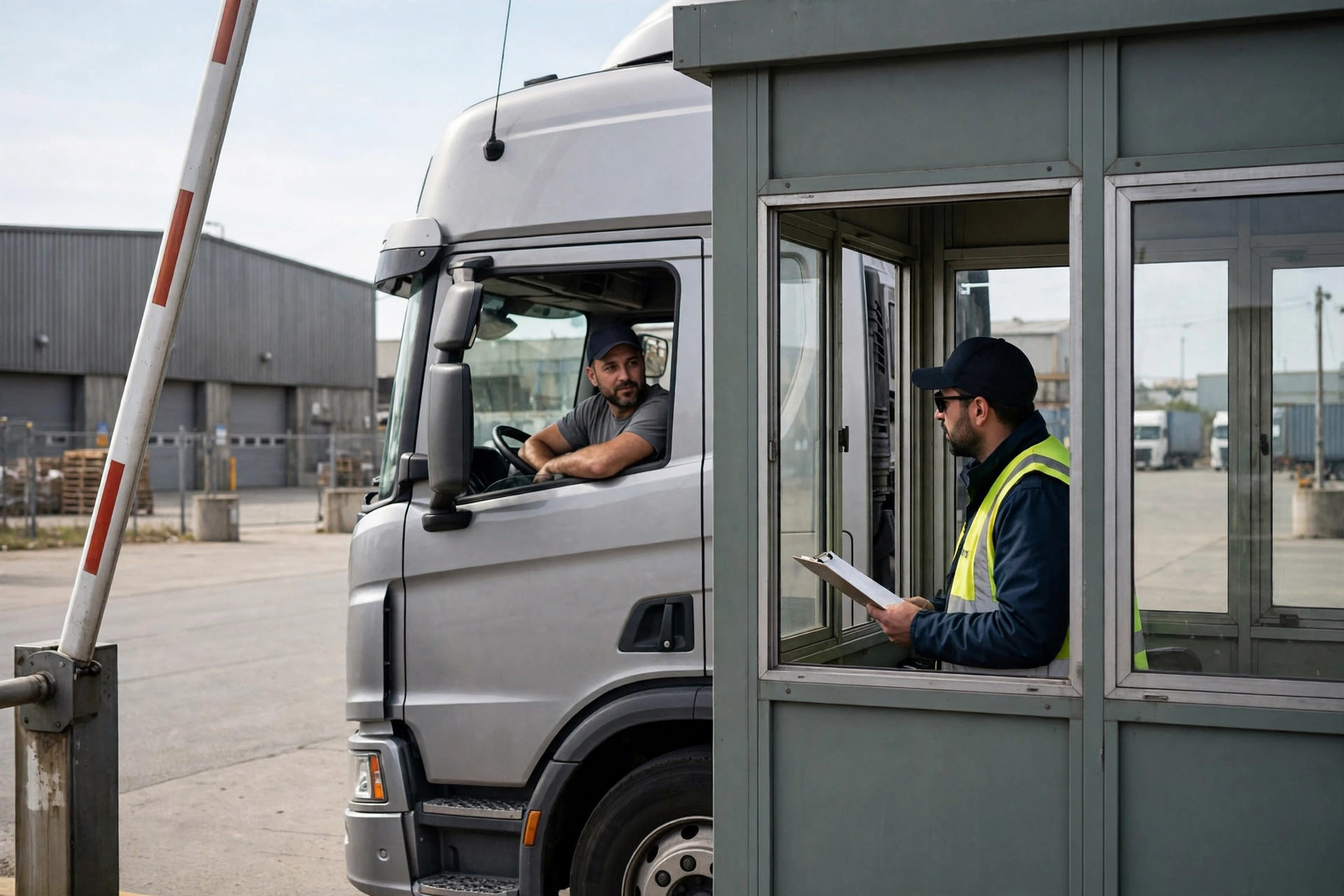
Third, the system auto-assigns doors by appointment slot and freight type, and jockeys take jobs on their phones. No more shouting over the radio.
Ninety days of measured results: average trailer dwell time fell from 3.8 hours to 36 minutes, closing in on the 30-minute target; the share of arrivals exceeding the 2-hour free window dropped from 40% to 6%; the monthly detention bill went from $88,000 to $9,500; jockey overtime went to zero.
Here's the payback math. Conservatively, counting detention savings only:
| Before | 90 days after | Annualized savings | |
|---|---|---|---|
| Monthly detention bill | $88,000 | $9,500 | $942,000 |
| YMS year-one investment | — | — | $58,000 |
| Payback period | — | — | 0.7 months |
Even at half the savings, payback stays under two months. YMS vendors like to quote "6–12 month payback" — that's the industry-average pitch. The worse your queue, the faster the payback, because the denominator (the waste) is bigger.
Here's the counterintuitive part: most YMS business cases I review lead with "eliminating 1–2 dispatcher headcount." A dispatcher costs $60,000–$80,000 a year — a rounding error next to $942,000 in annual savings. A YMS doesn't kill labor cost. It kills detention fees and idle time. If your proposal leads with headcount savings, it's aimed at the wrong target.
Why 30 minutes is the number: the breakeven point
Why 30 minutes — not 10, not zero?
Because 30 minutes is where the cost curve bends. Going from 4 hours to 30 minutes takes appointment discipline plus gate automation — tens of thousands of dollars. Going from 30 minutes to 10 takes a fully automated gate (plate recognition plus OCR plus scale integration), yard-wide RFID, and jockeys on permanent standby — 3–5x the investment for detention savings that round to nearly zero, since anything inside the 2-hour free window was never billed anyway.
Thirty minutes also has a financial meaning: it leaves a 1.5-hour buffer inside the free window, so the occasional delay never triggers a charge. Below 30 minutes, every extra 10 minutes you squeeze out is expensive peace of mind, not ROI.
Finally, a quick-reference table. The payback formula is simple:
Payback (months) = annual YMS cost ÷ (daily arrivals × detained share × avg. extra hours × $50 × 250 days) × 12
| Daily arrivals | Est. annual detention | Est. annual YMS cost | Payback |
|---|---|---|---|
| 20 | $150,000 | $18,000 | 1.4 months |
| 50 | $375,000 | $30,000 | about 1 month |
| 80 | $600,000 | $58,000 | about 1.2 months |
(Assumes 30% of arrivals detained, 2 extra hours on average, $50/hour.)
The verdict is blunt: at 20 arrivals a day or more, the YMS math works. Below 20 a day, don't buy software yet — stand up an Excel appointment sheet with a late-release rule first. Discipline alone cuts the wait in half.
Two things you can do tonight: first, pull three months of carrier invoices, total the detention line, divide by three — that's your monthly average. Second, if it's over $5,000, a YMS pays for itself within the year, guaranteed. Over $15,000, every month you wait is another month burned.
Queuing isn't an operations problem. It's a finance problem. A 4-hour line burns your own money.
By Lao Zhou, Logistics Cost Analyst