Ship 10,000 small parcels a month, and the gap between a poly mailer and a carton can quietly cost you $200,000 a year. The difference is one bag versus one box.
Do the math with me. Say you move 10,000 units a month, each weighing about 1 kg (2.2 lb), soft goods — apparel, hats, fabric accessories. Two ways to pack:
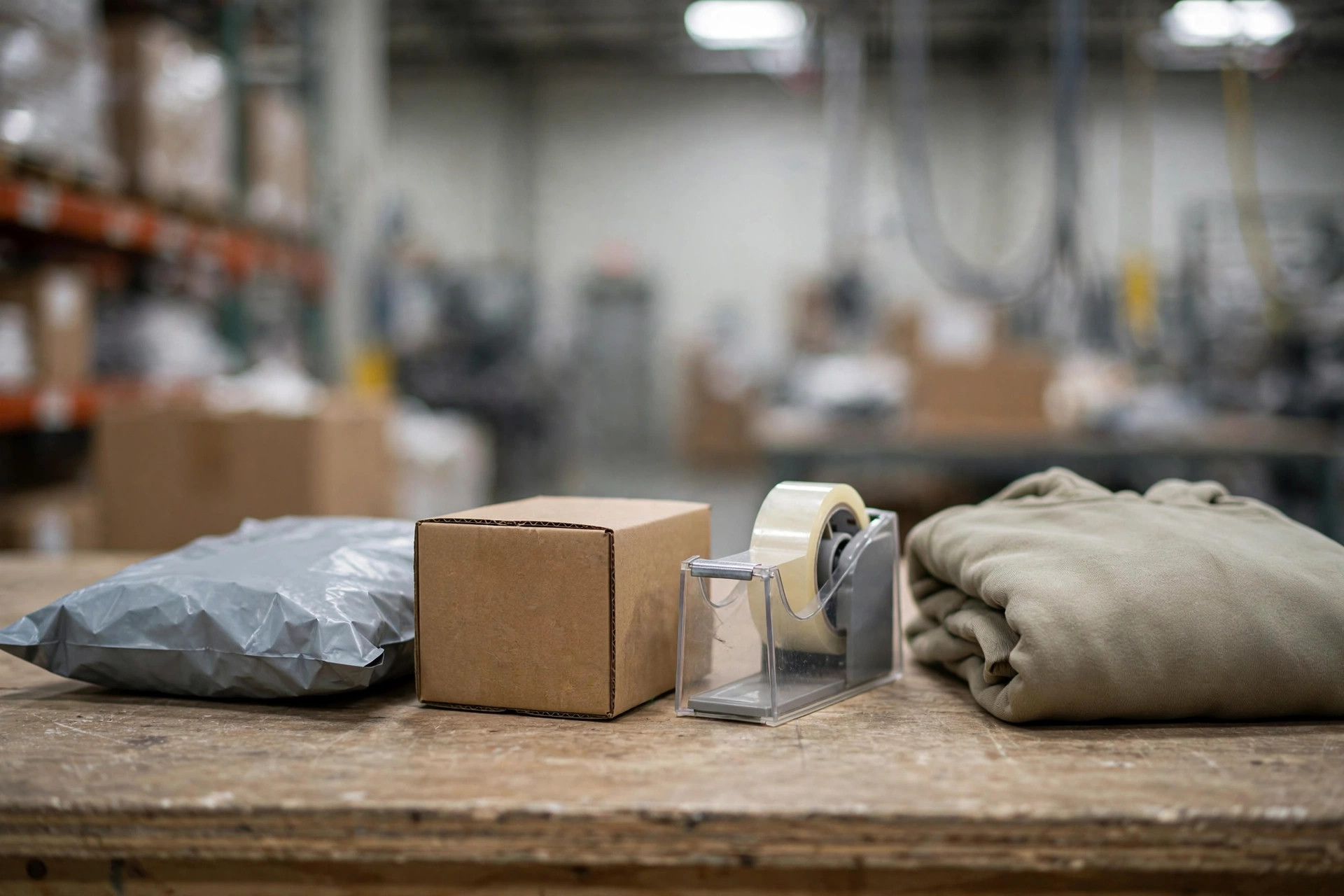
Option A: a 12×9×4-inch carton with filler. DIM weight = 432 ÷ 139 ≈ 3.1, and carriers round up to the next whole pound: 4 lb. Actual weight 2.2 lb rounds to 3 lb. Billable weight takes the greater: 4 lb.
Option B: a 10×13-inch poly mailer, about an inch thick. DIM weight = 130 ÷ 139 ≈ 0.94 → 1 lb. Billable = the greater of 3 and 1: 3 lb.
That's one billable pound per parcel, plus roughly $0.80 in material and labor. 10,000 a month is 120,000 a year — do the multiplication yourself. That's the invoice we're auditing today.
First, the ledger: a per-unit cost comparison
(Material ranges are 2026 U.S. wholesale estimates; labor at a $20/hour fully loaded rate; freight per each carrier's current published policy.)
| Cost per unit | Poly mailer (10×13 in) | Carton (12×9×4 in + filler) |
|---|---|---|
| Material | $0.06–$0.12 | $0.45–$0.80 (box + tape + filler) |
| Pack labor | ≈20 sec ≈ $0.11 | ≈70 sec ≈ $0.39 |
| DIM weight (UPS/FedEx) | ≈1 lb | ≈4 lb |
| Damage rate | negligible for soft goods; ≈1–2 points higher for hard goods (estimate) | baseline |
| Subtotal (excl. freight) | ≈$0.20 | ≈$1.00 |
Read it plainly: the bag saves about $0.80 per unit in material and labor, plus one billable pound of freight. At 10,000 units a month, material and labor alone differ by roughly $96,000 a year — freight not included.
The real dividing line isn't bag vs. box. It's dimensional weight.
People switch to mailers on vibes: "bags are cheaper, must save money." I am allergic to vibes. Whether you save comes down to one formula:
DIM weight = L × W × H ÷ 139, with each fractional inch rounded up; billable weight = the greater of actual and DIM.
That divisor, 139, is standard across UPS and FedEx domestic. As of July 12, 2026, USPS uses it too (it was 166). The three carriers now do the same math — the small pricing edge USPS used to have on big, light parcels is gone. One wrinkle worth knowing: USPS still doesn't apply DIM below one cubic foot (1,728 cubic inches). Under that floor, bag and box ride on actual weight and the whole freight argument evaporates — the decision comes down to material and labor only.
The dividing line in three steps:
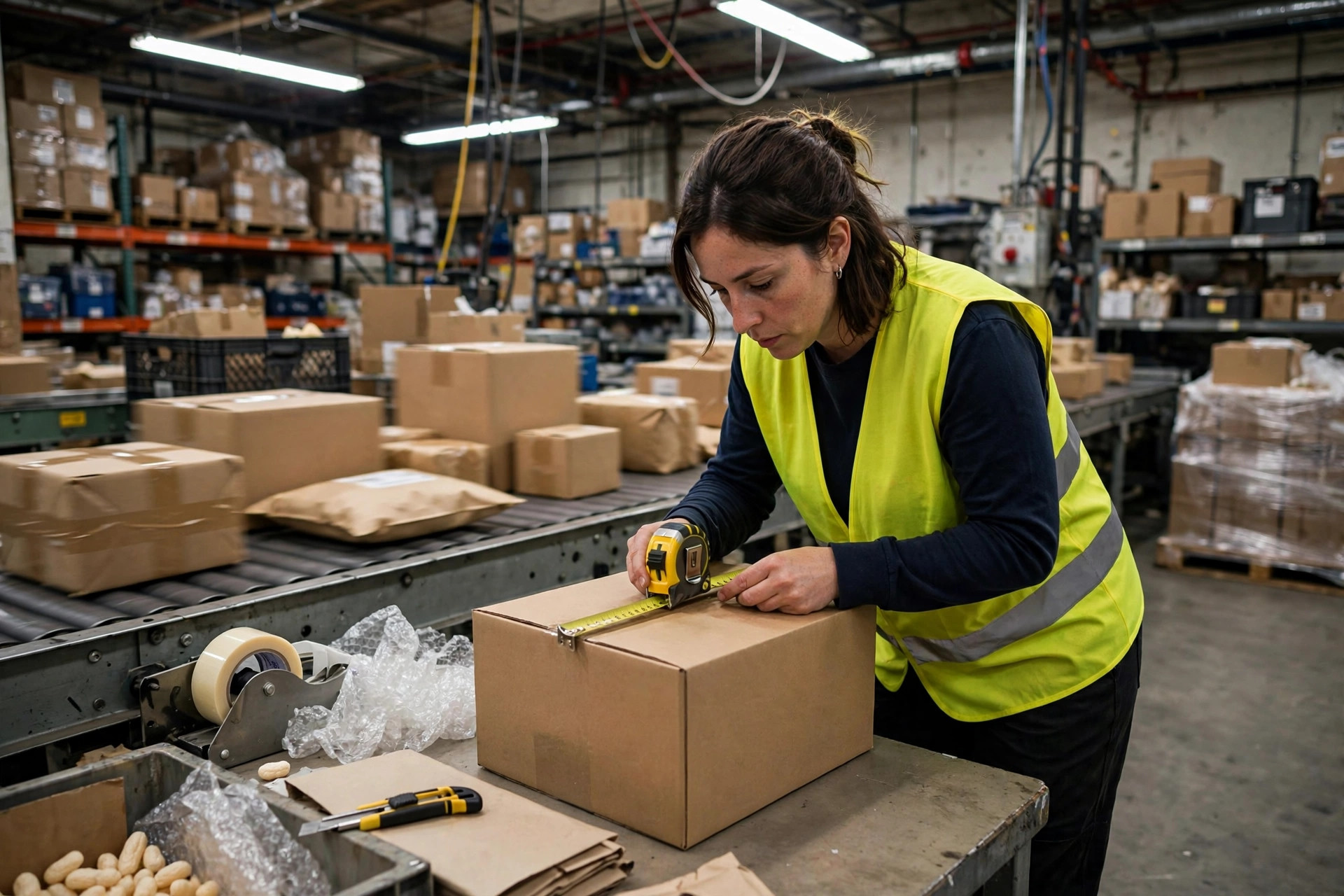
Step 1: compute DIM. Work out the dimensional weight of your main carton size, then check whether it's "running ahead" — if DIM exceeds actual weight in your billable weight, you're paying freight for air, and switching to a mailer or slimming the box pays. If actual weight already exceeds DIM, bag and box cost the same in freight, and switching is just rearranging labor.
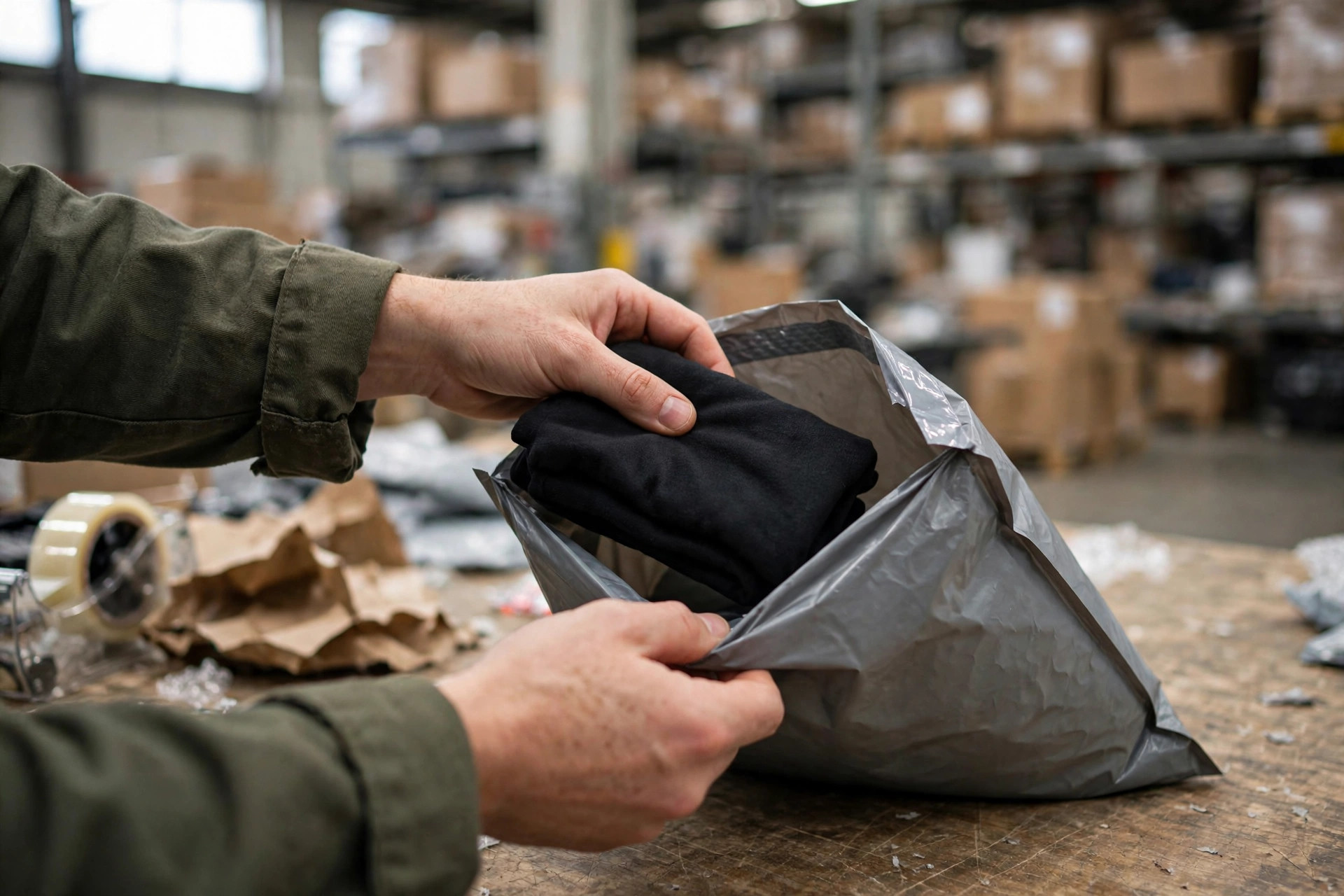
Step 2: interrogate the product. Soft goods (apparel, textiles, soft accessories): bag it, no debate. Hard or fragile goods (ceramics, glass, anything with a screen or a sharp edge): stay in the box. One more rule: if the unit is worth $20 or more, a single damage wipes out hundreds of units of savings — lean box.
Step 3: test the damage rate. Before switching, run 1,000 units as a pilot and compare. Switch fully only if: (mailer damage rate − carton damage rate) × fully loaded cost per damaged unit (product value + return freight + handling labor) ≤ per-unit savings. Otherwise, stand down.
The most expensive kind of "saving": when damage eats the margin
Q2 2025, an electronics accessories seller in Dongguan. Phone cases, cables, ≈$15 per unit, 30,000 units a month. They had switched everything from cartons to mailers that January and were saving roughly $22,000 a month in material and labor. The owner thought it was a brilliant call.
Three months later I audited the numbers: damage rate went from 0.4% to 2.1% — up 1.7 points. Fully loaded cost per damage — return freight, replacement, support labor — about $9. 30,000 × 1.7% × $9 ≈ $4,590 a month in new damage cost. That's direct cost only; the reviews weren't counted.
They were lucky, because their goods were cheap. The genuinely painful version — money spent for nothing — looks like this:
November 2025, a ceramics decor seller, $25 per unit, 8,000 units a month. After switching to mailers, damage went from 0.5% to 4.5% — up 4 points. Fully loaded damage cost per unit: about $37 (value + two-way freight + labor). 8,000 × 4% × $37 ≈ $11,840 a month in new losses, against roughly $6,000 saved in material and labor. Net: −$5,840 a month. They saved pennies and bled dollars.
Here's the counterintuitive takeaway: the biggest packaging lever is often not switching to bags — it's putting your boxes on a diet.
March 2026, a 3PL client in Los Angeles. Their carton went from 12×9×6 inches (DIM 648 ÷ 139 ≈ 4.7 → 5 lb) to 10×7×4 inches (280 ÷ 139 ≈ 2.01 → 3 lb). No mailers, no product changes, no line rework — two fewer billable pounds per parcel at 8,000 units a month. The real enemy was never the box. It was the air inside it.
The off-ledger costs: returns, SKUs, and floor space
Beyond the unit-price table, three more lines most people never book.
First, returns. Apparel return rates run high, and a standard mailer is dead once torn open — the returned unit gets repacked in a fresh bag, so labor and material both count twice. For high-return categories, spec mailers with a resealable second strip: roughly 2–3 cents more per unit (estimate), and it belongs in the model, or the savings quietly die at the returns bench.
Second, packaging SKUs. Three to four mailer sizes cover roughly 80% of orders; cartons mean a dozen-plus box SKUs plus fillers and tape — purchasing complexity, working capital tied up in stock, slot occupancy, all of it money. In the packaging cage, 10,000 flat mailers stack into roughly a fifth of the pallet positions the same count of cartons would need (estimate). If you pay rent by the square foot, that line isn't small.
Third, pack-station takt time. Twenty seconds versus seventy — those fifty seconds are a bottleneck in peak season. A warehouse doing 30,000 units a month frees roughly 40 pack-labor hours a day (estimate) by switching to mailers. Two fewer temps in Q4 is a line item finance understands.
So don't price the package. Price the whole chain — the packaging cage, the pack station, the returns bench. That's the accountant's algorithm.
A conclusion you can calculate:
Monthly net savings = monthly units × [(material gap + labor gap + billable-weight gap × your contracted per-lb rate for the zone) − (damage-rate gap × fully loaded cost per unit)]
Plug in your own numbers. Positive: switch. Negative: don't. "It feels like it saves money" is the most expensive illusion in warehouse costing.
By Lao Zhou, Logistics Cost Analyst