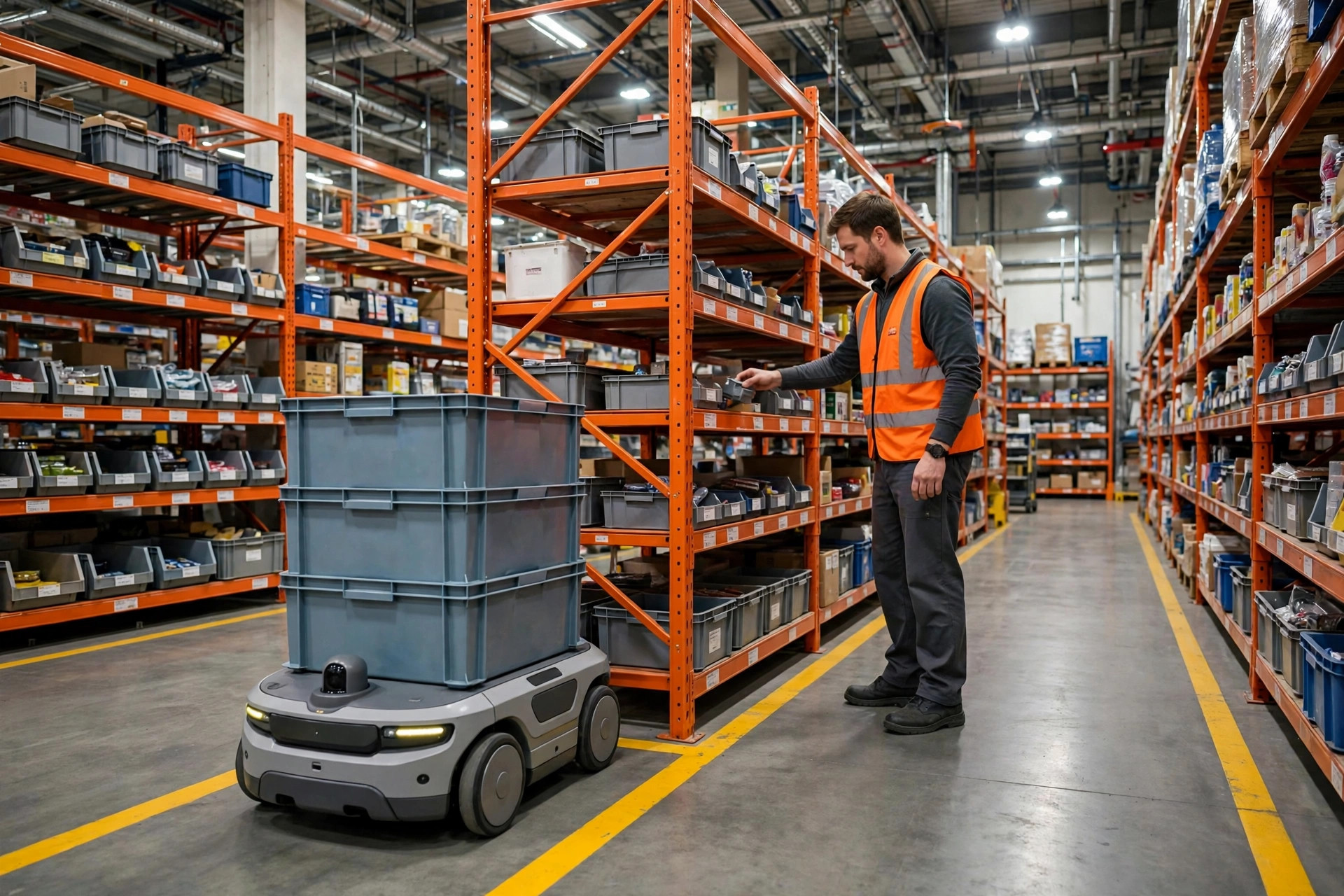
In 2022 I was walking a 3PL in Fontana, California — 80,000 square feet, about 12,000 orders a day in peak season — when the operations manager proudly introduced me to his star picker. Twenty-four years old, fastest hands in the building, 120 units an hour. Then, almost as an afterthought, he mentioned the guy who had just quit: 48 years old, 85 units an hour, third-slowest on the floor. The star got the year-end award. Three months later the veteran was gone. Two months after that, customer complaints about wrong items started climbing.
That is when the manager finally looked at the numbers he had never bothered to compare: the "slow" veteran picked at 99.8% accuracy. The star was at 97.5%.
If you could only keep one, would you keep speed or accuracy? Ask twenty warehouse managers and nineteen will say accuracy. Then look at their KPI sheets: nine out of ten pay bonuses on units per hour. The mouth says quality; the money says speed. That gap is where most picking KPI systems live — and where good veterans go to die.
What a mispick actually costs
Nobody does this math properly, because mispick costs are scattered across the P&L instead of sitting in one tidy line like payroll. So let us walk through it with illustrative numbers — plug in your own:
One mispick: return shipping, outbound shipping on the replacement, customer service time, packaging materials. That clears $15 easily. High-value item, or a wrong address that triggers a second delivery attempt, and $30 is not dramatic. Now scale it to that Fontana building: 12,000 orders a day. At 97.5% accuracy, that is 300 mispicks a day. At 99.8%, it is 24. The gap is 276 orders — at $15 each, over $4,100 a day, more than $90,000 a month. How many paychecks is that?
Now the cost of slow picking: mostly labor efficiency. The gap between 85 and 120 units an hour, over an 8-hour shift, is 280 units — roughly a third of a headcount. At California warehouse wages, that is tens of dollars a day. Tens of dollars versus thousands. You do not need to run this math twice.
There is a second layer most people miss: marketplace and retail-customer scorecards. Platforms track defect and return rates — miss the thresholds and you get throttled or fined. Retail customers charge you back for mispicks, and enough of them cost you the account. None of that shows up on the picking department's report, but all of it lands on the company P&L. A speed-only KPI makes your frontline crew absorb costs they cannot even see.
My verdict is blunt: accuracy is the gate, speed is the bonus. In that order. Never reversed.
Why the veterans quit first
Because most KPI designs are systematically unfair to them. Young pickers are fast — a piece-rate system rewards them naturally. The veteran's value is in not making mistakes: he knows which locations hold the lookalike SKUs and double-checks the scan; he knows which location the system inventory is always wrong at and glances before walking over; when peak season temps flood in, he is half a trainer. None of that shows up in a units-per-hour metric.
Worse, veterans are usually the first to feel "optimized" out: five years in, $3 an hour more than the new hire, slower on the clock. Under a pure-speed KPI, management sees an expensive, slow worker. But when he walks, you do not lose one person — you lose the floor's immune system. A new hire takes two to three weeks to reach base speed and three months or more to reach veteran accuracy. Every mispick in between is tuition, paid in customer complaints.
The dumbest design I have seen tries to fix this with a weighted composite score — accuracy times some factor plus speed times another. It sounds fair. In practice it hands the dilemma to the employee: do I protect my bonus by going fast, or protect my job by going slow? Human nature answers that question the same way every time. The whole floor starts racing, and the error rate climbs quietly in the background.
A KPI template you can steal
Two tiers. Never blend them.
Tier one is the accuracy gate: 99.5% is the line (tune it by category — apparel and auto parts are not the same game). Two consecutive weeks below the line: bonus paused, coaching starts. A full month below: reassigned. Accuracy is a red line, not a bonus lever. Say it out loud, put it on the wall.
Tier two is the speed bonus: only pickers who cleared the accuracy gate are eligible. Set the units-per-hour bands per zone — a small-parts put wall and a furniture pick module are not the same job, and one line for the whole building is a joke. Do not rank zones against each other either; the furniture picker will never beat the small-parts picker, and a leaderboard just pushes people to cherry-pick work that is not theirs.
How should the speed bands be set? Not from the fastest person's record — that is talent, not a standard. Pull the last three months of median rates per zone and set the top band 10–15% above the median. Half the crew can reach it with effort, the stars have something to chase, and nobody thinks the target was invented in a meeting. Recalibrate every six months; when the layout or SKU mix changes, the standard changes with it.
Piece rate or hourly? Go hybrid: hourly base for stability, piece-rate bonus for upside. Pure piece rate pushes people to trade accuracy for speed. Pure hourly grows complacency. Under a hybrid, the veteran earns his full bonus on accuracy, the rookie chases extra on speed, and neither feels cheated.
One thing people forget: the accuracy metric itself has to be fair. Measuring accuracy only from customer complaints punishes whoever picks the slow-moving SKUs — nobody buys them, nobody complains. The honest method is daily random QC: audit 20 orders per picker per day, combine the audit results with complaint data. That is how a veteran's careful work in the dead-stock zone finally gets seen.

Roll it out in one zone first, not the whole building on day one. And before the pilot, show the crew the mispick cost math — most people are reasonable when they see the numbers. Post the before-and-after accuracy numbers where everyone can see them. KPI changes fail when they arrive as a memo from above; they work when the floor understands the why.
One last habit: review your exit interviews every quarter. If the share of veterans among departures keeps rising, your KPI is pushing out exactly the people you cannot afford to lose. That is not an employee problem. That is a KPI problem.
Something you can do tomorrow: export three months of mispick records, calculate accuracy per picker, then calculate the return-shipping cost of each picker's errors. Take that sheet to your star picker. Most of the time, it is not that people do not want to be accurate — it is that your KPI never told them accuracy is worth more than speed.