Here's my verdict up front: the Peru blueberry cold chain isn't won inside the reefer at the Port of Callao. It's won in the six hours between the field and the packing house. If pulp temperature doesn't hit 0°C within six hours of harvest, every dollar you spend downstream is patching a hole you dug yourself.
Here's the thing about blueberries: they're delicate, but delicate in a very predictable way. Zero degrees Celsius, 90–95% relative humidity — those numbers are written in stone across the industry, from FAO storage guidance to every carrier's reefer manual. And Peru now sits on top of this trade as the world's largest blueberry exporter, a crown it took from Chile a few years ago. In 2025 the country shipped a preliminary 412,239 tons worth $2.563 billion to 66 markets, per Fresh Fruit Peru. The United States is the biggest buyer, the Netherlands is the gateway into Europe, and shipments to China more than doubled in 2025. The 2024/25 campaign alone moved 326,000 tons — up 57% from the prior year — worth $2.27 billion, according to Peru's agriculture ministry. When a chain this big breaks, you don't lose a pallet. You lose a container.
And I've seen too many people spend their money in the wrong place: the most expensive reefer, full controlled atmosphere switched on, and the fruit still lands in Rotterdam soft and moldy. The damage happened before the berries ever saw the container.
Where the Peru Blueberry Cold Chain Actually Starts: Six Hours After Picking
Two things matter here: temperature and time.
A blueberry comes off the bush carrying field heat. Peru's coastal growing regions — La Libertad, Lambayeque, and Ica lead the pack — run warm during the day. The fruit respires, respiration generates heat, and heat accelerates respiration. It's a vicious cycle. Postharvest research draws a hard line: pulp temperature must reach 0°C within six hours of harvest. One study found berries forced down to 1.5°C in two hours showed far less rot after storage than berries that took 48 hours to reach the same temperature.
Field discipline starts even earlier than that. Serious growers won't pick when fruit temperature is above 30°C, keep picking buckets and QC tables in the shade — shaded fruit runs 5–6°C cooler than ambient air — and never leave empty crates baking in the sun, because hot plastic transfers its heat straight into the berries. None of this costs money. Few operations do it every single day.
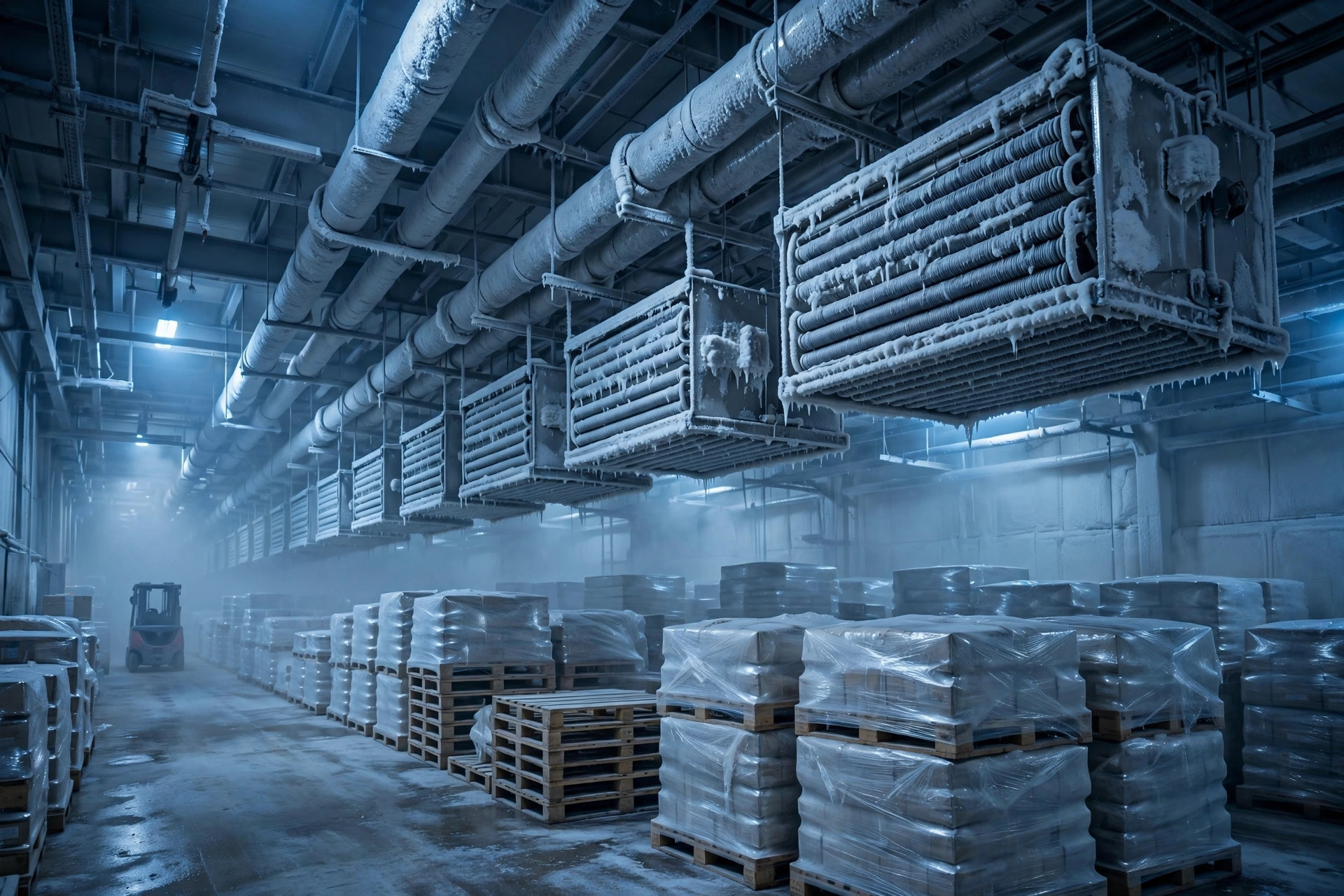
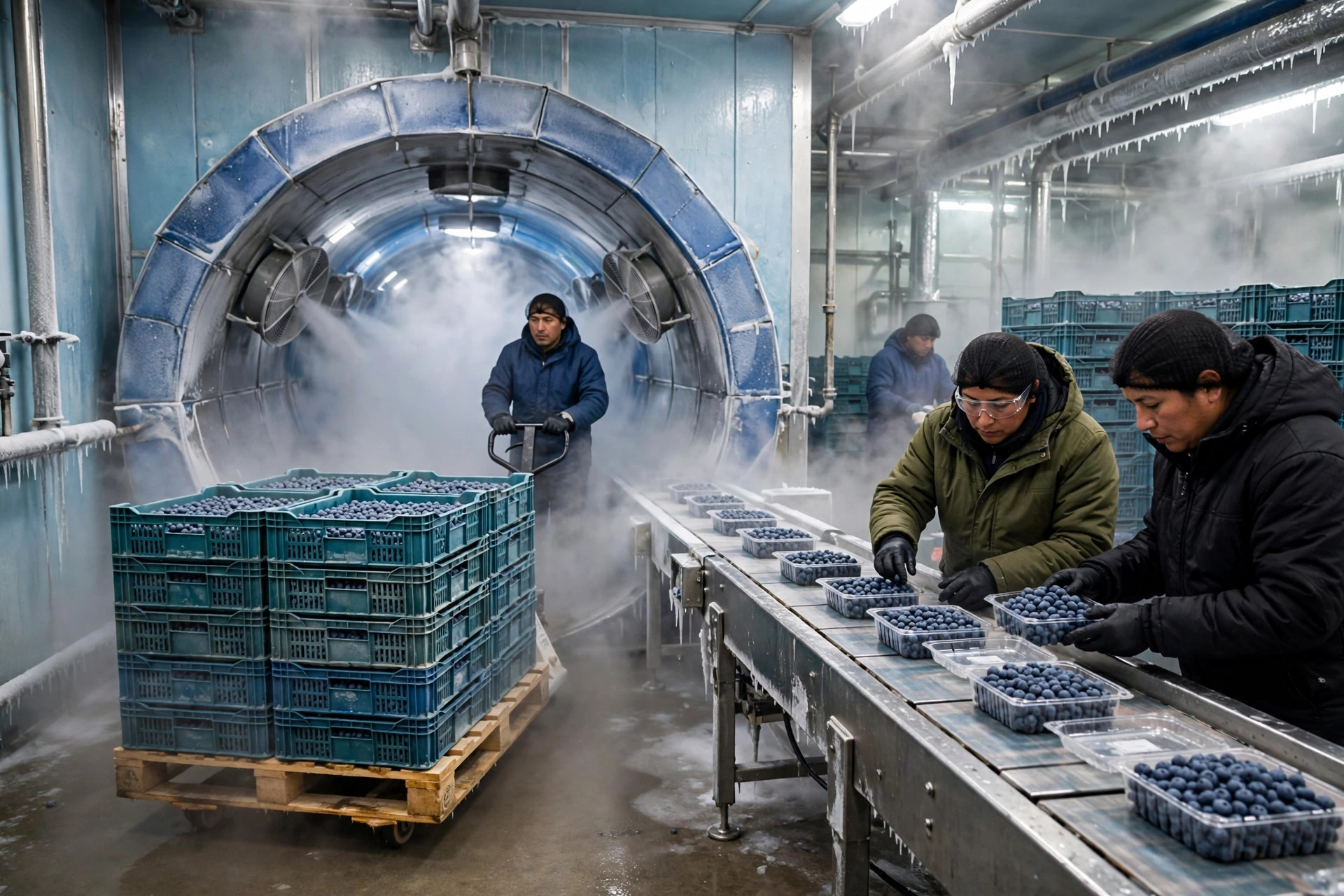
The disciplined packing houses run a tight sequence: fruit reaches the cold room within an hour of picking and gets pulled down to around 6°C; before the packing line it goes through forced-air cooling that drags pulp temperature to 0–1°C in under an hour; packing happens in a refrigerated environment; finished pallets wait in a 0°C cold room for the reefer truck.
Simple on paper, devilish in the details. Precooling is not "push the pallet into the cold room." A full pallet in a conventional cold room cools at a crawl — the fruit in the center can take hours, sometimes a day or two, and the temperature gradient causes condensation. I watched one packing house skip its forced-air tunnel to save on electricity during peak season, stacking full pallets in the cold room instead. While trucks queued at the cold room door, fruit sat at ambient temperature for hours. That season, three containers went to Europe and two arrived downgraded at destination, with the buyer deducting accordingly. The electricity they saved wouldn't cover a tenth of one container's claim.
Here's the counterintuitive part: the cheapest link in the Peru blueberry cold chain — getting fruit into the cold room within an hour — is where the chain breaks most often. Everyone stares at the temperature curve across 20 days at sea. Nobody looks at the two hours between the field and the packing house.
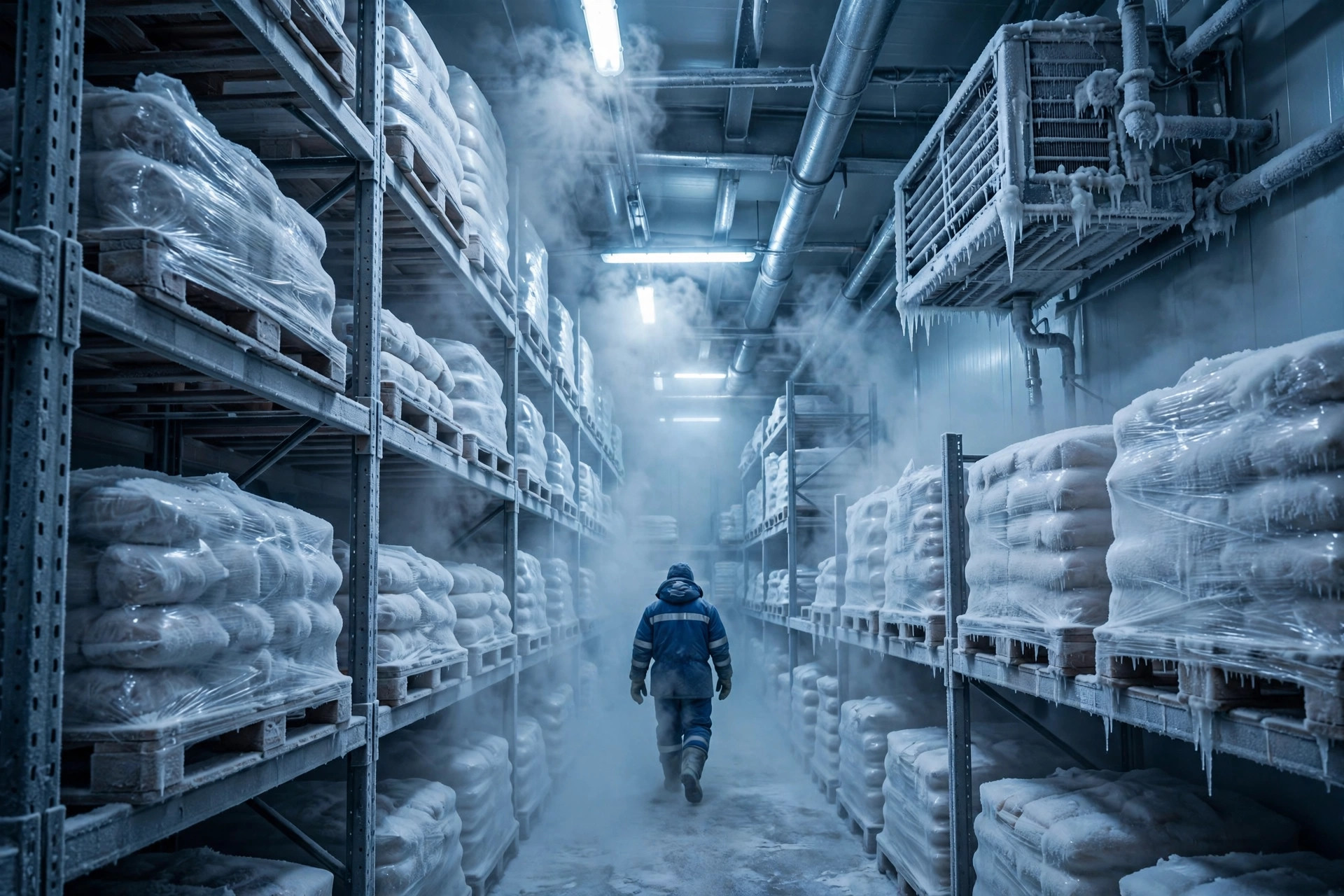
After Loading at Callao: Holding 0°C Across a 20-Day Voyage
From Callao — or Paita up north — to Rotterdam, you're looking at 20–25 days at sea. To the U.S. East Coast at Philadelphia, roughly two weeks. That's the fixed cost of distance, and the fruit sits at 0°C for all of it.
Here's how to read a reefer spec sheet for blueberries, in typical carrier-guidance terms:
| Parameter | Setting |
|---|---|
| Set point | 0°C (optimum −0.5 to 0.5°C) |
| Relative humidity | 90–95% |
| Controlled atmosphere | O₂ 2–5%, CO₂ 12–20% |
| Shelf life in normal air | 1–3 weeks |
| Shelf life under CA | 8–10 weeks |
See the trade-off? A Europe voyage at 20–25 days brushes right up against the 3-week ceiling of normal air. That's why Europe-bound boxes almost always run controlled atmosphere — you're buying the 8–10 week cushion. For the U.S. East Coast at around two weeks, a standard reefer does the job. Match the equipment to the route; don't blanket-spec CA everywhere.
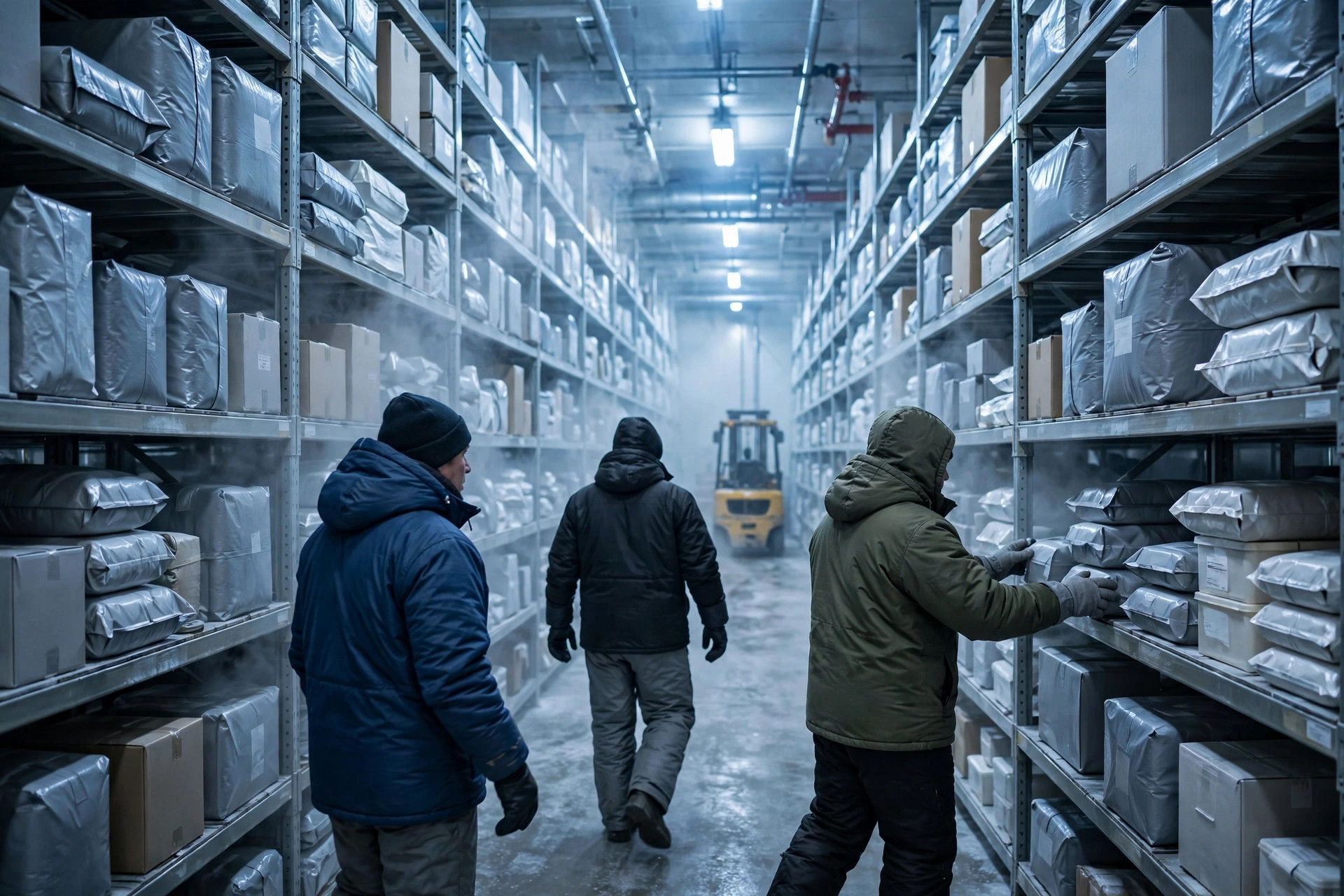
But there's a trap I've watched spring in person: loading a warm box. A reefer maintains temperature; it does not pull temperature down. Fruit must already be at 0°C when it goes in, the empty container should be pre-cooled to set point before loading, and the doors need to close fast. One afternoon at Callao I watched a crew load at midday with the doors open for the better part of an hour — cooler for the workers, deadly for the fruit. The data logger later showed the box hovering around 3°C for 36 hours before it recovered to 0°C. In the Netherlands, the top layers came out soft and the whole container was downgraded. The hours saved in those first six hours got paid back at sea, with interest.
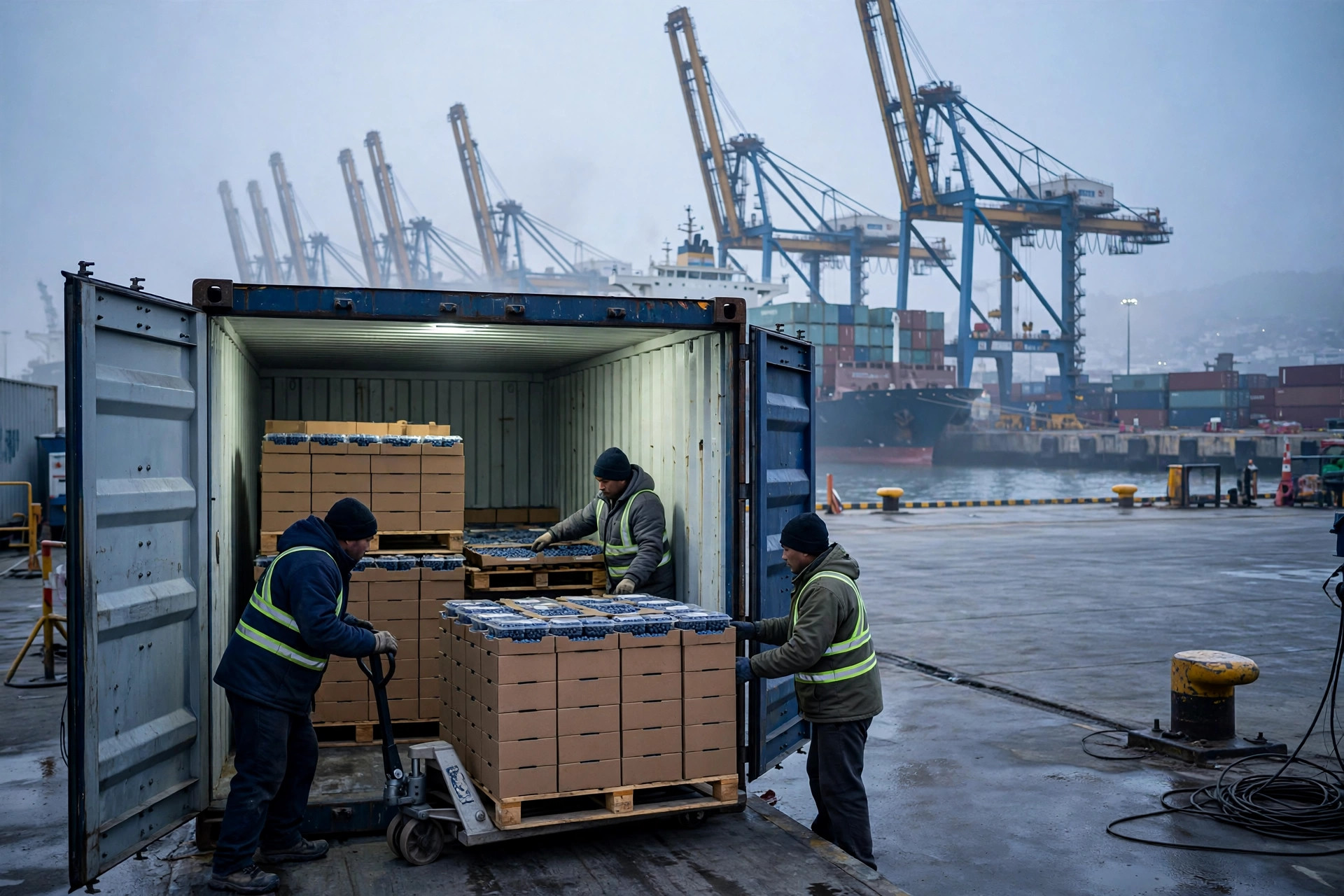
Two more handoff legs get forgotten in most people's logs: the reefer truck from the packing house to the port, and the plug-in time at the Callao terminal. A box that rides four hours on a truck with a weak genset arrives at the port already drifting warm, and no vessel schedule will wait for you to re-cool it. Log those legs with the same seriousness as the ocean leg.
One more number worth knowing: a 40-foot reefer holds about 20 pallets. In the standard Peruvian configuration — trays of twelve 125-gram clamshells, eight trays per layer, 18–22 layers per pallet — you're moving roughly 2,900–3,500 trays, or 4.3–5.9 tons net. Blueberries, as one packaging engineer put it, "carry air": the box fills by volume long before it fills by weight. So every extra layer you stack cuts freight cost per kilo — but only if the cartons survive 20-plus days at 0°C and 95% humidity. The spec that actually matters is wet compression strength, measured at 0°C and 95% relative humidity. That number is worth more than any freight discount. Stack height is a packaging decision first and a freight decision second.
Where the Money Goes: Cold Chain Spending, Ranked
This cuts two ways: what you never cheap out on, and where you can save.
Never cheap out on three things. First, forced-air precooling — pulp to 0°C in under an hour. It's the precondition for everything downstream; without it, CA money is wasted. Second, data loggers — two or three per container, front, middle, and back. A few dozen dollars buys the only evidence you'll ever have about where the chain actually broke. Third, controlled atmosphere on the Europe lane — 20 to 25 days against a 3-week normal-air ceiling is too tight, and CA buys the 8–10 week margin.
And three places you can save. The U.S. East Coast lane runs about two weeks, so a standard reefer is fine — don't pay the CA premium where the voyage doesn't need it. Air freight is the second: in 2023, an El Niño "hot winter" shrank Peru's crop and the average export price spiked to $8.50–$8.90 per kilo, and flying the early window paid off for some. By 2025 the average was back to $6.22, and air freight at several dollars per kilo eats most of the margin. Air is a bet on the price window, not a strategy — when prices normalize, the math stops working. Third, overbuilt packaging: wet compression strength that meets spec is enough. Decide stack height and carton spec together, because saving on cartons and stacking two layers higher is the most expensive "saving" you'll ever make when the bottom layers collapse.
One last piece of advice: if you're building a Peru blueberry cold chain program, don't start by asking which carrier's reefer to book. Start with three questions — how many hours from picking to precooling, was pulp temperature probe-verified at 0°C, and was the empty box pre-cooled before loading? If you can't answer those, everything downstream is luck.
By Lao Mi, Supply Chain Veteran (20 yrs)