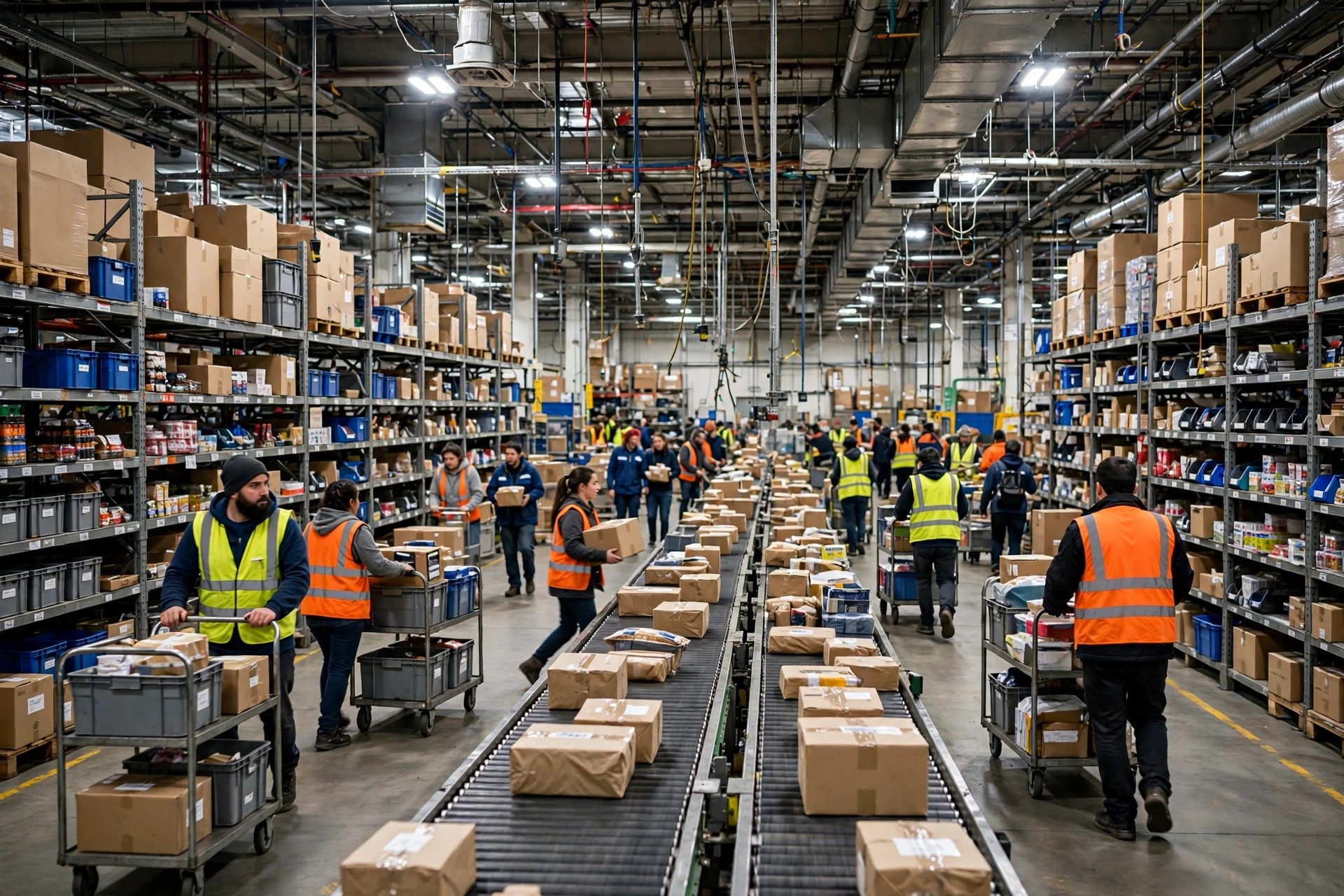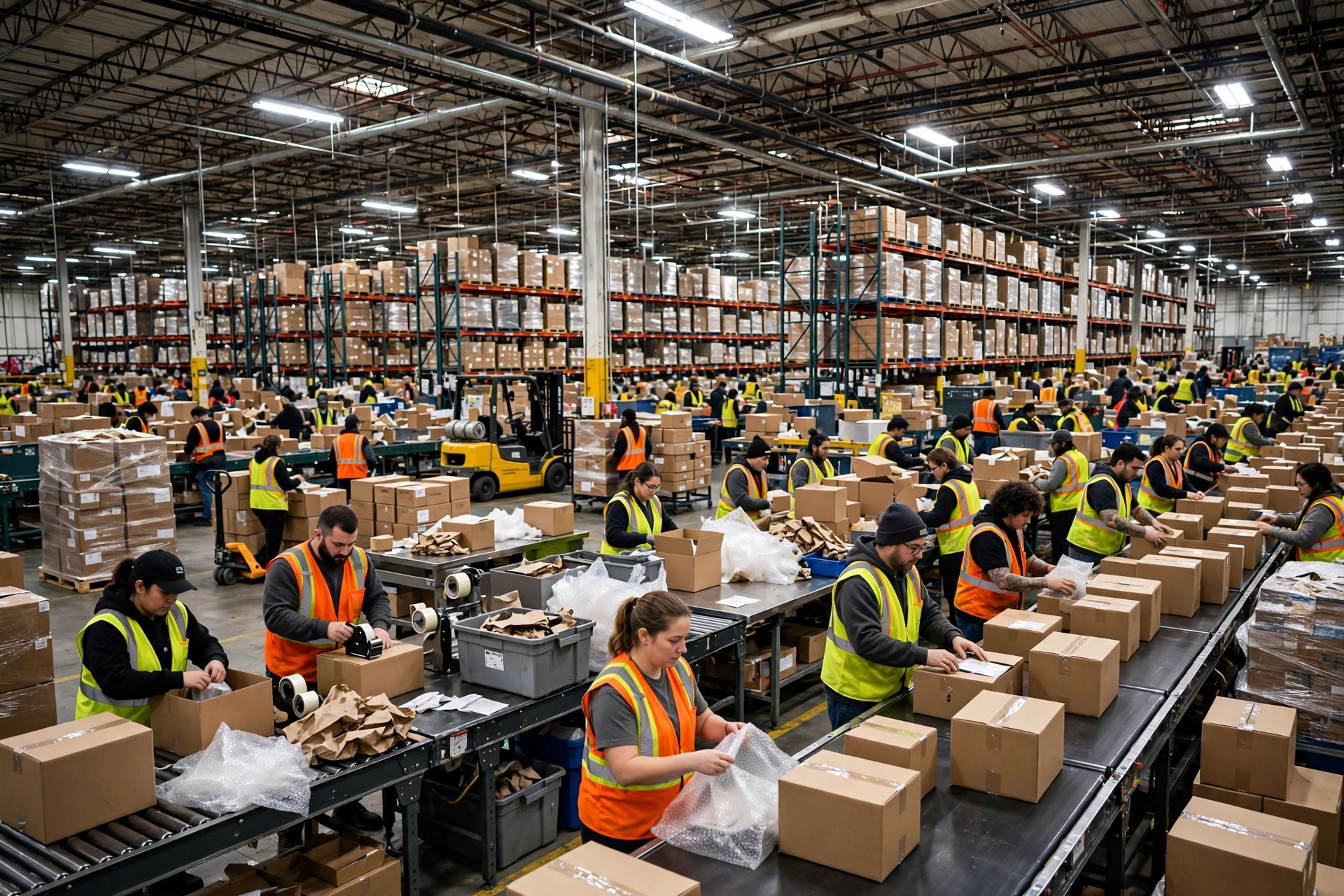
We had a client selling home goods out of a warehouse in Ontario, California. Last September he was bragging that peak-season staffing was all handled. Then one night in late October he called me, voice shot: order volume had tripled, he'd only filled sixty percent of his temp headcount, his veterans had worked twelve straight days, and two shift leads had just walked out.
When he finally tallied the season, the extra labor spend had eaten a huge chunk of his annual profit. He told me, "Susan, I didn't lose on orders. I lost on people."
I've heard that sentence more than once. After years of selling 3PL contracts, I've noticed a pattern: shippers will haggle a rate down to the penny, then wave off the labor section — "we'll just hire people when the time comes." Then the time comes, and the people don't. Or they come and don't stay. Or they stay and make mistakes. Meanwhile, on our side of the table, the labor line in a 3PL quote is never a guess.
What's Really Inside the Labor Line of a 3PL Quote
Here's some inside baseball from the sell side. The labor number in a 3PL proposal sits on top of a whole stack of assumptions: how many days out we start hiring, the wage we lock in at, the retention haircut we apply, how many days of training before someone is productive, the overtime multiplier on peak weekends. Sales and ops sit down, fill in every one of those assumptions, and the rate falls out of the model.
So what happens when you grind that labor number into the floor? Two possibilities. The honest provider jacks up the assumed retention rate and shortens training on paper, making the math work while praying peak season behaves. The less honest one just signs, betting on a contract amendment later. Then peak hits, the labor market tightens, nobody shows up at the contracted wage, veterans quit — and the provider comes back waving the price-escalation clause you skimmed over. You sign, because switching 3PLs mid-peak is not an option.
We had a client who learned this the hard way. Three years ago he negotiated the labor rate below our internal floor and felt pretty clever about it. Two weeks before Black Friday, market wages moved up across the board and we simply could not hire at the contracted rate. We triggered the peak-season adjustment clause, the rate went up, and he was furious — but the freight had to move, so he signed. These days he's wiser: he doesn't negotiate the absolute rate anymore. He negotiates the assumptions behind it.
The Most Expensive Worker Is the One Who Quits Mid-Peak
Here's the counterintuitive part, and most people do this math wrong. Everyone thinks peak labor gets expensive because hourly wages go up a few dollars. Wrong. The most expensive labor is the temp who quits after two weeks.
A quit costs you three times over. First, the recruiting and training investment goes straight down the drain. Second, your veterans cover the gap — overtime spend and burned-out morale. Third, and this is the killer: with more rookies and fewer veterans, mispick and mis-ship rates climb, and returns and customer chargebacks follow. Industry analyses put the extra cost of replacing a warehouse worker at roughly 16% of annual salary (cited by Refrigiwear). Warehousing's annual turnover ran near 50% in 2021 by one industry measure (Employbridge), and BLS JOLTS data has the transportation-and-warehousing monthly quit rate hovering around 1.8% — over 20% annualized, and that's the all-industry average. Peak-season temps run hotter.
Plain English: the few dollars an hour you saved can come back at multiples through error rates and overtime. Once temps pass half the floor headcount, rising error rates are practically guaranteed, and the labor savings won't cover the damage. That's why we have a house rule: any site where temps exceed half the workforce during peak gets a personal visit from the ops director.
Three Ways to Staff Peak — Pick Your Poison
There are three ways to hire temps. Here's the honest tradeoff table.
| Hire direct | Staffing agency | 3PL all-in labor | |
|---|---|---|---|
| Cost | Lowest on paper, no middleman | A hefty service fee on top | Bundled into the rate — looks pricey, zero hassle |
| Speed | Slowest — your HR team is only so big | Fastest — agencies hold a ready bench | Depends on how well your provider prepared |
| Quality | Most control, best culture fit | Hit or miss, depends on the agency | Provider's problem, but out of your hands |
| Risk | You own the shortfall | Wage-hike risk — agencies reprice in peak | In the contract, with escalation terms |
Where to actually find people: run a combo. Sixty days out, lock your core roles — leads, forklift drivers, QC — with your own people or a long-term agency partner. That's your foundation. Thirty days out, fill the numbers with short-term hires. And don't just stare at job boards: rehiring last year's seasonals is the best deal in the business. They're productive on day one and training cost is near zero. Most shippers forget this, and pay to recruit and train from zero every single year.
The 60-Day Playbook: Hire, Train, Retain as One Plan
First, the math. Public market data puts seasonal warehouse roles at roughly $15–22 an hour across most US markets, climbing as the holidays approach (labor platform Wonolo's market observations). Amazon hired 250,000 seasonal workers last peak at an average of $19 an hour (Bloomberg Law) — the giants lock in early. Do your own arithmetic: locking 60 people at $18, forty-five days early, versus scrambling at $22 in November when nobody's available. Four dollars times 60 people times 10 hours times 45 days is $108,000 — before overtime and late-shipment penalties. Starting early isn't diligence. It's money.
Training, next. The biggest mistake in temp training is trying to build all-rounders. Impossible, and not worth it. The only goal for a peak temp: error-free at a single station within three days. One client of ours broke training into 15-minute modules — scanning, labeling, packing, exception handling — each followed by an on-the-spot test. New hires learned two modules on day one, two more on day two, and worked solo on day three with a buddy shadowing. Get the structure right and the results follow.

One more piece of sell-side trivia: get training costs in writing. Plenty of 3PL quotes say "training at provider's expense," which sounds generous — until the provider either bakes it into your rate or quietly shortens training. If you use a 3PL, ask straight up: how many training days for peak temps? Who pays? What's the pass standard? Three questions, and they'll know they're dealing with someone who's done this before.
Finally, retention. The most underrated retention move is this: stabilize your veterans first. High temp turnover is the weather — you can't change it. But when a veteran lead walks, they take the whole shift's rhythm and morale with them. I watched one site lose two veteran leads in week three of peak; error rates went vertical, and the last three days ran on air freight. The expedite spend dwarfed the labor budget.
So my order of operations: first, a retention bonus for core veterans, paid in two halves — half at peak kickoff, half after, no payout if they don't finish the season. Second, keep temp shifts fixed; erratic scheduling is the number one reason temps ghost. Third, a small weekly bonus for perfect attendance plus zero errors — not much money, but paid weekly, and temps respond to it.
Where to hire, how to train, what to do when they quit — it's really one thing: start treating people like inventory, sixty days out. You'd never go into peak without locking capacity and safety stock. Do the same with labor: lock wages early, keep redundancy, and don't put all your eggs in one agency's basket.
Next time you negotiate a contract, ask these three questions: one, what labor assumptions sit behind your rate — what wage, what retention rate? Two, what triggers a peak labor price adjustment, what's the cap, and is it in the contract? Three, what's the training standard and error-rate KPI for temps, and what happens if you miss it?
Ask those three, and they'll know: this shipper can't be bluffed.
By Susan, 3PL Sales Director